What Pickleball Equipment Do You Actually Need?
Five things matter and the rest is optional. This is the buying order we would give a friend - cheapest fixes first, the paddle deliberately not first, and an honest line on what the sport is trying to upsell you.
Disclosure: Drive Dink earns a commission from qualifying Amazon purchases at no extra cost to you. We accept no free products and no paid placements — commissions never change our picks. How this works.
The short answer: a paddle, court shoes, balls that match where you play, and nothing else is mandatory. Everything past that list is either a cheap fix worth making or an upsell worth understanding before you pay for it. This page sorts them into those two piles.
The surprising answer: shoes before your next paddle. If you already own a paddle you can play with and you are wearing running shoes, new court shoes will do more for your results — and for your ankles — than a paddle upgrade will. That is the one ordering decision on this page we would argue hardest for.
We are not going to rank paddles on this page. A paddle is the biggest performance lever in the sport and the single thing you should not buy from a general equipment list, because the right one depends on which part of your game you are trying to fix. The paddle section below sends you to the roundup that matches your actual problem instead of guessing at it.
Units we claim to have tested: 0. Specs here are the manufacturers' and retailers' published figures. Prices come from our live layer and move daily — we never type a price into the page, and when a number cannot be verified we say so instead of guessing.
ASICS Gel-RENMA 2 (Men's)
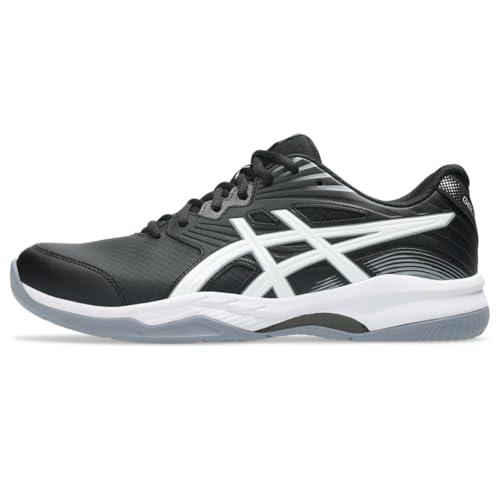
The men's cut of the only major-brand shoe on this page engineered for pickleball first — GEL cushioning included.
ASICS designed the Gel-RENMA around pickleball footwork rather than adapting a tennis model, and the men's version carries the same GEL rearfoot cushioning and court-focused outsole. The pick if you want a big-brand shoe that was actually built for this sport.
If you own one piece of real pickleball equipment, make it this one. Pickleball is played almost entirely sideways, and a running shoe is engineered to resist forces front-to-back and to sit you on a tall, soft heel - which is the exact combination that rolls an ankle on a split step. A court shoe has a wide, flat, low outsole and a reinforced upper that holds your foot over it. ASICS built the Gel-RENMA around pickleball footwork rather than adapting a tennis model, and it is the pick if you want a major-brand shoe designed for this sport, with GEL rearfoot cushioning and a court-tuned outsole. The cons: it is not the cheapest way to get a court shoe, and ASICS has sized this line snugly enough that it is worth ordering with a return in mind. This is the men's cut - the women's shelf and the full men's shelf both rank cheaper options we would still call proper court shoes, and the honest budget answer is any real court shoe over any running shoe.
- Spec 1
- Pickleball-specific last
- Spec 2
- GEL rearfoot cushioning
- Spec 3
- Court-tuned outsole
Franklin X-40 Outdoor Pickleballs
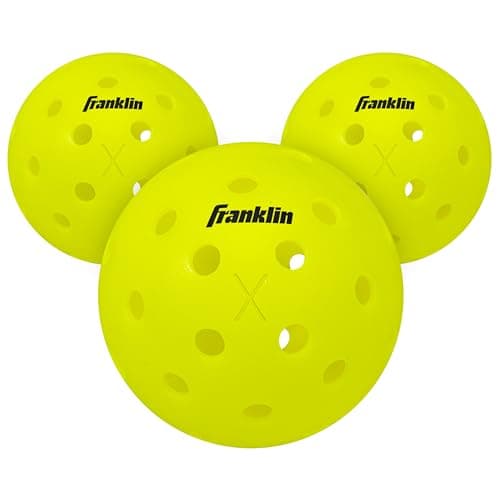
The most-played outdoor ball in the sport — the USA Pickleball national championship ball and a durable, true-flying default.
If you play outdoors, the Franklin X-40 is the ball you'll see most and the one most tournaments use. Consistent flight, a hard outdoor shell, and the official-ball pedigree make it the easy default for outdoor play.
Balls are the one piece of gear you will keep buying, and the only mistake that matters is buying the wrong kind. The Franklin X-40 is the most-played outdoor ball in the sport, with a 40-hole outdoor design, USA Pickleball approval and the national-championship pedigree, and it is the right default if you play outside. The cons are the whole category's cons rather than this ball's: outdoor balls crack in cold weather, go out of round before they look damaged, and a ball that has softened plays measurably slower than a new one from the same box. Buy them by the dozen, not by the three-pack, because the per-ball price difference is large and you will go through them. And if you play indoors, do not buy this ball at all - see the next section, because indoor balls are a different object and not a color variant.
- Spec 1
- 40-hole outdoor design
- Spec 2
- USA Pickleball approved
- Spec 3
- Tournament standard
GAMMA Supreme Overgrip (3-Pack)
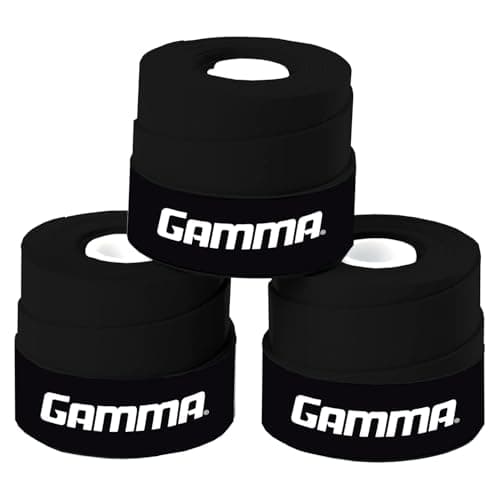
The racquet-sport default. Cheap, thin, tacky, and available everywhere — the sensible first thing to try.
GAMMA Supreme has been a staple in tennis and racquetball bags for years and translates straight across to pickleball. It is thin, mildly tacky and inexpensive enough that you can rewrap whenever it stops feeling fresh, which is the honest way to use an overgrip.
For the price of a sandwich, an overgrip changes the one part of the paddle you actually touch. It does two useful things: it builds a handle that is too thin up to the size your hand wants, and it gives you a fresh, predictable surface instead of a slick factory wrap. GAMMA Supreme is the racquet-sport default - thin, mildly tacky, cheap enough to rewrap whenever it stops feeling fresh, which is the honest way to use one. The cons are real and universal. A tacky grip feels best on day one and loses its bite faster than a dry grip in heat and humidity, it adds a small amount of mass at the handle which shifts your balance point slightly toward your hand, and it cannot fix a handle that is already too thick - no overgrip subtracts. If your hands sweat heavily, a dry-feel grip is the better buy; if your elbow is the problem, a structured replacement grip is a different product entirely.
- Spec 1
- Tacky feel
- Spec 2
- Thin — minimal handle build-up
- Spec 3
- 3-pack
HEAD Pro Elite Racquetball Goggles

Rated eye protection with a clip-on head strap for roughly half the price of the Gearbox — the cheapest way to stop guessing about impact.
The listing publishes compliance with ASTM F803 and ANSI Z87.1, distortion-free spherical polycarbonate lenses with anti-scratch and anti-fog treatment, protection against 99.9% of UV, a soft non-slip nosepiece, adjustable temples, and an adjustable clip-on elastic strap that keeps the frame on your face through a scramble. A lens-cleaning bag is included; a hard case is not, and HEAD does not state which revision of F803 the frame was tested to.
This is the cheapest insurance in the sport and the item most players skip until they have had a close call. Pickleball's hardest shots happen at the net from about fourteen feet away, which is less reaction time than you have; a ball to the eye is the one injury in this sport that does not heal. The HEAD Pro Elite is the value way to stop guessing: the listing publishes compliance with ASTM F803 and ANSI Z87.1, spherical polycarbonate lenses with anti-fog and anti-scratch treatment, 99.9 percent UV protection, a soft non-slip nosepiece and a clip-on elastic strap that keeps the frame on through a scramble. The cons are worth knowing before you order. HEAD does not state which revision of F803 the frame was tested to, no hard case is included, and no eyewear is fog-proof - a coating slows fogging, it does not prevent it, and an indoor gym in winter will test it. Ordinary sunglasses are not eye protection and are not a substitute.
- Spec 1
- ASTM F803 + ANSI Z87.1 (listing claim)
- Spec 2
- Spherical polycarbonate, anti-fog + anti-scratch
- Spec 3
- 99.9% UV, soft non-slip nosepiece
- Spec 4
- Adjustable temples + clip-on elastic strap
JOOLA Tour Elite Pro Bag
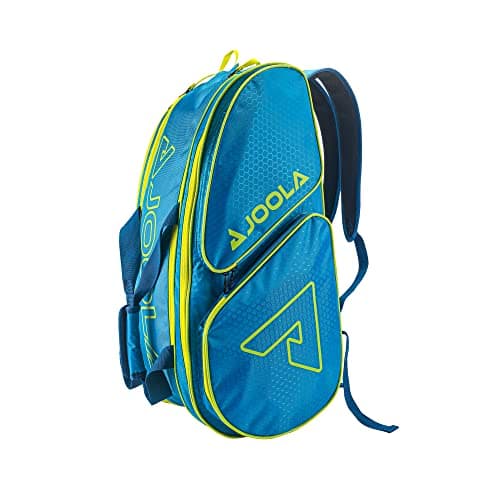
A convertible backpack-and-duffle with dedicated paddle storage and a fan-favorite layout — the best all-rounder.
The JOOLA Tour Elite Pro converts between backpack and duffle carry, with insulated pockets, ventilated shoe storage, and protected paddle sleeves. It hits the sweet spot of capacity, organization, and price for most players.
A bag buys convenience, not performance, which is why it belongs at the end of this list rather than the start - and why buying it first is one of the most common ways new players spend money on the wrong thing. Once you are carrying two paddles, a dozen balls, a change of shoes and a water bottle, a proper bag stops being an indulgence. The JOOLA Tour Elite Pro is the all-rounder: it converts between backpack and duffle carry, with insulated pockets, ventilated shoe storage and protected paddle sleeves. The cons: it is larger than many players want for a casual session, a convertible bag is heavier empty than a dedicated backpack of the same capacity, and if you genuinely only carry one paddle and a water bottle, a sling at a fraction of the price does the job and our bags shelf ranks one. Buy the bag that matches how much gear you own today, not the gear you imagine owning.
- Spec 1
- Backpack + duffle convertible
- Spec 2
- Dedicated paddle storage
- Spec 3
- Insulated + shoe pockets
How we decided what counts as “need”
Three questions, applied to every category of gear in the sport. A purchase has to pass at least one to make this list.
1. Does it stop you getting hurt? Court shoes and rated eyewear pass. This is the only test that outranks performance, because an ankle or an eye costs more than any paddle.
2. Does it change what happens to the ball? The paddle passes overwhelmingly. The ball passes, because a softened or out-of-round ball plays nothing like a fresh one. A grip passes marginally — it changes how you hold the handle, which changes what you can do with it. Apparel does not pass.
3. Does it cost less than the problem it solves? This is the test that kills most of the sport's upsells and rescues the cheap ones. An overgrip costs a few dollars and fixes a handle that is the wrong size. A ball machine costs several hundred and fixes nothing you cannot fix with a practice partner who shows up.
Notice what is missing from those three tests: looking like a serious player. That is a real motivation and we are not going to pretend it is not, but it is not a need, and the sport's marketing is built almost entirely on blurring the line.
The paddle: the one thing not to buy from a list
A paddle is between a third and most of your equipment budget and it is the only item here that changes every single shot you hit. It is also the item most badly served by a generic recommendation, because “best paddle” is not a question with an answer — the right paddle depends entirely on what you are trying to fix.
So here is the honest routing. If your serves and thirds lack bite and your dinks sit up, you are shopping for spin: best pickleball paddles for spin. If your drives die in the middle of the court and you cannot finish a point you have earned, you are shopping for power: best pickleball paddles for power. If you lose points by hitting out rather than by being outhit, you are shopping for control: best control and all-court paddles.
If you genuinely do not know which of those three describes you, start at how to choose a pickleball paddle, which walks the decision in order — shape, then core thickness, then face, then weight — and power vs control paddles, which explains the one trade every paddle on the market is making.
Two numbers decide more than the marketing does. Core thickness — 14mm for a faster ball off the face, 16mm for more control and dwell — and weight, where most of the market sits within half an ounce and the meaningful number is how that weight is distributed rather than what the box says. If you want the single most useful spec almost nobody shops on, it is in our swing weight and twist weight guide.
On money: how much should a paddle cost covers what each price bracket actually buys. The short version is that the jump from the cheapest tier to the mid tier buys a great deal, and the jump from mid to flagship buys considerably less than the price difference suggests. And if you already own a paddle you like, read when a paddle is worn out before replacing it — a face that has gone smooth is a real reason, and a new model release is not.
Shoes: the purchase players skip and shouldn't
This is the argument we would make hardest. Pickleball is a lateral sport played on a hard surface in a small box, and a running shoe is built for the opposite of that: cushioned, tall in the heel, narrow in the base, engineered to absorb forces that arrive front-to-back. Push off sideways in one and the shoe rolls before your foot does.
A court shoe is wide and flat underneath, low to the ground, and reinforced where your foot tries to slide over the sole. That is not a marketing distinction — it is a different last and a different outsole pattern. Our pickleball shoes vs tennis shoes page covers how close the two sports are, and can you play pickleball in running shoes gives the blunt version of the answer above.
Buy from the shelf that fits you: best pickleball shoes for men, best pickleball shoes for women, or the combined best pickleball shoes roundup. If your feet already hurt, shoes for plantar fasciitis is the page to start on instead, and when to replace pickleball shoes covers the wear signs that matter — the outsole goes long before the upper looks tired.
Balls: indoor and outdoor are not interchangeable
This is the most common equipment mistake in the sport and it costs almost nothing to avoid.
An outdoor ball has around 40 smaller holes and a hard shell, because it has to hold a line through wind. An indoor ball has around 26 larger holes and a softer, lighter shell, because gym air is still and a hard ball skids off a wood floor. Play an outdoor ball indoors and it is fast and skittery; play an indoor ball outdoors and the first gust takes it. They are different objects. Our indoor vs outdoor pickleballs page covers the difference properly and ranks both, and the main best pickleball balls roundup covers the full set.
The second thing to know is that balls wear out invisibly. A ball goes soft and out of round before it cracks, and a softened ball plays slower and lower than a fresh one from the same box — which is exactly the sort of change players blame on their paddle. How long pickleball balls last covers the signs and the realistic lifespan, including why machine feeding is harder on balls than play is.
The practical advice: buy a dozen of whatever your group plays, keep them out of a hot car, and retire them as a batch rather than one at a time so every game you play uses a ball at the same stage of its life.
The cheap fixes worth making
These are the purchases where a few dollars genuinely change something. None of them is mandatory and all of them are better value than a paddle upgrade you do not need.
An overgrip. Covered in the picks above. If your handle feels too thin, this fixes it; if it feels slick, this fixes that too. Start with paddle grip size to work out what size you should be holding, then best pickleball grips and overgrips for the tacky-versus-dry decision, and replacing a paddle grip for doing it without wrecking the handle.
Rated eye protection. Also in the picks. Pickleball eye protection explains what the ASTM F803 rating actually certifies and why it is the only spec worth checking, and pickleball glasses vs sunglasses exists because this substitution is the single most common one players make.
Lead or tungsten tape — maybe. A few grams at the right place on a paddle changes its swing weight and twist weight more than most buyers believe, and it is the cheapest way to make a paddle you already own behave more like the one you wanted. It is also the easiest way to ruin a paddle's balance. Adding lead tape covers where to put it and best paddle weights and tape ranks the products. This is a tuning purchase, not a starter purchase.
A second paddle — eventually. Not for performance. Faces wear, paddles crack, and a cracked paddle on a tournament morning with no backup ends your day. Do you need a backup paddle covers who actually does and what it should be.
What you do not need, and what it is really for
This is the half of the equipment conversation nobody selling gear wants to have.
A net. You need a net the way you need a court — which is to say, the venue usually provides it. A portable net is for players with a driveway, an empty gym slot or a tennis court they can borrow, and in that situation it is a genuinely transformative purchase. Outside it, it sits in a garage. Our best pickleball nets page ranks systems against the actual rulebook dimensions, and pickleball net height covers what those dimensions are, because a lot of cheap nets do not meet them.
A ball machine. The most expensive thing most players will consider, and the one with the widest gap between who buys it and who should. A machine buys repetitions, which is the one thing a casual group cannot give you — and it only helps if you have somewhere to run it and the discipline to use it. Are pickleball ball machines worth it is deliberately the page we wrote before the roundup, and ball machine vs practice wall covers the free alternative that solves a surprising share of the same problem. If you are past that decision, best pickleball ball machines ranks them and ball machine drills covers using one properly.
Apparel. Pickleball-branded clothing does nothing a court shoe and ordinary athletic clothing do not already do. We do not cover it, and that is a deliberate decision rather than a gap.
A paddle cover. Most paddles ship with one and most players never use it. It protects the face in a bag, which matters more than it sounds if you are throwing a paddle in with shoes and a water bottle — but it is a bag-organization problem, not a gear purchase. Paddle care and cleaning covers keeping a face alive, which does more for your paddle than a cover.
The buying order, on a real budget
If you are starting from nothing and spending as little as sensibly possible: a mid-tier paddle, a real court shoe, and a dozen of whatever ball your group plays. That is the whole list, and the shoe is the part people skip.
If you already play and you are deciding where the next money goes, in order: court shoes if you are still in running shoes, rated eyewear if you play at the net and do not have any, an overgrip in the size your hand actually wants, a dozen fresh balls, and then — only then — the paddle, bought against a named weakness rather than a release announcement.
If you are the person buying for someone else, this page is the wrong shape for you and we have written the right one: our pickleball gift guide sorts by budget, with gifts under $50 and gifts under $150 for the two brackets most gifts land in. The one rule from that page worth repeating here: do not buy anyone a paddle unless they have named the model.
And if you are the player at the other end of this page — the one who has the shoes, the balls, the bag and the grip, and is now choosing between two frames that differ by one spec — that is the sort of decision our comparison pages exist for. The two newest are Diadem Edge 18K Power Pro vs Speed Pro, where one honeycomb cell size separates two otherwise identical paddles, and FRIDAY Aura vs Aura Pro, where the geometry is frozen and only the construction moves.
One case the buying order above does not cover: equipping a whole household at once, where nobody owns a paddle and there may be nowhere to play. That is a single purchase rather than a sequence, and our best pickleball sets page ranks the bundles on contents, listed approval status and face material. It is explicit about the ceiling too: a set's paddles get four people playing, then become the loaners you hand to guests once somebody takes the sport seriously.
What equipment do you need to play pickleball?
A paddle, court shoes, and balls that match where you play. Everything else is optional. Venues almost always provide the net and the court, so the only three purchases that are genuinely required are the ones you bring with you - and of those, the shoes are the one players most often skip, usually by wearing running shoes instead.
What should I buy first, a paddle or shoes?
Shoes, if you already own a paddle you can play with and you are currently in running shoes. Pickleball is a lateral sport and a running shoe is engineered to resist forces front-to-back on a tall, soft heel, which is the combination that rolls ankles on a split step. A court shoe is wide, flat and low with a reinforced upper. If you own neither, buy a mid-tier paddle and a real court shoe together and skip the flagship paddle.
Can I use indoor pickleballs outdoors?
Not well. An indoor ball has around 26 larger holes and a softer, lighter shell built for still gym air, so the first gust outdoors takes it off line. An outdoor ball has around 40 smaller holes and a hard shell, which indoors feels fast and skittery and skids off a wood floor. They are different objects rather than color variants, and buying the wrong one is the most common equipment mistake in the sport.
Do I need eye protection for pickleball?
It is not required, and it is the cheapest insurance in the sport. The hardest shots in pickleball happen at the kitchen line from about fourteen feet away, which is less reaction time than you have, and an eye injury is the one injury here that does not heal. If you buy some, check for an ASTM F803 rating - that is the ball-impact standard, and ordinary sunglasses do not meet it and are not a substitute.
How much should I spend on pickleball equipment to start?
A mid-tier paddle, one real court shoe and a dozen balls covers everything you actually need, and the paddle is the only part where spending more buys a lot. Our paddle price guide covers what each bracket buys: the step from the cheapest tier to the mid tier buys a great deal, and the step from mid to flagship buys considerably less than the price gap suggests. Add an overgrip for a few dollars if the handle feels thin or slick.
Do I need a pickleball net?
Only if you have somewhere to put it. Courts and venues supply the net, so a portable system is for players with a driveway, a bookable gym slot or a tennis court they can borrow - and in that situation it changes how much you get to play. Check the dimensions before buying, because plenty of inexpensive nets do not meet the rulebook's 22-foot post spacing and 36-inch sideline height.
Is a pickleball bag worth it?
Once you are carrying two paddles, a dozen balls, spare shoes and a water bottle, yes - and before that, no. A bag buys convenience rather than performance, which is why we put it last on this list. Buying a tournament bag first is one of the most common ways new players spend money on the wrong thing. If you carry one paddle and a bottle, a sling at a fraction of the price does the job.
Do I need a second paddle?
Not for performance, but for insurance if you compete. Faces wear smooth and frames crack, and a cracked paddle on a tournament morning with no backup ends your day. The useful backup is the same model you play, or at least the same shape and core thickness, so switching mid-match does not change what you are holding.