Best Pickleball Shoes for Plantar Fasciitis
Heel pain and a sport built on hard lateral stops is a bad combination. These are the court shoes we cover with the most published cushioning under the heel — and the honest limits of what a shoe can do.
Disclosure: Drive Dink earns a commission from qualifying Amazon purchases at no extra cost to you. We accept no free products and no paid placements — commissions never change our picks. How this works.
If you want one answer: the ASICS Gel-Dedicate is the pick, and it is for the player whose heel is the problem and who wants the most published shock absorption we can point at in a real court shoe. ASICS names GEL rearfoot cushioning on it — a gel insert under the heel whose job is absorbing impact at heel strike — and it is the cheapest of the four picks here. If you want that cushioning in a shoe designed around pickleball footwork rather than adapted from tennis, the Gel-RENMA 2 is the upgrade, in men's and women's lasts. If your foot also rolls on hard stops, the K-Swiss Ultrashot Light trades plushness for containment.
Read this before you read the picks: we are not clinicians and this is not medical advice. Plantar fasciitis is a diagnosis, and footwear is one input among several that a physiotherapist or podiatrist will look at alongside loading, calf flexibility, orthotics and how much you are playing. What we can do honestly is rank the court shoes we cover on the published features that bear on impact and foot stability — named heel cushioning, upper structure, and whether the last was designed for lateral court movement — and tell you where the published data stops. No shoe on this page is a treatment, and none of them is sold as one.
Units we claim to have tested: 0.Every feature named is from the manufacturer's own listing. Live Amazon prices render on every card below and move daily.
| # | Paddle | Best for | Score | Price |
|---|---|---|---|---|
| 1 | 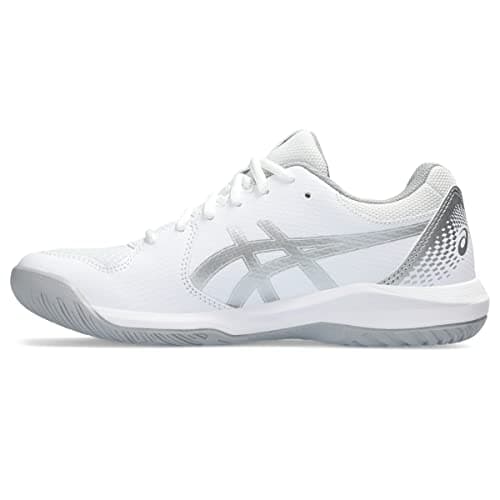 ASICS Gel-Dedicate Court Shoe Best cushioning / joint comfort | Most cushioning for the money | — | |
| 2 | No image ASICS Gel-RENMA 2 (Men's) Best pickleball-specific men's shoe | Best men's pick | — | |
| 3 | 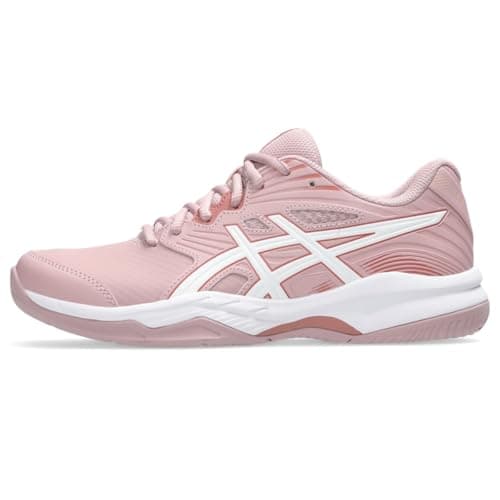 ASICS Gel-RENMA 2 (Women's) Best pickleball-specific women's shoe | Best women's pick | — | |
| 4 | 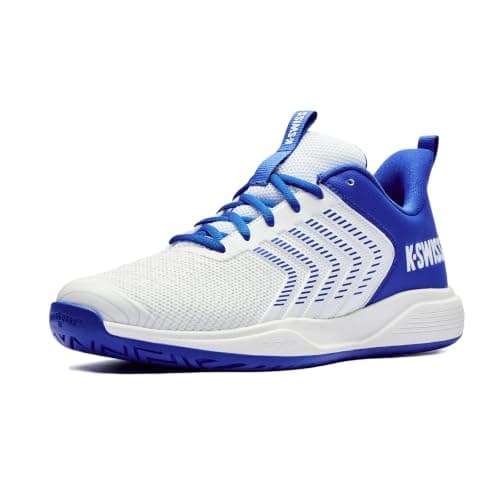 K-Swiss Ultrashot Light (Men's) Best stability for heavier or harder-stopping players | Best for hard stoppers and heavier players | — |
Tap any row to jump to the full write-up. Prices are pulled live from Amazon.
ASICS Gel-Dedicate Court Shoe
ASICS' GEL cushioning is the reason to buy — the pick if knees and joints take a beating on hard courts.
A tennis court shoe that translates perfectly to pickleball, the Gel-Dedicate brings ASICS' signature GEL cushioning for shock absorption. If you play on hard courts and your joints feel it the next day, this is the comfort pick.
For the player whose heel is the whole problem and who wants the most shock absorption we can point at in a genuine court shoe. ASICS publishes GEL rearfoot cushioning in the Gel-Dedicate - a gel insert under the heel whose entire job is to absorb impact at the moment of heel strike, which is the moment that hurts if you are managing plantar fasciitis. It is a tennis court shoe that translates directly to pickleball: hard-court outsole, supportive upper, and the lowest price of the four picks here. The cons are honest: it is an adapted tennis last rather than a pickleball-specific one, it is the least structured shoe on this page so it offers less help if your foot also rolls inward on hard stops, and ASICS publishes no stack height or drop figure, so we cannot tell you how much cushioning in millimeters.
- Spec 1
- GEL rearfoot cushioning
- Spec 2
- Hard-court outsole
- Spec 3
- Supportive upper
ASICS Gel-RENMA 2 (Men's)
The men's cut of the only major-brand shoe on this page engineered for pickleball first — GEL cushioning included.
ASICS designed the Gel-RENMA around pickleball footwork rather than adapting a tennis model, and the men's version carries the same GEL rearfoot cushioning and court-focused outsole. The pick if you want a big-brand shoe that was actually built for this sport.
For the male player who wants the GEL heel cushioning in a shoe that was actually designed around pickleball footwork. ASICS built the Gel-RENMA around this sport rather than borrowing a tennis last, and the men's version carries the same GEL rearfoot cushioning plus a court-tuned outsole built for the short, sharp lateral steps the kitchen line demands. That matters here for a specific reason: plantar fasciitis is aggravated by repeated loading, and a shoe that lets your foot slide inside it on a lateral cut adds loading cycles you did not intend. Our pickleball-specific pick for men. The cons: it costs more than the Gel-Dedicate, it is lighter on heel padding than a dedicated cushioned running shoe (which is deliberate - see below), and ASICS publishes no stack height.
- Spec 1
- Pickleball-specific last
- Spec 2
- GEL rearfoot cushioning
- Spec 3
- Court-tuned outsole
ASICS Gel-RENMA 2 (Women's)
ASICS built the Gel-RENMA for pickleball rather than adapting a tennis last — GEL cushioning with a court-tuned women's fit.
The Gel-RENMA 2 is one of the few shoes on this list designed around pickleball movement instead of borrowed from tennis. You get ASICS' GEL cushioning under the heel, a supportive women's-specific upper, and an outsole built for the short, sharp lateral steps the kitchen line demands.
The same case, in a women's-specific last. The Gel-RENMA 2 women's carries ASICS' GEL rearfoot cushioning, a supportive women's-specific upper and the same pickleball-designed outsole, and fit is not a side issue for heel pain - a shoe that is too long lets the heel lift and slip, which loads the plantar fascia on every step rather than only on the hard ones. If you have been playing in a unisex or men's shoe sized down, that alone is worth changing before you change anything else. The cons are the same as the men's version: a premium over the Gel-Dedicate, no published stack height or drop, and cushioning tuned for court feel rather than for maximum plushness.
- Spec 1
- Pickleball-specific last
- Spec 2
- GEL rearfoot cushioning
- Spec 3
- Women's-specific fit
K-Swiss Ultrashot Light (Men's)
K-Swiss' more substantial court shoe — the pick if lighter shoes let your foot roll on hard lateral stops.
The Ultrashot line is K-Swiss' more structured court shoe, built around containment rather than minimum weight. If you are a bigger player, or you stop hard enough that lighter shoes feel vague underfoot, the extra structure here is the point.
For the player whose heel pain comes with a second symptom - the foot rolling or the ankle feeling vague on a hard lateral stop. K-Swiss builds the Ultrashot line around containment rather than minimum weight: a structured supportive upper, court lateral containment and a durable outsole. The reason that belongs on this page is that structure and cushioning solve different halves of the same problem. Cushioning reduces the force arriving at your heel; structure stops your foot moving inside the shoe while that force arrives. If lighter shoes have felt unstable to you, the extra structure here is the point, and it is the pick for bigger players and anyone who stops hard. The cons: it is the heaviest-feeling shoe of the four, it is a men's listing only, and K-Swiss publishes no cushioning technology by name - the case for it is structural, not cushioning.
- Spec 1
- Structured supportive upper
- Spec 2
- Court lateral containment
- Spec 3
- Durable outsole
Why the obvious answer is the wrong one
Search for shoes for plantar fasciitis and almost everything you find is a running shoe, because that is where the cushioning arms race happens. A maximally cushioned running shoe genuinely does reduce the force arriving at your heel, and if you were running in a straight line it would be the right answer.
You are not running in a straight line. Pickleball is a sport of short lateral steps, hard stops and changes of direction inside a space smaller than a tennis court, and a running shoe is built to be unstable sideways — a tall, soft stack with a narrow base and an upper designed for forward motion. Put that under a lateral cut and the shoe rolls. That is how ankles get turned, and it is also a way to make heel pain worse rather than better, because a foot sliding around inside a shoe loads the plantar fascia on steps that should have been free.
So the brief for this page is narrower and more awkward than “most cushioned shoe”: you want the most heel cushioning available inside a shoe that is still laterally stable. That is a smaller set, and it is why three of the four picks here are ASICS — GEL is the only heel cushioning technology named by a manufacturer across the court shoes we cover. Our guide to running shoes for pickleball makes the full case against the substitution, and pickleball shoes vs tennis shoes covers the closer comparison.
What to look for in a court shoe
Four things, in the order they matter for this specific problem.
1. Named heel cushioning.Not “cushioned midsole” as a marketing line — a technology the manufacturer names and places. ASICS' GEL is placed in the rearfoot, which is where you want it if heel strike is what hurts. A shoe whose listing says only that it is comfortable has told you nothing.
2. Upper structure and heel hold.Your heel should not lift inside the shoe. If it does, every step adds a small amount of stretch to the plantar fascia, and the total over two hours of play is not small. This is mostly a fit question rather than a model question, which is why the women's pick is on this page as a separate recommendation rather than as a footnote.
3. Torsional stability. Hold a shoe at the heel and the toe and twist. A court shoe should resist; a running shoe usually does not. Resistance here is what stops your foot deforming through a lateral cut.
4. A court outsole, not a trainer outsole. Non-marking, relatively flat, and designed to let you pivot rather than grip absolutely. A tread that grips too well is its own injury risk because the force has to go somewhere, and that somewhere is your joints.
| Pick | Named cushioning | Structure | Last | Best for |
|---|---|---|---|---|
| ASICS Gel-Dedicate | GEL rearfoot | Supportive upper | Tennis, court | Most cushioning per dollar |
| ASICS Gel-RENMA 2 (Men's) | GEL rearfoot | Court-tuned outsole | Pickleball-specific | Men who want the purpose-built shoe |
| ASICS Gel-RENMA 2 (Women's) | GEL rearfoot | Women's-specific upper | Pickleball-specific | Women who need real heel hold |
| K-Swiss Ultrashot Light | None published | Structured, containment-focused | Court | Hard stoppers, heavier players |
Note what is missing from that table: stack height and heel-to-toe drop. Neither ASICS nor K-Swiss publishes those figures for these models, and drop in particular gets discussed a lot in the context of heel pain. We are not going to estimate them. If a number matters to you that much, measure the pair you buy.
What a shoe cannot fix
Three things worth saying plainly, because a shoe page that implies otherwise is selling you something.
Volume. Plantar fasciitis is usually a loading injury, and the most effective variable is how much you play. Going from three sessions a week to six in new shoes is still going from three to six. A ball machine makes this easier to get wrong, not harder — see our ball machine drills guide for how to structure practice without adding hours.
Old shoes. Cushioning compresses, and a shoe whose midsole has packed out gives you a fraction of what it gave you new, with no visible change to the upper. If your heel pain arrived gradually in shoes you have played a lot in, the shoes may be the cause rather than the cure. Our guide to when to replace pickleball shoes covers the wear signs.
A diagnosis. Heel pain has several causes and plantar fasciitis is only one of them. If it is persistent, morning-worst, or getting worse, see a clinician rather than buying another pair of shoes. That is the honest end of what a gear site can tell you.
How we picked
We filtered the court shoes in our registry to those whose makers publish a named cushioning technology or a structural claim relevant to impact and foot stability, then ranked on cushioning first, structure second, and whether the last was designed for pickleball rather than adapted from tennis. We did not rank on any clinical claim, because none of these manufacturers makes one and neither do we. Features quoted are from the manufacturers' own listings; where a figure is not published we say so rather than estimate it. Every listing was confirmed in the registry on October 11, 2026, and prices are pulled live rather than typed in. Full approach on our methodology page.
The bottom line
Start with the ASICS Gel-Dedicate: it is the cheapest shoe here with heel cushioning a manufacturer will name and place, and for most readers on this page that is the right first purchase. Step up to the Gel-RENMA 2 in your own last if you play often enough that a pickleball-specific outsole and a better fit are worth the premium — and if you are currently wearing a men's shoe sized down, change that before you change anything else. Take the K-Swiss Ultrashot Light instead if your foot rolls on hard stops. Then address the volume, the age of your shoes and, if it persists, the diagnosis — because those are the three variables that actually decide how this goes. The wider best pickleball shoes roundup covers the rest of the field.
What are the best pickleball shoes for plantar fasciitis?
Of the court shoes we cover, the ASICS Gel-Dedicate is the pick: ASICS names GEL rearfoot cushioning on it, which places shock absorption under the heel, and it is the cheapest of our four picks. The pickleball-specific Gel-RENMA 2 carries the same GEL cushioning in men's and women's lasts. We are not clinicians and none of these shoes is a treatment — footwear is one input among several.
Can I just wear running shoes for pickleball if I have heel pain?
We would not. A cushioned running shoe does reduce impact at the heel, but it is built to be unstable sideways — a tall soft stack on a narrow base with an upper made for forward motion. Pickleball is short lateral steps and hard stops, and a shoe that lets your foot move inside it adds loading cycles to the plantar fascia as well as risking an ankle.
What should I look for in a court shoe if I have plantar fasciitis?
Four things, in order: a heel cushioning technology the manufacturer names and places in the rearfoot; an upper that holds your heel so it cannot lift; torsional stiffness, which you can test by twisting the shoe; and a proper non-marking court outsole that lets you pivot rather than grip absolutely.
Do heel-to-toe drop and stack height matter?
They are discussed a lot in the context of heel pain, but neither ASICS nor K-Swiss publishes those figures for the court shoes on this page, so we do not print them. We are not going to estimate a number that we cannot source. If drop matters that much to you, measure the pair you buy.
Could my old pickleball shoes be causing the problem?
Possibly. Midsole cushioning compresses with use and gives you progressively less protection, often with no visible change to the upper — so heel pain that arrived gradually in a well-played pair of shoes may be a shoe-age problem rather than a shoe-model problem. Replacing them is cheaper than most of the alternatives.
Will insoles or orthotics help more than new shoes?
That is a question for a clinician rather than a gear site. What we can say is that a shoe with a structured upper and a stiff torsion box gives an insole something to work against, while a soft, flexible shoe does not — so the two are not alternatives so much as parts of the same decision.