Best Pickleball Shoes for Men
Bigger players stop harder, and hard stops are what break down a shoe that was never built for them. These are the men's court shoes that hold up.
Disclosure: Drive Dink earns a commission from qualifying Amazon purchases at no extra cost to you. We accept no free products and no paid placements — commissions never change our picks. How this works.
Court shoes are the highest-return purchase in pickleball, and the reason is unglamorous: running shoes have almost no structure to resist side-to-side load, and pickleball is almost entirely side-to-side. The mismatch is why rolled ankles are the sport's signature injury, and no paddle upgrade compensates for a foot that slides off its own footbed.
Units we claim to have tested: 0. We rank on manufacturer-published construction features and the consistent reviewer record, and we say what each shoe gives up. Court shoes list per size and color on Amazon, so every buy link here also carries a model-level search fallback. Prices move; the live price above is the one to trust.
| # | Paddle | Best for | Score | Price |
|---|---|---|---|---|
| 1 | 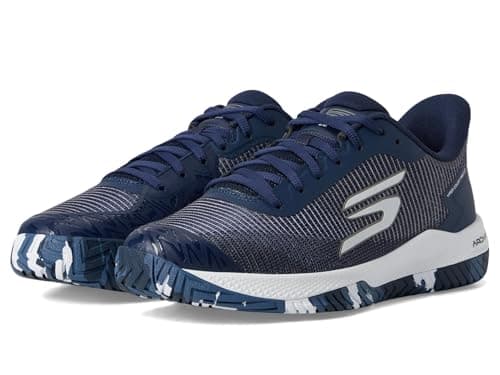 Skechers Viper Court Pro 2.0 (Men's) Best all-around men's court shoe | Best overall | — | |
| 2 | No image ASICS Gel-RENMA 2 (Men's) Best pickleball-specific men's shoe | Best pickleball-specific build | — | |
| 3 | 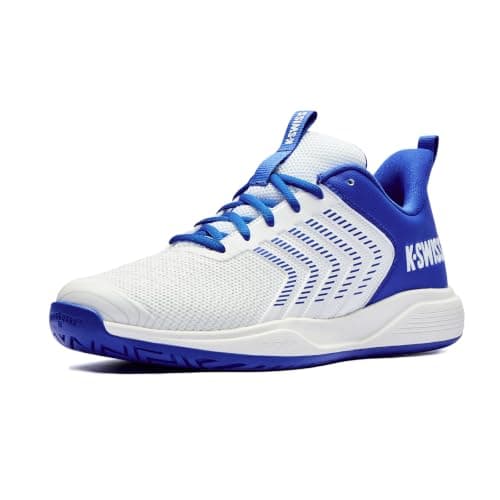 K-Swiss Ultrashot Light (Men's) Best stability for heavier or harder-stopping players | Best stability for heavier players | — | |
| 4 | 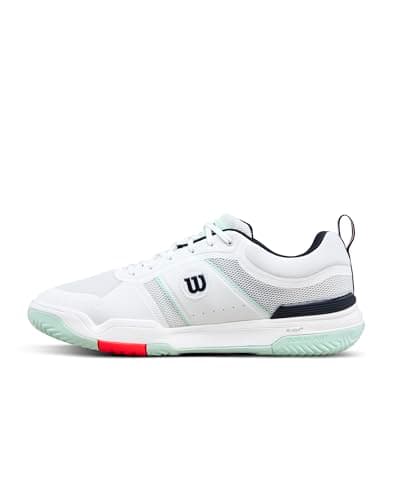 Wilson Pickle Pro (Men's) Best lightweight men's option | Best lightweight option | — | $110.00 · View on Amazon #adPrice as of October 22, 2026 |
| 5 | 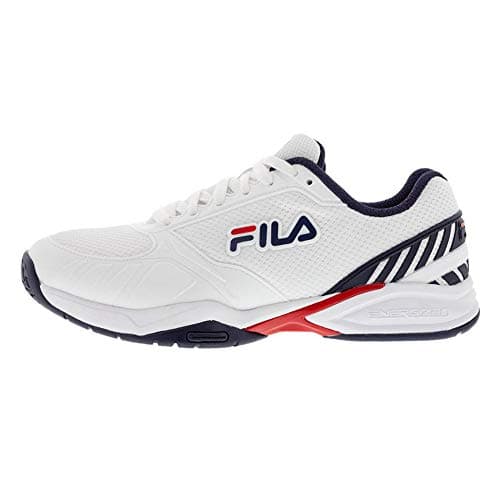 FILA Volley Zone Pickleball Best value court shoe | Best value | — | $44.95 · View on Amazon #adPrice as of October 22, 2026 |
Tap any row to jump to the full write-up. Prices are pulled live from Amazon.
Skechers Viper Court Pro 2.0 (Men's)
A dedicated pickleball court shoe with lateral support and a non-marking outsole — comfortable enough for long sessions.
Skechers went after pickleball specifically with the Viper Court line, and it shows: real lateral containment for side-to-side play, a grippy non-marking sole, and the cushioning Skechers is known for. The default recommendation for most men.
Skechers built the Viper Court line for pickleball rather than adapting a tennis model, and the result is the shoe that gets most things right: real lateral containment, a grippy non-marking outsole and enough cushioning for a long session. The con is that it is a generalist — it is neither the most cushioned nor the most structured shoe here, and a heavy player who stops hard may want more support than it offers.
- Spec 1
- Court-specific lateral support
- Spec 2
- Non-marking outsole
- Spec 3
- Cushioned midsole
ASICS Gel-RENMA 2 (Men's)
The men's cut of the only major-brand shoe on this page engineered for pickleball first — GEL cushioning included.
ASICS designed the Gel-RENMA around pickleball footwork rather than adapting a tennis model, and the men's version carries the same GEL rearfoot cushioning and court-focused outsole. The pick if you want a big-brand shoe that was actually built for this sport.
The Gel-RENMA 2 is ASICS designing around pickleball footwork rather than borrowing a tennis last, and it comes with the GEL rearfoot cushioning that makes hard courts survivable. If your joints notice the day after, this is the pick from a brand with a genuine cushioning pedigree. The con is weight — cushioning has mass, and quick-footed players may find it more shoe than they want underfoot.
- Spec 1
- Pickleball-specific last
- Spec 2
- GEL rearfoot cushioning
- Spec 3
- Court-tuned outsole
K-Swiss Ultrashot Light (Men's)
K-Swiss' more substantial court shoe — the pick if lighter shoes let your foot roll on hard lateral stops.
The Ultrashot line is K-Swiss' more structured court shoe, built around containment rather than minimum weight. If you are a bigger player, or you stop hard enough that lighter shoes feel vague underfoot, the extra structure here is the point.
The Ultrashot line is K-Swiss' more structured court shoe, built around containment rather than minimum weight, and it is the answer when lighter shoes let your foot roll on a hard lateral stop. If you are a bigger player or you brake aggressively, the extra structure is the entire point. The con is that it is the least nimble shoe here — you feel the support, and some players read that as clumpy.
- Spec 1
- Structured supportive upper
- Spec 2
- Court lateral containment
- Spec 3
- Durable outsole
Wilson Pickle Pro (Men's)
A purpose-built pickleball shoe that stays light — court feel over cushioning.
Wilson's Pickle Pro is a dedicated pickleball shoe that prioritizes being quick underfoot. Less padding than the ASICS or Skechers options, more connection to the court. Good for players who like to feel their feet; less good if hard courts already leave your knees complaining.
A purpose-built pickleball shoe that prioritizes being quick underfoot over being padded, with more court feel than anything else on this page. Good for players who like to feel their feet and dislike the sensation of a tall stack between them and the ground. The con is the direct consequence: less padding means hard courts transmit more, so it is the wrong shoe if joint comfort is why you are shopping.
- Spec 1
- Pickleball-specific design
- Spec 2
- Lightweight build
- Spec 3
- Non-marking court sole
FILA Volley Zone Pickleball
The value pick: a genuine court shoe with pickleball-appropriate support at a budget-friendly price.
You don't have to spend big for a proper court shoe. The FILA Volley Zone delivers the lateral support and non-marking sole you need for pickleball at a price well under the specialty options — the smart budget choice.
You do not have to spend big to get a proper court shoe, and the Volley Zone delivers the lateral support and non-marking sole that matter at a price well below the specialty models. It is the shoe to buy if the alternative is continuing to play in runners. The con is refinement: cushioning and upper materials are basic next to the pricier options, and it will not last as long under heavy use.
- Spec 1
- Budget-friendly
- Spec 2
- Court-appropriate support
- Spec 3
- Non-marking sole
What makes a court shoe a court shoe
Three structural things, and none of them are marketing.
A reinforced lateral upper. When you push hard sideways, something has to stop your foot traveling across the footbed before the shoe itself moves. Court shoes use denser upper materials and external support structures to do that. Running shoes use soft knit uppers designed to flex forwards, which is precisely the wrong property.
A flat, dense, non-marking outsole. Running shoes have thick curved heels that lift your center of gravity and can catch during a hard stop. Court outsoles sit lower and flatter, use rubber compounds formulated for abrasive court surfaces, and do not leave marks — which many indoor venues require.
Reinforcement where court play actually wears. The medial forefoot and toe-drag area take the load in a lateral sport. Court shoes armor those zones. Runners do not, which is why they develop holes in strange places within a couple of months of court use.
How we picked
Every shoe here is a genuine court shoe with a reinforced lateral upper and a flat non-marking court outsole, sold with a real first-party Amazon listing. We chose five, each covering a clear use case, rather than listing ten near-identical models.
We rank on published construction features and the consistent reviewer record. We do not claim to have worn these, and we will not publish invented durability figures or step counts. What we can do honestly is say what each shoe is built to prioritize and what that costs. The full approach is on our methodology page.
The three-way trade: cushion, structure, weight
Once a shoe clears the lateral-support bar, everything else is a three-way trade, and you cannot maximize all of it.
Cushioning protects joints over long sessions on concrete. It costs weight and a small amount of ground feel. The ASICS leads here.
Structurekeeps a heavier or harder-braking player's foot contained. It costs nimbleness — a structured shoe feels more substantial in a quick shuffle. The K-Swiss Ultrashot leads here.
Low weight makes you feel quicker and gives more feedback from the surface. It costs cushioning and, at the extreme, some containment. The Wilson leads here.
The Skechers Viper Court sits near the middle of all three, which is why it is our overall pick and why it is a slightly boring one. The FILA is the value entry: acceptable on all three axes, excellent on none.
A note for heavier and harder-stopping players
This is the part most shoe roundups skip. A 220-pound player braking hard on a hard court generates substantially more lateral load than a 150-pound player does, and a lightweight shoe that feels supportive to one may feel vague to the other. If you have bought court shoes before and still felt your foot moving inside them, the shoe was not wrong in general — it was under-built for you.
The signals to look for are a wider platform, a stiffer heel counter (squeeze the back of the shoe: it should not fold easily) and a denser upper rather than a soft knit. The K-Swiss Ultrashot is on this list specifically for that. Buying a shoe with more structure than you strictly need is a much cheaper mistake than the reverse.
Who should buy which
- You want one shoe that handles everything: the Skechers Viper Court Pro 2.0.
- Your knees, hips or back notice the next day: the ASICS Gel-RENMA 2.
- You are a bigger player, or you brake hard: the K-Swiss Ultrashot Light.
- You want to feel quick and hate a tall stack: the Wilson Pickle Pro.
- You are replacing running shoes on a tight budget: the FILA Volley Zone. Any proper court shoe beats runners.
Fit, sizing and the listing problem
Court shoes on Amazon list per size and color, so the specific listing behind our buy button is one variant of the model. If your size is not there, the link falls back to a tagged search for the model itself — you will reach the right shoe either way.
Two sizing notes. Court shoes are meant to fit closer than running shoes, because a sloppy fit defeats the lateral support you are paying for; do not size up from habit. And your toes should not reach the front on a hard stop — toe bruising is the most common complaint from players who bought their usual running size and then discovered what a hard lateral brake does inside a shoe.
When to replace them
Court shoes fail from the sole up, and usually well before the upper looks worn out. Two checks: run your hand over the outsole under the ball of the foot and the medial forefoot — if the tread pattern has gone smooth, the grip that arrests your slide has gone. Then press the midsole hard with your thumb; if it feels flat and dead compared with a new pair, the cushioning has collapsed regardless of how the shoe looks.
Outdoor courts wear shoes considerably faster than indoor courts, because outdoor surfaces are abrasive by design. The same abrasion is what polishes a raw carbon paddle face smooth — our grit and durability guide covers that side, and when a paddle is actually done is the paddle equivalent of this section.
The rest of the kit
Once your feet are sorted, the next highest-value changes are small ones. A grip that suits your hand does more for how a paddle feels than almost any other single change — our grips and overgrips page and grip size guide cover it. A ball that flies true makes practice worth doing; see our ball picks. And a bag that carries paddles, shoes and water without being a nuisance is worth its price — our bag picks cover the range.
If a paddle is next, start with how to choose a pickleball paddle. The shape and core decisions matter more than the brand, and getting them wrong is a far more expensive mistake than buying the wrong shoes.
The bottom line
The Skechers Viper Court Pro 2.0 is the shoe we would hand most men without asking further questions. Take the ASICS Gel-RENMA 2 if your joints are the constraint, the K-Swiss Ultrashot if you are heavier or stop hard, the Wilson if you want to feel quick, and the FILA if the real alternative is another season in running shoes.
The one recommendation we will make emphatically: buy something from this category. No paddle in our power roundup or spin roundup will improve your results as much as being able to push off sideways without your foot moving inside the shoe. Our women's court shoe picks cover the equivalent models in women's lasts.
What should I look for in men's pickleball shoes?
A reinforced lateral upper that stops your foot sliding across the footbed on side-to-side pushes, a flat dense non-marking court outsole, and reinforcement at the medial forefoot and toe-drag area. After that it is a three-way trade between cushioning, structure and low weight — pick the one your body and playing style need most.
Are tennis shoes good for pickleball?
Yes, in general. Tennis shoes are court shoes and share the lateral support and outsole design that matter most. Pickleball involves more short sharp direction changes in a smaller area, so some pickleball-specific models tune for quicker lateral pickup, but a good tennis shoe comfortably beats a mediocre pickleball-branded one.
I'm a heavier player and my shoes still feel unstable. What do I need?
More structure. Look for a wider platform, a stiff heel counter that does not fold when you squeeze the back of the shoe, and a dense upper rather than a soft knit. A lightweight shoe that feels supportive to a lighter player can feel vague under greater lateral load. Buying more structure than you need is a much cheaper mistake than the reverse.
How long do pickleball shoes last?
It depends far more on surface and frequency than on time. Check the outsole under the ball of the foot for a smoothed-out tread pattern, and press the midsole to see whether it has compressed and gone dead. Outdoor courts are abrasive by design and wear shoes considerably faster than indoor play.