Best Pickleball Shoes for Women
Running shoes have no lateral support and pickleball is almost entirely lateral. These are the women's court shoes worth owning — and why the fit, not the badge, is the point.
Disclosure: Drive Dink earns a commission from qualifying Amazon purchases at no extra cost to you. We accept no free products and no paid placements — commissions never change our picks. How this works.
If you are still playing in running shoes, court shoes are the highest return purchase in this entire sport — higher than any paddle upgrade, and it is not close. Running shoes are built to move you forwards and have essentially no structure to resist side-to-side load. Pickleball is almost entirely side-to-side. The mismatch is why rolled ankles are the sport's signature injury.
Units we claim to have tested: 0. We rank on manufacturer-published construction features and the wider reviewer record, and we are explicit about what each shoe gives up. Court shoes list by size and color on Amazon, so every buy link here also carries a model-level search fallback — if your size is not on the linked listing, the search finds the model. Prices move; the live price above is the one to trust.
| # | Paddle | Best for | Score | Price |
|---|---|---|---|---|
| 1 | 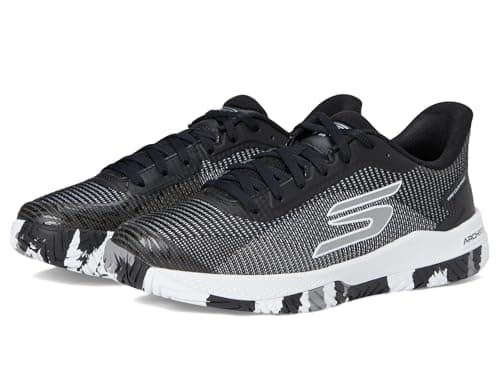 Skechers Viper Court Pro 2.0 (Women's) Best all-around women's court shoe | Best overall | — | |
| 2 | 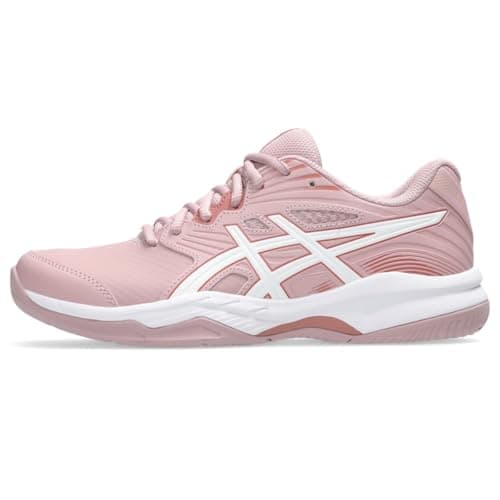 ASICS Gel-RENMA 2 (Women's) Best pickleball-specific women's shoe | Best cushioning and joint comfort | — | |
| 3 | 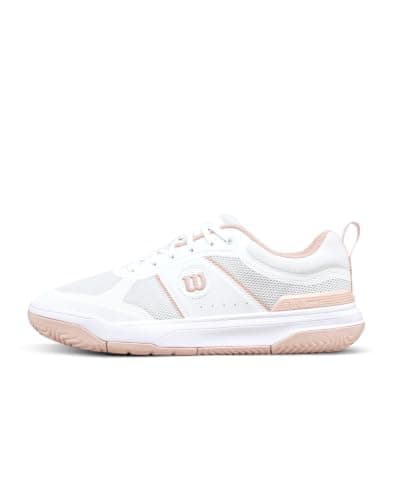 Wilson Pickle Pro (Women's) Best lightweight women's option | Best lightweight option | — | $109.99 · View on Amazon #adPrice as of October 23, 2026 |
| 4 | 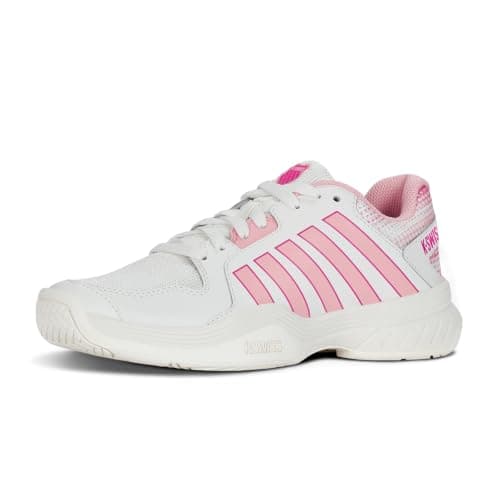 K-Swiss Court Express (Women's) Best value women's court shoe | Best value | — |
Tap any row to jump to the full write-up. Prices are pulled live from Amazon.
Skechers Viper Court Pro 2.0 (Women's)
The women's cut of our top overall pick — court-tuned support and cushioning in a women's-specific fit.
Same court-focused design as the men's Viper Court Pro 2.0 in a women's-specific last: lateral support for quick changes of direction, a non-marking outsole, and all-day cushioning. Our top overall women's court shoe.
Skechers went after pickleball specifically with the Viper Court line rather than adapting a tennis shoe, and the women's version pairs real lateral containment with the cushioning the brand is known for. It is the default recommendation for most women because it is good at everything and bad at nothing. The con is that it is neither the lightest nor the most cushioned shoe here — it wins on balance rather than on any single property.
- Spec 1
- Women's-specific fit
- Spec 2
- Lateral court support
- Spec 3
- Non-marking outsole
ASICS Gel-RENMA 2 (Women's)
ASICS built the Gel-RENMA for pickleball rather than adapting a tennis last — GEL cushioning with a court-tuned women's fit.
The Gel-RENMA 2 is one of the few shoes on this list designed around pickleball movement instead of borrowed from tennis. You get ASICS' GEL cushioning under the heel, a supportive women's-specific upper, and an outsole built for the short, sharp lateral steps the kitchen line demands.
The Gel-RENMA is one of the few major-brand shoes designed around pickleball footwork instead of borrowed from tennis, and ASICS' GEL rearfoot cushioning is the reason to buy it. If hard courts leave your knees, hips or lower back complaining the next day, this is the pick. The con is weight: cushioning has mass, and players who like to feel quick underfoot may find it more shoe than they want.
- Spec 1
- Pickleball-specific last
- Spec 2
- GEL rearfoot cushioning
- Spec 3
- Women's-specific fit
Wilson Pickle Pro (Women's)
Wilson's dedicated pickleball shoe — lighter underfoot than the cushioned options, with the stability of a real court sole.
The Pickle Pro is Wilson's purpose-built pickleball shoe, and it leans light and quick rather than heavily cushioned. If you dislike feeling like you are wearing a brick and you would rather feel the court, this is the women's pick — provided your joints are happy with less padding.
Wilson's Pickle Pro is a purpose-built pickleball shoe that leans light and quick rather than heavily padded, which suits players who dislike feeling like they are wearing bricks and want to feel the court underfoot. The con is the flip side of the same choice: less padding means hard courts transmit more, so this is the wrong shoe if joint comfort is why you are shopping.
- Spec 1
- Pickleball-specific design
- Spec 2
- Lightweight build
- Spec 3
- Non-marking court sole
K-Swiss Court Express (Women's)
K-Swiss court pedigree at the value end — the cheapest shoe here we would still call a proper court shoe.
K-Swiss has been making tennis-court shoes for decades, and the Court Express brings that lateral-support DNA in at a price well below the specialty pickleball models. Not the plushest ride on this page, but a genuine court shoe rather than a running shoe with a flat sole.
K-Swiss has been building tennis court shoes for decades, and the Court Express brings that lateral-support DNA in below the specialty pickleball models. It is the cheapest shoe here that we would still call a proper court shoe, which is the bar that matters. The con is that it is the least refined of the four — adequate cushioning rather than good, and a firmer ride than the ASICS.
- Spec 1
- Budget-friendly
- Spec 2
- Tennis-court lateral support
- Spec 3
- Durable outsole
Why a court shoe is different
Three structural differences separate a court shoe from a running shoe, and all three matter more in pickleball than in most racquet sports because the court is small and the movements are short, sharp and constant.
Lateral containment. A court shoe has a reinforced upper and a wider, flatter platform that stops your foot sliding off the footbed when you push hard sideways. A running shoe has a soft, narrow upper designed to flex forwards. When you lunge for a wide dink in runners, your foot moves inside the shoe before the shoe moves — and that is the moment ankles roll.
A flat, grippy, non-marking outsole. Running shoes have thick, curved heels that raise your center of gravity and can catch on a hard stop. Court outsoles are flatter, denser and formulated for the abrasive surfaces courts are built from. Non-marking matters practically: many indoor venues require it.
Durability where the wear is. Court play grinds the medial forefoot and the toe drag area. Court shoes reinforce those zones; running shoes do not, which is why runners used on court develop holes in odd places within a couple of months.
What "women's" actually means here
Women's court shoes are not simply smaller men's shoes with a different colorway, though some cheap models effectively are. A genuine women's last is built on a narrower heel relative to forefoot width, a different instep volume and, on better models, a midsole tuned for a different average load. All four shoes here are sold as women's models rather than unisex.
That said, fit is individual, and the honest advice is that a men's or unisex shoe that fits your foot is better than a women's shoe that does not. If you have a wider forefoot, trying the equivalent men's model half a size down is a legitimate move and one plenty of players make. Our men's court shoe picks cover those models.
How we picked
Every shoe here had to be a genuine court shoe — reinforced lateral upper, flat non-marking court outsole — and had to be sold as a women's model with a real first-party Amazon listing. We deliberately kept the list to four, one per clear use case, rather than padding it with near-duplicates.
We rank on published construction features and the consistent reviewer record, not on lab testing. We do not claim to have worn these, and we do not publish invented durability figures or step counts. What we can do honestly is tell you what each shoe is built to prioritize and what it therefore gives up. The full approach is on our methodology page.
The trade that decides your pick: cushioning versus court feel
Once a shoe has adequate lateral support — and all four here do — the remaining decision is almost entirely about how much material sits between your foot and the court.
More cushioning means less shock through the joints over a three-hour session, which matters enormously if you play on concrete, play often, or already have knees that complain. It costs you weight and a small amount of stability, because a taller stack is marginally less connected to the ground.
Less cushioning means a lighter, quicker shoe with more feedback from the surface, which some players find genuinely improves their footwork because they can feel exactly where their weight is. It costs you shock absorption, and hard courts are unforgiving.
The ASICS sits at the cushioned end, the Wilson at the light end, and the Skechers and K-Swiss in between. There is no correct answer — but there is a correct answer for you, and it usually depends on how your body feels the morning after a long session.
Who should buy which
- You want one shoe that does everything well: the Skechers Viper Court Pro 2.0.
- Your joints feel it the next day: the ASICS Gel-RENMA 2. Cushioning is the reason it exists.
- You hate feeling weighed down: the Wilson Pickle Pro.
- You want a proper court shoe for the least money: the K-Swiss Court Express.
Fit, sizing and the listing problem
Court shoes on Amazon list per size and color, which means the specific listing our buy button points at is one variant of the model. If your size is not available there, the link falls back to a tagged search for the model itself — you will land on the right shoe either way.
Three sizing notes worth knowing. Court shoes generally fit closer than running shoes by design, because a sloppy fit defeats the lateral support; do not size up out of habit. Your toes should not touch the front on a hard stop — that is how you lose toenails, and it is the most common complaint from players who bought their usual running size. And if you wear orthotics, check whether the insole is removable before buying, as court shoe footbeds vary more than running shoe footbeds do.
When to replace them
Court shoes usually fail in the outsole long before the upper looks worn, and the failure is gradual enough that most players miss it. The practical checks: look at the outsole tread under the ball of the foot and the medial forefoot — if the pattern has gone smooth, the grip that stops your slide has gone with it. Press the midsole with your thumb; if it feels compressed and dead compared with a new pair, the cushioning has collapsed even though the shoe looks fine.
Playing several times a week on outdoor courts wears shoes considerably faster than indoor play, because outdoor surfaces are abrasive by design. It is worth noticing that the same abrasion is what wears your paddle face — our grit and durability guide covers that side of it.
The rest of the kit
Shoes are the highest-return purchase, but they are one part of a kit that also decides how much you enjoy playing. A ball that flies true makes practice worth doing — our pickleball ball picks cover the outdoor standards. A bag that carries paddles, shoes and a water bottle without being a nuisance is worth more than it costs — see our bag picks. And a grip that suits your hand does more for how a paddle feels than almost any other change; our grips and overgrips page covers it, and our grip size guide explains how to work out what you need.
If the paddle itself is next on your list, start with how to choose a pickleball paddle rather than a roundup — the shape and core decisions matter more than the brand, and getting them wrong is expensive.
The bottom line
The Skechers Viper Court Pro 2.0 is the shoe we would hand most women without further questions: purpose-built for the sport, well cushioned without being heavy, and properly supportive through a lateral cut. Take the ASICS Gel-RENMA 2 if joint comfort is the priority, the Wilson Pickle Pro if you want to feel quick, and the K-Swiss Court Express if the budget is the binding constraint.
Whichever you choose, choose one. Playing pickleball in running shoes is the most common avoidable mistake in the sport, and no paddle in our spin roundup or power roundup will do as much for your results as being able to push off sideways without your foot moving inside the shoe.
While you are here: the paddle
Shoes are the half of the kit that decides whether you are in position. The other half is the handle in your hand, and the same honesty applies — there is no governed category of women's paddle, only published grip circumference and weight. Our best pickleball paddles for women page ranks on exactly those two specs.
Do I really need pickleball-specific shoes?
You need court shoes; whether they are marketed for pickleball or tennis matters much less. What matters is a reinforced lateral upper that stops your foot sliding off the footbed on side-to-side pushes, and a flat non-marking court outsole. Running shoes have neither, which is why they are the most common cause of avoidable ankle injuries in the sport.
Can women wear men's pickleball shoes?
Yes, and plenty do — a men's or unisex shoe that fits your foot is better than a women's shoe that does not. Women's lasts are typically built with a narrower heel relative to forefoot width and a different instep volume, which suits many but not all feet. If you have a wider forefoot, trying the men's equivalent around half a size down is a legitimate approach.
Are tennis shoes okay for pickleball?
Generally yes. Tennis shoes are court shoes and share the lateral support and outsole design that matter. The differences are marginal: pickleball involves more short, sharp direction changes in a smaller area and slightly less sustained sprinting, so some pickleball-specific models tune for quicker lateral pickup. A good tennis shoe beats a mediocre pickleball shoe.
How often should I replace pickleball shoes?
Judge by the shoe rather than by a date. Check whether the outsole tread under the ball of the foot has gone smooth — that is your grip gone — and press the midsole to see whether it has compressed and lost its bounce. Outdoor courts are abrasive and wear shoes considerably faster than indoor play does.