Best Pickleball Grips & Overgrips
The cheapest change you can make to a paddle, and the one most players never make. A grip that suits your hand alters how a paddle feels more than a hundred dollars of upgrade does.
Disclosure: Drive Dink earns a commission from qualifying Amazon purchases at no extra cost to you. We accept no free products and no paid placements — commissions never change our picks. How this works.
A grip costs a fraction of what a paddle costs and changes more about how the paddle feels in your hand than any spec on the box. It decides how hard you have to squeeze, how much the handle turns on off-center contact, how much vibration reaches your forearm, and whether your hand is still holding on at the end of a long hot session.
Units we claim to have tested: 0. We rank on manufacturer-published construction and the consistent reviewer record, and we tell you what each option gives up. Prices move; the live Amazon price above is the only one to trust.
| # | Paddle | Best for | Score | Price |
|---|---|---|---|---|
| 1 | 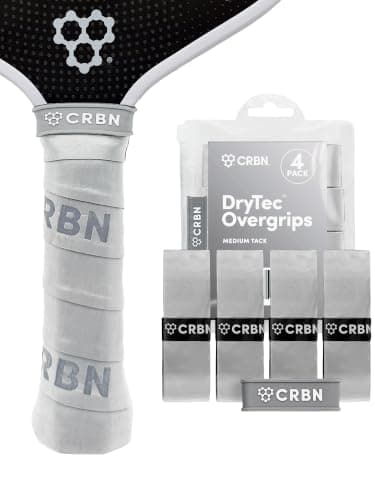 CRBN Drytec Overgrip (4-Pack) Best overgrip for sweaty hands | Best for sweaty hands | — | $12.99 · View on Amazon #adPrice as of October 24, 2026 |
| 2 | 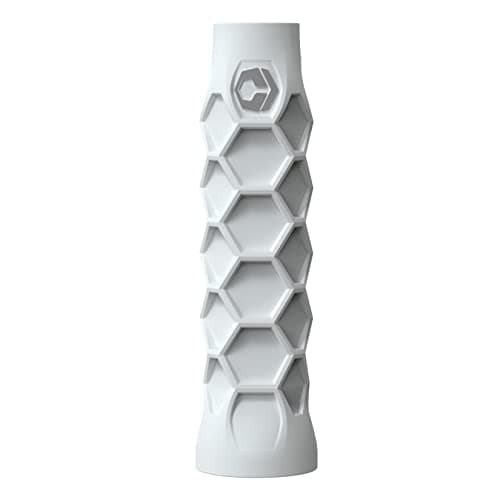 Hesacore Pickleball Paddle Grip Best for arm and elbow comfort | Best for arm and elbow comfort | — | $26.90 · View on Amazon #adPrice as of October 24, 2026 |
| 3 | 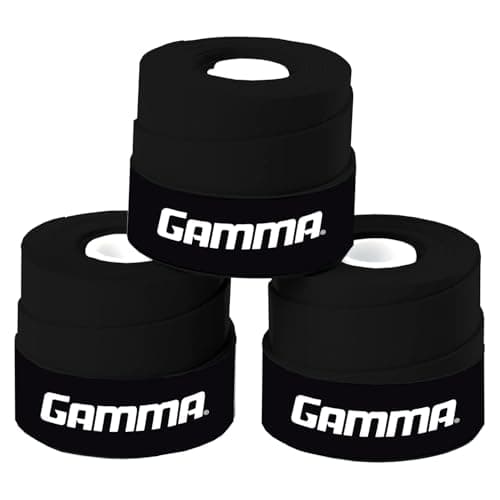 GAMMA Supreme Overgrip (3-Pack) Best value overgrip | Best value | — | $7.99 · View on Amazon #adPrice as of October 24, 2026 |
| 4 | 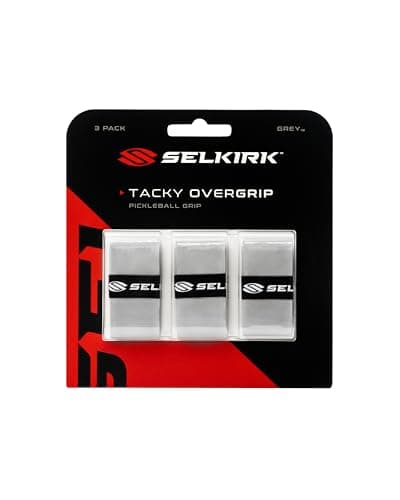 Selkirk Non-Slip Pickleball Grip Tape (3-Pack) Best tacky grip from a paddle brand | Best tacky grip | — |
Tap any row to jump to the full write-up. Prices are pulled live from Amazon.
CRBN Drytec Overgrip (4-Pack)
A dry-feel overgrip from a paddle brand that understands pickleball hands — the pick when tacky grips turn to soap.
Overgrips split into tacky and dry. Drytec is firmly in the dry camp: a slightly absorbent, chalky-feeling surface that keeps working when your hand is wet, rather than one that feels glued to your palm for the first twenty minutes and slick after that. A four-pack lasts most players a season.
Dry-feel overgrips work by absorbing moisture rather than sticking to it, and that is the right mechanism if your hands sweat enough that tacky grips turn slick halfway through a session. Drytec comes from a paddle brand that understands the problem, and a four-pack lasts most players a season. The con is that it never feels glued to your palm the way a fresh tacky grip does — if you like that sensation, you will find this one underwhelming.
- Spec 1
- Dry / absorbent feel
- Spec 2
- 4-pack
- Spec 3
- Fits any paddle handle
Hesacore Pickleball Paddle Grip
A structured hexagonal replacement grip designed to spread load across the palm and cut vibration into the arm.
Hesacore is not an overgrip — it is a replacement grip with a raised hexagonal pattern that changes how the handle loads your hand. The manufacturer's pitch is reduced vibration, better grip strength and support for players managing tennis elbow. It is the most expensive grip here and the most polarizing: people who like it will not go back.
This is a replacement grip rather than an overgrip, with a raised hexagonal pattern that spreads load across the palm and is marketed by the manufacturer for reducing vibration and supporting players managing tennis elbow. Players who get on with it rarely go back. The cons are real: it is by some distance the most expensive grip here, it changes handle shape noticeably, and it is genuinely polarizing.
- Spec 1
- Replacement grip (not an overgrip)
- Spec 2
- Hexagonal load-spreading pattern
- Spec 3
- Manufacturer-marketed for elbow comfort
GAMMA Supreme Overgrip (3-Pack)
The racquet-sport default. Cheap, thin, tacky, and available everywhere — the sensible first thing to try.
GAMMA Supreme has been a staple in tennis and racquetball bags for years and translates straight across to pickleball. It is thin, mildly tacky and inexpensive enough that you can rewrap whenever it stops feeling fresh, which is the honest way to use an overgrip.
GAMMA Supreme has been a staple in tennis and racquetball bags for years and translates straight across: thin, mildly tacky, and cheap enough that you can rewrap whenever it stops feeling fresh — which is the honest way to use an overgrip. The con is that thin means minimal build-up, so if you are using overgrips to increase handle circumference, you will need several wraps to get there.
- Spec 1
- Tacky feel
- Spec 2
- Thin — minimal handle build-up
- Spec 3
- 3-pack
Selkirk Non-Slip Pickleball Grip Tape (3-Pack)
Selkirk's own tacky wrap — a grippier, stickier feel than the dry options, at the lowest price on this page.
If you want the handle to feel like it is holding onto you rather than the other way round, a tacky wrap is what you want, and Selkirk's is both cheap and made by a company that builds paddles. The trade-off is universal to tacky grips: they feel best fresh and lose their bite faster than dry grips in hot, humid play.
If you want the handle to hold onto you rather than the other way round, a tacky wrap is what you want, and Selkirk's is the cheapest on this page while coming from a company that actually builds paddles. The con is universal to tacky grips rather than specific to this one: they feel best fresh and lose their bite faster than dry grips, particularly in hot or humid play.
- Spec 1
- Tacky non-slip finish
- Spec 2
- 3-pack
- Spec 3
- Paddle-brand made
Overgrip or replacement grip? They are different products
This trips up more buyers than anything else in the category, so it goes first.
A replacement grip is the base layer. It is thicker, goes directly onto the bare handle, and is what your paddle shipped with. You replace it rarely — when it is genuinely worn out, or when you want to change the fundamental feel or thickness of the handle. The Hesacore is a replacement grip.
An overgrip is a thin wrap that goes on top of the existing grip. It is cheap, consumable, adds a small amount of circumference, and is designed to be changed regularly — every few weeks for a frequent player. The CRBN, GAMMA and Selkirk products here are overgrips.
Most players should be running an overgrip over the factory grip and replacing it when it stops feeling fresh. Only change the replacement grip when the base layer itself has gone hard, slippery or compressed.
Tacky versus dry: the actual decision
Every overgrip sits somewhere on a spectrum between two mechanisms, and choosing the wrong one is why people conclude that overgrips do not work for them.
Tacky grips use a slightly adhesive surface so the grip holds your hand. They feel excellent fresh — secure, connected, almost sticky — and they let you hold the paddle more loosely, which is good for the arm. Their weakness is moisture: once a tacky surface gets wet, the tack turns to slick, and in hot or humid conditions that can happen quickly.
Dry grips use a slightly absorbent, chalky-feeling surface that soaks up moisture rather than fighting it. They never feel as connected as a fresh tacky grip, but they keep working consistently through a sweaty session, which is exactly what a heavy-sweating player needs.
The rule of thumb: if your hands stay dry, buy tacky and enjoy it. If your hands sweat, buy dry and stop fighting the problem. If you are unsure, a cheap three-pack of each costs less than a set of balls and settles it in two sessions.
Grip size is the part that actually matters
Before choosing a texture, it is worth checking whether your handle is the right circumference, because that decision outranks everything else in this category.
A grip that is too small forces you to squeeze harder to stop the paddle turning in your hand. A permanently tense forearm is tiring and is one of the conditions associated with aggravating tennis elbow. A grip that is too large restricts wrist movement, which costs you spin — the brushing motion that puts rotation on the ball needs a free wrist.
Most paddles ship on the thin side, which means adding an overgrip or two is the single most common and most useful adjustment players make. Our grip size guide covers how to work out what you need and how much circumference each wrap adds.
This matters doubly if you hit a two-handed backhand, where two hands have to share one handle — our paddles for a two-handed backhand page covers the interaction.
How we picked
Four picks, each covering a distinct problem: sweaty hands, arm comfort, value, and tacky feel. Every product had to be a real, currently-listed item with a first-party Amazon listing, and we prioritized products from brands with an identifiable presence in the sport over generic unbranded wraps, of which there are hundreds.
We do not claim to have worn these through a season, and we will not publish invented longevity figures. What we can say honestly is what each product is built to do and what it costs you. Our full approach is on the methodology page.
Who should buy which
- Your hands sweat and grips go slick: the CRBN Drytec four-pack.
- Your arm or elbow is the problem: the Hesacore replacement grip — and read our paddles for tennis elbow page, because the paddle and the grip both matter.
- You just want a fresh wrap and do not want to think about it: the GAMMA Supreme three-pack.
- You want maximum tack and minimum spend: the Selkirk non-slip grip tape.
- You want to build up a thin handle: any of the overgrips, applied in two or three wraps — check our grip size guide first.
Wrapping a grip properly
A badly applied overgrip feels worse than no overgrip, and the mistakes are consistent.
Start at the butt, not the throat. Wrapping upward from the bottom means each layer overlaps in the direction your hand slides, so the edges do not peel. Wrapping downward guarantees a lifted edge within a week.
Keep tension even and overlap consistently. Roughly a sixteenth of an inch of overlap per turn is the usual guidance; more overlap means a thicker, softer handle, less means a thinner, firmer one. Uneven tension produces lumps you will feel on every shot.
Finish with the tape provided, not electrical tape. The finishing tape in the pack is designed to sit flush. Electrical tape creates a hard ridge exactly where your index finger sits.
Replace it before it is obviously dead. Grips degrade gradually, so most players are running a grip well past its useful life without noticing. If you cannot remember when you last changed it, it is time.
What to avoid
Cheap unbranded bulk wraps. The category is flooded with twenty-packs at prices that make no sense, and the common failure is a grip that peels or turns to plastic in the sun. A three or four-pack from a brand with a reputation to protect costs a couple of dollars more.
Over-building the handle without checking spin. Adding four wraps to fix a slippery grip also adds circumference, which restricts the wrist. If your rolls stop dipping after a grip change, the handle got too fat — our how paddle spin works guide explains why wrist freedom matters for brushed contact.
Treating a grip as a fix for a worn-out paddle. If the face has polished smooth or the core feels dead, a new grip changes nothing that matters. Our guide to when a paddle is done covers the difference.
The bottom line
Buy a multi-pack of whichever texture matches your hands, wrap it properly, and replace it more often than you think you need to. If your hands sweat, that is the CRBN Drytec; if they do not, the Selkirk tacky tape or the GAMMA Supreme. If your arm is the problem rather than your hand, the Hesacore is the one product here that is genuinely trying to solve something different.
Then check the circumference. Most paddles ship thin, most players never adjust it, and it is the cheapest meaningful change available. After that, the next-cheapest way to change how a paddle plays is weight — our paddle weights and tuning tape page covers it, and together the two cost less than a set of balls and a coffee.
Buying the grip is the easy half. Our how to replace a pickleball paddle grip guide covers the wrap itself — direction, tension and overlap — and what each layer does to your grip circumference and swing weight.
What is the difference between an overgrip and a replacement grip?
A replacement grip is the thicker base layer that goes directly onto the bare handle — it is what your paddle shipped with, and you change it rarely. An overgrip is a thin consumable wrap that goes on top, adds a little circumference, and is designed to be replaced every few weeks. Most players should be running an overgrip over the factory grip.
Should I use a tacky or a dry pickleball overgrip?
If your hands stay dry, tacky feels better — it holds your hand and lets you grip more loosely, which is easier on the arm. If your hands sweat, dry is the right choice: an absorbent surface keeps working through a hot session, whereas a tacky surface turns slick once it gets wet.
Does grip size affect spin?
Yes. A grip that is too large restricts wrist movement, and the brushing motion that puts rotation on the ball needs a free wrist. A grip that is too small makes you squeeze harder to stop the paddle turning, which tires the forearm. Most paddles ship on the thin side, so one or two overgrips is a common and useful adjustment.
How often should I change my overgrip?
More often than most players do. Grips degrade gradually rather than suddenly, so it is easy to run one well past its useful life without noticing. A rough rule: if you cannot remember when you last changed it, change it. A frequent player will get through a multi-pack over a season.