How to Replace a Pickleball Paddle Grip
Five minutes, a few dollars, and it changes more about how the paddle feels than most upgrades costing fifty times as much. Here is the difference between the two kinds of grip, and how to wrap either one properly.
Disclosure: Drive Dink earns a commission from qualifying Amazon purchases at no extra cost to you. We accept no free products and no paid placements — commissions never change our picks. How this works.
The job takes five minutes and the first decision is the only one that matters: overgrip or replacement grip. An overgrip is a thin wrap that goes over the grip your paddle came with. It is what almost everybody wants — cheap, reversible, a minute to fit, and it adds only a fraction to the handle thickness. A replacement grip is thicker and goes instead ofthe factory grip, which means stripping the handle first. You want that one only if the factory grip is genuinely destroyed, or if you are deliberately changing the handle's shape or size.
For most readers the answer is an overgrip, and the one to start with is the GAMMA Supreme. If your hands sweat, the CRBN Drytec; if you want maximum tack, the Selkirk wrap; if your arm is the problem rather than your hand, the Hesacore replacement grip.
What to look for — and when a grip is actually finished
Tacky or dry, which is a sweat question. Tacky grips feel locked in when fresh and go slick once your hand is wet. Dry grips feel chalky and slightly absorbent, never feel as glued, and keep working in heat and humidity. If your paddle rotates in your hand in the second hour of play, you want dry; if it rotates on a hard drive in cool conditions, you want tacky.
Thickness, because it is secretly a grip-size decision. Each layer you add increases the circumference of the handle. That is a feature if your paddle's grip is too small for your hand and a problem if it already fits — and grip size affects both wrist mobility and how much you have to squeeze. Our grip size guide covers how to measure your hand and what the number should be, which is worth reading before you add a second layer.
Replace it on feel, not on a schedule. There are three signals, and none of them is how it looks: the surface has gone shiny or slick; the wrap has visibly compressed and flattened where your fingers sit; or you notice yourself gripping harder than you used to. That last one is the most important and the easiest to miss, because the compensation happens gradually. A tight forearm is a slow forearm — see our paddles for hand speed page for why that costs you at the net.
The four grips below are the ones we cover, with live Amazon prices. Our best pickleball grips page ranks the full field.
GAMMA Supreme Overgrip (3-Pack)
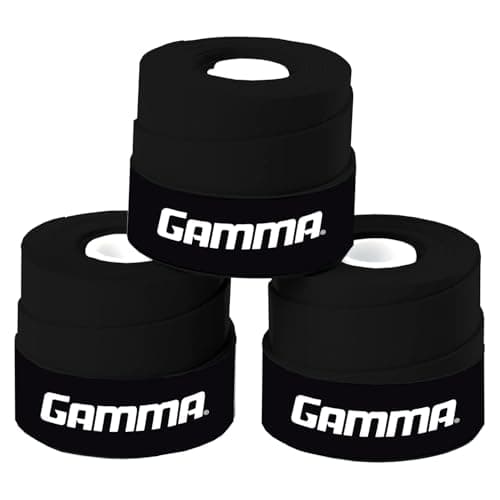
The racquet-sport default. Cheap, thin, tacky, and available everywhere — the sensible first thing to try.
GAMMA Supreme has been a staple in tennis and racquetball bags for years and translates straight across to pickleball. It is thin, mildly tacky and inexpensive enough that you can rewrap whenever it stops feeling fresh, which is the honest way to use an overgrip.
If the section above has you reaching for an overgrip rather than a replacement grip, this is the sensible first thing to try. GAMMA Supreme has been a staple in tennis and racquetball bags for years and translates straight across: thin, mildly tacky and cheap enough that you can rewrap whenever it stops feeling fresh, which is the honest way to use an overgrip. Thin matters here - it adds the least to your handle circumference of anything on this page, so it changes the feel without changing your grip size. The cons are universal to tacky wraps: it feels best on day one and loses bite faster than a dry grip in hot, humid play, so budget on rewrapping rather than on durability.
- Spec 1
- Tacky feel
- Spec 2
- Thin — minimal handle build-up
- Spec 3
- 3-pack
CRBN Drytec Overgrip (4-Pack)
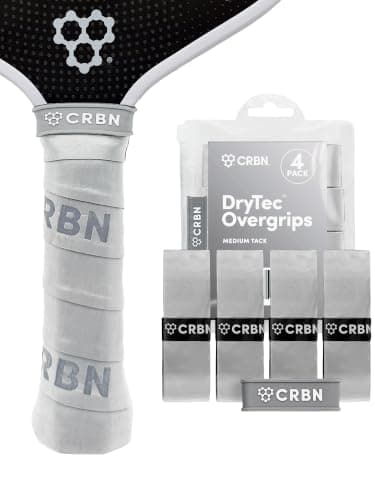
A dry-feel overgrip from a paddle brand that understands pickleball hands — the pick when tacky grips turn to soap.
Overgrips split into tacky and dry. Drytec is firmly in the dry camp: a slightly absorbent, chalky-feeling surface that keeps working when your hand is wet, rather than one that feels glued to your palm for the first twenty minutes and slick after that. A four-pack lasts most players a season.
The pick if the reason you are reading this page is that your paddle turns in your hand mid-rally. Overgrips split into tacky and dry, and Drytec is firmly in the dry camp - a slightly absorbent, chalky-feeling surface that keeps working when your hand is wet rather than one that feels glued to your palm for twenty minutes and slick afterwards. That matters for more than comfort: a slipping handle makes you squeeze, and a tight forearm is a slow forearm, which costs you hand speed at the kitchen. A four-pack lasts most players a season. The cons are that a dry grip never feels as locked-in as a fresh tacky wrap, and it costs more per wrap than the GAMMA.
- Spec 1
- Dry / absorbent feel
- Spec 2
- 4-pack
- Spec 3
- Fits any paddle handle
Selkirk Non-Slip Pickleball Grip Tape (3-Pack)
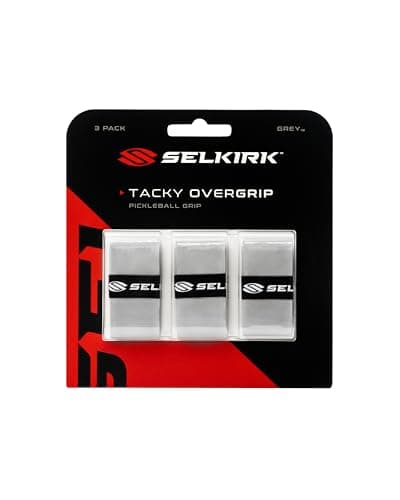
Selkirk's own tacky wrap — a grippier, stickier feel than the dry options, at the lowest price on this page.
If you want the handle to feel like it is holding onto you rather than the other way round, a tacky wrap is what you want, and Selkirk's is both cheap and made by a company that builds paddles. The trade-off is universal to tacky grips: they feel best fresh and lose their bite faster than dry grips in hot, humid play.
For players who want the handle to feel like it is holding onto them rather than the other way round. Selkirk's non-slip wrap is the grippiest, stickiest option here and the cheapest per wrap, made by a company that builds paddles rather than a generic accessories brand. It is the right choice if you play in dry conditions or indoors, where a tacky surface stays tacky, and if your complaint is the paddle rotating on a hard drive rather than sliding when wet. It comes as a three-pack. The cons are the trade every tacky grip makes - peak feel is fresh and the bite fades faster in heat and humidity than a dry grip's absorbency does.
- Spec 1
- Tacky non-slip finish
- Spec 2
- 3-pack
- Spec 3
- Paddle-brand made
Hesacore Pickleball Paddle Grip
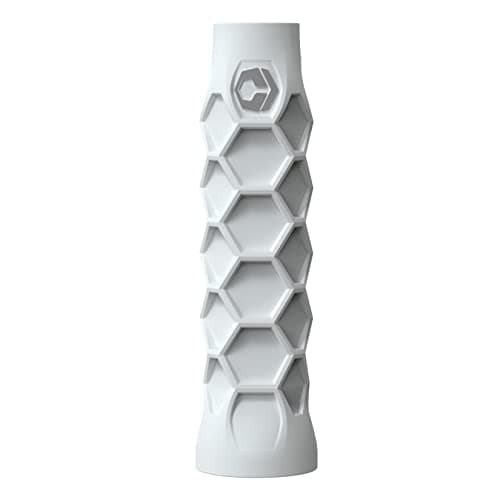
A structured hexagonal replacement grip designed to spread load across the palm and cut vibration into the arm.
Hesacore is not an overgrip — it is a replacement grip with a raised hexagonal pattern that changes how the handle loads your hand. The manufacturer's pitch is reduced vibration, better grip strength and support for players managing tennis elbow. It is the most expensive grip here and the most polarizing: people who like it will not go back.
The one product on this page that is not an overgrip, and the one to consider if your issue is your arm rather than your hand. Hesacore is a replacement grip with a raised hexagonal pattern that changes how the handle loads your palm - the manufacturer's pitch is reduced vibration, better grip strength and support for players managing tennis elbow. Because it is a replacement grip it goes on in place of the factory grip rather than over it, so fitting it means stripping the handle first (the method below covers that). It is the most expensive grip here and the most polarising: the people who like it do not go back. The cons are that it builds the handle up noticeably, which is a grip-size decision, and that the hexagonal feel is genuinely not for everyone - there is no half-measure.
- Spec 1
- Replacement grip (not an overgrip)
- Spec 2
- Hexagonal load-spreading pattern
- Spec 3
- Manufacturer-marketed for elbow comfort
Overgrip against replacement grip
| Overgrip | Replacement grip | |
|---|---|---|
| Goes | Over the factory grip | Instead of the factory grip |
| Thickness | Thin — minimal build-up per layer | Thicker — a deliberate size change |
| Fitting time | About a minute, no tools | Five minutes; the old grip has to come off |
| Reversible | Yes — unwrap and you are back to stock | No — the factory grip is gone |
| Cost per wrap | Low; sold in multi-packs | Higher; usually sold singly |
| Buy it when | The surface is slick, or you want a different feel, or the handle is slightly too thin | The factory grip is destroyed, or you want a structural change like a hexagonal profile |
How to wrap an overgrip, step by step
You need the grip and the small piece of finishing tape that comes with it. Nothing else.
- Start at the butt end, not the face end. Peel the backing from the tacky starter strip if there is one, and line the tapered corner of the grip up with the bottom edge of the handle. Wrapping from the bottom upward is what makes the overlaps face away from your hand as it slides down the handle — wrap the other way and the edges catch and lift.
- Keep it taut, all the way. Pull firm tension as you go round. A loose wrap feels soft for one session and then bunches. Taut does not mean stretched to failure — you want constant tension, not maximum tension.
- Overlap each turn by about an eighth of an inch. Less and you get bare patches as it settles; much more and the handle builds up faster than you intended and you run out of grip before you reach the top.
- Follow the handle, do not fight it. On a paddle with a flared butt, the first turn or two will want to spiral unevenly. Let the tension do the work and keep the angle shallow.
- Finish below the paddle face — leave a small gap rather than running the wrap up onto the throat, cut the excess at an angle so the last turn lies flat, and secure it with the finishing tape.
- Hold it, dry. Pick the paddle up and take your normal grip before you play. If a ridge sits under a finger, unwrap and redo it — it takes a minute and a ridge becomes a blister.
For a replacement grip, add one step at the front: unwrap or peel the factory grip off, pull any remaining adhesive or staple-mounted starter tape off the handle, and wipe the bare handle clean. Then wrap exactly as above, tacky side out. Keep the old grip until the new one feels right.
What a new grip quietly changes
Grip circumference.Every layer adds a little. If your paddle's handle already fits, one overgrip is fine and two is a decision; if the handle has always felt thin, a layer or two is the cheapest fix in the sport. Our grip size guide covers how to work out what you actually need.
Swing weight, slightly, and in the useful direction. Mass added at the handle is mass close to your wrist, which lowers how heavy the paddle feels to swing while raising what a scale reads. That is the same principle lead tape exploits from the other end, and our swing weight and twist weight guide explains why the two numbers move independently. If you have been meaning to counterweight a head-heavy paddle, a fresh grip plus a couple of grams of tungsten tape under it is the tidiest way to do it.
Handle length, effectively. A wrap that runs too far up the throat shortens the usable handle, which matters if you hit a two-handed backhand — see our handle length guide and the two-handed backhand picks. Finish below the face.
How often to rewrap
There is no honest schedule, because it depends entirely on how much you sweat, how often you play and whether you leave the paddle in a hot car. What is reliable is the test: hold the paddle with a dry hand and try to twist it. If it turns with less resistance than you remember, rewrap. Overgrips are sold in three- and four-packs precisely because the answer for a regular player is "several times a season," and at a few dollars a wrap it is the cheapest maintenance in the sport.
Two habits that extend grip life meaningfully: do not store the paddle in a car (heat destroys adhesives and softens tacky surfaces), and let the handle dry before zipping it into a bag. Our paddle care guide covers the rest of the routine, including the face — which is a consumable too, as our grit durability guide explains.
If the real problem is your arm
A grip change is worth trying before you buy a different paddle, and it is sometimes the whole answer. A slick handle makes you squeeze; a clenched forearm transmits more shock into the elbow; and the elbow is where people notice it. A fresh dry grip, or a structured replacement grip that spreads load across the palm, addresses the cause rather than the symptom.
If it does not help, the paddle is the next variable: core thickness and construction change how much shock reaches your arm far more than a grip does. Our paddles for tennis elbow page ranks the field on exactly that, and 14mm vs 16mm explains why a thicker core damps more. None of this is medical advice — if it hurts after a week off, see someone qualified.
The bottom line
Replacing a grip is the highest-return five minutes in pickleball maintenance. Pick an overgrip unless the factory grip is destroyed or you want a structural change. Pick dry if your hands sweat and tacky if they do not. Wrap from the butt end upward with firm, constant tension and about an eighth of an inch of overlap, finish below the face, and hold it before you play. Then watch for the signal that it is time to do it again — not how the grip looks, but whether you have started squeezing.
How do you replace a pickleball paddle grip?
Start at the butt end of the handle with the tapered corner lined up to the bottom edge, wrap upward under firm constant tension with about an eighth of an inch of overlap per turn, finish just below the paddle face, cut the excess at an angle and secure it with the finishing tape supplied. Wrapping bottom-to-top is what keeps the overlapping edges from catching on your hand. For a replacement grip, strip the old grip and wipe the handle clean first.
What is the difference between an overgrip and a replacement grip?
An overgrip is thin and goes over the grip the paddle came with — cheap, reversible and about a minute to fit. A replacement grip is thicker and goes instead of the factory grip, so the old one has to come off. Most players want an overgrip; choose a replacement grip only if the factory grip is destroyed or you want a structural change such as a hexagonal profile.
How often should you change a pickleball paddle grip?
There is no honest schedule — it depends on how much you sweat, how often you play and whether the paddle lives in a hot car. Use the test instead: hold the paddle with a dry hand and try to twist it, and rewrap when it turns more easily than you remember. The other signal is noticing that you have started gripping harder than you used to.
Does adding an overgrip change your grip size?
Yes, by a small amount per layer, and that is worth thinking about. If the handle already fits your hand, one overgrip is fine and two is a deliberate decision; if the handle has always felt too thin, a layer or two is the cheapest fix available. Grip circumference affects both wrist mobility and how hard you have to squeeze.
Should I use a tacky or a dry grip?
A sweat question. Tacky grips feel locked in when fresh and turn slick once your hand is wet, which suits cool or indoor conditions. Dry grips feel chalky and slightly absorbent, never feel as glued, and keep working in heat and humidity. If your paddle rotates in the second hour of play, buy dry.