Best Pickleball Paddles for Hand Speed
Losing hands battles at the kitchen is a paddle problem more often than a reflex problem. Three published numbers tell you which frames are quick — and none of them is the one on the box.
Disclosure: Drive Dink earns a commission from qualifying Amazon purchases at no extra cost to you. We accept no free products and no paid placements — commissions never change our picks. How this works.
If you want one answer: the JOOLA Collin Johns Scorpeus Pro IV 16mm is the paddle to buy for hand speed, because a standard outline on a flagship build is the only way to get quicker without giving up spin, power or forgiveness. It is for the doubles player who keeps losing the second and third ball of a kitchen exchange. If flagship money is not the plan, the Vatic Pro Prism V7 16mm makes the same geometry argument from the value tier; if you want the lowest published weight on the page, the JOOLA Hyperion Pro IV 14mm.
Units we claim to have tested: 0. Picks are ranked on manufacturer-published dimensions and weights, on independent measured swing weights where they exist, and on our editorial scores compiled from those specs and the consistent reviewer record. Live Amazon prices render on every card below.
| # | Paddle | Best for | Score | Price |
|---|---|---|---|---|
| 1 | 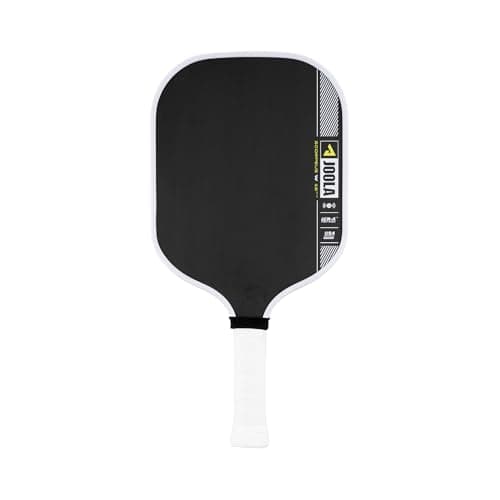 JOOLA Collin Johns Scorpeus Pro IV 16mm Standard-shape all-court control + spin | Best for hand speed overall | 8.0 | |
| 2 | 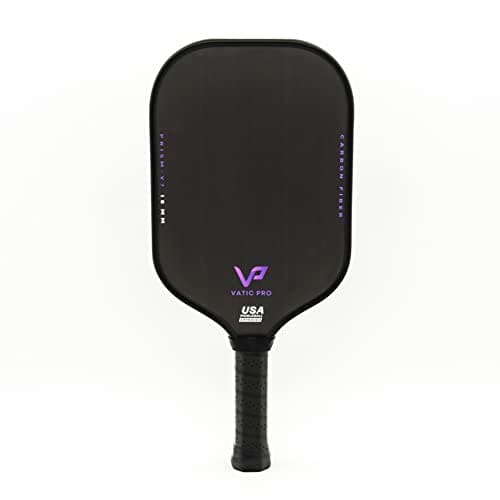 Vatic Pro Prism V7 16mm Value control in a standard shape | Best value standard shape | 7.8 | $99.99 · View on Amazon #adPrice as of October 5, 2026 |
| 3 | 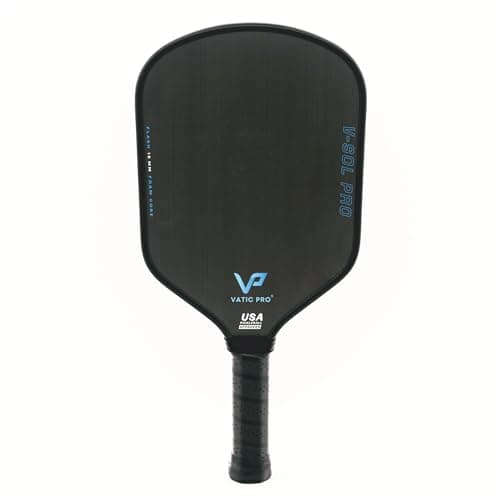 Vatic Pro V-Sol Pro Flash 16mm The foam core in a shorter, faster hybrid outline | Best hybrid compromise | 8.3 | $109.99 · View on Amazon #adPrice as of October 5, 2026 |
| 4 | 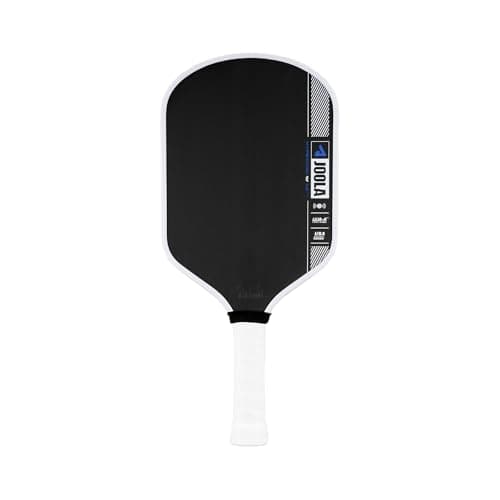 JOOLA Ben Johns Hyperion Pro IV 14mm The quickest Pro IV JOOLA sells | Lightest listed paddle we cover | 7.5 | $149.95 · View on Amazon #adPrice as of October 5, 2026 |
| 5 | 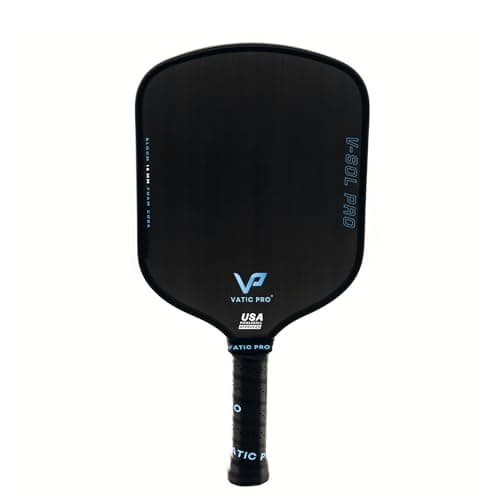 Vatic Pro V-Sol Pro Bloom 16mm Maximum face width and margin on mishits | Best for quick hands with margin | 8.5 | $109.99 · View on Amazon #adPrice as of October 5, 2026 |
Tap any row to jump to the full write-up. Prices are pulled live from Amazon.
JOOLA Collin Johns Scorpeus Pro IV 16mm
The standard-shape Perseus. A more balanced, control-leaning face for players who don't get on with elongated handles.
Same Gen-4 tech as the Perseus in a standard shape, which brings the sweet spot lower and wider and makes hands battles easier to win. If you want JOOLA's power tech but prefer an all-court, control-first feel, this is the one.
The quickest flagship we cover, and the only one that gives up nothing else to be quick. The Scorpeus is JOOLA's Pro IV build in a standard outline rather than the Perseus hybrid, which pulls mass down out of the head and puts the sweet spot lower and closer to your hand - the two things that decide whether you win a fast exchange. Our scores are an 8 on every axis, the most even spread we publish, so choosing it costs you no spin and only a little drive. It is the paddle to buy if you play doubles, live at the kitchen line, and keep getting beaten to the second ball. The cons are flagship money for a paddle that leads no single category, and less reach on a stretch volley than the elongated frames further down.
- Core
- 16 mm
- Shape
- Standard
- Face
- Charged carbon-fiber surface
- Weight
- ~8.0 oz
- Build
- Thermoformed
- Gen
- Pro IV (Gen 4)
Manufacturer-listed as USA Pickleball approved. Approvals and delistings change — verify against the current USAP equipment list before tournament play (checked 2026-07).
Vatic Pro Prism V7 16mm
The standard-shape Prism: the same value-carbon face in a more control-friendly, maneuverable body.
The V7 is the Prism for players who prefer a standard shape — a lower, wider sweet spot and quicker hands than the elongated Flash, at the same wallet-friendly price. A lot of paddle for the money on the control end.
The same geometry argument from the value tier. The Prism V7 is Vatic's thermoformed raw-T700 build in a standard outline, and standard outline is most of what hand speed is - a shorter head means less mass far from your wrist, which means less for your forearm to accelerate and stop. Our scores are an 8 on spin, control and forgiveness with a 7 on power, which is an honest reading: this is a quick, forgiving paddle and not a power frame. It is the pick if you want to find out whether a standard shape fixes your hands problem before spending flagship money on the question. The cons are the 7 on power - you will have to construct points rather than end them - and value-tier consistency across the face.
- Core
- 16 mm
- Shape
- Standard
- Face
- Raw Toray T700 carbon fiber
- Weight
- ~8.0 oz
- Build
- Thermoformed
- Gen
- Prism
Manufacturer-listed as USA Pickleball approved. Approvals and delistings change — verify against the current USAP equipment list before tournament play (checked 2026-07).
Vatic Pro V-Sol Pro Flash 16mm
Same foam core and raw T700 face as the V7, in Vatic's 16.3 x 7.7in hybrid shape — a little less reach, a little more hand speed.
Flash is the middle shape of the V-Sol Pro range: shorter and wider than the elongated V7, which moves the sweet spot down and in and makes the paddle quicker to turn over at the net. If you have been playing a standard or hybrid frame and want a foam core without relearning where the paddle face is, this is the version to buy.
For players who want quicker hands without surrendering reach. Flash is Vatic's 16.3 x 7.7in hybrid outline - between a standard and an elongated frame - wrapped around a full EPP foam core with a raw Toray T700 face. Pickleball Studio measured the V-Sol platform's V7 at a 114 swing weight, which is light for a 16mm foam paddle, and the Flash's shorter, wider head sits below that platform figure rather than above it. Our scores are a 9 on spin with 8s on power, control and forgiveness. It is the pick if your game needs the extra half-inch of reach on a put-away but your hands are still the losing end. The cons are a thin 4.125in grip, a light static weight that wants lead tape, and a core construction with no multi-season durability record.
- Core
- 16 mm
- Shape
- Hybrid
- Face
- Raw Toray T700 carbon fiber (heat-compressed texturing)
- Weight
- ~8.0-8.3 oz (listed)
- Build
- Not published
- Gen
- V-Sol (Gen 4 foam core)
Manufacturer-listed as USA Pickleball approved. Approvals and delistings change — verify against the current USAP equipment list before tournament play (checked 2026-07).
JOOLA Ben Johns Hyperion Pro IV 14mm
Same curved head and same Pro IV build on a 14mm core — the lightest and liveliest paddle in the Hyperion line, and the least forgiving.
Two millimeters of core is the whole difference, and JOOLA's own listings show where it lands: 7.9 oz average against the 16mm's 8.1 oz, and a thinner 4 1/8in grip. A thinner core is poppier off the face and faster through the air, which stacks with the Aero Curve head. The cost is the usual one — less cushioning behind the ball on a reset and a smaller margin when you catch it off-center.
The lowest published static weight in our catalog, on the generation's quickest core. JOOLA lists the 14mm Hyperion Pro IV at a 7.9 oz average with a 7.7-8.1 oz range - lighter than anything else here - and the 14mm core returns the ball faster off the face, which shortens the time between a block and the next block. Our scores are a 9 on spin and an 8 on power, with a 6 on control and a 7 on forgiveness: this is the aggressive choice on the page, not the safe one. It is for a confident player who finds the middle of the face and wants speed in both senses. The cons are those two numbers - the smallest margin for error of the five - and a hybrid outline that still carries more head mass than the Scorpeus or the Prism V7.
- Core
- 14 mm
- Shape
- Hybrid
- Face
- Textured carbon-fiber surface (Tech Flex Power)
- Weight
- ~7.9 oz (7.7-8.1)
- Build
- Thermoformed
- Gen
- Pro IV (Gen 4)
Manufacturer-listed as USA Pickleball approved. Approvals and delistings change — verify against the current USAP equipment list before tournament play (checked 2026-07).
Vatic Pro V-Sol Pro Bloom 16mm
The widebody V-Sol Pro — 16 x 8in, long handle only. The widest, most forgiving face in the line and the one to buy if off-center contact is the weakness you are fixing.
Bloom trades the V7's reach for width: Vatic lists it at 16 x 8in against the V7's 16.5 x 7.5in, which spreads the sweet spot sideways and raises twist weight — the spec that decides how much a paddle turns in your hand on an off-center ball. It ships in the 5.6in long handle only, so two-handed backhand players lose nothing by choosing it.
Width instead of length, which is the under-used way to buy hand speed. Bloom is 16 x 8in - half an inch shorter in the head than the V7 and half an inch wider - so mass sits closer to your wrist while the face gets broader. That combination lowers how heavy the paddle feels to swing and raises twist weight, the specification that decides how much the frame turns on an off-center ball. Our scores are a 9 on forgiveness, the joint highest we publish, with a 9 on spin. It is the pick if you want faster hands and know your contact is not reliably centred when the exchange speeds up. The cons are the reach you give up, long-handle-only availability, and the same unproven foam core as its siblings.
- Core
- 16 mm
- Shape
- Widebody
- Face
- Raw Toray T700 carbon fiber (heat-compressed texturing)
- Weight
- ~8.0-8.3 oz (listed)
- Build
- Not published
- Gen
- V-Sol (Gen 4 foam core)
Manufacturer-listed as USA Pickleball approved. Approvals and delistings change — verify against the current USAP equipment list before tournament play (checked 2026-07).
The three numbers that decide hand speed
1. Shape, which almost nobody treats as a weight spec. Total paddle dimensions are capped by the rules, so length is bought with width. Every half-inch a maker adds to the head is a half-inch further from your wrist that the paddle's mass now sits — and resistance to being accelerated rises with the square of that distance, not in step with it. This is why a 16in standard frame feels dramatically quicker than a 16.5in elongated frame of identical static weight. Our paddle shape guide covers the full trade.
2. Swing weight, not static weight. Static weight is what a scale reads. Swing weight is how heavy the paddle feels to accelerate, and it is the number that predicts whether you get the face there in time. Two paddles can both read 8.0 oz and differ by ten points of swing weight depending on where that mass sits. Makers publish static weight; almost none publish swing weight, which is why the only measured figures on this page are credited to Pickleball Studio. Our swing weight and twist weight guide explains how to read them.
3. Core thickness, in a small way. A 14mm core rebounds faster than a 16mm, so the ball leaves sooner and you get marginally more time before the next one arrives. It is the smallest of the three levers and it costs you the most forgiveness, which is why only one 14mm paddle is on this list. Our 14mm vs 16mm guide has the physics.
What is not on that list: grip size, handle length, and the face material. A longer handle lets you get a second hand on the paddle, which is a different benefit — see our handle length guide and our two-handed backhand picks.
The five, side by side
Published figures only. Measured swing and twist weights exist for one platform on this page and are Pickleball Studio's, labelled as theirs; everywhere else the row says not published rather than repeating a retailer's estimate as fact.
| Paddle | Shape | Core | Listed static weight | Measured swing weight |
|---|---|---|---|---|
| JOOLA Scorpeus Pro IV 16mm | Standard | 16mm | ~8.0 oz | Not published |
| Vatic Pro Prism V7 16mm | Standard | 16mm | ~8.0 oz | Not published |
| Vatic Pro V-Sol Pro Flash 16mm | Hybrid 16.3 x 7.7in | 16mm | 8.0-8.3 oz (listed) | Platform figure only: V-Sol V7 measured 114 (Pickleball Studio) |
| JOOLA Hyperion Pro IV 14mm | Hybrid 16.5 x 7.5in | 14mm | 7.9 oz avg (7.7-8.1) | Not published for this paddle; Pickleball Studio measured the Perseus Pro IV 14mm at 113 |
| Vatic Pro V-Sol Pro Bloom 16mm | Widebody 16 x 8in | 16mm | 8.0-8.3 oz (listed) | Not published |
Who should buy which
You play doubles and lose the fast exchanges: the Scorpeus Pro IV. Our full review and the Perseus vs Scorpeus comparison are the reads if you are deciding between JOOLA's two outlines.
You want to test the theory cheaply: the Prism V7 — read the Prism V7 review, and Prism Flash vs V7 if you are weighing the standard shape against Vatic's elongated one.
You need reach as well as speed: the V-Sol Pro Flash, covered in our V-Sol Pro review and ranked for its core on our best foam core paddles page.
You want the lightest listed paddle and you find the middle: the Hyperion Pro IV 14mm — our Hyperion Pro IV review covers the head-shape decision and names what the 14mm core costs you.
You want speed and a bigger margin: the V-Sol Pro Bloom. Also our top value slot on the most forgiving paddles reasoning.
Try this before you buy anything
Hand speed is the one weakness you can sometimes fix for the price of a roll of tape. If your current paddle is quick enough on a block but slow to reset between blocks, the problem may be where its mass sits rather than how much there is. Moving weight from 12 o'clock to 3 and 9 lowers swing weight while keeping static weight the same, and taking weight out of the head entirely lowers both. Our lead tape guide walks through it with the gear, and paddle weights and tuning tape is the kit. Doing that costs a few dollars and tells you whether a standard-shape paddle is the actual answer.
The other free change: if your grip has gone slick, you are gripping harder, and a tight forearm is a slow forearm. See replacing a paddle grip.
Quick paddles we cover but did not rank here
The Paddletek Bantam TKO-CX is listed at a 7.9 oz average, which ties the Hyperion Pro IV 14mm for the lightest figure we carry — but it is an elongated frame, and the shape argument above is the reason it is not on the list. The Selkirk LUXX Control Air Invikta is the most muted paddle on our board and the right answer for a sore elbow (see paddles for tennis elbow), but a 20mm core in an elongated outline is the slowest combination we cover. And the Perseus Pro IV is the paddle most readers arrive already owning — if hand speed is your complaint about it, the Scorpeus is the same build with the problem taken out.
How we picked
We ranked the registry on the three levers above in order — outline first, then published static weight, then core thickness — and broke ties so the list covers the ways someone buys speed rather than five near-identical standard frames: a flagship, a value standard shape, a hybrid that keeps some reach, the lightest listed paddle, and a widebody that buys speed with width. No swing weight is claimed that a maker or an independent tester has not published. Scores are our assessment from published specifications and the consistent reviewer record; we do not run a lab and we do not claim to. Every listing was confirmed live on October 6, 2026, and prices are pulled live rather than typed in. The full approach is on our methodology page.
The bottom line
Buy the Scorpeus Pro IV if you want the complete answer and the budget allows; the Prism V7 if you want to test whether shape is your problem; the V-Sol Pro Flash if you need reach as well; the Hyperion Pro IV 14mm if you want the lightest listed paddle and accept the smaller margin; and the Bloom if you want speed without surrendering forgiveness. Before any of them, spend five dollars on tape and find out whether the paddle you own is the problem — that is the cheapest experiment in the sport, and it is the one most people skip.
What is the best pickleball paddle for hand speed?
The JOOLA Collin Johns Scorpeus Pro IV 16mm. It is a flagship Pro IV build in a standard outline rather than the elongated or hybrid shapes most power paddles use, which pulls mass closer to your wrist and makes the paddle quicker to turn over in a fast exchange — and it scores an 8 on spin, power, control and forgiveness, so being quick costs you nothing else.
Does a lighter paddle give you faster hands?
Less than most people assume. Static weight is what a scale reads; swing weight is how heavy the paddle feels to accelerate, and that depends on where the mass sits, not just how much there is. A short standard-shape paddle at 8.0 oz can be meaningfully quicker than an elongated paddle at 7.9 oz. Choose on shape first and weight second.
Is a standard shape paddle better for hands battles?
Yes, as a rule. Paddle dimensions are capped, so length is bought with width — an elongated frame puts mass further from your wrist, and resistance to acceleration rises with the square of that distance. A standard outline also sits the sweet spot lower and closer to the hand, which is where a fast ball at the kitchen tends to arrive.
Can I make my current paddle faster instead of buying a new one?
Sometimes, and it costs a few dollars. Moving weight out of the head — or from 12 o'clock down to 3 and 9 — lowers swing weight without changing what a scale reads, and removing head weight lowers both. Our lead tape guide covers the method. Try that before you buy, because it also tells you whether shape really is your problem.
Does a 14mm core help hand speed?
Marginally. A thinner core rebounds faster, so the ball leaves the face sooner and you get a little more time before the next one. It is the smallest of the three levers and it costs the most forgiveness, which is why only one 14mm paddle is on our list and it is labelled as the aggressive choice rather than the safe one.