Best Control Paddles for Intermediate Players
The 3.0-to-4.0 stretch is won with resets, dinks and consistency. These are the paddles that make those shots repeatable without killing your drive.
Disclosure: Drive Dink earns a commission from qualifying Amazon purchases at no extra cost to you. We accept no free products and no paid placements — commissions never change our picks. How this works.
The 3.0 to 4.0 stretch is not decided by how hard you can hit. It is decided by whether your third-shot drop lands in the kitchen, whether a hard drive at your body comes back as a reset instead of a pop-up, and whether you can hold a dinking exchange without giving away the point first. A control paddle helps with all three — but only if it is the right kind of control paddle.
These five cover the range an improving player actually shops, from a genuine budget carbon frame to a premium touch specialist. Every one has a real Amazon listing with a live price above. Units we claim to have tested: 0. We compile published specs, weigh reviewer consensus, and state what each paddle costs you.
| # | Paddle | Best for | Score | Price |
|---|---|---|---|---|
| 1 | 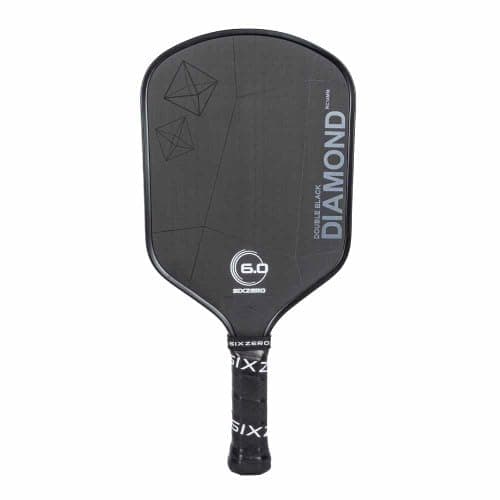 Six Zero Double Black Diamond 16mm All-court value with a huge sweet spot | Best overall for intermediates | 8.5 | $180.00 · View on Amazon #adPrice as of October 23, 2026 |
| 2 | 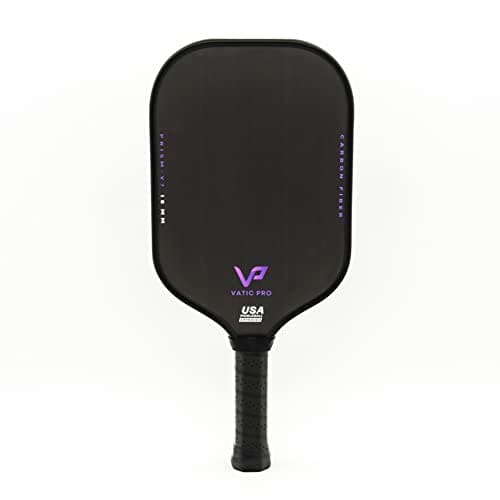 Vatic Pro Prism V7 16mm Value control in a standard shape | Best value | 7.8 | $99.99 · View on Amazon #adPrice as of October 23, 2026 |
| 3 | No image Ronbus R1 Pulsar Lowest-cost entry to thermoformed carbon | Best budget | 7.5 | |
| 4 | 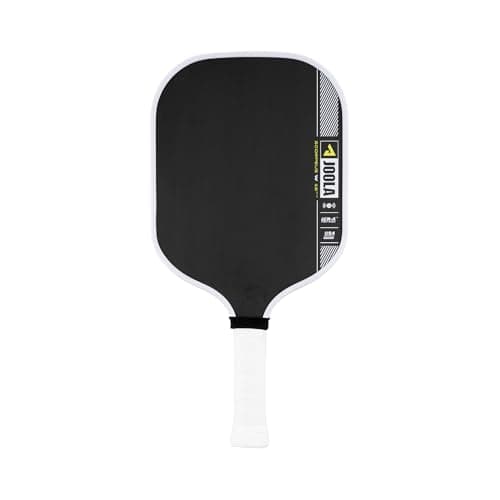 JOOLA Collin Johns Scorpeus Pro IV 16mm Standard-shape all-court control + spin | Best premium | 8.0 | |
| 5 | 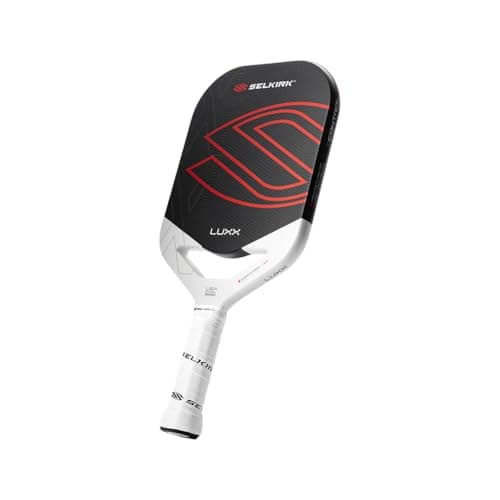 Selkirk LUXX Control Air Invikta Maximum control + soft touch | Best soft touch | 8.0 |
Tap any row to jump to the full write-up. Prices are pulled live from Amazon.
Six Zero Double Black Diamond 16mm
The internet's default 'do-it-all' recommendation: thermoformed power, a raw-carbon spin face, and a famously forgiving sweet spot at a fair price.
The DBD earned its reputation honestly. The 16mm Control build blends thermoformed pop with one of the most forgiving sweet spots in its class, and the raw T700 face grabs the ball for spin. It's the paddle we point undecided upgraders to first.
The safest recommendation in the sport for an improving player. A famously forgiving 16mm sweet spot, a raw T700 face that grips for real spin, and enough thermoformed pop that you never feel outgunned — at well under flagship money.
- Core
- 16 mm
- Shape
- Hybrid
- Face
- Raw Toray T700 carbon fiber
- Weight
- ~8.0 oz
- Build
- Thermoformed
- Gen
- Control (Gen 2 thermoformed)
Manufacturer-listed as USA Pickleball approved. Approvals and delistings change — verify against the current USAP equipment list before tournament play (checked 2026-07).
Vatic Pro Prism V7 16mm
The standard-shape Prism: the same value-carbon face in a more control-friendly, maneuverable body.
The V7 is the Prism for players who prefer a standard shape — a lower, wider sweet spot and quicker hands than the elongated Flash, at the same wallet-friendly price. A lot of paddle for the money on the control end.
A standard-shape, control-leaning Prism with the same raw Toray T700 face Vatic uses across the line. Lower and wider sweet spot, quicker hands, and roughly the same wallet-friendly price as the elongated Flash.
- Core
- 16 mm
- Shape
- Standard
- Face
- Raw Toray T700 carbon fiber
- Weight
- ~8.0 oz
- Build
- Thermoformed
- Gen
- Prism
Manufacturer-listed as USA Pickleball approved. Approvals and delistings change — verify against the current USAP equipment list before tournament play (checked 2026-07).
Ronbus R1 Pulsar
The budget thermoformed pick: raw T700 carbon and a real thermoformed build at a price that undercuts almost everyone.
Ronbus is the value-brand's value brand. The R1 Pulsar gets you a raw-carbon, thermoformed paddle for the least money of anything we cover — a smart first 'real' upgrade from a big-box starter paddle before you commit to a $200 frame.
The cheapest way into a genuinely modern paddle: raw T700 carbon, a real thermoformed build, a 16mm core. If you are stepping off a big-box starter paddle and do not want to commit hundreds, start here.
- Core
- 16 mm
- Shape
- Elongated
- Face
- Raw Toray T700 carbon fiber
- Weight
- ~8.0 oz
- Build
- Thermoformed
- Gen
- Pulsar
Manufacturer-listed as USA Pickleball approved. Approvals and delistings change — verify against the current USAP equipment list before tournament play (checked 2026-07).
JOOLA Collin Johns Scorpeus Pro IV 16mm
The standard-shape Perseus. A more balanced, control-leaning face for players who don't get on with elongated handles — and now the previous generation to JOOLA's Scorpeus Pro V.
Same Gen-4 tech as the Perseus in a standard shape, which brings the sweet spot lower and wider and makes hands battles easier to win. If you want JOOLA's power tech but prefer an all-court, control-first feel, this is the one. JOOLA launched a Scorpeus Pro V in its 2026 Pro V collection at roughly twice the Pro IV's current price; the change is a KineticFrame throat and a raw carbon face rather than a new spec sheet.
Gen-4 JOOLA technology in a standard shape. The sweet spot sits lower and wider than the elongated Perseus, so hands battles and resets get easier, and the Charged carbon surface keeps a finishing shot available.
- Core
- 16 mm
- Shape
- Standard
- Face
- Charged carbon-fiber surface
- Weight
- ~8.0 oz
- Build
- Thermoformed
- Gen
- Pro IV (Gen 4)
Manufacturer-listed as USA Pickleball approved. Approvals and delistings change — verify against the current USAP equipment list before tournament play (checked 2026-07).
Selkirk LUXX Control Air Invikta
A thick-core, control-first paddle: a plush, soft-hands feel for dinking and resets, not a bomb-thrower.
The LUXX Control leans hard into touch — a thicker core and a muted face make the third-shot drop and the reset the strengths here. If your game wins on placement and hands speed rather than raw pace, this is the control end of the Selkirk line.
The specialist. A thick 20mm core and a muted Florek carbon face make the reset and the third-shot drop the strengths here — the pick if you have already decided your game is placement rather than pace.
- Core
- 20 mm
- Shape
- Elongated
- Face
- Florek carbon face
- Weight
- ~8.0 oz
- Build
- Cold-pressed
- Gen
- LUXX
Manufacturer-listed as USA Pickleball approved. Approvals and delistings change — verify against the current USAP equipment list before tournament play (checked 2026-07).
What actually changes when you hit intermediate
At the beginner level, points end early and often by accident. Somebody misses a serve, somebody drives a ball into the net, somebody chases a lob. Paddle choice barely matters, which is why the standard advice is to buy something cheap and play. Somewhere around 3.0 that stops being true. Rallies start surviving the third shot, both teams get to the kitchen line, and the point gets decided in a soft exchange rather than a swing.
That shift changes what a paddle needs to do for you. The shots that now decide your matches are the drop, the reset, the dink and the block — every one of them a low-pace, high-precision shot where the ball has to come off the face in exactly the way you expected. Meanwhile the shots you are most likely to catch off center are, unhelpfully, those same shots: you are reaching, stretching, or defending a body shot with no time to set up.
So the two properties that matter most to an intermediate are a predictable, damped response on soft shots and a sweet spot forgiving enough to survive a mishit. Raw power is a distant third. This is the single most common mistake we see in upgrade decisions: a player who keeps losing kitchen exchanges buys the hardest-hitting paddle they can afford, discovers that it launches their resets and punishes their off-center dinks, and concludes they need to practice more. The paddle was working against them.
None of that means giving up pace entirely. Every paddle on this page except the last one retains a legitimate drive. If you want the picks pushed further toward the power end of that spectrum, our control paddles that still hit hard page is the more aggressive list.
How we picked
We ranked on forgiveness and touch first, then on value, and then on how much of a finishing shot survives. Value carries unusual weight here on purpose. An intermediate player is still discovering what kind of player they are going to be, and a paddle bought at 3.0 often gets replaced by 3.5 once that answer arrives. Spending flagship money to learn a preference is a poor trade for most people, which is why our top pick and two of the next three sit well below the premium tier.
We also deliberately spread the picks across shapes and core thicknesses rather than crowning five near-identical paddles. Shape preference is genuinely personal and shows up fast — some players immediately prefer the reach of an elongated frame, others find a standard shape easier to control in a hands battle. Our elongated vs standard shape guide explains the trade, and there are both on this list.
Every rating on every card is our editorial read of compiled manufacturer specifications and reviewer consensus. Where independently measured data matters — twist weight in particular, which is the real forgiveness number and which no manufacturer publishes — we point readers to Pickleball Studio, which tests to a consistent protocol. We do not invent numbers and we do not claim to have owned these paddles.
The picks, and what each one gives up
Six Zero Double Black Diamond 16mm
If you want one sentence: this is the paddle to buy if you do not want to think about it any further. The DBD earned its reputation by being genuinely hard to outgrow. The 16mm Control build damps the ball properly on drops and resets, the sweet spot is one of the most forgiving in its class, and the raw Toray T700 face bites hard enough to be a real spin paddle rather than one that merely permits spin.
What makes it specifically an intermediate paddle is that it does not force a decision. You are still finding out whether you will end up a counter-puncher who wins at the kitchen or an aggressor who wins with drives, and the DBD is competent at both — thermoformed walls mean a committed swing still produces a fast ball. It also costs considerably less than the flagships, so replacing it later if your game changes is not painful. Our full Six Zero DBD review has the detail, and Six Zero vs Selkirk puts it head to head with the touch specialist further down this list.
The honest con: it is an elongated paddle, so it is less nimble in a fast hands exchange than a standard shape and carries its weight further from your hand. Players with slower hands at the net, or anyone coming from a compact starter paddle, may find the standard-shape picks below easier to adapt to.
Vatic Pro Prism V7 16mm
Vatic built its reputation on a simple proposition: most of what a premium paddle gives you, for roughly a third of the money. The V7 is the standard-shape member of the Prism family, and it is the one we point control-minded intermediates to. Same raw Toray T700 carbon face as the rest of the line, same 16mm core, but in a balanced body that puts the sweet spot lower and wider and makes the paddle noticeably quicker to move at the net.
For an intermediate that shape choice is often worth more than any spec upgrade. Hands battles at the kitchen are won by whoever can get the face square on a ball that arrives in a fraction of a second, and a shorter, more balanced paddle simply gets there faster. The T700 face still grips for topspin dinks and rolls, so you are not giving up the spin that makes modern kitchen play work.
The honest con:it is the least powerful paddle on this list apart from the LUXX. The combination of a standard shape and a control-leaning build means you have less leverage on drives and serves, and against a genuine banger you will feel that. If you want Vatic's value with more reach and more spin, the elongated Prism Flash is the other side of the coin — Vatic Pro vs Ronbus compares it against our budget pick.
Ronbus R1 Pulsar
The Pulsar exists to answer one question: what is the least I can spend and still own a modern paddle? The answer is genuinely impressive. You get a raw Toray T700 carbon face, a real thermoformed unibody build, and a 16mm core — the same headline construction list as paddles costing twice as much. For a player stepping off a fiberglass big-box paddle, the jump in spin and consistency is the largest single upgrade they will ever feel.
We recommend it most often to two people: the improver who is not yet sure pickleball is a long-term habit, and the player who wants a second paddle to keep in the car. It is also the sensible choice if you would rather spend the difference on proper court shoes, which prevent more lost points than any paddle. The full R1 Pulsar review covers what the low price does and does not cost you.
The honest con: it is the least forgiving paddle on this page. Ronbus gets you the construction, but not the refined sweet spot or the off-center stability of the Six Zero or the foam-equipped premium paddles — mishits are punished more. It is a value champion, not a forgiveness champion, and forgiveness is exactly what most intermediates are shopping for.
JOOLA Collin Johns Scorpeus Pro IV 16mm
The premium pick, for the intermediate who already knows they are staying in the sport and would rather buy once. The Scorpeus is JOOLA's standard-shape Gen-4 paddle: the same thermoformed construction and the same Charged carbon fiber hitting surface as the Perseus power line, but shaped to bring the sweet spot lower and wider on the face.
That combination is unusually well suited to an improving player. The standard shape gives you the fast, controllable hands the kitchen line demands; the 16mm core gives you the damping that makes drops repeatable; and the Charged surface means that when you do get an attackable ball, the paddle can genuinely finish. It is the one paddle here that will not become a limitation if your game jumps two levels. If you are weighing the brands against each other, Joola vs CRBN covers how JOOLA stacks up against the other premium power house.
The honest con: the price. This is flagship money, and an intermediate is statistically likely to change what they want from a paddle within a season or two. It also gives up the reach and leverage of an elongated frame, so it is not the right buy if you already know you like stretching for wide balls.
Selkirk LUXX Control Air Invikta
This is the most specialized paddle on the page and the one with the clearest ideal buyer. A thick 20mm core and a muted Florek carbon face produce a plush, quiet response that is difficult to describe until you feel it — the ball seems to settle into the face rather than bounce off it. For resets and third-shot drops, that is exactly the behavior you want, and forgiveness is at the top of the class.
Buy it if you have already answered the question the rest of this page leaves open. If you know your points come from placement, patience and hands speed at the kitchen rather than from pace, the LUXX takes you further in that direction than any other paddle we cover, and the elongated Invikta shape adds reach for stretching to wide dinks. For contrast against a genuine all-rounder, read Six Zero vs Selkirk.
The honest con: you give up meaningful power and some spin bite. It is not thermoformed and it is not built to drive; against a team that attacks relentlessly you will need to win points a longer way around. It is also premium-priced, which is a lot to commit to a specialization you may not have settled into yet.
Three upgrade mistakes intermediates keep making
Buying power to fix a consistency problem. If you are losing kitchen exchanges, a hotter paddle makes it worse, not better. A thinner core launches your resets and shrinks the margin on off-center dinks. Fix the shot first with a damped, forgiving paddle, then add pace later if you still want it — our 14mm vs 16mm guide explains why that one number moves so much.
Shopping by core thickness alone. Two 16mm paddles can play completely differently depending on whether the perimeter is thermoformed, foam-filled, or neither. Perimeter construction determines how much energy comes back to the ball and how much the paddle twists on a mishit. Read the thermoformed paddles guide and the swing weight and twist weight guide before you compare specs across brands.
Ignoring the approval list.If there is any chance you will play a sanctioned tournament in the next year, check that your paddle is currently approved before you buy. Approvals and delistings do change, and the manufacturer's claim is not the same as the current list — see our guide to USAP-approved paddles and verify against the official list before entering an event.
Who should buy which
- You just want the right answer: the Six Zero Double Black Diamond 16mm. Forgiving, spinny, capable, fairly priced.
- You want a standard shape and value: the Vatic Pro Prism V7 — quicker hands, same value carbon face.
- You want the smallest possible spend: the Ronbus R1 Pulsar. Real carbon, real thermoforming, minimum money.
- You are committed and want to buy once: the JOOLA Scorpeus Pro IV.
- You already know you are a touch player: the Selkirk LUXX Control Air Invikta.
If you are not yet sure which category you belong in, how to choose a paddle walks through it in order. Intermediates who lean aggressive should look at power paddles for intermediate players instead, and anyone shopping to a strict budget should compare against our budget spin paddle picks.
What is the best pickleball paddle for an intermediate player?
For most intermediates, the Six Zero Double Black Diamond 16mm is the best single answer: a forgiving 16mm sweet spot, a raw carbon face with real spin, and enough thermoformed pop to drive, at well under flagship money. It suits both a counter-punching and an aggressive style, which matters while you are still finding out which one you are.
Should an intermediate player buy a control paddle or a power paddle?
Usually a control or all-court paddle. Points at the 3.0 to 4.0 level are decided by drops, resets and dinks, and a damped, forgiving paddle makes those shots repeatable. A hot power paddle tends to launch resets and punish off-center contact, which amplifies exactly the errors that cost intermediates matches.
How much should an intermediate spend on a paddle?
You do not need to spend flagship money. A budget thermoformed carbon paddle like the Ronbus R1 Pulsar already gives you the modern construction that matters, and the mid-tier Six Zero and Vatic Pro options add a more forgiving sweet spot for a modest step up. Spend premium money only once you know what kind of player you are.
Is a 16mm paddle better than a 14mm for intermediates?
Generally yes. A 16mm core absorbs more of the ball, giving a softer and more predictable response on touch shots and a more forgiving sweet spot. A 14mm core is quicker and poppier but less forgiving, which suits an established aggressive player more than someone still building consistency.