Joola vs CRBN: Which Should You Buy?
The sport's most-copied flagship against the power paddle players buy for its feel — JOOLA Perseus Pro IV 16mm vs CRBN X-Series Power.
Disclosure: Drive Dink earns a commission from qualifying Amazon purchases at no extra cost to you. We accept no free products and no paid placements — commissions never change our picks. How this works.
These two get cross-shopped constantly, and the reason is that they sell the same headline: thermoformed carbon, serious power, a face that grips for spin. Underneath, they are built to different priorities. The JOOLA Perseus Pro IV 16mm is the benchmark all-court power paddle. The CRBN X-Series Power is the thinner, quicker, more specialized one that players choose for how it feels in the hand.
Live Amazon prices for both are above. We have not tested either paddle; everything below comes from published specifications and reviewer consensus, and we say plainly where each one costs you something.
| # | Paddle | Best for | Score | Price |
|---|---|---|---|---|
| 1 | 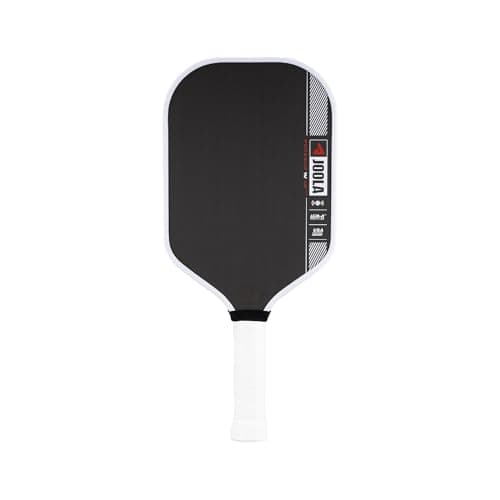 JOOLA Ben Johns Perseus Pro IV 16mm All-court power with a big sweet spot | The all-court benchmark | 8.3 | |
| 2 | 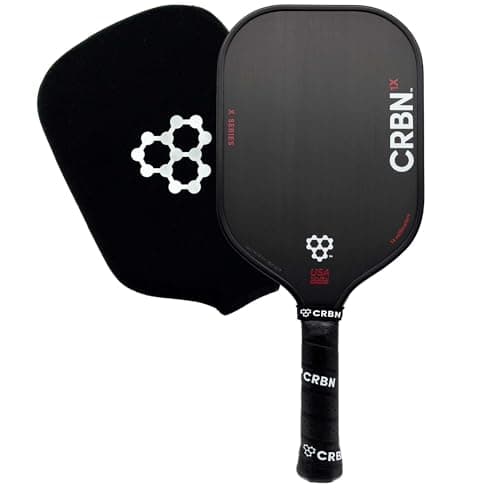 CRBN X-Series Power Clean, refined power feel | The refined power pick | 8.0 | $149.99 · View on Amazon #adPrice as of October 24, 2026 |
Tap any row to jump to the full write-up. Prices are pulled live from Amazon.
JOOLA Ben Johns Perseus Pro IV 16mm
JOOLA's Gen-4 Perseus: thermoformed power and a grippy Charged surface, with the 16mm core adding forgiveness the 14mm gives up. Now the previous generation to the Pro V.
The Perseus Pro IV set the benchmark the rest of the power field chased, and JOOLA's March 2026 Pro V refines that formula rather than replacing it. The 16mm version trades a little raw pop for a larger, more forgiving sweet spot — the sensible pick if you want top-tier power without punishing off-center hits. Charged Surface Technology keeps spin high.
The paddle the rest of the power field is chasing. Gen-4 thermoformed construction and a Charged carbon surface for spin, with the 16mm core buying back the forgiveness the 14mm version gives away.
- Core
- 16 mm
- Shape
- Hybrid
- Face
- Charged carbon-fiber surface (Tech-Flex)
- Weight
- ~8.0 oz
- Build
- Thermoformed
- Gen
- Pro IV (Gen 4)
Manufacturer-listed as USA Pickleball approved. Approvals and delistings change — verify against the current USAP equipment list before tournament play (checked 2026-07).
CRBN X-Series Power
CRBN's power line has a following for a reason: thermoformed pace with a cleaner, less hollow feel than some rivals.
The X-Series Power gives you the thermoformed power everyone wants but with a feel a lot of players describe as more solid and less 'tinny' than the cheaper thermoformed crowd. A dependable elongated power paddle from a respected brand.
CRBN's power line has a following for feeling solid and connected rather than hollow. A 14mm thermoformed elongated frame with a raw carbon face — quicker and livelier, with a cleaner feel than the budget thermoformed crowd.
- Core
- 14 mm
- Shape
- Elongated
- Face
- Raw carbon-fiber face
- Weight
- ~8.0 oz
- Build
- Thermoformed
- Gen
- X-Series
Manufacturer-listed as USA Pickleball approved. Approvals and delistings change — verify against the current USAP equipment list before tournament play (checked 2026-07).
JOOLA Perseus Pro IV 16mm vs CRBN X-Series Power: the specs
| Spec | JOOLA Perseus Pro IV 16mm | CRBN X-Series Power |
|---|---|---|
| Shape | Hybrid | Elongated |
| Core | 16 mm | 14 mm |
| Face | Charged carbon fiber surface (Tech-Flex) | Raw carbon fiber |
| Build | Thermoformed, Pro IV (Gen 4) | Thermoformed, X-Series |
| Leans toward | All-court power with a big sweet spot | Fast, refined, drive-first power |
| Best for | Players who want top-tier pace without punishing mishits | Players who want a solid, connected power feel |
Hybrid vs elongated: where the sweet spot sits
This is the first real difference, and it is the one most buyers underestimate. The Perseus is a hybrid shape — longer than a standard paddle but not fully elongated, with a shorter handle than the extremes of the category. The CRBN X-Series is a full elongated frame. Length changes two things at once: how far you can reach, and where on the face the paddle actually rewards you.
An elongated paddle puts its sweet spot higher up the face and further from your hand. That extra distance is leverage, which is why elongated frames feel like they hit harder even when nothing else changes, and why they suit players with a big swing. The cost is that the same leverage works against you in a fast hands battle at the kitchen — the paddle takes marginally longer to get square, and a ball that arrives low on the face near the throat feels dead.
The hybrid Perseus splits the difference. You keep most of the reach and most of the leverage, but the effective hitting zone sits a little lower and the paddle is easier to maneuver when somebody speeds a ball up at your chest. For a player who spends real time at the kitchen line rather than driving from the baseline, that is a meaningful advantage. Our elongated vs standard shape guide works through the trade in more detail, and our elongated power picks collects the frames that lean hardest into reach.
16mm vs 14mm: the biggest single lever
The spec gap that will change your experience the most is core thickness. The Perseus we are comparing here is the 16mm; the CRBN X-Series Power is 14mm. That is not a rounding difference — it is the difference between two philosophies.
A thicker core compresses more slowly and absorbs more of the ball's energy. On a soft shot that is exactly what you want: the ball settles, the response is quiet and repeatable, and a third-shot drop or a reset goes where you aimed it. It also produces a broader effective sweet spot, because the extra material damps the edges of the face rather than letting them behave like a different paddle. The trade is top-end pace — some energy that could have gone back into the ball gets absorbed instead.
A 14mm core does the opposite. It is livelier, poppier and faster through the air, which makes speed-ups and counters feel effortless and makes drives leave the face in a hurry. It is also less forgiving. Contact a ball off center on a thin core and you feel it, both in the vibration and in where the ball goes. Neither is better in the abstract; they suit different players. Our 14mm vs 16mm guide is the full explanation.
Practically: the CRBN is the faster, more demanding paddle of the two, and the 16mm Perseus is the more forgiving one. If you are the kind of player who catches the ball clean nearly every time and wants maximum hand speed, the thinner core is a genuine advantage. If you are honest about the number of balls you catch off center in a match, the 16mm buys you more points than it costs.
Charged surface vs raw carbon
Both paddles are built to generate spin, and both do it well, but they go about it differently. CRBN uses a raw carbon fiber face — the unpainted, unsealed weave that has become the default in the category because the texture of the fiber itself grabs the ball. JOOLA's Pro IV runs its Charged carbon fiber surface, a treated hitting surface engineered for grip and consistency rather than left raw.
In practice the JOOLA face is the more aggressive spin surface of the two and the reason the Perseus rates so highly for topspin drives and roll volleys. The CRBN is not far behind and is a legitimately grippy raw face; you are choosing between very good and excellent, not between spin and no spin. What separates them long term is durability of the texture rather than peak grip — every grit surface wears, and how fast it wears is the single most common complaint about modern paddles. We cover that in paddle grit and durability, and how spin actually works explains why face texture matters more than any other variable.
Feel, forgiveness and construction
Both paddles are thermoformed, meaning a unibody carbon shell is heated and formed around the core so the perimeter is stiff and returns energy rather than flexing it away. That construction is why both hit hard. The thermoformed paddles guide covers how it works and the known caveats that come with it.
The differentiator that keeps coming up in reviewer consensus is feel. CRBN's X-Series has a reputation for sounding and feeling solid and connected rather than hollow or tinny — a complaint that dogs cheaper thermoformed paddles. That is a subjective property that does not show up in any spec sheet, and it is the main reason people pay CRBN money rather than buying a similarly specified budget frame. If you have picked up a thermoformed paddle before and disliked the sound and the sensation, this is the direct answer.
On forgiveness the 16mm Perseus is the safer paddle, and that is mostly the core thickness talking rather than any brand advantage. If you want measured evidence rather than adjectives, independent testing at Pickleball Studio publishes swing weight and twist weight figures to a consistent protocol — twist weight being the number that actually predicts off-center behavior. Our swing weight and twist weight guide explains how to read those numbers.
Price, and what you are paying for
Both are premium paddles and neither was a value play when it launched — live prices are at the top of this page, and they are the only prices we will quote. The Perseus Pro IV was priced as JOOLA's flagship: the paddle a large share of the professional field used, the one the rest of the market benchmarked against, and the one with the most complete blend of power, spin and forgiveness. Since JOOLA launched the Pro V in March 2026 it has been the previous generation, which is exactly the class that gets discounted — so check the two live prices before assuming either paddle is the cheaper one.
The honest framing is this: you pay JOOLA for completeness and CRBN for feel. If you want one paddle that is excellent at everything on the power side of the sport, the Perseus is worth its price. If your priority is drives and put-aways and you would rather have a paddle that feels good in your hand than one that is marginally better at the kitchen, the CRBN is the more efficient purchase. Either way, if the budget is the real constraint, both CRBN vs Six Zero and our power paddle roundup point at cheaper frames that give up less than you would expect.
Before you buy: approval, grit and setup
Three things apply to both paddles and are worth settling before you spend flagship money on either.
Tournament approval.Both manufacturers list their paddles as USA Pickleball approved, but approvals and delistings do change, and a manufacturer's claim is not the same thing as the current official list. If there is any chance you will enter a sanctioned event, check the model and the exact configuration against the USA Pickleball approved paddle list before you buy. Our guide to USAP-approved paddles explains how the list works and why paddles occasionally come off it.
Grit wear. Both paddles rely on a textured face for spin, and every textured face loses bite with use. How fast depends on how much you play, whether your courts are abrasive, and how the paddle is stored and cleaned. This is the most common long-term disappointment with premium paddles: the paddle still hits fine, but the spin that justified the price has quietly faded. Budget for it rather than being surprised by it, and read paddle grit and durability for what genuinely slows the process.
Setup. Both come in around the standard mid-weight range for a modern paddle, and both respond noticeably to added lead tape and to grip changes. A paddle that feels slightly too light or slightly unstable out of the box can often be tuned rather than returned — adding weight at the sides raises stability on off-center contact, while weight higher on the head raises power at the cost of maneuverability. Our swing weight and twist weight guide covers which direction to go for the problem you actually have. Do this before concluding a paddle is wrong for you.
The verdict, by player type
- Buy the JOOLA Perseus Pro IV 16mm ifyou want the most complete paddle of the two — top-tier power and the sport's most aggressive spin surface, with a 16mm core and a hybrid shape that keep you competitive at the kitchen line. It is the pick for an all-court player who attacks, and for anyone who catches enough balls off center to value the extra margin. The trade is price and a paddle that is still power-first, so it will never feel as plush as a dedicated control frame. Read the full Perseus Pro IV review.
- Buy the CRBN X-Series Power ifyour game is drives, serves and put-aways, you want the fastest hands you can get, and feel matters to you more than the last few percent of forgiveness. The elongated frame gives you reach and leverage, the 14mm core makes it lively, and CRBN's construction avoids the hollow sensation that puts people off thermoformed paddles. The trade is a smaller margin for error on soft shots and off-center contact, and a slightly less aggressive spin face than the JOOLA. Read the full CRBN X-Series Power review.
Still narrowing the field? Start with how to choose a paddle, compare CRBN against a different rival in CRBN vs Selkirk, or — if this page has convinced you that forgiveness matters more than pace — look at the control paddles that still hit hard.
Is JOOLA or CRBN better?
Neither is universally better. The JOOLA Perseus Pro IV 16mm is the more complete paddle — a hybrid shape and a thicker core give it a bigger sweet spot and better kitchen play alongside top-tier power and spin. The CRBN X-Series Power is faster and more drive-focused, with a solid, connected feel that many players prefer, and the gap between them now depends on how hard JOOLA is discounting the previous-generation Perseus.
Which is more forgiving, the Perseus Pro IV or the CRBN X-Series Power?
The 16mm Perseus Pro IV. Core thickness is the dominant factor in forgiveness, and the Perseus we compare here runs a 16mm core against the CRBN's 14mm. The thicker core damps the ball more and widens the effective sweet spot, so off-center contact is punished less.
Which has more spin, JOOLA or CRBN?
The JOOLA edges it. The Perseus Pro IV uses JOOLA's Charged carbon fiber surface, which is engineered specifically for grip, while the CRBN X-Series uses a raw carbon face. Both generate serious spin — this is a difference between excellent and very good, not between spin and none.
Is the CRBN X-Series Power good for intermediate players?
It suits an intermediate who already swings well and specifically wants more pace and reach. Its 14mm core and elongated shape reward clean contact, so a player still building consistency will usually get more out of a thicker, more forgiving all-court paddle.