CRBN vs Selkirk: Which Fits Your Game?
Modern thermoformed pace against long-established reach and refinement — CRBN X-Series Power vs the Selkirk Amped Pro Air Invikta.
Disclosure: Drive Dink earns a commission from qualifying Amazon purchases at no extra cost to you. We accept no free products and no paid placements — commissions never change our picks. How this works.
This is a comparison between two eras of paddle design, both still very much alive. The CRBN X-Series Power is a modern thermoformed frame: stiff perimeter, thin lively core, raw carbon grit. The Selkirk Amped Pro Air Invikta comes from a longer lineage — a proven elongated shape, a thicker core, and a build tuned for a refined, quieter feel rather than maximum trampoline.
Both are legitimate power paddles. They arrive at power by different routes, and the route decides which one suits you. Live Amazon prices are above. We have not tested either paddle; everything here is drawn from published specifications and reviewer consensus, and we name the trade-off on both sides.
| # | Paddle | Best for | Score | Price |
|---|---|---|---|---|
| 1 | 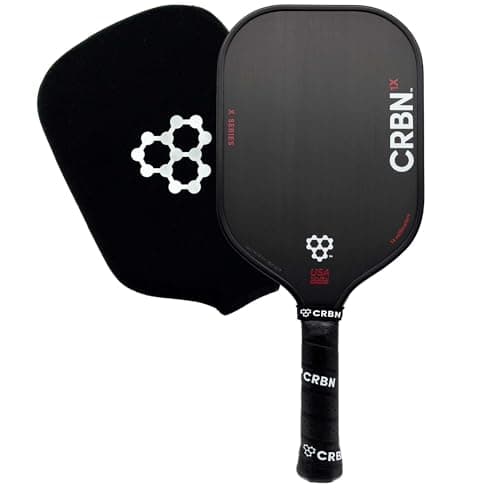 CRBN X-Series Power Clean, refined power feel | The thermoformed power pick | 8.0 | $149.99 · View on Amazon #adPrice as of October 24, 2026 |
| 2 | 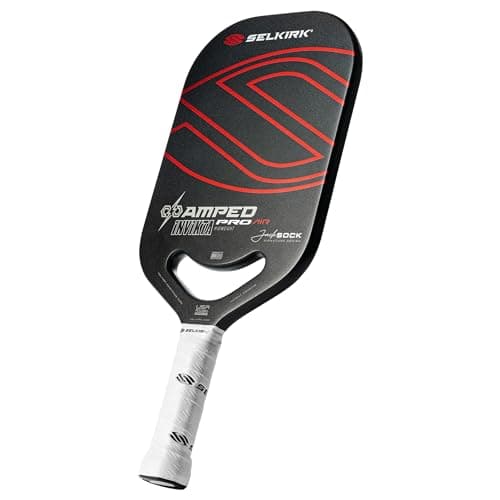 Selkirk Amped Pro Air Invikta Reach + leverage in an elongated frame | The reach-and-feel pick | 7.5 | $99.99 · View on Amazon #adPrice as of October 24, 2026 |
Tap any row to jump to the full write-up. Prices are pulled live from Amazon.
CRBN X-Series Power
CRBN's power line has a following for a reason: thermoformed pace with a cleaner, less hollow feel than some rivals.
The X-Series Power gives you the thermoformed power everyone wants but with a feel a lot of players describe as more solid and less 'tinny' than the cheaper thermoformed crowd. A dependable elongated power paddle from a respected brand.
A 14mm thermoformed elongated frame with a raw carbon face. Fast, lively and drive-first, with the solid, connected feel that separates CRBN from cheaper thermoformed paddles.
- Core
- 14 mm
- Shape
- Elongated
- Face
- Raw carbon-fiber face
- Weight
- ~8.0 oz
- Build
- Thermoformed
- Gen
- X-Series
Manufacturer-listed as USA Pickleball approved. Approvals and delistings change — verify against the current USAP equipment list before tournament play (checked 2026-07).
Selkirk Amped Pro Air Invikta
Selkirk's elongated reach option — the Invikta shape gives real reach and leverage, with the open Air throat trimming swing weight.
The Invikta is one of the longest-standing elongated shapes in the sport, and the Amped Pro Air pairs that reach with Selkirk's open Air Dynamic Throat, which the brand says raises swing speed through the air. The FiberFlex+ fiberglass face and 16mm X5+ honeycomb core are tuned for balanced power and a large sweet spot rather than raw thermoformed pace, so it is a former-tennis-player favorite: leverage on drives, a long paddle face, and a quieter, more refined feel than the raw thermoformed crowd.
The Invikta is one of the longest-standing elongated shapes in the sport, and the Amped Pro Air pairs that reach with an open Air throat and a quieter, more refined response than the raw thermoformed crowd.
- Core
- 16 mm
- Shape
- Elongated
- Face
- FiberFlex+ fiberglass face over an X5+ honeycomb core
- Weight
- 7.8-8.2 oz
- Build
- Cold-pressed
- Gen
- Amped Pro Air
Manufacturer-listed as USA Pickleball approved. Approvals and delistings change — verify against the current USAP equipment list before tournament play (checked 2026-07).
CRBN X-Series Power vs Selkirk Amped Pro Air Invikta: the specs
| Spec | CRBN X-Series Power | Selkirk Amped Pro Air Invikta |
|---|---|---|
| Shape | Elongated | Elongated (Invikta) |
| Core | 14 mm | 16 mm |
| Face | Raw carbon fiber | FiberFlex+ fiberglass face |
| Build | Thermoformed, X-Series | Amped Pro Air build with the Air throat, not thermoformed |
| Leans toward | Fast, lively, drive-first power | Reach, leverage and a refined feel |
| Best for | Players who want a solid, connected power feel | Former tennis players who want length and a quieter response |
Thermoformed vs the Air build: the difference that decides it
Everything else on this page follows from one line in the table. The CRBN is thermoformed; the Selkirk is not. Thermoforming heats and forms a unibody carbon shell around the core so the perimeter becomes rigid. Energy that would otherwise be spent flexing the frame gets returned to the ball instead, which is why thermoformed paddles feel hot and why the whole market moved this direction. Our thermoformed paddles guide explains the process and its known caveats.
Selkirk's Amped Pro Air construction takes a different position. Instead of maximizing return off the face, it aims at a quieter, more composed response — a paddle that is plainly powerful but does not feel like a spring. Players who dislike thermoformed paddles usually describe them as harsh, loud, or hard to take pace off, and the Selkirk is a direct answer to that complaint.
There is a practical consequence too. Thermoformed paddles have a longer history of edge and delamination complaints across the category as a whole, because a rigid unibody shell concentrates stress at the perimeter. That is an industry-wide pattern rather than a claim about this specific model, and it applies to a huge share of modern paddles including several we recommend enthusiastically. It is simply worth knowing that the Selkirk's more traditional build sidesteps the question.
Core thickness, shape and what they change
Both paddles are elongated, so neither has a reach advantage in the way a standard-shape paddle would concede one. What separates them is core thickness: 14mm for the CRBN against 16mm for the Selkirk.
The thinner CRBN core compresses and releases faster. The paddle feels quicker in your hand, speed-ups and counters take less effort, and drives leave the face in a hurry. The cost is margin — a thin core damps less, so a ball caught off center is punished more and soft shots need more deliberate hands. The 16mm Selkirk core absorbs more, which is why it can hit hard without feeling twitchy and why resets are easier to control. Our 14mm vs 16mm guide covers this lever properly.
The Invikta shape deserves its own note. It has been in Selkirk's line for years and has a genuine following among converted tennis players, because the long face and the leverage it creates map closely to a tennis stroke. If you came to pickleball from a racquet sport and keep feeling like your paddle is too short, that is exactly what the Invikta addresses — and our power paddles for tennis players page collects the rest of that category.
Swing weight, the Air throat and maneuverability
Elongated paddles carry a hidden cost: mass distributed further from your hand raises swing weight, which makes the paddle feel slower to move even when the scale says it weighs the same as a shorter frame. That is the main reason some players try an elongated paddle, love the drives, and then quietly go back to something shorter after losing a few hands battles.
Selkirk's Air throat is an answer to that problem. Removing material from the throat trims swing weight without shortening the paddle, so you keep the reach and leverage of the Invikta shape while getting some maneuverability back. It is one of the few genuine design solutions to the elongated trade-off rather than a marketing name for a shape.
The CRBN takes the other route to the same goal: a thinner core is simply less material, and the paddle is quick as a result. Which approach suits you depends on where you want the weight. If you want a paddle that feels light and fast throughout, the CRBN gets there. If you want the stability of a fuller frame with the swing weight problem partly solved, the Selkirk does. If those terms are unfamiliar, our swing weight and twist weight guide is the primer, and independent measured figures for a wide range of paddles are published by Pickleball Studio.
Spin: raw carbon vs the FiberFlex+ fiberglass face
Here the CRBN has the clearer advantage. Its raw carbon fiber face is unpainted and unsealed, so the texture of the weave itself grabs the ball — the mechanism behind the enormous topspin numbers that modern paddles produce. Selkirk's FiberFlex+ fiberglass face is a more refined, more finished surface, and it generates real spin, but it is not built to be the grittiest thing on the court.
If your game runs on heavy topspin drives, aggressive rolls off the bounce, and dipping third shots, the CRBN gives you more raw bite to work with. If your spin is a supporting shot rather than the point of your game, the difference will matter far less than the feel difference discussed above. The mechanics are covered in how spin actually works, and carbon fiber vs fiberglass explains why face material dominates this conversation.
One caveat that applies to the raw-carbon side of the argument: raw grit wears. Every textured face loses bite over time, and the more aggressive the texture the more noticeable that decay tends to be. We cover what to expect and how to slow it in paddle grit and durability.
At the kitchen line: which one you would rather hold
Power paddles get sold on drives, but most points at any competitive level end within a couple of meters of the kitchen line, in an exchange that lasts under a second. It is worth asking which of these two you would rather be holding when that happens, because the answer is not obvious from the power ratings.
The CRBN's advantage there is speed. A thin core is less material to move, the paddle feels quick, and counter-attacking a speed-up takes less effort — you can get the face square and add pace to a ball that is already traveling fast. If your instinct in a firefight is to attack back, that suits you.
The Selkirk's advantage is composure. A 16mm core absorbs more of an incoming drive, so blocking a hard ball into the kitchen is easier and far less likely to sail long. The Air throat keeps the long frame from feeling slow, so you are not paying for that stability with sluggish hands the way you would on a heavier elongated paddle. If your instinct in a firefight is to absorb, reset and rebuild the point, that is the better tool.
Neither instinct is more correct. What matters is matching the paddle to the one you actually have under pressure, rather than the one you wish you had. A useful test: think back to the last few points you lost at the kitchen. If you lost them because your counter was too slow, buy speed. If you lost them because your block popped up or flew long, buy damping. This is the same logic our control-with-power shortlist applies across a wider field.
Price and value
Live prices sit at the top of this page, and they do not line up with the brands' reputations. The Amped Pro Air is Selkirk's accessible Invikta, not its flagship — it typically undercuts the CRBN, which asks more for the thermoformed build and the raw carbon face. If your priority is pace per dollar, the CRBN is the one delivering the newer construction, and you are paying for it.
What the Selkirk gives you for less is the shape lineage, the refined feel, and a build that avoids the harshness some players never get on with. What it does not give you is the thermoformed power ceiling or the raw-carbon spin bite. That is a feel-and-reach buy, not a performance buy. If value is your driving concern, our power paddle roundup has frames that deliver most of this power for considerably less, and CRBN vs Six Zero pits CRBN against the value benchmark directly.
The verdict, by player type
- Buy the CRBN X-Series Power if you want the modern formula — thermoformed pace, a fast 14mm core, and a raw carbon face with genuine topspin bite — in a frame that avoids the hollow feel of cheaper thermoformed paddles. It is the pick for a drive-first player who catches the ball clean and wants the quickest hands available. The trade is forgiveness: a thin core gives you less margin on off-center contact and demands more deliberate touch on resets. Read the full CRBN X-Series Power review.
- Buy the Selkirk Amped Pro Air Invikta if you came from tennis, want maximum reach and leverage, or have tried a thermoformed paddle and found it harsh and hard to control. The 16mm core and the Air build give you leveraged power with a composed, quieter response, and the Air throat keeps the long frame from feeling sluggish. The trade is spin bite — the finished FiberFlex+ fiberglass face does not grab the ball like raw carbon, and the thermoformed field hits harder. Read the full Selkirk Amped Pro Air review.
Not sure power is where you belong at all? Start with how to choose a paddle, see how CRBN fares against JOOLA in Joola vs CRBN, or look at the control paddles that still hit hard if forgiveness is climbing your priority list.
Is CRBN or Selkirk better for power?
The CRBN, on our scoring. It gets its power from thermoformed construction and a thin, lively 14mm core, so it feels faster and hotter off the face. The Selkirk Amped Pro Air Invikta generates its drive from the leverage of the long Invikta shape rather than a stiff shell, with a more composed, quieter response. Choose the CRBN for raw pace and the Selkirk for reach and feel.
Which has more spin, CRBN or Selkirk?
The CRBN. Its raw carbon fiber face is unsealed, so the weave texture itself grips the ball, which is the mechanism behind modern topspin numbers. Selkirk's FiberFlex+ fiberglass face is more refined and generates real spin, but it is not built to be the grittiest surface on the court.
Is the Selkirk Invikta good for former tennis players?
It is one of the most commonly recommended shapes for that transition. The elongated Invikta face gives reach and leverage that map closely to a tennis stroke, and the Air throat trims swing weight so the long frame stays manageable at the kitchen line.
Is a thermoformed paddle better than a non-thermoformed one?
Not automatically. Thermoforming stiffens the perimeter so more energy returns to the ball, which raises power. The trade is a firmer, louder response that some players find harsh, and the category as a whole has seen more edge and delamination complaints on rigid unibody builds. A well-made non-thermoformed paddle can be the better choice if you value a composed feel and easy resets.