Best Pickleball Paddles for Former Tennis Players
Reach, leverage and a handle long enough for two hands — plus the honest warning that a paddle is not a racket.
Disclosure: Drive Dink earns a commission from qualifying Amazon purchases at no extra cost to you. We accept no free products and no paid placements — commissions never change our picks. How this works.
Tennis players arrive in pickleball with a real advantage — footwork, stroke mechanics, an overhead, and the ability to generate pace from a full swing. Most of that transfers. What does not transfer is the equipment intuition, and that is where converts waste money.
A paddle is not a small racket. There are no strings, so there is no string bed to hold the ball, no snapback, and far less dwell time. Below are the paddles that suit a tennis swing best, plus the three warnings every convert should read before buying: the two-handed backhand question, the arm load, and the soft game you do not have yet.
| # | Paddle | Best for | Score | Price |
|---|---|---|---|---|
| 1 | 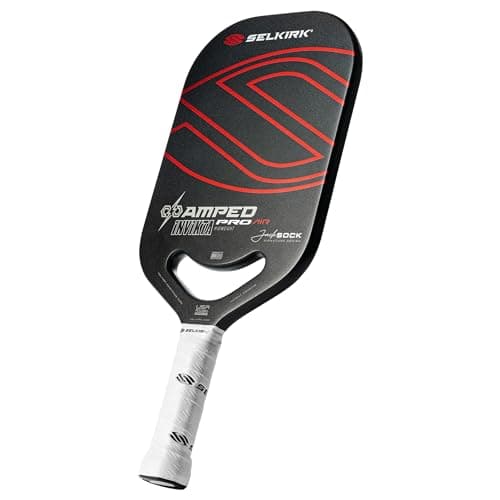 Selkirk Amped Pro Air Invikta Reach + leverage in an elongated frame | Best for a big tennis swing | 7.5 | $99.99 · View on Amazon #adPrice as of October 23, 2026 |
| 2 | 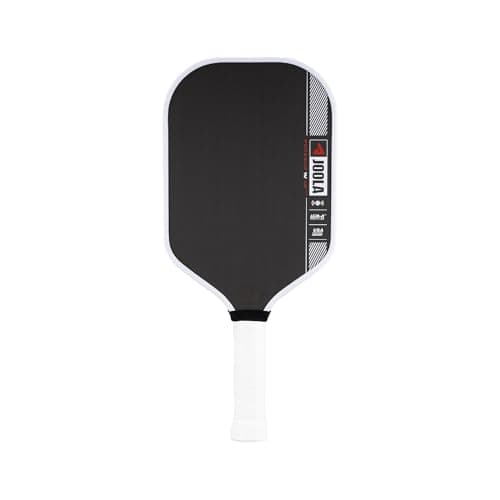 JOOLA Ben Johns Perseus Pro IV 16mm All-court power with a big sweet spot | Best all-court power | 8.3 | |
| 3 | 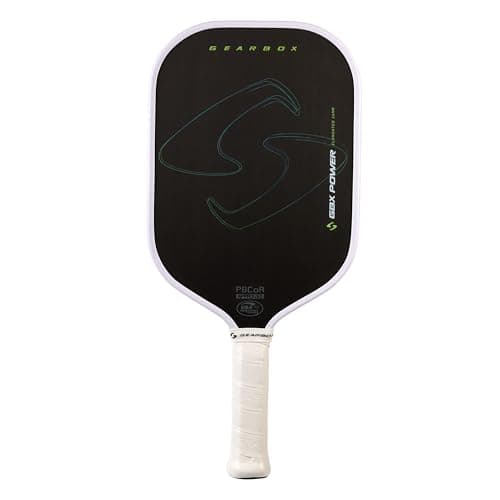 Gearbox GBX Power Elongated Raw drive power for big hitters | Most familiar drive | 7.0 | $179.99 · View on Amazon #adPrice as of October 23, 2026 |
| 4 | 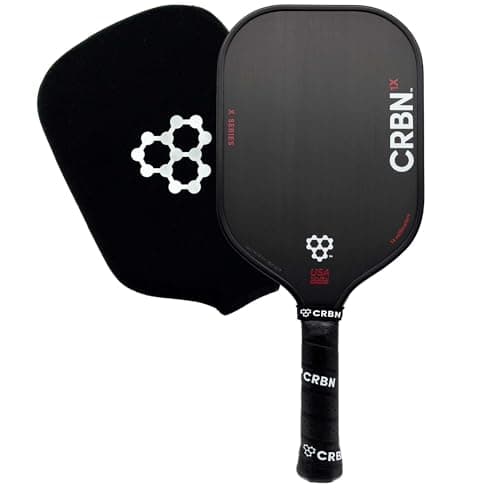 CRBN X-Series Power Clean, refined power feel | Best refined feel | 8.0 | $149.99 · View on Amazon #adPrice as of October 23, 2026 |
| 5 | 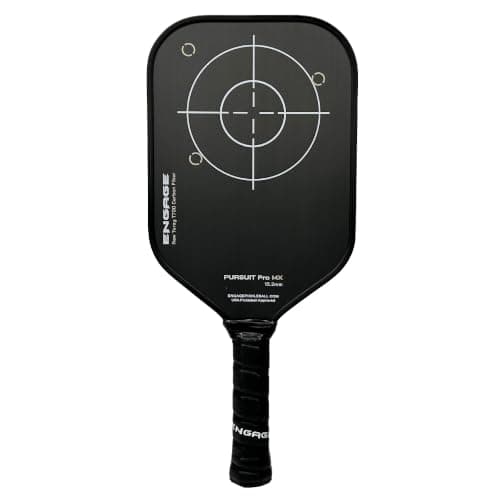 Engage Pursuit Pro MX 15.2 Elongated Control-forward power without the harsh feel | Best softened feel | 7.8 | $129.99 · View on Amazon #adPrice as of October 23, 2026 |
Tap any row to jump to the full write-up. Prices are pulled live from Amazon.
Selkirk Amped Pro Air Invikta
Selkirk's elongated reach option — the Invikta shape gives real reach and leverage, with the open Air throat trimming swing weight.
The Invikta is one of the longest-standing elongated shapes in the sport, and the Amped Pro Air pairs that reach with Selkirk's open Air Dynamic Throat, which the brand says raises swing speed through the air. The FiberFlex+ fiberglass face and 16mm X5+ honeycomb core are tuned for balanced power and a large sweet spot rather than raw thermoformed pace, so it is a former-tennis-player favorite: leverage on drives, a long paddle face, and a quieter, more refined feel than the raw thermoformed crowd.
The Invikta is the shape tennis converts keep coming back to: genuine reach, leverage on drives and serves, and a handle long enough for a two-handed backhand. The Air throat keeps it from feeling heavy through the swing.
- Core
- 16 mm
- Shape
- Elongated
- Face
- FiberFlex+ fiberglass face over an X5+ honeycomb core
- Weight
- 7.8-8.2 oz
- Build
- Cold-pressed
- Gen
- Amped Pro Air
Manufacturer-listed as USA Pickleball approved. Approvals and delistings change — verify against the current USAP equipment list before tournament play (checked 2026-07).
JOOLA Ben Johns Perseus Pro IV 16mm
JOOLA's Gen-4 Perseus: thermoformed power and a grippy Charged surface, with the 16mm core adding forgiveness the 14mm gives up. Now the previous generation to the Pro V.
The Perseus Pro IV set the benchmark the rest of the power field chased, and JOOLA's March 2026 Pro V refines that formula rather than replacing it. The 16mm version trades a little raw pop for a larger, more forgiving sweet spot — the sensible pick if you want top-tier power without punishing off-center hits. Charged Surface Technology keeps spin high.
The flagship the rest of the power field measures itself against, in the 16mm core that adds forgiveness. A hybrid shape, so slightly less reach than a true elongated frame — and a much bigger margin for error.
- Core
- 16 mm
- Shape
- Hybrid
- Face
- Charged carbon-fiber surface (Tech-Flex)
- Weight
- ~8.0 oz
- Build
- Thermoformed
- Gen
- Pro IV (Gen 4)
Manufacturer-listed as USA Pickleball approved. Approvals and delistings change — verify against the current USAP equipment list before tournament play (checked 2026-07).
Gearbox GBX Power Elongated
A punchy, drive-first power paddle. Gearbox's construction is stiff and solid — you feel the ball leave.
The GBX Power is for the player whose game is put-aways and drives. It's a stiffer, less forgiving frame than the foam paddles, but the payoff is directness — the ball comes off fast and predictably. Not the pick if you need help on mishits.
The closest thing here to the sensation of a stiff racket: direct, solid, and fast off the face. If what you miss most is feeling the ball leave, this is the paddle that gives it back.
- Core
- 16 mm
- Shape
- Elongated
- Face
- Raw unidirectional carbon fiber
- Weight
- 8.0 oz avg (7.8-8.2 oz)
- Build
- Thermoformed
- Gen
- GBX (Gen-3 suspended PPE honeycomb)
The Amazon listing title states USA Pickleball approved; Pickleball Central's certification field for this paddle lists UPA-A and PBCoR only. Those are different programs for different competitions — verify your exact model against the current USA Pickleball equipment list before sanctioned play (checked 2026-10).
CRBN X-Series Power
CRBN's power line has a following for a reason: thermoformed pace with a cleaner, less hollow feel than some rivals.
The X-Series Power gives you the thermoformed power everyone wants but with a feel a lot of players describe as more solid and less 'tinny' than the cheaper thermoformed crowd. A dependable elongated power paddle from a respected brand.
Thermoformed pace with a cleaner, more connected response than the hollow-feeling end of the market. An elongated head with the polish a player used to good equipment will notice.
- Core
- 14 mm
- Shape
- Elongated
- Face
- Raw carbon-fiber face
- Weight
- ~8.0 oz
- Build
- Thermoformed
- Gen
- X-Series
Manufacturer-listed as USA Pickleball approved. Approvals and delistings change — verify against the current USAP equipment list before tournament play (checked 2026-07).
Engage Pursuit Pro MX 15.2 Elongated
Engage's calling card is a softer, more controllable power feel — the Pursuit Pro MX gives you drive without the trampoline harshness.
Engage tunes its paddles for a plusher, quieter response than the raw thermoformed crowd. The Pursuit Pro MX 15.2 is an elongated frame that still hits hard but keeps the ball on the face longer, which control players tend to prefer.
The pick if your elbow is already telling you something. Engage tunes for a plusher, quieter response that keeps the ball on the face longer — easier on the arm and far easier for building a soft game.
- Core
- 15 mm
- Shape
- Elongated
- Face
- Raw carbon-fiber face
- Weight
- ~8.0 oz
- Build
- Cold-pressed
- Gen
- Pursuit Pro MX
Manufacturer-listed as USA Pickleball approved. Approvals and delistings change — verify against the current USAP equipment list before tournament play (checked 2026-07).
A paddle is not a racket
This is the single most useful thing a tennis player can internalize before shopping. A racket generates its behavior from a tensioned string bed: the strings deflect on contact, hold the ball for a comparatively long moment, and snap back — which is where a huge share of both the power and the spin comes from. Change the string, the tension or the pattern and you change the racket more than swapping frames does.
A paddle has none of that. It is a rigid face over a core, and the ball is on it for a fraction of the time it spends on a string bed. Three consequences follow, and all three surprise converts:
- Spin comes from surface texture, not snapback. The grit on a raw carbon face is what bites the ball as it brushes across. There is no string movement to add to it, which is why paddle spin numbers are far lower than racket spin numbers and why a smooth, worn-out face is genuinely a dead paddle. Our how spin works guide covers the mechanism.
- Power comes from stiffness and construction. There is no tension to drop for more pop. What you get is decided by the core thickness, the face and whether the frame is thermoformed or foam-injected — the levers explained in our thermoformed paddles guide.
- Less dwell means less margin.A string bed forgives a slightly late or slightly off-center ball by holding it longer. A paddle does not. Off-center contact is felt immediately and punished immediately, and that is the sensation converts most often describe as the paddle feeling "harsh."
The practical upshot: stop looking for a paddle that feels like your racket. It does not exist. Look instead for one that suits the swing you already own.
What transfers, and what does not
Transfers well. Your split step and court movement. The overhead — probably your single biggest weapon in the first six months. The serve motion, once you adapt it to the underhand rule. Topspin mechanics: brushing up the back of the ball works the same way, and it is why converts get so much out of a grippy raw-carbon face. And the ability to drive a ball hard from the back of the court, which is exactly what the paddles on this page are built to amplify.
Does not transfer. The baseline game as a strategy. Pickleball is not won from the back; it is won by getting to the kitchen line and out-patiencing someone. The soft game — the third shot drop, the dink, the reset — is a completely new skill set that most converts do not have and, worse, do not want, because bombing drives works brilliantly at 3.0 and stops working at 4.0.
This matters for paddle choice more than it looks. The stiffest, hottest, most drive-oriented paddle will make your first three months exciting and your next six frustrating, because it actively makes the skills you most need to build harder to learn. That is the argument for a 16mm core and a slightly softer build even if your swing says otherwise.
What a tennis convert should look for
| Tennis habit | What it causes in pickleball | Paddle feature that helps |
|---|---|---|
| Long, committed swing | Needs leverage to be worth it; feels cramped on a short frame | Elongated or hybrid shape for tip speed and reach |
| Two-handed backhand | Second hand runs out of handle on a standard grip | Longer handle, which elongated frames almost always have |
| Heavy topspin brushing | Wasted on a smooth face; there is no snapback to help | Grippy raw-carbon surface with real grit |
| Wristy, high-repetition strokes | More shock into the forearm than tennis, per hour played | Thicker 16mm core and a softer, less stiff build |
| Blocking hard balls with firm hands | Pops the ball up; a hot face returns pace you did not want | Longer dwell, plusher build, higher twist weight |
Shape is the first decision and the one converts get most right by instinct: an elongated frame suits a big swing, and the whole field is ranked on our best elongated paddles page. The trade-offs of that shape — a narrower sweet spot and slower hands — are laid out in the shape guide, and they are worth reading before you commit, because they hit hardest at the kitchen line where you are already weakest.
Who should buy which
- You still swing like a tennis player and do not intend to stop: the Selkirk Amped Pro Air Invikta. Reach, leverage, a long handle for two hands, and a refined feel rather than a harsh one. Honest cons: it is priced at the premium end, its face is not as aggressively grippy as the raw T700 surfaces elsewhere in our catalog, and the elongated head narrows the sweet spot exactly where converts already struggle. Full detail in the Amped Pro Air review.
- You want the best all-round paddle and can adapt: the JOOLA Perseus Pro IV 16mm. Thermoformed power, a Charged surface that keeps spin high, and the thicker core that buys back forgiveness. The cons are that it is a hybrid rather than a true elongated shape, so you get less reach than the Invikta, and it sits at flagship pricing. See the Perseus Pro IV review or JOOLA vs Selkirk if those two are your shortlist.
- You miss the feeling of a stiff racket: the Gearbox GBX Power. Direct, solid and fast — the ball leaves and you know it. The con is significant for this audience specifically: it is the least forgiving frame we cover, and a stiff thin-core paddle transmits the most shock into a forearm that is already adapting to a new sport. Great paddle, wrong paddle if your elbow is borderline.
- You want power with polish: the CRBN X-Series Power. Thermoformed pace without the hollow feedback, in an elongated head that suits a full swing. The con is the thinner core: less margin on off-center contact than the 16mm options here, which is the exact error converts make most often in their first season.
- Your arm is already complaining: the Engage Pursuit Pro MX. A softer, quieter, longer-dwelling build that is easier on the elbow and much easier to develop a soft game with. The con is the ceiling — it is the least explosive paddle on this page, and if your only goal is maximum pace it will feel muted.
The two-handed backhand question
Most tennis converts want to keep the two-handed backhand, and for a while it is a weapon: it is stable, it is powerful, and it is a shot most rec opponents cannot deal with. Two things are worth knowing before you build your paddle choice around it.
First, the handle length is not optional. A standard-shape paddle usually leaves your top hand crowded or partly on the paddle face, which is uncomfortable and costs you control. Elongated frames pair the longer head with a longer handle, which is the practical reason converts end up in that shape whether or not they cared about reach.
Second, and less popular: the two-handed backhand costs you reach and speed at the kitchen line. Pickleball has far more sudden, close-range exchanges than tennis, and getting a second hand on the paddle takes time you frequently do not have. The strongest converts end up with both — two hands on the drive and the roll, one hand on everything at the line. If you can only have one, one-handed at the kitchen is worth more than two-handed at the baseline.
Wrist, elbow and the volume problem
Here is the warning converts almost never get. Pickleball rallies contain far more contacts per minute than tennis rallies, the sessions run longer, and people play many more days per week because it is social and less physically punishing on the legs. The result is a much higher shot count going through the same forearm — with a rigid paddle that transmits more of each impact than a string bed does.
The habits that make you good at tennis make this worse: a firm grip, a wristy finish, and the instinct to swing hard at everything. Add a stiff thin-core paddle to that and you have assembled the conditions for the elbow trouble that ends a lot of converts' first seasons early.
The mitigations are boring and effective. Choose a thicker core — our 14mm vs 16mm guideexplains why 16mm dampens noticeably more. Prefer a softer, non-thermoformed or foam-damped build over the stiffest frame you can find. Use a grip size that lets you hold the paddle loosely rather than squeezing, because grip pressure is a bigger contributor to arm strain than most players realize. And accept that the correct answer to "should I play six days this week" is usually no, at least for the first couple of months.
Your first month with a real paddle
Expect to mishit low on the face for the first hour with an elongated frame — your hands are calibrated to a racket's sweet spot, which sits differently. That resolves quickly. What does not resolve on its own is swing length: a full tennis backswing at the kitchen line is simply too slow, and the fastest single improvement most converts make is shortening the swing inside the transition zone while keeping it long at the baseline.
Spend the first month deliberately on the two shots you do not have. The third shot drop and the reset are the difference between a convert who plateaus at 3.5 and one who is 4.0 by the end of the year. A paddle with some touch makes learning them dramatically easier, which is why this page does not simply rank the five hottest frames. If you want the wider field, the main power paddle roundup has it, and how to choose a paddle is the place to start if you are still narrowing things down.
One last piece of kit advice, since converts almost always skip it: do not play in running shoes. Pickleball is a lateral sport on a hard surface and running shoes offer no side-to-side containment — our court shoe picks cover it. Tennis shoes transfer fine, which is one more advantage you already have.
The bottom line
If you swing big and want the equipment to reward it, the Selkirk Amped Pro Air Invikta is the natural landing spot. The JOOLA Perseus Pro IV 16mm is the better all-round paddle and the smarter buy if you are willing to trade some reach for a bigger sweet spot. The Gearbox GBX Power is the most familiar sensation and the hardest on your arm, the CRBN X-Series Power is the refined option, and the Engage Pursuit Pro MX is the one to buy if your elbow is already sending signals.
Whichever you pick, remember the framing: your swing is the asset, your soft game is the gap, and no paddle fixes the second one for you.
What kind of pickleball paddle is best for a former tennis player?
An elongated or hybrid shape with a longer handle. The extra length gives reach and leverage that suit a full tennis swing, and the longer handle leaves room for a two-handed backhand. Pair it with a grippy raw-carbon face for topspin and, for most converts, a 16mm core rather than a 14mm one to reduce shock and widen the sweet spot.
Is a pickleball paddle just a small tennis racket?
No. A racket generates power and spin largely through its tensioned string bed, which holds the ball far longer and snaps back. A paddle is a rigid face over a core with no strings, so dwell time is much shorter, spin comes from surface grit rather than string movement, and off-center contact is punished more immediately.
Can I use a two-handed backhand in pickleball?
Yes, and many tennis converts keep it as a weapon on drives and rolls. You need a paddle with a longer handle, which is why elongated frames suit converts. Be aware that a second hand costs you reach and speed at the kitchen line, where exchanges are much faster than in tennis — most strong converts use two hands on drives and one hand at the net.
Why does my elbow hurt after switching from tennis to pickleball?
Usually volume plus stiffness. Pickleball produces far more contacts per session and people play more days per week, while a rigid paddle transmits more of each impact than a string bed does. A thicker 16mm core, a softer or foam-damped build, a grip size that lets you hold the paddle loosely, and fewer consecutive playing days all reduce the load.