JOOLA Perseus Pro IV Review
The paddle the rest of the power field measures itself against — the 16mm Charged-surface flagship, by the numbers, not the marketing.
Disclosure: Drive Dink earns a commission from qualifying Amazon purchases at no extra cost to you. We accept no free products and no paid placements — commissions never change our picks. How this works.
JOOLA Ben Johns Perseus Pro IV 16mm
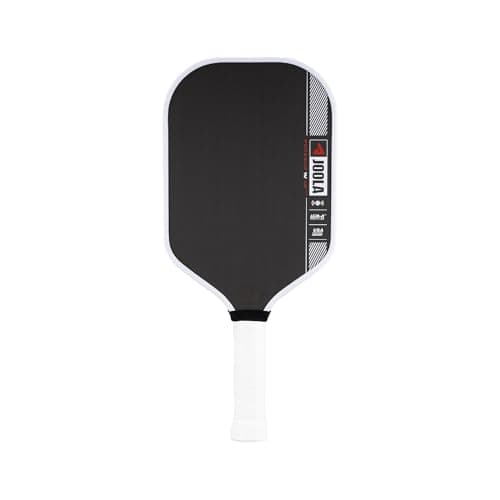
JOOLA's Gen-4 Perseus: thermoformed power and a grippy Charged surface, with the 16mm core adding forgiveness the 14mm gives up. Now the previous generation to the Pro V.
The Perseus Pro IV set the benchmark the rest of the power field chased, and JOOLA's March 2026 Pro V refines that formula rather than replacing it. The 16mm version trades a little raw pop for a larger, more forgiving sweet spot — the sensible pick if you want top-tier power without punishing off-center hits. Charged Surface Technology keeps spin high.
The 16mm Perseus Pro IV is the complete power package for most upgraders: thermoformed pop, a Charged surface that keeps spin high, and enough forgiveness to survive off-center hits. It is expensive and it is stiff, so if you want maximum pace and fast hands, look at the 14mm variant instead. But as one paddle to cover the whole court, this is the one the rest of the field is chasing.
- Core
- 16 mm
- Shape
- Hybrid
- Face
- Charged carbon-fiber surface (Tech-Flex)
- Weight
- ~8.0 oz
- Build
- Thermoformed
- Gen
- Pro IV (Gen 4)
Manufacturer-listed as USA Pickleball approved. Approvals and delistings change — verify against the current USAP equipment list before tournament play (checked 2026-07).
Who it's for
The JOOLA Ben Johns Perseus Pro IV 16mmis aimed squarely at the player Drive Dink is built for: you already own a decent paddle, you know your game, and you want to upgrade power without throwing away control and forgiveness in the process. This is the 16mm version of JOOLA's Gen-4 flagship — the sensible, all-court half of the Perseus family. It trades a sliver of the 14mm's raw pop for a larger, more forgiving sweet spot, which is exactly the deal most upgrading 3.5-to-4.5 players should take.
It is the top pick in our best power paddles roundup for a reason: it does the power thing better than almost anything at its price and still behaves like a paddle you can dink and reset with. If your game is built on ending points with pace but you refuse to become a liability at the kitchen line, start here. If you are chasing spin above all else, know that the spin roundup features the poppier 14mm Perseus instead — same face, different feel.
How it plays
Power
Power is the headline. The Perseus Pro IV is a thermoformed unibody — heat-molded into a single stiff shell that returns more energy to the ball than a cold-pressed paddle — and you feel it on drives and put-aways. The published verdict from JOOLA and the wider reviewer consensus is consistent: this is a genuine plus-power frame, and our editorial power score reflects that. The 16mm core softens the very top of that pace slightly versus the 14mm, but nobody is going to accuse this paddle of lacking pop.
Spin
The face is JOOLA's Charged carbon-fiber surface (Tech-Flex), and it grips. Reviewers consistently place the Charged surface near the top of the spin conversation, and independent labs such as Pickleball Studio publish measured spin RPM if you want exact figures — we cite their machine rather than pretend we ran our own. In play, that grip shows up most on topspin drives and dipping third-shot drops, where the ball bites and drops instead of sailing.
Control and feel
This is where the 16mm build earns its keep. The thicker core dampens the ball a touch more than the 14mm, so resets and dinks feel more predictable, and the sweet spot is bigger and more forgiving. It is still a stiff, powerful paddle — it will never feel as plush as a dedicated control frame — but of the two Perseus options this is the one you can trust when a ball catches the upper third of the face under pressure.
Specs and build
Here are the manufacturer-published specs for the 16mm version. The card above pulls the live price and our editorial scores; the table is the build at a glance.
| Spec | Perseus Pro IV 16mm |
|---|---|
| Shape | Hybrid |
| Core thickness | 16mm |
| Face | Charged carbon-fiber surface (Tech-Flex) |
| Construction | Thermoformed unibody |
| Generation | Pro IV (Gen 4) — succeeded by the Pro V in March 2026 |
| Listed weight | ~8.0 oz |
The hybrid shape splits the difference between a standard and an elongated frame — a bit more reach and leverage than a standard paddle, a bit more maneuverable than a full elongated one. If the whole thermoformed idea is new to you, our thermoformed paddles guide explains why the construction adds power, and our 14mm vs 16mm guide covers the core thickness trade-off that decides which Perseus you should buy.
Shape is a separate decision from core thickness, and JOOLA offers the identical Pro IV build in a second outline: the Hyperion Pro IV is this paddle with a curved top edge instead of a flat one, at the same listed dimensions and the same price. Reviewers consistently report the curve makes it quicker in hand battles and marginally less powerful. If you lose net exchanges on speed rather than pace, read that one before you buy this one.
16mm vs 14mm: which Perseus
JOOLA sells the Pro IV in two core thicknesses, and the second key exists for a reason. The 16mm reviewed here is the forgiving, all-court option: a bigger sweet spot, a more controllable feel, and only a small step down in raw speed. The 14mm variant is quicker through the air and livelier off the face — more spin and more pop, at the cost of a smaller margin for error. If you swing hard, play aggressively, and catch the ball clean, the 14mm rewards you; if you want one paddle that does everything and hides the occasional mishit, the 16mm is the smarter buy. Both share the identical Charged surface, so this is purely a feel decision, not a spin one.
Grit, longevity and what level it suits
Two honest caveats before you buy. First, longevity: the Charged surface is grippy, but like every textured performance face it loses a little bite as it wears — reviewers note this across the whole raw-carbon and charged-surface field, and independent labs track how spin decays over hundreds of games. A heavy daily player should expect the surface to soften over months; a casual player will get far longer. It is not a flaw unique to the Perseus, but it is real, and it is worth factoring into a flagship-price purchase rather than pretending the grit lasts forever.
Second, level. This is not a beginner's paddle. The stiffness and power reward a stroke that already generates its own pace and spin — a developing 3.0 still grooving fundamentals can find it hot and unforgiving, and the money is wasted until technique catches up. The player who gets the most from it is the 3.5-to-4.5-and-up upgrader who wants a flagship power frame that still behaves all-court. If that is you, the 16mm core is the version that flatters the widest range of shots; if you are earlier in your development, a more forgiving, lower-cost all-court paddle is the smarter first upgrade, and you can step up to a Perseus later.
Where it fits vs the alternatives
Start with its own successor. JOOLA launched the Pro V collection on March 3, 2026, which makes the Pro IV the previous generation. JOOLA says the move from Pro IV to Pro V centered on the throat: a patent-pending KineticFrame designed to flex on contact, paired with a raw-carbon face in place of the Charged surface. That is a refinement of the same thermoformed recipe rather than a new construction class, and JOOLA now advertises the Pro IV at a discount — so the older paddle has become the lower-cost way into the Perseus shape. Our Perseus Pro V review covers whether the newer paddle is worth the difference, and our Pro IV vs Pro V comparison puts the two side by side with a spec table and the live price gap. The other paddle most buyers weigh it against is the Six Zero Double Black Diamond; that head-to-head is our JOOLA vs Six Zero comparison.
Beyond JOOLA, the Perseus is not the only good answer. The Selkirk Amped Pro Air Invikta is the pick if you came from tennis and want a longer, elongated frame with more reach and a quieter, less harsh feel — the head-to-head lives in our Joola vs Selkirk comparison. The CRBN X-Series Powerchases a similar thermoformed pace but with a more solid, less hollow feel that some players prefer. And if the sticking point is price, the Six Zero Double Black Diamond and Vatic Pro Prism Flash both deliver a large chunk of the Perseus experience — compare the live prices, because the Pro IV's post-launch discounts mean it is no longer automatically the expensive option of the three.
Pros
- Top-tier thermoformed power with a Charged surface that keeps spin high.
- 16mm core gives a larger, more forgiving sweet spot than the 14mm.
- Hybrid shape balances reach and maneuverability.
- Flagship pedigree with a deep supply of independent measured data to check.
Cons
- No longer JOOLA's newest — the Pro V (March 2026) now sits above it in the Perseus line.
- Still a stiff, powerful frame; not a plush touch paddle.
- Spin-first, hard-swinging players may want the poppier 14mm instead.
What we'd skip it for
We would not point a pure control-and-touch player here. If your game is won at the kitchen with resets, dinks and placement rather than pace, a thicker, softer control frame will feel better in your hand and the Perseus's stiffness will fight you. We also would not tell a budget-conscious buyer this is mandatory: the Six Zero DBD and the Vatic Prism Flash cover most of the same ground, so let the live prices decide rather than the JOOLA name. Finally, if maximum spin and speed is the entire point of the upgrade, the 14mm Perseus — or a lighter, faster spin specialist — is the better call. This 16mm build is the all-court answer, not the specialist one.
The verdict
The JOOLA Perseus Pro IV 16mm set the benchmark the rest of the power field chased, and even with the Pro V now above it in JOOLA's line, the 16mm core makes it the version most players should actually buy. You get thermoformed pace, a genuinely grippy Charged surface, and a sweet spot forgiving enough to survive a bad day — the complete package if you want power without becoming a one-dimensional banger. It will never play like a soft touch paddle and it is no longer JOOLA's newest, but if you want one do-everything power frame, this is still the safest premium recommendation on the board. If you want to see how it stacks up against the whole field, the power roundup ranks it against every rival, and our methodology explains exactly how we score without a lab.
Two newer comparisons use this paddle as the benchmark: CRBN TruFoam vs JOOLA Pro IV, which sets it against a genuine foam core, and JOOLA vs Vatic Pro, which asks what the flagship premium buys when a value paddle matches it on every axis we score.
If you are deciding between this paddle and the rest of JOOLA's range rather than against another brand, our best JOOLA pickleball paddles page ranks all six models we cover and explains the grid — head shape, core thickness and generation — that the model names hide.
The other Pro IV flagship
JOOLA sells a second Pro IV paddle on this same platform — the Hyperion Pro IV, which shares the core, the throat foam and the outline but rounds off the top edge. If you are choosing between them, our Perseus Pro IV vs Hyperion Pro IV comparison lays out all nine published specs and names the one axis that separates them.
Is the JOOLA Perseus Pro IV worth the money?
For an upgrading player who wants top-tier power without giving up forgiveness, yes — it was the benchmark power paddle of its generation and the 16mm core keeps it playable all-court. JOOLA launched the Pro V in March 2026, which makes the Pro IV the previous generation and has brought discounts on it. The Six Zero Double Black Diamond and Vatic Pro Prism Flash deliver much of the same character, so compare live prices; the Perseus is worth it when you specifically want the Perseus shape and the Charged surface.
Should I get the 16mm or 14mm Perseus Pro IV?
Get the 16mm if you want a larger, more forgiving sweet spot and an all-court feel — it is the version most players should buy. Get the 14mm if you swing hard, play aggressively and want maximum pop and spin, and you consistently catch the ball clean. The face is identical, so it is a feel-and-forgiveness decision, not a spin one.
Does the Perseus Pro IV have good spin?
Yes. Its Charged carbon-fiber surface is consistently near the top of the spin conversation among reviewers, and independent labs like Pickleball Studio publish measured spin RPM if you want exact numbers. We compile those published and measured figures rather than run our own spin machine.
Is the Perseus Pro IV a control paddle?
Not primarily. It is a power-first thermoformed frame, and the 16mm core adds control and forgiveness relative to the 14mm, but it will never feel as soft as a dedicated control paddle. If touch and resets are your priority over pace, a thicker, more muted control paddle is a better match.
- Perseus Pro IV vs Hyperion Pro IV
- JOOLA Perseus: 14mm vs 16mm
- JOOLA Hyperion vs Perseus
- Paddletek vs JOOLA
- JOOLA Perseus Pro V — full review
- Joola vs CRBN — head to head
- Best Pickleball Paddles for Power (2026)
- Selkirk Amped Pro Air Invikta — full review
- Joola vs Selkirk — head to head
- 14mm vs 16mm: which core is right for you?
- Perseus vs Scorpeus — which JOOLA is yours?
- JOOLA Ben Johns Hyperion — full review
- JOOLA vs Gearbox — two kinds of power