JOOLA Perseus Pro IV: 14mm vs 16mm
Same shell, same face, same shape — two millimeters of core apart. This is the most consequential either/or in the paddle market, and JOOLA does not help you pick.
Disclosure: Drive Dink earns a commission from qualifying Amazon purchases at no extra cost to you. We accept no free products and no paid placements — commissions never change our picks. How this works.
This is not a comparison between two paddles. It is a comparison between two versions of the same paddle, which makes it a cleaner experiment than almost anything else on this site: identical Charged carbon face, identical hybrid shape, identical thermoformed shell, identical listed weight. The only variable is the core.
That is also what makes it hard. When everything else is held constant, the decision comes down to how you actually play — not to which paddle is better. Live Amazon prices for both are above. Units we claim to have tested: 0.
| # | Paddle | Best for | Score | Price |
|---|---|---|---|---|
| 1 | 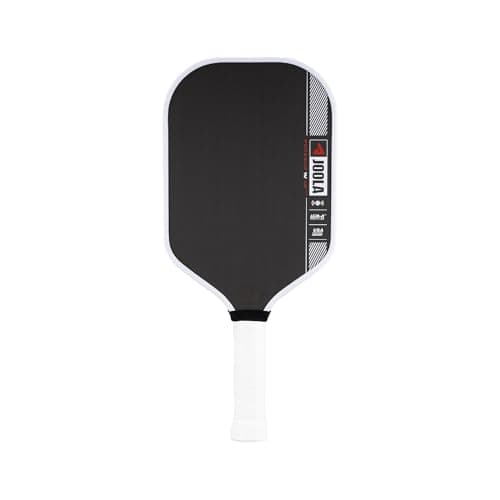 JOOLA Ben Johns Perseus Pro IV 16mm All-court power with a big sweet spot | The safer default | 8.3 | |
| 2 | 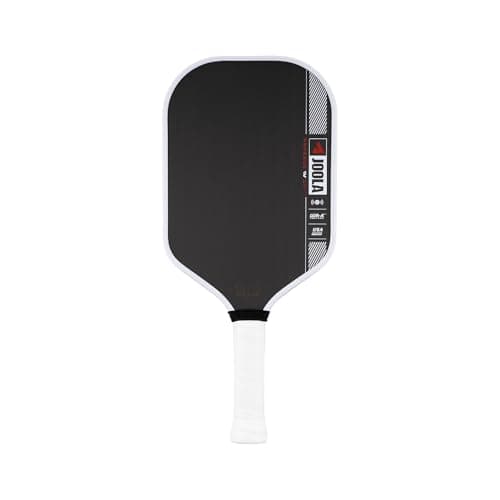 JOOLA Ben Johns Perseus Pro IV 14mm Fast hands + spin at the net | The hands-battle build | 7.8 | $149.95 · View on Amazon #adPrice as of October 24, 2026 |
Tap any row to jump to the full write-up. Prices are pulled live from Amazon.
JOOLA Ben Johns Perseus Pro IV 16mm
JOOLA's Gen-4 Perseus: thermoformed power and a grippy Charged surface, with the 16mm core adding forgiveness the 14mm gives up. Now the previous generation to the Pro V.
The Perseus Pro IV set the benchmark the rest of the power field chased, and JOOLA's March 2026 Pro V refines that formula rather than replacing it. The 16mm version trades a little raw pop for a larger, more forgiving sweet spot — the sensible pick if you want top-tier power without punishing off-center hits. Charged Surface Technology keeps spin high.
Two extra millimeters of polymer buy you a wider usable face and a longer dwell time on the ball, and neither costs you as much pace as the spec sheet implies. This is the version we would hand to a player who has not already decided — the extra forgiveness protects your worst shots, and a thermoformed Perseus has power to spare even in its softer build.
- Core
- 16 mm
- Shape
- Hybrid
- Face
- Charged carbon-fiber surface (Tech-Flex)
- Weight
- ~8.0 oz
- Build
- Thermoformed
- Gen
- Pro IV (Gen 4)
Manufacturer-listed as USA Pickleball approved. Approvals and delistings change — verify against the current USAP equipment list before tournament play (checked 2026-07).
JOOLA Ben Johns Perseus Pro IV 14mm
The 14mm Perseus is quicker and poppier than the 16mm — more spin and speed, less forgiveness. A hard-swinging aggressor's paddle.
Same Charged surface and thermoformed build as its 16mm sibling, but the thinner core makes it faster through the air and livelier off the face. You get more spin and more pop at the cost of a smaller margin for error — ideal if your game is built on speed and you catch the ball clean.
The 14mm gives up sweet-spot size and touch to buy speed off the face. In a hands battle at the kitchen line, where the ball is on the paddle for a fraction of a second and you are countering rather than shaping, that trade is worth making. It punishes off-center contact more sharply, which is exactly why it suits players who rarely miss the middle.
- Core
- 14 mm
- Shape
- Hybrid
- Face
- Charged carbon-fiber surface (Tech-Flex)
- Weight
- ~8.0 oz
- Build
- Thermoformed
- Gen
- Pro IV (Gen 4)
Manufacturer-listed as USA Pickleball approved. Approvals and delistings change — verify against the current USAP equipment list before tournament play (checked 2026-07).
Side by side
| Spec | Perseus Pro IV 16mm | Perseus Pro IV 14mm |
|---|---|---|
| Core thickness | 16 mm | 14 mm |
| Shape | Hybrid | Hybrid |
| Face | Charged carbon-fiber surface (Tech-Flex) | Charged carbon-fiber surface (Tech-Flex) |
| Build | Thermoformed | Thermoformed |
| Listed weight | ~8.0 oz | ~8.0 oz |
| Our spin score | 9 / 10 | 9 / 10 |
| Our power score | 9 / 10 | 9 / 10 |
| Our control score | 7 / 10 | 6 / 10 |
| Our forgiveness score | 8 / 10 | 7 / 10 |
Read that table honestly and the story is clear: spin and power are a wash, and the 16mm wins the two properties that decide how a paddle behaves when you are not perfect. That is not JOOLA marketing — it is what happens when you add polymer between the faces.
What two millimeters actually change
A pickleball core is a honeycomb of polymer cells. Make the cells taller and three things follow. The core compresses more at impact, which lengthens the time the ball spends on the face. The paddle becomes stiffer in bending across the face, which spreads energy further from the contact point. And the whole assembly damps more of the impact before it reaches your hand.
Longer dwell is why thicker paddles feel plush and why they are easier to shape a shot with — you have marginally more time to impart direction and spin before the ball leaves. Wider energy spread is why the sweet spot measures larger. More damping is why the 16mm is the friendlier paddle for an arm that has had a long week. Our 14mm vs 16mm core guide works through the physics in full, and applies to every brand, not just this one.
What thinner cores buy is a faster, more immediate response. Less compression means the ball leaves sooner, which registers as pop. Whether that translates into more measurable power is genuinely contested — many reviewers find thicker thermoformed paddles hit harder because the stiffer shell returns more energy — but it reliably translates into a quicker, more reactive feel.
Why the hybrid shape changes this decision
Most 14mm-versus-16mm arguments are conducted about elongated paddles, where the thinner core partly compensates for a long, unforgiving face. The Perseus Pro IV is a hybrid — shorter and slightly wider than a true elongated frame, which already puts more of its face within reach of the sweet spot.
That matters because the usual reason to buy 14mm is that you want a long paddle to feel quicker. On a hybrid, the paddle is already quicker. So the 14mm Perseus is not a corrective — it is a deliberate move further towards speed from a starting point that was already balanced. Our paddle shape guide covers what the hybrid outline gives up and gains against a true elongated frame.
Who should buy which
Buy the 16mm if you play mostly doubles, you spend more rallies resetting and dropping than counter-attacking, you have ever described a paddle as harsh, or you are honest enough to admit that a meaningful share of your contacts are not in the middle. It is also the pick if this is your first thermoformed paddle, because a stiff shell plus a thin core is a lot of change at once.
Buy the 14mm if you play a fast, front-of-court game where hands battles decide points, you already own a thin paddle and want to stay in that feel, or you are a singles player who wants the ball off the face quickly on drives. Our paddles for singles picks cover why that format shifts the calculation.
A note on skill level that gets skipped: this is not a beginner-versus-advanced split. Plenty of high-level players use 16mm because the forgiveness lets them swing harder with less risk. The 14mm is not a graduation.
Spin is the same, and that is the point
Both versions carry the same Charged surface, and surface texture — not core thickness — is what generates spin. We score both at the top of our range for that reason. If you are choosing between these two paddles on spin grounds, you are choosing on a variable that does not differ.
The one indirect effect is dwell time: a fractionally longer contact gives the face marginally more opportunity to grip and brush. It is a small edge to the 16mm, and it is nowhere near large enough to be a deciding factor. Our guide to how paddle spin works explains why the face does almost all the work here.
You can move one towards the other
If you buy the 14mm and find it unforgiving, adding weight at the 3 and 9 o'clock positions raises twist weight and measurably widens the usable face. It will not give you the 16mm's dwell time, but it addresses the specific failure — the paddle rotating on off-center contact — that most people mean when they call a thin paddle harsh. Our lead tape guide covers where to put it and how much.
The reverse is harder. You cannot make a 16mm paddle respond faster by adding mass; weight slows the head down. If you buy the 16mm and want more speed at the net, the honest fix is a lighter setup or a shorter swing, not tape.
The price question
Both versions carry the same list price, and both sit at the top of the market. If the live prices above happen to diverge — retailers discount the two SKUs independently and often unevenly — a meaningful gap is a legitimate tiebreaker between two paddles this closely matched. Our guide to how much a pickleball paddle should cost sets out what flagship money is actually buying.
Verdict
The 16mm is the better paddle for more players, and it is the one we rank first in our best power paddles roundup. It gives up almost nothing measurable and returns a wider sweet spot, a softer arm experience and better touch on the soft game — advantages that show up on every shot, not just the ones you hit cleanly.
The 14mm is not a lesser paddle; it is a narrower one. If your game is built around speed at the kitchen line and you consistently find the middle of the face, it will feel faster in your hands than the 16mm ever does, and that feeling is worth something real. Just do not buy it because it sounds like the more serious option. For the full write-up of the paddle itself, see our JOOLA Perseus Pro IV review; for whether the newer generation changes this decision, our Pro IV vs Pro V comparison. And if you want to see each core against the rest of the market, our best 16mm paddles and best 14mm paddles pages rank the field by thickness.
Is the 14mm or 16mm Perseus more powerful?
We score both at the top of our power range. The 14mm feels quicker off the face because the core compresses less, but the thermoformed shell is doing most of the power work in both versions, and several reviewers find thicker thermoformed paddles hit harder rather than softer. Choose on feel and forgiveness, not on an expected power gap.
Does core thickness change how much spin a paddle generates?
Barely. Spin comes from the face texture, and both Perseus versions use the same Charged carbon surface. A thicker core holds the ball on the face fractionally longer, which is a marginal advantage to the 16mm, but it is not large enough to decide the purchase.
Which Perseus is better for doubles?
The 16mm for most doubles players. Doubles is decided by resets, drops and dinks far more than by drives, and those shots reward dwell time and a wide sweet spot. The 14mm suits doubles players whose points are won in fast hands battles at the kitchen line rather than in the soft game.
Can I make the 14mm more forgiving?
Partly. Adding tape at 3 and 9 o'clock raises twist weight, which is the property that resists the paddle rotating on off-center contact, and that measurably widens the usable face. It will not replicate the 16mm's longer dwell time or its softer feel, but it addresses the most common complaint about thin cores and it is cheap and reversible.