JOOLA Perseus Pro IV vs Pro V
JOOLA changed two things and kept the rest. Whether the two things are worth the price gap is the whole decision — and for most Perseus buyers, the answer is not the one the generation number suggests.
Disclosure: Drive Dink earns a commission from qualifying Amazon purchases at no extra cost to you. We accept no free products and no paid placements — commissions never change our picks. How this works.
This is the comparison a lot of Perseus owners are running in their heads right now: keep the Pro IV, or move to the Pro V? And it is the comparison a lot of first-time Perseus buyers are running the other way: buy the discounted previous generation, or pay for the current one? Both questions have the same answer, and it depends on two changes JOOLA made and one thing it did not — the price.
Live Amazon prices for both are above; the gap between them is the most important number on this page. Units we claim to have tested: 0.Everything below is read from JOOLA's published specifications and launch material, our editorial scores and the consistent reviewer record.
| # | Paddle | Best for | Score | Price |
|---|---|---|---|---|
| 1 | 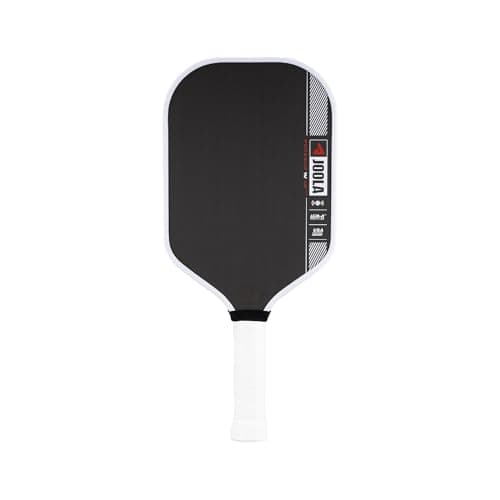 JOOLA Ben Johns Perseus Pro IV 16mm All-court power with a big sweet spot | The value pick, now discounted | 8.3 | |
| 2 | 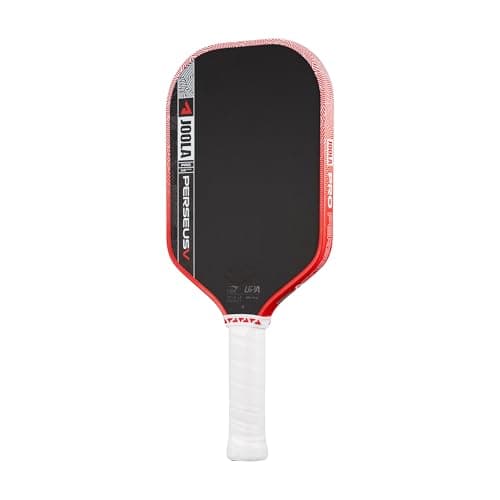 JOOLA Perseus Pro V Buyers who want JOOLA's newest generation | The current generation | 8.3 | $299.95 · View on Amazon #adPrice as of September 17, 2026 |
Tap any row to jump to the full write-up. Prices are pulled live from Amazon.
JOOLA Ben Johns Perseus Pro IV 16mm
JOOLA's Gen-4 Perseus: thermoformed power and a grippy Charged surface, with the 16mm core adding forgiveness the 14mm gives up. Now the previous generation to the Pro V.
The Perseus Pro IV set the benchmark the rest of the power field chased, and JOOLA's March 2026 Pro V refines that formula rather than replacing it. The 16mm version trades a little raw pop for a larger, more forgiving sweet spot — the sensible pick if you want top-tier power without punishing off-center hits. Charged Surface Technology keeps spin high.
The paddle the power field measured itself against, and now the previous generation — which is the best thing that has happened to its price. The Pro IV 16mm keeps everything that made the Perseus the reference: a thermoformed hybrid frame with a 9 on our power axis, JOOLA's Charged carbon surface with a 9 on spin, and a 16mm core that keeps the sweet spot large. JOOLA itself has discounted it since the Pro V launched. Our scores for the two generations are identical on all four axes, which is the con for the Pro V rather than for this paddle; the Pro IV's only real con is that it is no longer the newest thing in the bag.
- Core
- 16 mm
- Shape
- Hybrid
- Face
- Charged carbon-fiber surface (Tech-Flex)
- Weight
- ~8.0 oz
- Build
- Thermoformed
- Gen
- Pro IV (Gen 4)
Manufacturer-listed as USA Pickleball approved. Approvals and delistings change — verify against the current USAP equipment list before tournament play (checked 2026-07).
JOOLA Perseus Pro V
JOOLA's newest Perseus generation — a raw-carbon face for spin and a flexing KineticFrame throat over the familiar thermoformed power, offered in 14mm and 16mm.
Launched in March 2026, the Pro V changes the Perseus formula in two places: a raw-carbon hitting surface aimed at spin, and JOOLA's patent-pending KineticFrame, a slimmer throat built to flex on contact. It's the priciest paddle we cover; whether it's worth the jump over a Pro IV comes down to feel preference more than a spec gap.
Launched March 3, 2026, the Pro V changes the Perseus in two places. The Charged surface gives way to a raw carbon-fiber texture — the unpainted, exposed-weave face that anchors the top of the measured spin charts — and the throat becomes JOOLA's patent-pending KineticFrame, a slimmer neck built to flex on contact, which JOOLA describes as the focus of the redesign. The hybrid shape, the 14mm and 16mm options, the thermoformed unibody and the listed weight carry over. It is the priciest paddle we cover, and the con is exactly that: our scores match the Pro IV on every axis, so what you are paying for is feel and the newest face, not a specification gap.
- Core
- 16 mm
- Shape
- Hybrid
- Face
- Raw carbon-fiber texture
- Weight
- ~8.0 oz
- Build
- Thermoformed
- Gen
- Pro V (Gen 5)
Manufacturer-listed as USA Pickleball approved. Approvals and delistings change — verify against the current USAP equipment list before tournament play (checked 2026-07).
Side by side
| Spec | Perseus Pro IV (16mm) | Perseus Pro V (16mm) |
|---|---|---|
| Generation | Pro IV (Gen 4) | Pro V (Gen 5), launched March 2026 |
| Face | Charged carbon-fiber surface (Tech-Flex) | Raw carbon-fiber texture |
| Throat | Conventional Perseus throat | KineticFrame (patent-pending, built to flex on contact) |
| Shape | Hybrid | Hybrid |
| Core options | 14 mm / 16 mm | 14 mm / 16 mm |
| Build | Thermoformed unibody | Thermoformed unibody |
| Listed weight | ~8.0 oz | ~8.0 oz |
| Our spin score | 9 / 10 | 9 / 10 |
| Our power score | 9 / 10 | 9 / 10 |
| Our control score | 7 / 10 | 7 / 10 |
| Our forgiveness score | 8 / 10 | 8 / 10 |
Four identical scores. That is not us being lazy — it is what happens when a brand changes the face finish and the throat geometry and leaves the core, the shape, the shell and the weight alone. The specification that decides most of a paddle's character did not move, so neither did our numbers.
What changed: the face
The visible change. The Pro IV used JOOLA's Charged carbon-fiber surface, a treated finish over the carbon designed for grip. The Pro V moves to a raw carbon-fiber texture — an unpainted, exposed weave of the kind that Six Zero, Vatic Pro and CRBN built their spin reputations on, and that anchors the top of the measured spin charts independent labs publish. JOOLA adopting it for its flagship is a meaningful signal about where the category has landed. We score both faces a 9 on spin, because both sit at the top of the range; the honest difference is feel and, arguably, wear pattern rather than peak grip. Every raw face polishes smooth with heavy play, and our grit durability guide explains why that is a cost to price in. Our best carbon fiber paddles page ranks treated and raw surfaces side by side.
What changed: the throat
The change JOOLA says mattered most. The Pro V introduces KineticFrame, a patent-pending slimmer throat built to flex on contact; JOOLA's own launch material describes the Pro IV-to-Pro V redesign as centered on restructuring the throat. In plain terms, JOOLA is trying to get more energy return and a livelier feel out of the neck of the paddle without changing the shell that surrounds the core. We cannot measure the effect ourselves, and neither can most of the people describing it; what the reviewer record consistently reports is a difference in feel rather than a step-change in pace, which is why our power score did not move.
What stayed the same
Almost everything that decides how a Perseus plays. The hybrid shape — shorter and slightly wider than a true elongated frame, with most of the reach and a lower, wider sweet spot — is unchanged, and it remains the quiet advantage of the whole line. Both generations are offered in 14mm and 16mm, and the choice between those two cores is a bigger decision than the choice between generations; our Perseus 14mm vs 16mm comparison works through it. The thermoformed unibody construction and the listed weight carry over. If you know how a Pro IV feels in your hand, you know roughly how a Pro V will, and JOOLA describes the Pro V as a refinement of that feel rather than a replacement for it.
The price, which is the actual decision
The Pro V is the most expensive paddle we cover. The Pro IV, since March, has been the previous generation — and JOOLA has discounted it on its own store since the launch, with retailers following. The gap between the two live prices at the top of this page is the number that should decide this purchase, because the specification gap is zero on our scorecard and the feel gap is a preference. When the gap is large, the Pro IV is one of the best-value flagship-grade paddles on the market. When it narrows — and it will, in the run-up to Black Friday and as Pro IV stock thins — the Pro V becomes the sensible buy for anyone who wants the newest face. Our guide to how much a paddle should cost sets out what flagship money is actually buying.
Should a Pro IV owner upgrade?
Usually not yet. If your Pro IV is in good condition, the Pro V gives you a different face finish and a redesigned throat for full flagship money — a feel change, not a performance tier. The exception is a Pro IV whose Charged surface has worn smooth: at that point you are buying a paddle anyway, and the question becomes whether you want a fresh Pro IV at a discount or a Pro V at full price, which is the same decision a first-time buyer faces. Our worn-out paddle guide explains how to tell whether the face is done or merely dirty; run that check before you spend either amount.
Who should buy which
Buy the Pro IV if you are buying a Perseus for the first time and the live price gap is meaningful; you want the paddle with the longest track record and the most stable reviewer consensus; or you prefer a treated carbon surface to a raw one. It is still our #1 pick on the best power paddles and best spin paddles roundups.
Buy the Pro V if you want a raw carbon face on a Perseus frame and would rather not wait for a Pro IV to wear out to get one; you have hit both and prefer the KineticFrame feel; or the price gap has closed to the point where the previous generation is no longer a bargain. It is the paddle JOOLA built for a player who has already decided a Perseus is right and wants the current version of it.
Buy neither if you are still working out whether you want power, spin or forgiveness first — start with how to choose a paddle — or if control is the weakness you are fixing, in which case the Scorpeus Pro IV or our JOOLA vs Six Zero comparison is the better read.
Verdict
The Pro V is the better paddle by the smallest margin we can honestly describe — a newer face and a redesigned throat, on a spec sheet that otherwise did not move — and the Pro IV is the better purchase for most people while the price gap lasts. Buy the generation the live prices point you to, not the one the number on the throat does. For the full write-ups, see our Perseus Pro IV review and our Perseus Pro V review.
What is the difference between the JOOLA Perseus Pro IV and Pro V?
Two things. The Pro V replaces the Pro IV's Charged carbon surface with a raw carbon-fiber texture, and it introduces JOOLA's patent-pending KineticFrame, a slimmer throat built to flex on contact. The hybrid shape, the 14mm and 16mm core options, the thermoformed unibody construction and the listed weight are unchanged. Our scores for the two are identical on spin, power, control and forgiveness.
Is the Perseus Pro V worth it over the Pro IV?
For most buyers, not while the Pro IV is discounted. The Pro V is the most expensive paddle we cover, and what it buys over the Pro IV is a different face finish and throat geometry — a feel change rather than a performance tier. If the live price gap is small, or you specifically want a raw carbon face on a Perseus frame, the Pro V is the sensible buy.
Should I upgrade from a Perseus Pro IV to a Pro V?
Not if your Pro IV is in good condition. The Pro V does not out-score it on any axis we track. If your Pro IV's face has worn smooth and you are buying a paddle anyway, then compare a fresh discounted Pro IV against a full-price Pro V on the live prices, which is the same decision a first-time buyer faces.
Is the Perseus Pro V more powerful than the Pro IV?
We score both a 9 on power. JOOLA's KineticFrame is designed for more energy return from the throat, but the shell, core and shape that do most of the power work are unchanged, and the reviewer record consistently describes a difference in feel rather than a step-change in pace.
Does the Pro V spin more than the Pro IV?
Marginally at most. The Pro V's raw carbon texture is the surface family that anchors the top of the measured spin charts, but the Pro IV's Charged surface already sits in that range, and we score both a 9. The practical difference is feel and wear pattern: every raw face polishes smooth with heavy play, so budget for grit durability either way.