JOOLA vs Six Zero: Perseus vs Double Black Diamond
The flagship brand against the balance brand, on the two 16mm paddles that define them. One wins on power and face grip; the other wins on control and forgiveness. Which one wins for you depends on the weakness you are fixing.
Disclosure: Drive Dink earns a commission from qualifying Amazon purchases at no extra cost to you. We accept no free products and no paid placements — commissions never change our picks. How this works.
"JOOLA vs Six Zero" is really one question wearing a brand name: should I buy the Perseus or the Double Black Diamond? Those are the two 16mm thermoformed paddles that upgrading players cross-shop most, and they represent their brands honestly. JOOLA is the flagship maker — the Ben Johns signature, a numbered generation that keeps moving on, and a price to match. Six Zero sits between the flagships and the value tier and competes on balance: paddles with no weak axis, at money that is neither cheap nor flagship. This page compares the two paddles first and the two brands second, because the paddle is what you actually buy.
Live Amazon prices for both are above. Units we claim to have tested: 0. Everything below is read from published specifications, our editorial scores and the consistent reviewer record.
| # | Paddle | Best for | Score | Price |
|---|---|---|---|---|
| 1 | 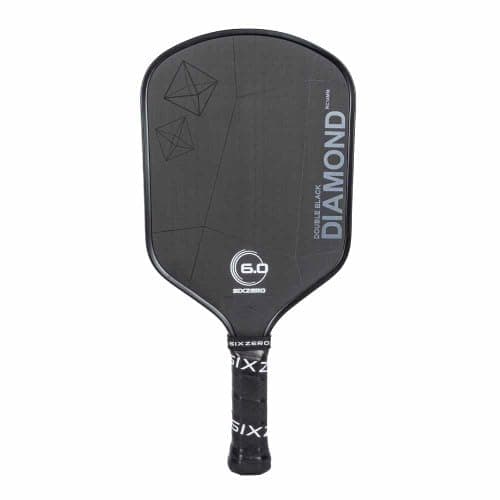 Six Zero Double Black Diamond 16mm All-court value with a huge sweet spot | Wins on balance, control and forgiveness | 8.5 | $180.00 · View on Amazon #adPrice as of September 17, 2026 |
| 2 | 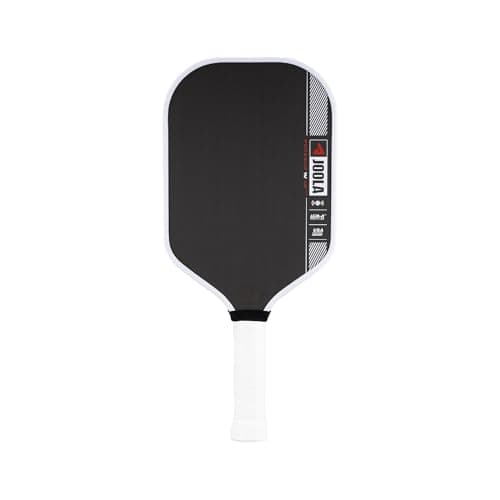 JOOLA Ben Johns Perseus Pro IV 16mm All-court power with a big sweet spot | Wins on power and face grip | 8.3 |
Tap any row to jump to the full write-up. Prices are pulled live from Amazon.
Six Zero Double Black Diamond 16mm
The internet's default 'do-it-all' recommendation: thermoformed power, a raw-carbon spin face, and a famously forgiving sweet spot at a fair price.
The DBD earned its reputation honestly. The 16mm Control build blends thermoformed pop with one of the most forgiving sweet spots in its class, and the raw T700 face grabs the ball for spin. It's the paddle we point undecided upgraders to first.
The Double Black Diamond is the paddle that made Six Zero, and the reason is on its scorecard: an 8 on spin and power, a 9 on control and forgiveness, with no weak axis. A raw Toray T700 face over a thermoformed unibody shell in a 16mm Control build, it is the paddle we point undecided upgraders to first and our overall all-court pick. Against the Perseus it gives up a point on spin and power and takes two back on control and one on forgiveness. The con is the long outline — it swings heavier than the hybrid Perseus — and a Gen 2 foam-wall construction the newest foam-core builds have edged past.
- Core
- 16 mm
- Shape
- Elongated
- Face
- Raw Toray T700 carbon fiber
- Weight
- ~8.0 oz
- Build
- Thermoformed
- Gen
- Control (Gen 2 thermoformed)
Manufacturer-listed as USA Pickleball approved. Approvals and delistings change — verify against the current USAP equipment list before tournament play (checked 2026-07).
JOOLA Ben Johns Perseus Pro IV 16mm
JOOLA's Gen-4 Perseus: thermoformed power and a grippy Charged surface, with the 16mm core adding forgiveness the 14mm gives up. Now the previous generation to the Pro V.
The Perseus Pro IV set the benchmark the rest of the power field chased, and JOOLA's March 2026 Pro V refines that formula rather than replacing it. The 16mm version trades a little raw pop for a larger, more forgiving sweet spot — the sensible pick if you want top-tier power without punishing off-center hits. Charged Surface Technology keeps spin high.
The paddle the rest of the power field measured itself against. JOOLA's Pro IV generation pairs a thermoformed hybrid frame with the Charged carbon surface, and the 16mm core is the version to cross-shop against the DBD: a 9 on spin and power, a 7 on control, an 8 on forgiveness. The hybrid shape is the quiet advantage — most of an elongated frame's reach with a lower, wider sweet spot and quicker hands. The cons are the two points it gives up on control, and that it is now the previous generation to the Pro V; the live price on the buy button will tell you whether that makes it a bargain today.
- Core
- 16 mm
- Shape
- Hybrid
- Face
- Charged carbon-fiber surface (Tech-Flex)
- Weight
- ~8.0 oz
- Build
- Thermoformed
- Gen
- Pro IV (Gen 4)
Manufacturer-listed as USA Pickleball approved. Approvals and delistings change — verify against the current USAP equipment list before tournament play (checked 2026-07).
Side by side
| Spec | Six Zero Double Black Diamond 16mm | JOOLA Perseus Pro IV 16mm |
|---|---|---|
| Core thickness | 16 mm | 16 mm |
| Shape | Elongated | Hybrid |
| Face | Raw Toray T700 carbon fiber | Charged carbon-fiber surface (Tech-Flex) |
| Build | Thermoformed (Gen 2, foam perimeter walls) | Thermoformed (Pro IV, Gen 4) |
| Listed weight | ~8.0 oz | ~8.0 oz |
| Also offered in | 14 mm | 14 mm |
| Our spin score | 8 / 10 | 9 / 10 |
| Our power score | 8 / 10 | 9 / 10 |
| Our control score | 9 / 10 | 7 / 10 |
| Our forgiveness score | 9 / 10 | 8 / 10 |
Read the table honestly and the split is clean. The Perseus takes spin and power by a point each; the DBD takes control by two and forgiveness by one. Neither paddle has a bad axis. That is what makes this a real decision rather than a ranking.
The same recipe, spent differently
Both paddles are 16mm thermoformed unibody builds with a carbon face, which means the construction that decides most of a paddle's character is shared. What differs is where each brand spent its engineering. JOOLA spent it on the face and the frame: the Charged surface is a treated carbon designed for grip, and the hybrid outline is JOOLA's answer to the elongated paddle's swing weight — a slightly shorter, wider frame that keeps most of the reach and gets the sweet spot lower. Six Zero spent it on the core and the tuning: the "Control" in the DBD 16mm's name is not decoration, and the result is a thermoformed paddle that was stable and forgiving at a time when most of them were harsh. Our thermoformed paddles guide covers the shared construction; our paddle shape guide covers why the outline difference matters.
Spin: treated surface vs raw weave
This is the most interesting axis, because the two brands took opposite approaches and both work. Six Zero exposes a raw Toray T700 weave and lets the natural texture grip the ball. JOOLA applies its Charged finish over the carbon. We score the Perseus a point higher, in line with the measured spin data independent labs publish, but the gap is small enough that a slightly worn Perseus and a fresh DBD would likely swap places. The larger practical difference is wear: every raw face polishes smooth with play, and our grit durability guide explains why that is the real cost of a spin paddle. Six Zero's own answer to that problem is the Ruby Pro, not the DBD. For the mechanism itself, see how paddle spin works.
Power: a point apart, and why
The Perseus is a power paddle that behaves; the DBD is an all-court paddle that drives properly. We score them 9 and 8, and the point comes mostly from JOOLA's newer shell — the Pro IV is a fourth-generation thermoformed build, the DBD 16mm is a second-generation one — and from the hybrid frame's leverage. If pace is the weakness you are fixing, the Perseus is the honest pick and our best power paddles roundup ranks it first. If pace is already fine, the point is not worth what it costs you on the next two axes.
Control and forgiveness: where the DBD earns its reputation
Two points on control is the largest gap on the table, and it is the one that decides most purchases. The DBD's 16mm Control build holds the ball fractionally longer and stays stable further out toward the edges, which is why it carries our joint-highest forgiveness score in the whole catalog and leads our control and all-court roundup and our most forgiving paddles page. The Perseus is not unforgiving — an 8 is very good — but it is a power frame first, and a slightly late reset shows it. If the shots costing you points are the ones you caught late or off-center, the DBD is the paddle for you regardless of which brand you walked in wanting.
Shape: elongated vs hybrid
The DBD is a long frame; the Perseus is a hybrid — shorter and slightly wider. That gives the Perseus quicker hands at the kitchen and a lower, wider sweet spot, and gives the DBD marginally more reach and leverage. For a doubles player who lives at the line, the hybrid's hand speed is a real advantage and partly offsets the control gap. For a singles player or a former tennis player who wants reach, the DBD's outline suits. Our best elongated paddles page covers the trade in full.
The rest of each line
If neither 16mm paddle is quite right, both brands sell the answer next door. JOOLA's Scorpeus Pro IVis the same shell in a standard shape for a player who wants JOOLA's power tech with a control-first feel; the Perseus Pro V is the newer generation with a raw carbon face — our Pro IV vs Pro V comparison covers whether it is worth the jump — and the Hyperionis the previous-era cold-pressed flagship now sold well below current money. Six Zero's DBD 14mm is the same paddle with more pop and less forgiveness, and the Ruby Pro is the brand competing on how long a face stays good rather than how good it is new. Our paddle brands guide covers what each company is genuinely good at.
Who should buy which
Buy the Six Zero DBD 16mm if you want one paddle with no weak axis, your points are lost on late or off-center contact more than on a lack of pace, you play mostly doubles and spend more rallies resetting than counter-attacking, or you are choosing your first thermoformed paddle and want the forgiving version of the construction.
Buy the JOOLA Perseus Pro IV 16mm ifpace is the weakness you are fixing, you want the grippiest face of the two, you play a fast front-of-court game where the hybrid frame's hand speed matters, or you want the paddle with the most current generation-to-generation development behind it.
Price is a legitimate tiebreaker. Both paddles sit in the mid-to-upper tier, and retailers discount them independently — the Perseus in particular has moved since the Pro V launched. If the live prices above have a meaningful gap, that gap is worth more than a single point on one axis. Our guide to how much a paddle should cost sets out what each tier is actually buying.
Verdict
The Double Black Diamond is the better paddle for more players, and it is the one we rank first in our all-court roundup for that reason: it gives up a point each on spin and power and returns two on control and one on forgiveness, advantages that show up on every shot rather than just the ones you hit cleanly. The Perseus Pro IV is the better paddle for the specific player whose game is built on pace and grip and whose contact is consistent enough to cash the extra point in. Neither is a mistake. For the full write-ups, see our Double Black Diamond review and our Perseus Pro IV review.
Is JOOLA or Six Zero better?
Neither brand is better across the board. JOOLA leads on power and face grip and has the most current generation-to-generation development; Six Zero leads on balance, control and forgiveness at lower money. On the two paddles people actually cross-shop, the Perseus Pro IV 16mm wins spin and power by a point each and the Double Black Diamond 16mm wins control by two and forgiveness by one.
Is the JOOLA Perseus or the Six Zero Double Black Diamond better?
For more players, the Double Black Diamond 16mm: no weak axis, our joint-highest forgiveness score, and a lower price. For a player whose weakness is pace and whose contact is consistent, the Perseus Pro IV 16mm: a point more spin and power, and a hybrid frame with quicker hands.
Which is more forgiving, JOOLA or Six Zero?
Six Zero, on these two paddles. The Double Black Diamond 16mm carries our joint-highest forgiveness score in the catalog and holds the ball fractionally longer than the Perseus. The Perseus Pro IV 16mm is still a forgiving paddle by power-frame standards, and its hybrid shape puts the sweet spot lower and wider than a true elongated frame.
Is the Six Zero DBD a cheaper JOOLA Perseus?
No. They share a core thickness and a thermoformed construction, but they are tuned differently — the DBD for control and stability, the Perseus for pace and grip — and they use different shapes and different face technologies. The DBD usually costs less, but it is a different paddle, not a discount version of the same one.