JOOLA Perseus Pro V Review
JOOLA's newest Perseus generation, read from its published specs — a raw-carbon hitting surface over the familiar thermoformed power, at the steepest price we cover.
Disclosure: Drive Dink earns a commission from qualifying Amazon purchases at no extra cost to you. We accept no free products and no paid placements — commissions never change our picks. How this works.
JOOLA's Perseus line has been the reference point for power paddles for years, and the Pro V is the newest chapter — a raw-carbon hitting surface bolted onto the thermoformed formula everyone already knows. It is also the most expensive paddle on our board, which makes the real question not "is it good" but "is it worth the jump." Everything below is read from published specs and reviewer consensus; we have not hit this paddle ourselves and we will not pretend otherwise.
JOOLA Perseus Pro V
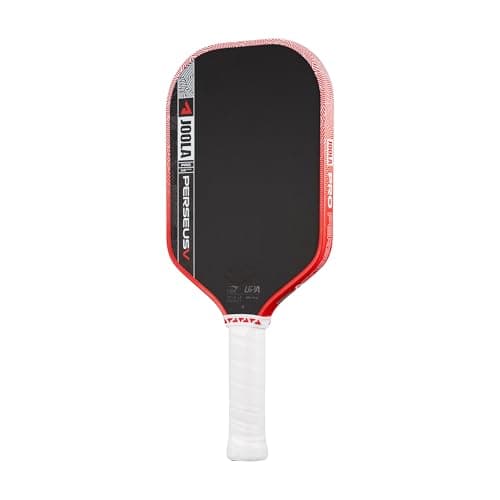
JOOLA's newest Perseus generation — a raw-carbon face for spin and a flexing KineticFrame throat over the familiar thermoformed power, offered in 14mm and 16mm.
Launched in March 2026, the Pro V changes the Perseus formula in two places: a raw-carbon hitting surface aimed at spin, and JOOLA's patent-pending KineticFrame, a slimmer throat built to flex on contact. It's the priciest paddle we cover; whether it's worth the jump over a Pro IV comes down to feel preference more than a spec gap.
The Pro V is JOOLA taking its flagship formula and changing the one thing everyone argues about: the face. A raw-carbon hitting surface replaces the Charged surface of the Pro IV, the thermoformed power carries over, and the result is the most expensive paddle on our board. Whether it justifies the jump over a Pro IV comes down to feel preference rather than a spec gap — which is exactly why we would only push it on a player who already knows what they want from a Perseus.
- Core
- 16 mm
- Shape
- Hybrid
- Face
- Raw carbon-fiber texture
- Weight
- ~8.0 oz
- Build
- Thermoformed
- Gen
- Pro V (Gen 5)
Manufacturer-listed as USA Pickleball approved. Approvals and delistings change — verify against the current USAP equipment list before tournament play (checked 2026-07).
Who it's for
The JOOLA Perseus Pro Vis for the player who has already decided that a Perseus is the right shape of paddle for their game and now wants JOOLA's newest version of it. That is a narrower buyer than it sounds. If you are still working out whether you want power, spin or forgiveness first, start with how to choose a paddle instead — the Pro V is a refinement of a known quantity, not an entry point. But if you have hit a Perseus, liked the hybrid shape and the thermoformed pop, and simply want the current generation with a raw-carbon face, this is the paddle JOOLA built for you.
The published spec sheet points at an aggressive 4.0-and-up player. The hybrid shape sits between a standard and an elongated frame, so you get some extra reach and leverage without the sluggishness of a full elongated body, and the 16mm core is the more forgiving of the two thicknesses JOOLA offers. In practice this is a power-first paddle that has been tuned to still behave at the kitchen line, which is the same brief the Perseus family has always answered. It sits at the top of our power paddles roundup tier on price and it is one of the paddles we point at in our spin roundup when someone wants a flagship raw-carbon face rather than a value one.
Who it is not for: anyone shopping on value, anyone who needs a soft touch paddle, and anyone hoping that a newer generation number will fix a technique problem. The Pro V is a premium-tier purchase, and the gap between it and a well-chosen paddle at half the money is smaller than the price gap suggests.
How it plays
Power
Power is the through-line of the whole Perseus line and the Pro V does not step away from it. The construction is a thermoformed unibody — heat-molded into a single stiff shell with a foam-filled perimeter, which is the build that returns more energy to the ball than a traditional cold-pressed paddle. That is why the whole thermoformed category hits harder, and our thermoformed paddles guide explains the mechanism in detail. JOOLA's own published positioning for the Pro V keeps it in the plus-power bracket, and reviewers consistently report the same thing they reported about the Pro IV: this is a paddle that punishes a ball that sits up. Our editorial power score sits at the top of our range for exactly that reason.
The 16mm core is the important qualifier. A thicker core damps the face slightly and costs a sliver of top-end pace compared with the 14mm build JOOLA also sells, and it buys a bigger, steadier sweet spot in return. For most players that is the right trade, and it is the same reasoning we applied to the Perseus Pro IV.
Spin
This is the change you can see. The Pro IV used JOOLA's Charged carbon-fiber surface; the Pro V moves to a raw carbon-fiber texture — an unpainted, textured carbon face of the kind that anchors the top of the measured spin charts. Raw carbon is the surface family that made Six Zero, Vatic Pro and CRBN credible on spin in the first place, and JOOLA adopting it for its flagship is a meaningful signal about where the category has landed. If you want measured numbers rather than adjectives, independent labs like Pickleball Studio publish spin RPM figures across the raw-carbon field; we cite their machine rather than invent our own results.
The trade that comes with raw carbon is grit longevity. Textured carbon grips hardest when it is new and gradually polishes smoother with heavy play — that is a property of the material, not a defect in this paddle, and it applies to every raw-carbon face on the market. Our guide to how spin actually works covers why surface texture matters more than any other single variable, and if grit that lasts is your top priority, read the section below on what we would skip this paddle for.
Control and feel
JOOLA describes the Pro V as a refinement of the Perseus feel, and that is the honest way to frame it. The 16mm core, the hybrid shape and the thermoformed shell together produce a paddle that is stiff and direct but not harsh, with a sweet spot generous enough that a slightly late block still goes where you aimed. Our editorial control score is solid rather than exceptional, and that is deliberate: this is a power frame that behaves well, not a dedicated touch paddle. Resets and dinks are perfectly playable, but a thicker, softer control frame will always feel plusher in the hand. If control is the weakness you are trying to fix, our control and all-court roundup is the better starting point.
Specs and build
These are the manufacturer-published specs. The card above pulls the live price and our editorial scores; the table is the build at a glance.
| Spec | JOOLA Perseus Pro V |
|---|---|
| Shape | Hybrid |
| Core thickness | 16mm (14mm also offered) |
| Face | Raw carbon-fiber texture |
| Construction | Thermoformed unibody |
| Throat | KineticFrame (patent-pending, built to flex on contact) |
| Generation | Pro V (Gen 5), launched March 2026 |
| Listed weight | ~8.0 oz |
Two of those rows deserve a note. The hybrid shape is the Perseus signature — longer than a standard paddle, shorter than a true elongated one — and it is a large part of why the line suits so many players. If you are unsure whether that shape suits your game, our elongated vs standard shape guide walks through the reach-versus-maneuverability trade. The core thickness row matters just as much: JOOLA sells the Pro V in both 14mm and 16mm, and the two play noticeably differently. The 14mm is quicker through the air and livelier off the face with a smaller margin on mishits; the 16mm reviewed here is the forgiving all-court option. Our 14mm vs 16mm guide is the deciding read if you are torn.
On approvals, JOOLA lists the Perseus line as USA Pickleball approved, but approvals and delistings change, so verify against the current USAP approved paddle list before tournament play. Our guide to USAP-approved paddles explains why that list moves and how to check it in thirty seconds.
Pro V vs Pro IV: is the upgrade real?
This is the question every Perseus owner actually asks, so here is the straight answer: the difference is a frame and surface refinement, not a new construction class. Both are thermoformed hybrid paddles at roughly the same listed weight with the same core thickness options. JOOLA launched the Pro V on March 3, 2026, and says the move from Pro IV to Pro V centered on the throat: the patent-pending KineticFrameis a slimmer throat structure designed to flex on contact and release that energy into the shot, which JOOLA pitches as sharper feel and ball placement without sacrificing power. The other change is the face — the Pro IV runs JOOLA's Charged carbon-fiber surface; the Pro V runs a raw carbon texture. Both grip well, both sit high in the spin conversation, and reviewers who have hit both tend to describe the choice in terms of preference rather than superiority.
What that means practically: if you already own a Pro IV and it is not worn out, the Pro V is not a mandatory upgrade, and we would not tell you otherwise to earn a commission. If you are buying your first flagship Perseus and the price difference is not decisive, the Pro V is the current generation and the raw-carbon face is the surface most of the market has converged on. If the price difference is decisive, the Pro IV remains an outstanding paddle and the money you save covers a year of balls and a decent bag. Our Pro IV vs Pro V comparison lays the two generations out in a spec table with the live price gap.
How it compares
Against the CRBN X-Series Power, the Pro V is the more expensive and more polished of the two, while the CRBN answers with a feel a lot of players describe as more solid and less hollow. That brand-level head-to-head lives in our JOOLA vs CRBN comparison. Against the Selkirk Amped Pro Air Invikta, the Pro V is the stiffer, poppier thermoformed paddle and the Selkirk is the longer, quieter, more refined-feeling one — a genuine preference split that we break down in JOOLA vs Selkirk.
The uncomfortable comparison is with the value field. The Six Zero Double Black Diamond and the Vatic Pro Prism Flash both run raw Toray T700 carbon faces on thermoformed frames — the same material category as the Pro V — for a fraction of the outlay. The Pro V answers with build refinement, the hybrid shape and flagship consistency, and those are real things. They are just not proportional-to-price things, and any honest review has to say so.
Pros
- JOOLA's newest Perseus generation with a raw-carbon face for spin.
- Thermoformed unibody delivers genuine flagship power.
- Hybrid shape balances reach and maneuverability better than most elongated frames.
- Offered in both 14mm and 16mm, so you can tune pop against forgiveness.
Cons
- The most expensive paddle we cover — the value case is thin.
- The step up from a Pro IV is a throat-and-face refinement, not a new construction class.
- Raw-carbon grit polishes smoother with heavy play, as it does on every raw-carbon face.
- Stiff and power-first; never a plush touch paddle.
What we'd skip it for
We would skip the Pro V for three buyers. First, the value shopper: paddles like the Double Black Diamond and the Prism Flash cover most of the same ground for meaningfully less, and if the budget matters at all, the difference is better spent elsewhere. Second, the existing Pro IV owner: unless your Charged surface has genuinely worn out or you have hit both and clearly prefer the raw-carbon feel, this is a lateral move with a flagship invoice attached. Third, the touch specialist: if your points are won with resets, dinks and placement rather than pace, a thicker, softer control paddle will feel better and cost less.
There is also the grit-durability buyer. If your single biggest frustration is spin dying as a face polishes smooth, a paddle built specifically around an abrasion-resistant surface — like the Six Zero Ruby Pro — targets that problem directly in a way no raw-carbon flagship does. Our paddle grit and durability guide covers what actually causes texture loss.
The verdict
The JOOLA Perseus Pro V is a very good paddle with a difficult price. The thermoformed power is real, the raw-carbon face puts it firmly in the spin conversation, and the hybrid 16mm build is the most broadly usable version of a frame that already suited a lot of players. If you want the newest Perseus and the budget is genuinely not the constraint, buy it and you will not be disappointed.
What we will not do is pretend the generation number buys you a level of play. The honest read of the published specs is that the Pro V refines rather than reinvents, and that a Pro IV, a Double Black Diamond or a Prism Flash gets most players most of the way for much less. See where it lands against the whole field in our power paddles roundup, and read our methodology for exactly how we score without running a lab.
Where this sits in the signature range
The Pro V is the current generation of the most recognisable signature paddle in the sport, which is a large part of why people shop it. If you arrived here because of the name on the throat rather than the spec sheet, it is worth reading what a signature retail model actually tells you about a professional's gear — and which of JOOLA's four signature frames is the sensible buy for a normal player. That is on what paddles the pros use.
Is the JOOLA Perseus Pro V better than the Pro IV?
It is newer, not decisively better. Both are thermoformed hybrid paddles with the same core thickness options and listed weight. The Pro V, launched in March 2026, changes two things: JOOLA's patent-pending KineticFrame throat, designed to flex on contact, and a raw carbon texture in place of the Pro IV's Charged carbon surface. Reviewers describe the difference as a feel and surface preference rather than a performance gap, so an existing Pro IV owner has no urgent reason to upgrade.
Should I get the 14mm or 16mm Perseus Pro V?
Get the 16mm if you want the larger, more forgiving sweet spot and an all-court feel — it is the version most players should buy. Get the 14mm if you swing hard, want maximum pop and hand speed, and consistently catch the ball clean. The face is the same on both, so this is a feel and forgiveness decision, not a spin one.
Does the Perseus Pro V have good spin?
Its face is a raw carbon-fiber texture, which is the same surface family that sits at the top of measured spin charts. Independent labs such as Pickleball Studio publish measured spin RPM across the raw-carbon field if you want exact figures. Expect the grit to soften gradually with heavy play, as it does on every raw-carbon face.
Is the Perseus Pro V worth the money?
Only if flagship build and the newest generation matter to you specifically. It is the priciest paddle we cover, and raw-carbon thermoformed paddles like the Six Zero Double Black Diamond and Vatic Pro Prism Flash deliver a similar character for far less. Buy the Pro V because you want a Perseus, not because you expect the price to buy you extra performance.