Six Zero Double Black Diamond Review
The internet's default 'just tell me what to buy' paddle — the 16mm all-court DBD, by the numbers, and whether it deserves the reputation.
Disclosure: Drive Dink earns a commission from qualifying Amazon purchases at no extra cost to you. We accept no free products and no paid placements — commissions never change our picks. How this works.
Six Zero Double Black Diamond 16mm
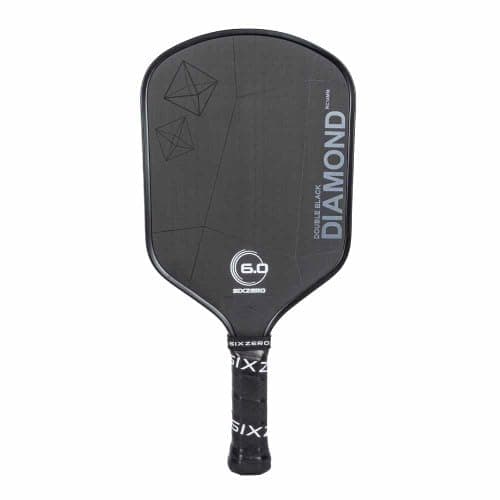
The internet's default 'do-it-all' recommendation: thermoformed power, a raw-carbon spin face, and a famously forgiving sweet spot at a fair price.
The DBD earned its reputation honestly. The 16mm Control build blends thermoformed pop with one of the most forgiving sweet spots in its class, and the raw T700 face grabs the ball for spin. It's the paddle we point undecided upgraders to first.
The 16mm Double Black Diamond earned its 'just buy this' reputation honestly: a huge forgiving sweet spot, real raw-carbon spin, and enough thermoformed pop to finish points, all at a price well under the flagships. It gives up a little top-end pace to the poppier paddles, but as the one paddle to hand an undecided upgrader, nothing else is this safe a bet.
- Core
- 16 mm
- Shape
- Hybrid
- Face
- Raw Toray T700 carbon fiber
- Weight
- ~8.0 oz
- Build
- Thermoformed
- Gen
- Control (Gen 2 thermoformed)
Manufacturer-listed as USA Pickleball approved. Approvals and delistings change — verify against the current USAP equipment list before tournament play (checked 2026-07).
Who it's for
The Six Zero Double Black Diamond 16mmis the paddle we point at when someone says "just tell me what to buy." It is the top pick in our best control and all-court roundupand it also earns the "most forgiving" slot in our spin roundup — which tells you exactly what it is: a do-everything paddle that does nothing badly. If you are an improving 3.0-to-4.5 player upgrading from a starter frame and you do not want to overthink it, the DBD is the lowest-regret choice in the whole category.
It is aimed at the player who wants forgiveness first. The sweet spot is the headline feature, and it means your mishit dinks and slightly-late blocks stay in play instead of spraying off the paddle. You give up a little raw pace for that margin — but for most players, consistency wins more games than an extra few miles per hour on a drive.
How it plays
Forgiveness and control
This is the DBD's calling card. The 16mm Control build pairs a thicker, more damped core with one of the largest, most stable sweet spots in its class, so off-center contact does not twist the paddle in your hand or kill the shot. Our editorial forgiveness and control scores both sit at the top of our range for that reason. In play it shows up as a paddle that is genuinely easy to reset and dink with — the ball sits on the face predictably, and touch shots behave.
Spin
The face is raw Toray T700 carbon fiber — unpainted, textured carbon, the same family of surface that anchors the top of the spin charts. It grabs the ball well for topspin drives and dropping third shots. Independent labs like Pickleball Studio publish measured spin RPM across the raw-carbon field if you want to compare exact numbers; we cite their machine instead of inventing our own figures. The usual raw-carbon caveat applies: that grit gradually polishes smooth with heavy play, so the spin is strongest when the paddle is new.
Power
The DBD is thermoformed, so there is real pop in reserve — enough to drive and finish when a ball sits up. It is not a dedicated bomb-thrower, though. The 16mm core and the forgiveness-first tuning mean it trades some top-end pace for its sweet spot. If your game is built around put-away power, the poppier 14mm DBD or a true power flagship will hit harder; the 16mm is the balanced, all-court half of the family.
Specs and build
| Spec | Double Black Diamond 16mm |
|---|---|
| Shape | Hybrid (16.3 x 7.7in, 5.5in handle) |
| Core thickness | 16mm |
| Face | Raw Toray T700 carbon fiber |
| Construction | Thermoformed unibody |
| Generation | Control (Gen 2 thermoformed) |
| Listed weight | ~8.0 oz |
The hybrid outline is part of why this paddle plays the way it does. At 16.3 inches it is longer than a standard shape, so you get some reach and leverage, but it stops short of the 16.5-inch elongated frames — Six Zero sells a separate 15mm Elongated edition for that — which keeps the usable face wider and the sweet spot lower than a true long frame. Six Zero also sells a 14mm version of the same paddle: same raw T700 face, thinner core, more pop and speed, a smaller margin on mishits. If you want to understand that trade-off before you pick, our 14mm vs 16mm guide lays it out, and if you are still deciding what to upgrade at all, start with how to choose a paddle.
How it holds up over time
The one honest asterisk on any raw-carbon paddle is grit longevity. The DBD's T700 face grips hard when new, but that texture gradually polishes smooth with play — a heavy daily player may notice the spin soften over a few months, while a casual player gets a year or more. Independent labs track how quickly raw-carbon faces lose bite, and the DBD sits in the normal range for the material rather than being unusually durable or unusually short-lived. If grit that lasts is your single biggest priority, a paddle built specifically around an abrasion-resistant face will hold its bite longer; for most players the DBD's face lasts plenty long for the money.
The other thing time reveals is how easy the DBD is to live with. Because the sweet spot is so large and the feel so predictable, it tends to be the paddle people keep reaching for even after they own flashier frames — the drives are good enough, the resets are easy, and nothing about it fights you on an off day. That "no bad days" quality is exactly why it is the default recommendation, and it is worth as much as any single spec on the sheet.
Which player it suits
The DBD flatters the widest band of players of anything we cover. A 3.0 improver gets a forgiving sweet spot that hides mishits while they build consistency; a 4.0-plus all-court player gets real spin and enough thermoformed pop to compete without switching paddles for every situation. The only players it does not fully suit are the two extremes — the pure banger who wants maximum drive, and the pure touch specialist who wants the softest possible reset paddle. Everyone in the broad middle, which is most of us, is well served.
Where it fits vs the alternatives
The DBD's closest rival on value is the Vatic Pro Prism Flash, which undercuts it on price and leans a touch more spin-first; the DBD answers with a bigger, more forgiving sweet spot. Against the CRBN X-Series Power, the DBD is the more forgiving, more control-leaning paddle while the CRBN is the more power-first, refined-feeling one — that head-to-head lives in our CRBN vs Six Zero comparison. And if you want flagship pace above all, a paddle like the JOOLA Perseus Pro IV hits harder, but you pay a premium and give up some of the DBD's easy forgiveness — our JOOLA vs Six Zero comparison works through that exact decision, and the DBD's forgiveness is why it leads our most forgiving paddles page.
Pros
- One of the most forgiving sweet spots in its class.
- Raw T700 carbon face for genuine spin.
- Thermoformed pop with real all-court balance.
- Priced well below the flagships — outstanding value.
Cons
- Gives up top-end pace to dedicated power paddles.
- Raw-carbon grit polishes smooth over time with heavy play.
- Big hitters may prefer the poppier 14mm version.
What we'd skip it for
If your single priority is raw put-away power, the 16mm DBD is not the max-pace pick — the forgiveness tuning costs it a little at the top end, and a dedicated power flagship or the 14mm DBD will drive the ball harder. We would also steer a pure touch-and-reset specialist toward a thicker, softer control paddle if they never intend to drive the ball at all. And the raw-carbon face, like every raw-carbon face, loses grit with heavy daily use; if grit durability is your top concern, a paddle built specifically around an abrasion-resistant face holds its bite longer. None of that dents the core recommendation — it just means the DBD is a superb generalist, not a specialist.
The verdict
The Six Zero Double Black Diamond 16mm deserves its reputation. It combines a famously forgiving sweet spot, a real raw-carbon spin face and enough thermoformed pop to finish points, at a price that makes the flagships look overpriced for what most players need. It is not the hardest-hitting or the highest-spin paddle on any single axis, but it is the best-balanced, lowest-regret paddle in the whole lineup — the one we hand an undecided upgrader first. See where it ranks against the field in our control and all-court roundup, and how we score without a lab in our methodology.
This paddle is the top of its brand as well as of our all-court rankings. Our best Six Zero pickleball paddles page puts it against the 14mm version and the Ruby Pro, and explains what Six Zero competes on that the flagship and value brands do not.
Is the Six Zero Double Black Diamond a good paddle for intermediate players?
Yes — it is one of the best intermediate choices available. The large, forgiving sweet spot masks mishits while you build consistency, the raw T700 face gives real spin, and there is enough thermoformed pop to drive and finish. It is the paddle we most often recommend to an improving player upgrading from a starter frame.
Should I get the 14mm or 16mm Double Black Diamond?
Get the 16mm for the most forgiving, all-court feel and the biggest sweet spot — it is the safer, more balanced pick for most players. Get the 14mm if you swing hard and want extra pop and speed, and you are willing to accept a smaller margin on off-center hits. The face and value are identical, so it comes down to feel.
Does the Double Black Diamond have good spin?
Yes. Its raw Toray T700 carbon face is the same textured surface family that sits at the top of measured spin charts, and it grips well for topspin and drops. Independent labs like Pickleball Studio publish measured spin RPM if you want exact numbers. Expect the grit to soften gradually with heavy play, as with any raw-carbon face.
How does the DBD compare to the JOOLA Perseus Pro IV?
The Perseus is the more powerful, more premium flagship; the DBD is the more forgiving, better-value all-court paddle. The Perseus hits harder and carries flagship polish, but the DBD delivers a larger sweet spot and much of the same spin for meaningfully less money. For most upgraders the DBD is the smarter buy unless you specifically want the flagship power.
- Black Friday & Cyber Monday pickleball deals 2026
- Six Zero DBD: 14mm vs 16mm
- Six Zero DBD vs Ruby Pro
- Best control paddles for intermediates
- Six Zero Ruby Pro — full review
- Best Control & All-Court Paddles (2026)
- CRBN X-Series Power — full review
- CRBN vs Six Zero — head to head
- How to choose a pickleball paddle