Selkirk Amped Pro Air Invikta Review
Reach, leverage and a refined feel — the long-standing Invikta shape in Selkirk's open-throat Air build, by the numbers and for the swing it suits.
Disclosure: Drive Dink earns a commission from qualifying Amazon purchases at no extra cost to you. We accept no free products and no paid placements — commissions never change our picks. How this works.
Selkirk Amped Pro Air Invikta
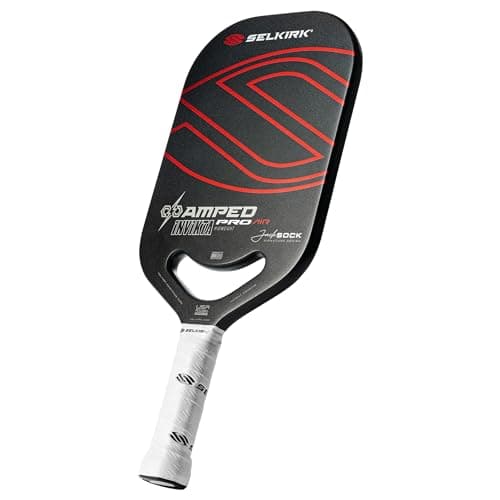
Selkirk's elongated reach option — the Invikta shape gives real reach and leverage, with the open Air throat trimming swing weight.
The Invikta is one of the longest-standing elongated shapes in the sport, and the Amped Pro Air pairs that reach with Selkirk's open Air Dynamic Throat, which the brand says raises swing speed through the air. The FiberFlex+ fiberglass face and 16mm X5+ honeycomb core are tuned for balanced power and a large sweet spot rather than raw thermoformed pace, so it is a former-tennis-player favorite: leverage on drives, a long paddle face, and a quieter, more refined feel than the raw thermoformed crowd.
The Amped Pro Air Invikta pairs one of pickleball's longest-standing elongated shapes with Selkirk's open Air Dynamic Throat, which trims the swing weight so the reach does not feel unwieldy. It is a former-tennis-player favorite for a reason: leverage on drives, a long hitting face, and a quieter, more refined feel than the raw thermoformed field. If your power comes from a big swing, this is a natural fit.
- Core
- 16 mm
- Shape
- Elongated
- Face
- FiberFlex+ fiberglass face over an X5+ honeycomb core
- Weight
- 7.8-8.2 oz
- Build
- Cold-pressed
- Gen
- Amped Pro Air
Manufacturer-listed as USA Pickleball approved. Approvals and delistings change — verify against the current USAP equipment list before tournament play (checked 2026-07).
Who it's for
The Selkirk Amped Pro Air Inviktais the paddle we point tennis converts toward. It is the "best for reach / tennis converts" pick in our best power paddles roundup, and that label is the whole story: if your power comes from a big, tennis-style swing, the Invikta's long elongated frame gives you the leverage and reach to make the most of it. The Air throat cutout trims swing weight so the long head does not feel like a sledgehammer, and the whole paddle has a more refined, less harsh feel than the raw thermoformed crowd.
This is an aggressive, reach-first power paddle for an upgrading player with a developed stroke — not a forgiving beginner frame and not a soft control paddle. The Invikta shape has been in the sport for a long time and has one of the most loyal followings of any paddle silhouette; players who get on with it tend to stay with it for years.
How it plays
Reach and power
Reach is the defining trait. The Invikta is one of the longest elongated shapes around, which puts more of the hitting face out in front of you and adds leverage on drives — you cover more court and generate more tip speed on a full swing. Selkirk describes the FiberFlex+ face and X5+ core as tuned for balanced power rather than maximum pace, so the drive here is leveraged out of the length rather than fired out of a stiff shell — our editorial power score sits just below the thermoformed flagships. The trade-off with any long paddle is a narrower face, so contact discipline matters more here than on a standard shape.
Feel and construction
Unlike most of the paddles in this category, the Amped Pro Air is not a thermoformed unibody— it uses Selkirk's Amped Pro Air construction, a FiberFlex+ fiberglass face bonded to a 16mm X5+ honeycomb core, and the result is a quieter, more refined, less "trampoline-harsh" feel than the raw thermoformed field. That is a big part of its appeal: players who find bare thermoformed paddles too tinny or hot often prefer the more damped, controlled response here. The Air throat cutout is the other signature — it removes material to lower swing weight, which is what keeps a long paddle from feeling sluggish.
Spin and control
Spin is solid rather than class-leading — the FiberFlex+ face grips respectably but sits below the top raw-T700 spin specialists in our editorial read and in the reviewer consensus. Independent labs like Pickleball Studio publish measured spin RPM if you want the exact comparison; we cite their machine rather than run our own. Control is decent for a power paddle — the refined feel helps on resets — but the narrower elongated face means forgiveness is not this paddle's strength. You buy the Invikta for reach and refined power, not for a huge sweet spot.
Specs and build
| Spec | Amped Pro Air Invikta |
|---|---|
| Shape | Elongated (Invikta) |
| Core thickness | 16mm |
| Face | FiberFlex+ fiberglass face |
| Construction | Amped Pro Air build (not thermoformed); Air Dynamic Throat cutout |
| Generation | Amped Pro Air |
| Listed weight | 7.8-8.2 oz |
The elongated Invikta shape concentrates mass out toward the tip, so swing weight — how heavy the paddle feels in motion — is the number to pay attention to here, and the Air throat is Selkirk's answer to keeping it manageable. Our swing weight and twist weight guide explains why that matters more than the static weight on the box. It is also worth understanding how this non-thermoformed build differs from the thermoformed paddles it competes with — our thermoformed paddles guide covers why that construction feels different, and why some players deliberately prefer the more refined non-thermoformed feel.
The Air throat and swing weight
The Air throat is Selkirk's signature move and it is worth understanding. A long elongated paddle naturally carries a lot of mass out toward the tip, which is what gives the Invikta its leverage — but that same mass can push swing weight high enough that the paddle feels sluggish and tiring in fast exchanges. The cutout in the throat removes material to bring that number back down, so you keep much of the reach and leverage without the full weight penalty. Independent labs publish measured swing weight if you want to see exactly where it lands; we cite their numbers rather than invent our own.
The practical upshot is a long paddle that plays lighter than its length suggests. That is the whole reason the Amped Pro Air exists as a separate line from Selkirk's standard Amped frames, and it is a big part of why the Invikta shape has kept a loyal following even as thermoformed rivals chase it on raw power.
Who the reach really suits
Reach is only an advantage if your game supplies the swing to use it. A player with a compact, punchy stroke will not extract much from the extra length and may prefer a shorter, more maneuverable frame. But a former tennis or racquet-sport player who drives through the ball with a full swing gets exactly what the Invikta is built for: more court coverage, more leverage on the drive, and a hitting face that reaches balls a standard paddle leaves behind. Match the paddle to your stroke, not the other way around.
Where it fits vs the alternatives
The head-to-head buyers most want is Selkirk against JOOLA. The JOOLA Perseus Pro IV is the thermoformed flagship — grippier on spin thanks to its Charged surface, and hotter off the face — while the Amped Pro Air answers with more reach, a more refined feel, and the tennis-convert ergonomics. Our Joola vs Selkirk comparison walks the whole decision. If you want raw thermoformed pace with more spin, the Perseus or the CRBN X-Series Power edge it; if you want a shorter, more forgiving all-court frame instead of a long reach paddle, the Six Zero Double Black Diamond is the friendlier pick. The Invikta wins specifically on reach and refined feel.
Pros
- Long elongated reach and real leverage for a big-swing game.
- Refined, quieter feel than the raw thermoformed crowd.
- Air throat trims swing weight so the long head stays manageable.
- A proven, long-loved shape with a devoted following.
Cons
- Narrower face means less forgiveness than a standard shape.
- Spin is solid but below the top raw-T700 specialists.
- Not thermoformed, so it gives up the power ceiling of the stiff-shell field.
- The reach only pays off with the right swing.
What we'd skip it for
We would not recommend the Amped Pro Air Invikta to a player who mishits a lot or wants maximum forgiveness — the long, narrow elongated face rewards clean contact and punishes off-center hits more than a standard shape or a foam-perimeter paddle. We would also not point a spin-first player here; the FiberFlex+ face grips well but a dedicated raw-T700 paddle bites harder. And if you do not have the big, developed swing the Invikta is built to reward, a shorter, more maneuverable all-court paddle will feel easier to play with. The reach is a real advantage only if your game supplies the swing to use it.
The verdict
The Selkirk Amped Pro Air Invikta is the reach-and-refined-power pick, and it is the paddle we hand tennis converts first. You get one of the sport's longest-standing elongated shapes, an open Air throat, and a quieter, more controlled feel than the raw thermoformed field — with the Air throat keeping the long head from feeling unwieldy. It is not the most forgiving or the highest-spin paddle on the board, and it does not match the thermoformed field for raw pace, but for a big-swing player who wants leverage and a polished feel, it is exactly right. See where it ranks against the field in our power roundup, and how we score without a lab in our methodology.
Power Air or LUXX Control?
Selkirk sells two Invikta-outline paddles that sit at opposite ends of the same shelf, and choosing between them is the decision most readers of this review are really making. Our Power Air vs LUXX Control comparison puts the 16mm fiberglass frame next to the 20mm carbon one and names which weakness each of them fixes.
The rest of the Selkirk shelf
Selkirk also sells this frame in a widebody Epic outline, and its value SLK sub-brand puts a raw carbon face on a 16mm core for considerably less. Our best Selkirk pickleball paddles page ranks all five we cover and sets out the one specification that rules a Selkirk out entirely for a two-handed backhand.
Is the Selkirk Amped Pro Air Invikta good for tennis players?
Yes — it is one of the most popular paddles among tennis converts. The long elongated Invikta shape gives the reach and leverage a big tennis-style swing wants, and the refined, less harsh feel suits players used to a more connected racquet response. If your power comes from a full swing rather than a compact punch, it is a natural fit.
Is the Amped Pro Air Invikta thermoformed?
No. Unlike most paddles in the power category, it uses Selkirk's Amped Pro Air construction — a FiberFlex+ fiberglass face bonded to a 16mm X5+ honeycomb core — rather than a thermoformed unibody. That is part of its appeal: it delivers a quieter, more refined and less trampoline-harsh feel than the raw thermoformed crowd, which many players prefer.
Does the Invikta shape hurt forgiveness?
Somewhat. A long elongated paddle has a narrower face than a standard shape, so it rewards clean contact and is less forgiving on off-center hits. The upside is reach and leverage on drives. If forgiveness is your top priority, a standard-shape or foam-perimeter paddle will feel more secure; the Invikta trades some margin for reach.
How does the Selkirk Amped Pro Air compare to the JOOLA Perseus?
The Perseus Pro IV is the thermoformed JOOLA the category benchmarked itself against — grippier on spin and hotter off the face, and the previous generation since the Pro V arrived — while the Selkirk offers more reach, a more refined feel and tennis-convert ergonomics. The Perseus tends to win on raw spin and pop; the Amped Pro Air wins on reach and feel. Our Joola vs Selkirk comparison covers the full decision.
- Best Selkirk Pickleball Paddles
- Selkirk Power Air vs LUXX Control
- Best paddles for singles
- Best paddles for former tennis players
- Six Zero vs Selkirk — all-court vs touch
- Best Pickleball Paddles for Power (2026)
- JOOLA Perseus Pro IV — full review
- Joola vs Selkirk — head to head
- Swing weight & twist weight explained
- Selkirk Amped Pro Air vs LUXX Control
- Selkirk LUXX Control Air Invikta — full review
- Selkirk vs Vatic Pro — is the premium worth it?