Selkirk Amped Pro Air vs LUXX Control
The same Invikta outline built twice, for opposite jobs — one to end points, one to stop giving them away.
Disclosure: Drive Dink earns a commission from qualifying Amazon purchases at no extra cost to you. We accept no free products and no paid placements — commissions never change our picks. How this works.
Selkirk sells both of these paddles in the Invikta shape, which makes this an unusually informative comparison: the geometry variable is removed, so everything you feel between them comes from core thickness, face and tuning rather than from outline. It is close to a controlled experiment in what a control paddle actually is.
Live Amazon prices for both are above. We compile manufacturer-published specifications and rank by fit rather than a single overall score. Units we claim to have tested: 0.
| # | Paddle | Best for | Score | Price |
|---|---|---|---|---|
| 1 | 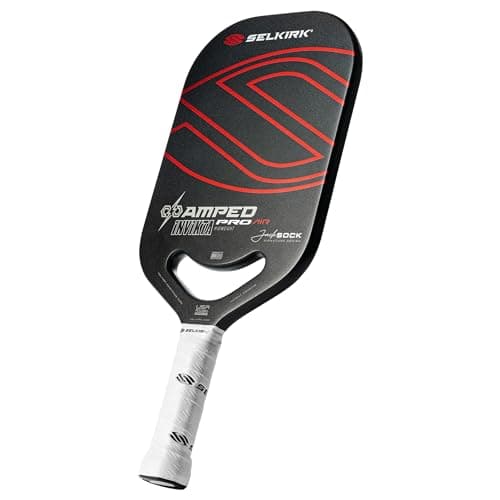 Selkirk Amped Pro Air Invikta Reach + leverage in an elongated frame | Pick this to finish points | 7.5 | $99.99 · View on Amazon #adPrice as of October 24, 2026 |
| 2 | 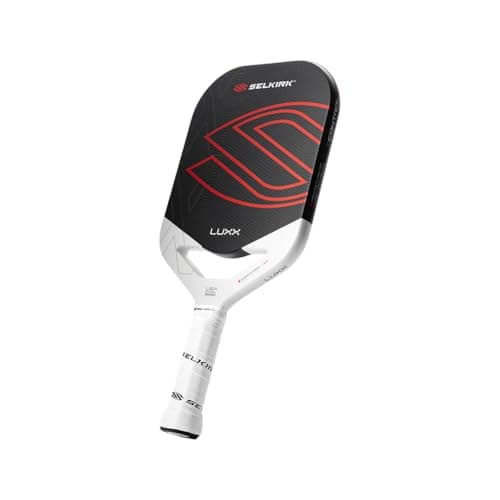 Selkirk LUXX Control Air Invikta Maximum control + soft touch | Pick this to stop giving points away | 8.0 |
Tap any row to jump to the full write-up. Prices are pulled live from Amazon.
Selkirk Amped Pro Air Invikta
Selkirk's elongated reach option — the Invikta shape gives real reach and leverage, with the open Air throat trimming swing weight.
The Invikta is one of the longest-standing elongated shapes in the sport, and the Amped Pro Air pairs that reach with Selkirk's open Air Dynamic Throat, which the brand says raises swing speed through the air. The FiberFlex+ fiberglass face and 16mm X5+ honeycomb core are tuned for balanced power and a large sweet spot rather than raw thermoformed pace, so it is a former-tennis-player favorite: leverage on drives, a long paddle face, and a quieter, more refined feel than the raw thermoformed crowd.
The Amped Pro Air is Selkirk's answer to the drive-and-put-away game. The Invikta shape gives reach and leverage, the Air throat trims swing weight so the head still moves, and the FiberFlex+ fiberglass face and 16mm core keep the ball coming off with pace. If your losses are the points you could not end, this is the Selkirk to buy.
- Core
- 16 mm
- Shape
- Elongated
- Face
- FiberFlex+ fiberglass face over an X5+ honeycomb core
- Weight
- 7.8-8.2 oz
- Build
- Cold-pressed
- Gen
- Amped Pro Air
Manufacturer-listed as USA Pickleball approved. Approvals and delistings change — verify against the current USAP equipment list before tournament play (checked 2026-07).
Selkirk LUXX Control Air Invikta
A thick-core, control-first paddle: a plush, soft-hands feel for dinking and resets, not a bomb-thrower.
The LUXX Control leans hard into touch — a thicker core and a muted face make the third-shot drop and the reset the strengths here. If your game wins on placement and hands speed rather than raw pace, this is the control end of the Selkirk line.
The LUXX takes the same outline and tunes everything the other way. A 20mm core absorbs incoming pace instead of returning it, the Florek face is damped rather than hot, and the result is the most controllable paddle we cover. If your losses are the resets that popped up and the drops that floated, this is the Selkirk to buy.
- Core
- 20 mm
- Shape
- Elongated
- Face
- Florek carbon face
- Weight
- ~8.0 oz
- Build
- Cold-pressed
- Gen
- LUXX
Manufacturer-listed as USA Pickleball approved. Approvals and delistings change — verify against the current USAP equipment list before tournament play (checked 2026-07).
Side by side
| Spec | Amped Pro Air Invikta | LUXX Control Air Invikta |
|---|---|---|
| Shape | Elongated (Invikta) | Elongated (Invikta) |
| Core thickness | 16mm | 20mm |
| Face | FiberFlex+ fiberglass face | Florek carbon face |
| Construction | Not thermoformed | Not thermoformed |
| Generation | Amped Pro Air | LUXX |
| Listed weight | 7.8-8.2 oz | ~8.0 oz |
| Our power score | Highest in the Selkirk range | Mid-pack |
| Our control / forgiveness | Mid-pack | Highest in our catalog |
Two specification lines carry the whole difference: 16mm against 20mm, and FiberFlex+ fiberglass against Florek carbon. Neither paddle is thermoformed, which means neither is competing at the very top of the modern power charts — Selkirk's house character is refinement rather than raw pop. Our thermoformed paddles guide explains what that construction difference costs and buys.
What four millimeters of core actually does
A paddle core is a honeycomb structure that compresses at impact. The thicker it is, the more it flexes, the longer the ball stays on the face, and the more of the incoming ball's energy gets absorbed rather than returned. That single mechanism produces every difference you will feel between these two paddles.
Going from the 16mm Amped Pro Air to the 20mm LUXX means: less pop on everything, including the shots you did not mean to hit hard; more predictable resets, because a hard incoming drive gets deadened rather than rebounded; softer drops, because the ball leaves slower for the same swing; and a wider margin on mishits, because a more flexible core is more forgiving of contact away from the center.
Twenty millimeters is a genuine outlier — the market has largely standardized on 14mm and 16mm. Our core thickness guide covers the mainstream split, and the LUXX sits well beyond its control end. Some players find that past a point extra core stops adding forgiveness and starts subtracting feedback; that is a real reaction and worth knowing about before you buy.
What the Air throat is for
Both paddles carry Selkirk's Air throat cut-out, and it is worth understanding because it is the reason the Amped Pro Air is usable at all in an elongated shape. Removing material from the throat lowers swing weight — the effective mass you have to accelerate through a swing — without shortening the paddle.
That matters because elongated paddles are normally slow to swing, which is the price of their reach. Trimming swing weight lets Selkirk keep the Invikta's coverage while making the head easier to move in a fast exchange. Our swing weight and twist weight guide explains the numbers, and it is the single most useful concept for understanding why two paddles of identical listed weight can feel completely different.
Spin: closer than the names suggest
Neither of these is a spin specialist. Both faces are textured carbon rather than the raw, unpainted Toray T700 surfaces that anchor the top of the measured spin charts, and our spin scores for the two are close to each other and a step below the raw-carbon field. Independent labs such as Pickleball Studio publish calibrated RPM comparisons; we cite their machine rather than invent numbers.
If spin is the property you are shopping for, neither Selkirk is the right answer and our spin paddle roundup is where to start. What Selkirk sells instead is finish, feel and a brand you can get service from — real value, but not grip. Our how paddle spin works guide explains why the surface, not the brand, decides this.
Which one fixes your actual problem?
The clean way to choose is to audit your own losses. Think about the last handful of points you lost on execution rather than decision-making and sort them.
You could not finish. Your drives got counter-attacked. Your put-away came back. You built the point correctly and could not close it. That is a power problem, and the Amped Pro Air is the fix — or, if you want more pace than any non-thermoformed Selkirk can give, the thermoformed field in our most powerful paddles list.
You gave points away. Your reset popped up. Your drop floated and got attacked. The block off a hard drive sailed. That is an error problem, and the LUXX Control is the fix. Adding power to a game that leaks errors makes it leak faster.
Most intermediate players are in the second bucket and shop as though they are in the first, because power is the exciting column in every review. Our control paddles for intermediate players page exists for exactly that mismatch.
If you want both
The honest answer is that you cannot have both from these two paddles — they are the endpoints of Selkirk's range, not points along a continuum. What you can do is buy something engineered for the middle.
Our control paddles that still hit list is built around that requirement, and the paddle we point most undecided buyers toward is the Six Zero Double Black Diamond 16mm, which is thermoformed, cheaper than either Selkirk, spinnier than both, and carries one of the widest sweet spots in the category. What it lacks is Selkirk's finish and the LUXX's specific damping.
There is also a tuning route. A 16mm paddle you find slightly too lively can be calmed with a few grams of weight, and a paddle you find too dead can be given more drive the same way — our paddle weights and tuning tape page covers what to buy. Weight will not turn a 20mm core into a 16mm one, but it moves a paddle meaningfully within its own character.
Why neither of these is thermoformed
Neither paddle is thermoformed, and that is a deliberate house choice rather than an oversight. It is worth understanding because it affects how you should read their power scores against the rest of the market.
A thermoformed paddle is heat-molded into a single stiff shell with foam-filled perimeter walls, and that stiffness is what returns energy to the ball. A cold-pressed paddle bonds a face to a honeycomb core at low temperature, which produces a softer, quieter, more damped response and a lower power ceiling. Our thermoformed paddles guide covers the mechanism.
There are two genuine upsides to the older method. Early thermoformed paddles across the whole industry developed a reputation for edge-foam cracking under heavy play, with the failure mode being a paddle that goes dead rather than one that visibly breaks — a cold-pressed frame does not carry that specific risk. And a lot of players simply prefer the feel, describing thermoformed paddles as loud, hollow or hard to place. If that describes your experience with a modern flagship, Selkirk's whole range is worth a look on those grounds alone.
The downside is unambiguous. When the Amped Pro Air is described as Selkirk's power paddle, that is relative to Selkirk. Against the thermoformed field in our most powerful paddles list, or the value thermoformed frames in power paddles under $200, it gives away pace. Buy it for the refinement and the brand, not because you expect it to out-hit a Perseus.
What each one asks of your technique
Paddles do not only change results, they change what you have to do to get them, and these two make opposite demands.
The Amped Pro Air asks for restraint. A livelier face plus an elongated frame means the paddle contributes pace whether you wanted it or not, so your soft game has to be deliberate. Players who move to it from a control paddle usually spend a few weeks over-hitting drops before they recalibrate, and the ones who do not recalibrate conclude the paddle is inaccurate when it is simply faster than what they had.
The LUXX asks for commitment. A 20mm core absorbs energy, so a tentative swing produces a genuinely short ball — you have to hit through drives rather than guiding them. Players who move to it from a poppy paddle often report their drives dying in the net for the first few sessions, which is not the paddle failing but the paddle declining to do the work for them.
Both adjustments are real and both are temporary. What matters is knowing which one you are signing up for, because a fortnight of recalibration feels like a bad purchase if you were not expecting it.
The verdict
Buy the Amped Pro Air Inviktaif you can build a point but not close it, if you play singles or drive from the baseline, and if you want Selkirk's refinement in the most offensive form they offer. Understand that it is still not a thermoformed paddle, so it will not match a thermoformed flagship for raw pace.
Buy the LUXX Control Air Invikta if your error count is what caps your results, if your value on court is keeping the ball low and unattackable, and if you want the most damped tool available for that job. Understand that it is the least powerful paddle at its price and that the 20mm core is a strong opinion you may or may not share.
If neither description lands cleanly, you probably want the middle of the market rather than either end of Selkirk's — start with our control and all-court roundup and how to choose a pickleball paddle.
What is the difference between the Selkirk Amped Pro Air and the LUXX Control?
Same Invikta elongated outline, opposite tuning. The Amped Pro Air uses a 16mm core and a FiberFlex+ fiberglass face to keep pace on the ball; the LUXX Control uses a 20mm core and a Florek carbon face to absorb pace and prioritize touch. Buy the Amped Pro Air if you cannot finish points, the LUXX if you give too many away.
Is a 20mm core better than a 16mm core?
It is different, not better. A 20mm core flexes more at impact, absorbs more incoming pace and makes resets and drops far more predictable. It also lowers your power ceiling and can feel muted or slow to give feedback. A 16mm core is the balanced mainstream choice; 20mm is a deliberate commitment to the soft game.
What does Selkirk's Air throat do?
It removes material from the paddle's throat to lower swing weight — the effective mass you accelerate through a swing — without shortening the paddle. That lets an elongated frame keep its reach while staying easier to move in fast exchanges, which is normally the main cost of a long paddle.
Are either of these good spin paddles?
Both grip the ball respectably, but neither is a spin specialist. Their faces are textured carbon rather than the raw, unpainted Toray T700 surfaces that sit at the top of measured spin charts. If spin is the property you are upgrading, a raw-carbon paddle from our spin roundup will do more for you than either Selkirk.