Best Power Paddles Under $200
The two-hundred-dollar line is where the power market gets interesting: everything below it is thermoformed now, and the gap to the flagships is narrower than the price suggests.
Disclosure: Drive Dink earns a commission from qualifying Amazon purchases at no extra cost to you. We accept no free products and no paid placements — commissions never change our picks. How this works.
Two hundred dollars used to be the entry point to serious paddles. It is now the ceiling of an extremely competitive tier, and the reason is that thermoforming — the construction method behind the entire modern power era — has become standard rather than premium. Every paddle on this page except one is thermoformed, and the one that is not is here because a major brand's support is worth something.
Units we claim to have tested: 0. We compile manufacturer-published specifications, cite the independent labs that measure performance, and rank by who each paddle suits. Prices move constantly at this end of the market, so we never type one into the copy — the live Amazon price renders at the top of this page and is the only price you should trust.
| # | Paddle | Best for | Score | Price |
|---|---|---|---|---|
| 1 | 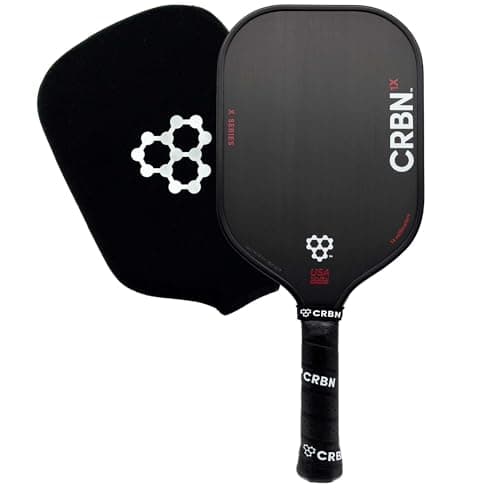 CRBN X-Series Power Clean, refined power feel | Best power under $200 | 8.0 | $149.99 · View on Amazon #adPrice as of October 22, 2026 |
| 2 | 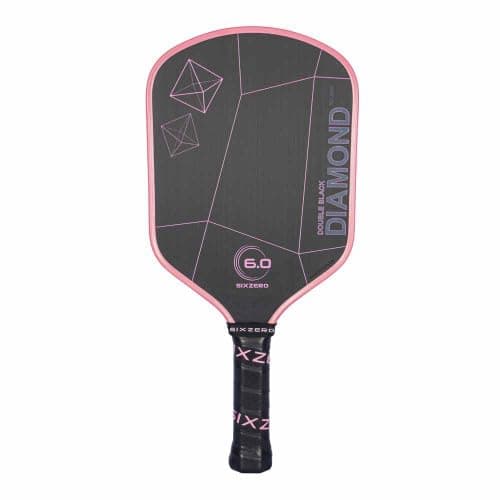 Six Zero Double Black Diamond 14mm More pop and speed than the 16mm | Best all-court power | 7.8 | $180.00 · View on Amazon #adPrice as of October 22, 2026 |
| 3 | 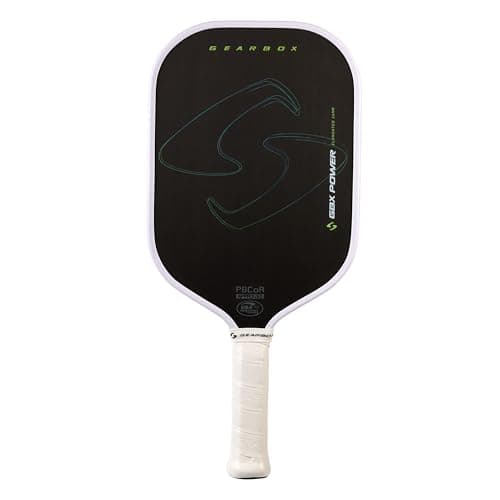 Gearbox GBX Power Elongated Raw drive power for big hitters | Best raw drive | 7.0 | $179.99 · View on Amazon #adPrice as of October 22, 2026 |
| 4 | 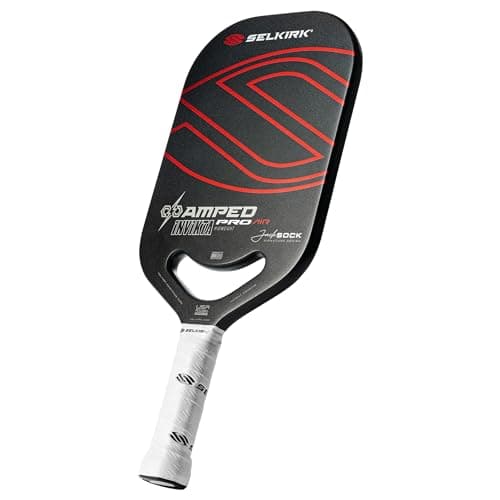 Selkirk Amped Pro Air Invikta Reach + leverage in an elongated frame | Best major-brand pick | 7.5 | $99.99 · View on Amazon #adPrice as of October 22, 2026 |
| 5 | 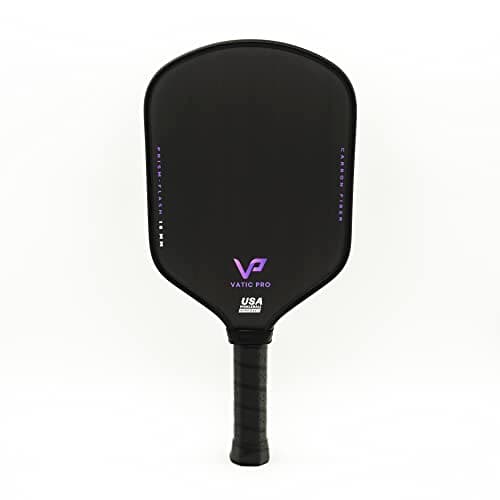 Vatic Pro Prism Flash 16mm The value spin champion (best under ~$110) | Best under $100 | 8.0 | $99.99 · View on Amazon #adPrice as of October 22, 2026 |
Tap any row to jump to the full write-up. Prices are pulled live from Amazon.
CRBN X-Series Power
CRBN's power line has a following for a reason: thermoformed pace with a cleaner, less hollow feel than some rivals.
The X-Series Power gives you the thermoformed power everyone wants but with a feel a lot of players describe as more solid and less 'tinny' than the cheaper thermoformed crowd. A dependable elongated power paddle from a respected brand.
A thermoformed 14mm elongated frame from a brand with a real following, at a price that undercuts most of the flagship field by a wide margin. What sets the X-Series apart is feel rather than a spec advantage — players consistently describe it as more solid and less hollow than cheaper thermoformed paddles. The honest con is the 14mm core: it is poppy and fast, and it does not forgive contact away from the middle.
- Core
- 14 mm
- Shape
- Elongated
- Face
- Raw carbon-fiber face
- Weight
- ~8.0 oz
- Build
- Thermoformed
- Gen
- X-Series
Manufacturer-listed as USA Pickleball approved. Approvals and delistings change — verify against the current USAP equipment list before tournament play (checked 2026-07).
Six Zero Double Black Diamond 14mm
The 14mm DBD trades some of the 16mm's plush forgiveness for extra pace and a quicker, poppier response.
If you loved the DBD's spin and value but wanted more pop, the 14mm delivers it — faster through the air and livelier off the face, with a slightly smaller margin on off-center hits. A strong pick for aggressive all-court players.
The 14mm Double Black Diamond is the version of the internet's favorite all-rounder tuned for pace. You keep the raw Toray T700 face and the reputation for a wide sweet spot, and you gain a livelier, quicker response than the 16mm. The con is that you also lose some of the forgiveness that made the DBD famous — if the sweet spot is why you wanted one, buy the 16mm instead.
- Core
- 14 mm
- Shape
- Hybrid
- Face
- Raw Toray T700 carbon fiber
- Weight
- ~8.0 oz
- Build
- Thermoformed
- Gen
- Control (Gen 2 thermoformed)
Manufacturer-listed as USA Pickleball approved. Approvals and delistings change — verify against the current USAP equipment list before tournament play (checked 2026-07).
Gearbox GBX Power Elongated
A punchy, drive-first power paddle. Gearbox's construction is stiff and solid — you feel the ball leave.
The GBX Power is for the player whose game is put-aways and drives. It's a stiffer, less forgiving frame than the foam paddles, but the payoff is directness — the ball comes off fast and predictably. Not the pick if you need help on mishits.
Nothing else on this page hits with the same directness. Gearbox builds around structural stiffness rather than the mainstream foam-and-shell recipe, and the payoff is a paddle where the ball leaves fast and exactly as you struck it. The con is unambiguous and worth reading twice: this carries the lowest forgiveness score in our catalog, and mishits are punished without ceremony.
- Core
- 16 mm
- Shape
- Elongated
- Face
- Raw unidirectional carbon fiber
- Weight
- 8.0 oz avg (7.8-8.2 oz)
- Build
- Thermoformed
- Gen
- GBX (Gen-3 suspended PPE honeycomb)
The Amazon listing title states USA Pickleball approved; Pickleball Central's certification field for this paddle lists UPA-A and PBCoR only. Those are different programs for different competitions — verify your exact model against the current USA Pickleball equipment list before sanctioned play (checked 2026-10).
Selkirk Amped Pro Air Invikta
Selkirk's elongated reach option — the Invikta shape gives real reach and leverage, with the open Air throat trimming swing weight.
The Invikta is one of the longest-standing elongated shapes in the sport, and the Amped Pro Air pairs that reach with Selkirk's open Air Dynamic Throat, which the brand says raises swing speed through the air. The FiberFlex+ fiberglass face and 16mm X5+ honeycomb core are tuned for balanced power and a large sweet spot rather than raw thermoformed pace, so it is a former-tennis-player favorite: leverage on drives, a long paddle face, and a quieter, more refined feel than the raw thermoformed crowd.
The only paddle here from a brand you can buy in a shop, return through a real warranty process and resell easily. The Invikta shape gives genuine reach and the Air throat keeps swing weight manageable. The con is construction: it is cold-pressed rather than thermoformed, so it does not have the modern power ceiling of the paddles above it — you are buying a refined feel and brand support.
- Core
- 16 mm
- Shape
- Elongated
- Face
- FiberFlex+ fiberglass face over an X5+ honeycomb core
- Weight
- 7.8-8.2 oz
- Build
- Cold-pressed
- Gen
- Amped Pro Air
Manufacturer-listed as USA Pickleball approved. Approvals and delistings change — verify against the current USAP equipment list before tournament play (checked 2026-07).
Vatic Pro Prism Flash 16mm
The value-shopper's spin paddle: raw T700 carbon and a thermoformed build that punches well above its price.
Vatic built a reputation on giving you 90% of a $250 paddle for around a hundred bucks. The Prism Flash's raw T700 face grips for spin and the elongated frame adds reach — the paddle we recommend when 'best spin under $100' is the search.
The value bracket's long-standing default, and it belongs on a power list because a thermoformed raw-carbon frame drives far harder than the composite paddles it usually replaces. The con is that it is tuned for balance rather than pace — this is a strong spin paddle and a moderate power paddle, so finishing from the baseline takes more work than it does on the four above.
- Core
- 16 mm
- Shape
- Elongated
- Face
- Raw Toray T700 carbon fiber
- Weight
- ~8.0 oz
- Build
- Thermoformed
- Gen
- Prism
Manufacturer-listed as USA Pickleball approved. Approvals and delistings change — verify against the current USAP equipment list before tournament play (checked 2026-07).
How we picked
To qualify for this page a paddle had to do three things. It had to sit consistently below the two-hundred-dollar mark rather than dipping there occasionally on sale. It had to be a genuine power paddle — an above-average power score in our scoring, not a control paddle with a power badge. And it had to have a real first-party Amazon listing so the buy link goes somewhere trustworthy.
Five paddles cleared all three. We would rather name five we would actually recommend than pad the list to ten. Our scores for spin, power, control and forgiveness are our editorial read of compiled specifications and the wider reviewer consensus — they are not measurements, and we never publish them as a star rating in structured data. For measured spin figures we defer to Pickleball Studio, which runs calibrated testing and publishes results. The full approach is on our methodology page.
What two hundred dollars buys in 2026
The single most useful thing to understand about this price tier is that it is no longer defined by what it lacks. Four of the five paddles here are thermoformed, which means a heat-molded unibody shell with a foam-filled perimeter — the exact construction the flagships use, and the mechanism that produces the modern power feel. Our thermoformed paddles guide explains why that matters more than almost anything else on a spec sheet.
Three of the five also carry raw, unpainted carbon faces, which is the material family that sits at the top of measured spin charts. So on the two specifications that most change how the ball leaves the paddle — construction and hitting surface — this tier is running the same recipe as paddles costing considerably more. Our carbon fiber vs fiberglass guide covers why the surface dominates the spin conversation.
What you are not buying at this level is the newest generation. Gen-4 foam-core construction — where foam is injected into the core itself rather than only the perimeter — currently lives above this price ceiling. That technology is the best answer the industry has to off-center stability, and if forgiveness is your specific weakness it is worth knowing what you are declining. Our foam-core paddles guide explains it, and the CRBN TruFoam Barrage is the example we cover.
The 14mm decision this page forces
Three of the five paddles here are 14mm, which is not an accident. Power lists skew thin because a thinner core is stiffer, returns more energy and produces a livelier, faster response. It also produces a narrower margin: less flex means less forgiveness on contact away from the center.
This is the decision most buyers on this page get wrong. A 14mm elongated paddle stacks two demanding choices — a thin core and a narrow, high sweet spot — and the result punishes anything but clean contact. If you are honest about mis-hitting more than a couple of balls a game, the 16mm option is the better buy even though it scores lower on power, because the pace you actually deliver over a match is higher when more of your contacts are clean. Our 14mm vs 16mm guide goes through it properly.
Our general rule: make one aggressive choice, not two. Elongated with a 16mm core, or standard shape with a 14mm core, but rarely both at once.
Who should buy which
- You want the best power-per-dollar and you strike the ball cleanly: the CRBN X-Series Power. The most refined feel on this page.
- You want power but you also want the sweet spot to help you: the Six Zero Double Black Diamond 14mm — or its 16mm sibling if forgiveness is really the priority.
- You are a strong hitter who finds mainstream paddles vague: the Gearbox GBX Power. Nothing else feels like it.
- You want a brand you can demo, return and resell: the Selkirk Amped Pro Air Invikta.
- Your budget is really a hundred dollars: the Vatic Pro Prism Flash, and read our best spin paddles under $100 for the rest of that bracket.
Shape matters more than the price tier
Every paddle on this page is elongated, and that is a genuine limitation of a power-focused list rather than a coincidence. Length buys leverage, leverage buys pace, and power roundups therefore skew long.
If you play doubles and lose points in fast exchanges at the kitchen line, a long paddle is working against you regardless of its power score. A standard outline keeps mass closer to your hand, so the head comes around faster and the sweet spot sits lower and wider. Our elongated vs standard shape guide covers the trade, and if it lands, look at the JOOLA Scorpeus Pro IV or the value Vatic Pro Prism V7 instead of anything here.
Cheap ways to add power to a paddle you already own
Before spending two hundred dollars, it is worth knowing that a few grams of tape does more for drive than most people expect. Adding weight toward the tip — 10 and 2 o'clock — raises swing weight, which puts more mass behind the ball for the same arm speed. That is a real power gain for a few dollars, and it is fully reversible.
The cost is maneuverability: a heavier head is slower through a fast exchange, and it asks more of your arm. Our swing weight and twist weight guide explains the numbers, and our paddle weights and tuning tape page covers what to buy. If your current paddle has a raw carbon face and a thermoformed build and simply feels a bit light, tuning it is a better first move than replacing it.
What to avoid in this bracket
Vague face language."Graphite," "carbon composite," or "carbon" without the word raw usually means a painted or clear-coated surface, and a shiny face does not grip. Manufacturers who use genuine raw carbon say so explicitly, generally with a material grade.
Cold-pressed paddles at thermoformed prices. There is nothing wrong with non-thermoformed construction — the Selkirk on this page is not thermoformed and it is here on merit — but you should know which one you are buying and why. If a paddle is neither thermoformed nor from a brand whose support you value, it is hard to justify at this price.
Last-generation flagships, unless the change was incremental. Buying a superseded flagship is usually smart. It is not smart when the generational change was structural — as it was when the industry moved from cold-pressed to thermoformed. Our JOOLA Hyperion review works through exactly that case.
Multi-paddle bundles. Two paddles, four balls and a bag for one low price is a set built to a cost, and none of that cost went into the hitting surface.
When spending more is genuinely worth it
There are two situations where we would tell you to leave this page. The first is if you mishit under pressure. Gen-4 foam construction adds off-center stability that nothing in this tier currently matches, and forgiveness converts directly into points. The second is if you need the very top of the power range — the paddles in our most powerful paddles list sit above this ceiling for a reason.
Everyone else is well served here. A club player adding pace, an intermediate moving up from a starter paddle, or a strong player who would rather spend the difference on court shoes will not find the flagship premium buys them proportionally more. Our paddle price guide breaks the tiers down in full.
A note on USAP legality
Price has nothing to do with legality. Every paddle here is manufacturer-listed as USA Pickleball approved, and we date-stamp that note on each product card. Approvals and delistings change and apply to specific model revisions, so if you play sanctioned tournaments, check the current USAP approved paddle list before you enter. Our USAP-approved paddles guide explains how the process works.
The bottom line
For most people arriving here, the CRBN X-Series Power is the answer: thermoformed pace, a refined feel and a raw carbon face, comfortably below the ceiling. Take the Six Zero DBD 14mm if you want a wider sweet spot with your pace, the Gearbox if directness is what you have been missing, the Selkirk if brand support matters, and the Vatic if the budget is really half of this page's.
What none of them will do is turn a control player into a power player. If you are not sure that pace is the weakness you should be fixing, read how to choose a pickleball paddle before buying, and compare this list against the control paddles that still hit.
Can you get a genuinely powerful pickleball paddle under $200?
Yes, and comfortably. Thermoforming — the heat-molded unibody construction behind the modern power era — is now standard rather than premium, and most paddles in this tier use it. What generally sits above the two-hundred mark is Gen-4 foam-core construction, which adds off-center stability rather than raw pace.
Is a 14mm or 16mm core better for power?
A 14mm core is stiffer and returns more energy, so it is livelier and faster. The trade is forgiveness: less flex means a narrower margin on off-center contact. If you mishit more than a couple of balls a game, a 16mm core often delivers more pace over a whole match because more of your contacts are clean.
What is the difference between thermoformed and cold-pressed paddles?
A thermoformed paddle is heat-molded into a single stiff shell with foam-filled perimeter walls, which returns significantly more energy to the ball. A cold-pressed paddle bonds a face to a honeycomb core at low temperature, which feels softer and quieter but has a lower power ceiling. Thermoforming is the mechanism behind the current power generation.
Can I add power to a paddle I already own?
To a degree, yes. Adding a few grams of tape toward the tip raises swing weight, putting more mass behind the ball for the same arm speed — a real, cheap and fully reversible power gain. The cost is maneuverability: a heavier head is slower in fast exchanges and asks more of your arm.