Best Control Paddles That Still Hit
Soft hands should not mean no finish. These are the control-first paddles that still let you end the point when a ball sits up.
Disclosure: Drive Dink earns a commission from qualifying Amazon purchases at no extra cost to you. We accept no free products and no paid placements — commissions never change our picks. How this works.
Most "control" paddles are controlled because the ball dies on the face. You can place a dink anywhere you like, and then you get one attackable ball a rally and cannot do anything with it. That is a fine trade if your whole game lives at the kitchen line. For everybody else it is a downgrade dressed up as a category.
This is the shortlist for the other kind: paddles with a damped, predictable face and a big stable sweet spot that still have pace held in reserve. Every one has a real Amazon listing with a live price above. Units we claim to have tested: 0. We compile the published specs, weigh the reviewer consensus, and say plainly what each paddle gives up.
| # | Paddle | Best for | Score | Price |
|---|---|---|---|---|
| 1 | 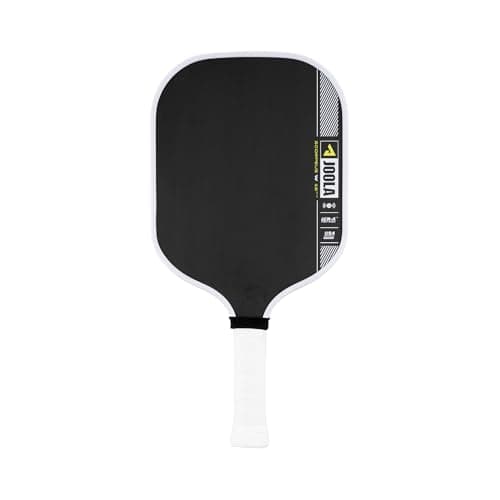 JOOLA Collin Johns Scorpeus Pro IV 16mm Standard-shape all-court control + spin | Best control + power overall | 8.0 | |
| 2 | 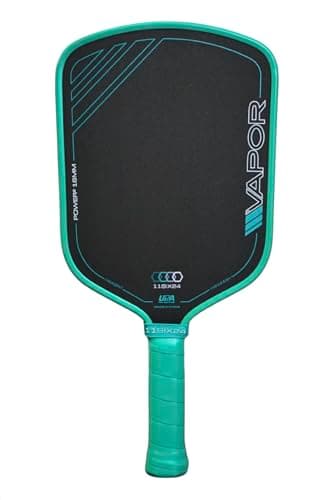 11Six24 Vapor Power 2 Gen-4 foam power with pro pedigree | Best Gen-4 foam | 8.3 | $209.99 · View on Amazon #adPrice as of October 24, 2026 |
| 3 | 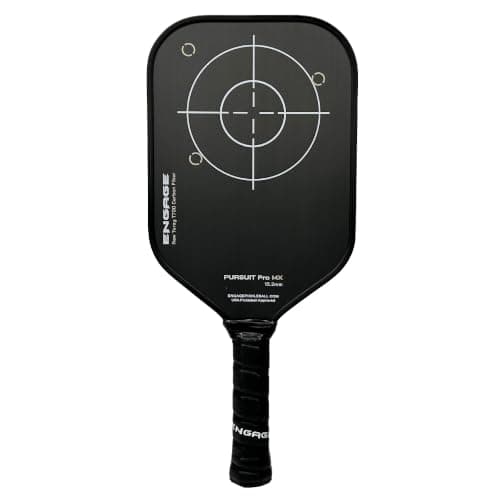 Engage Pursuit Pro MX 15.2 Elongated Control-forward power without the harsh feel | Best softened power | 7.8 | $129.99 · View on Amazon #adPrice as of October 24, 2026 |
| 4 | 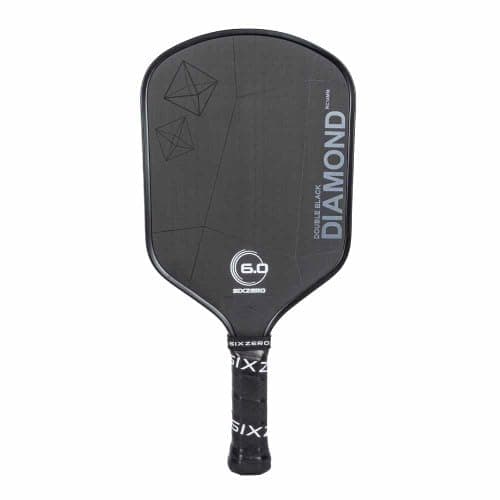 Six Zero Double Black Diamond 16mm All-court value with a huge sweet spot | Best all-court value | 8.5 | $180.00 · View on Amazon #adPrice as of October 24, 2026 |
| 5 | 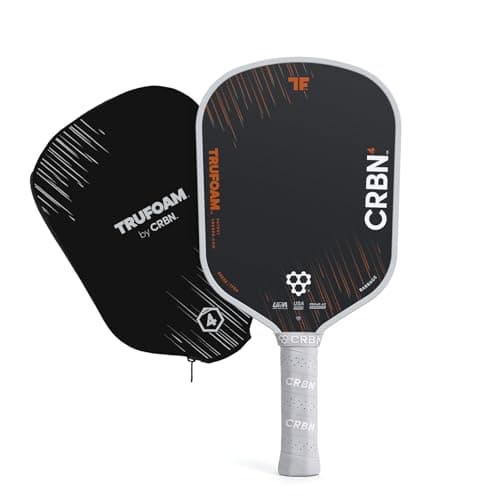 CRBN TruFoam Barrage Newest-gen foam power + stability | Most power in the group | 8.3 |
Tap any row to jump to the full write-up. Prices are pulled live from Amazon.
JOOLA Collin Johns Scorpeus Pro IV 16mm
The standard-shape Perseus. A more balanced, control-leaning face for players who don't get on with elongated handles — and now the previous generation to JOOLA's Scorpeus Pro V.
Same Gen-4 tech as the Perseus in a standard shape, which brings the sweet spot lower and wider and makes hands battles easier to win. If you want JOOLA's power tech but prefer an all-court, control-first feel, this is the one. JOOLA launched a Scorpeus Pro V in its 2026 Pro V collection at roughly twice the Pro IV's current price; the change is a KineticFrame throat and a raw carbon face rather than a new spec sheet.
The standard-shape Gen-4 JOOLA. You get the same Charged carbon surface as the Perseus line, but in a balanced body that drops the sweet spot lower and wider — easier hands battles and softer resets, with a genuine put-away swing still underneath. JOOLA now sells a Scorpeus Pro V above it, so this is the previous generation at the previous generation's price; our Pro IV vs Pro V comparison finds that change is feel rather than spec.
- Core
- 16 mm
- Shape
- Standard
- Face
- Charged carbon-fiber surface
- Weight
- ~8.0 oz
- Build
- Thermoformed
- Gen
- Pro IV (Gen 4)
Manufacturer-listed as USA Pickleball approved. Approvals and delistings change — verify against the current USAP equipment list before tournament play (checked 2026-07).
11Six24 Vapor Power 2
A Gen-4 foam power paddle from a brand with real tour presence — broad sweet spot, strong pop, modern build.
11Six24 flies under the radar on Amazon but carries serious pro credibility. The Vapor Power 2 is the hybrid of the three Power 2 outlines at 16.25 x 7.75in, on a 16mm Gen 4 floating core behind a HexGrit face, with a 5.75in handle, a 4 1/8in grip and an 8.15 oz average. It sits deliberately between its siblings — quicker and more maneuverable than the elongated Hurache-X, less stable on a mishit than the widebody Pegasus — which makes it the one to buy if you do not have a specific shape complaint to fix.
Foam-perimeter construction is a control player's cheat code: it steadies the paddle on off-center contact so mishit blocks and dinks stay in play, while the 16mm build keeps a big drive available on demand.
- Core
- 16 mm
- Shape
- Hybrid
- Face
- HexGrit face over a Gen 4 floating core
- Weight
- ~8.15 oz
- Build
- Thermoformed
- Gen
- Gen 4 (Power 2)
11Six24 lists the Power 2 line as UPA-A approved — the professional-tour certification, which is a separate program from USA Pickleball approval. Check the current USA Pickleball equipment list before amateur tournament play, and your event's own rules before professional play (checked 2026-10).
Engage Pursuit Pro MX 15.2 Elongated
Engage's calling card is a softer, more controllable power feel — the Pursuit Pro MX gives you drive without the trampoline harshness.
Engage tunes its paddles for a plusher, quieter response than the raw thermoformed crowd. The Pursuit Pro MX 15.2 is an elongated frame that still hits hard but keeps the ball on the face longer, which control players tend to prefer.
Engage tunes for a plusher, quieter response than the thermoformed crowd. The Pursuit Pro MX still drives, but the ball stays on the face longer — the paddle for someone who finds modern power frames too harsh and too fast.
- Core
- 15 mm
- Shape
- Elongated
- Face
- Raw carbon-fiber face
- Weight
- ~8.0 oz
- Build
- Cold-pressed
- Gen
- Pursuit Pro MX
Manufacturer-listed as USA Pickleball approved. Approvals and delistings change — verify against the current USAP equipment list before tournament play (checked 2026-07).
Six Zero Double Black Diamond 16mm
The internet's default 'do-it-all' recommendation: thermoformed power, a raw-carbon spin face, and a famously forgiving sweet spot at a fair price.
The DBD earned its reputation honestly. The 16mm Control build blends thermoformed pop with one of the most forgiving sweet spots in its class, and the raw T700 face grabs the ball for spin. It's the paddle we point undecided upgraders to first.
The default 'just tell me what to buy' paddle. A famously forgiving 16mm sweet spot and a raw T700 face for spin, with enough thermoformed pop that you are never the player who cannot end a rally. It costs less than the flagships here.
- Core
- 16 mm
- Shape
- Hybrid
- Face
- Raw Toray T700 carbon fiber
- Weight
- ~8.0 oz
- Build
- Thermoformed
- Gen
- Control (Gen 2 thermoformed)
Manufacturer-listed as USA Pickleball approved. Approvals and delistings change — verify against the current USAP equipment list before tournament play (checked 2026-07).
CRBN TruFoam Barrage
A Gen-4 foam-wall paddle: the foam core widens the sweet spot and adds stability on off-center hits without killing power.
Foam-injected 'Gen 4' construction is where the category is heading — the foam broadens the sweet spot and calms twisting on mishits while keeping the power high. The Barrage is CRBN's take, and it's one of the more polished foam builds you can buy.
The furthest toward pace on this page. A foam-injected 14mm core delivers the most drive of anything here while the foam still widens the sweet spot — a power paddle that behaves itself, rather than a control paddle that punches.
- Core
- 14 mm
- Shape
- Elongated
- Face
- Raw carbon face over a foam-injected core
- Weight
- ~8.0 oz
- Build
- Thermoformed
- Gen
- Gen 4 (foam)
Manufacturer-listed as USA Pickleball approved. Approvals and delistings change — verify against the current USAP equipment list before tournament play (checked 2026-07).
What "control that still hits" actually means
The category name describes what a paddle surrenders, not what it does. A dead face is easy to engineer — thicken the core, mute the surface, and the ball leaves slowly and predictably. The harder engineering problem, and the one worth paying for, is a face that behaves identically on every touch shot but still launches when you finally take a full swing at a floater. That is the group of paddles on this page.
Three properties get you there. First, a thicker core, usually 15mm or 16mm, which absorbs the ball on soft shots and gives you a repeatable, quiet response instead of the trampoline pop of a thin core. Second, a wide, stable sweet spot — increasingly delivered by Gen-4 foam perimeters rather than by raw paddle size — so an off-center block still clears the net instead of twisting the handle in your hand. Third, a fast, grippy hitting surface: a raw or charged carbon fiber face that bites the ball for spin, sitting over a stiff enough structure that a real swing produces real pace.
Get all three and you have an all-court paddle in the true sense. You can reset a hard drive into the kitchen, hold a dinking exchange without popping anything up, and then drive a fourth ball hard enough that your opponents have to respect it. Miss on the third and you have a very pleasant paddle that never threatens anybody. Miss on the second and you have a power paddle that punishes you for every ball you catch off center. Our main control roundup ranks the whole category; this page narrows it to the paddles that keep a finishing shot.
How we picked
We started from the control and all-court field and applied a single filter: could this paddle end a point against a competent opponent? That immediately removes the softest touch specialists, which is why the thickest, most muted control paddles in the sport are not here — they belong on the main control page instead. It also removes the stiffest drive-first frames, which end points beautifully and then hand back three unforced errors at the kitchen.
From what was left, we weighted forgiveness and touch first, then ranked by how much genuine pace each paddle keeps. That ordering is deliberate. An improving player almost never loses because their paddle lacked power; they lose because a mishit dink sat up, or a reset floated. The paddle that fixes those problems while still letting you swing is worth more than the one that adds pace you rarely get to use.
Where measured numbers matter — twist weight, swing weight, the forgiveness figures that marketing copy never publishes — we point you to independent testing at Pickleball Studio, which runs a consistent lab protocol across the market. We do not publish numbers we did not measure, and we do not claim to have owned any of these paddles.
The picks, and what each one gives up
JOOLA Collin Johns Scorpeus Pro IV 16mm
The Scorpeus is the answer to a question a lot of upgrading players are quietly asking: can I have JOOLA's power technology without the elongated handle and the top-heavy feel that comes with it? It is the standard-shape sibling to the Perseus line, running the same Gen-4 thermoformed build and the same Charged carbon fiber hitting surface, but in a balanced body that moves the sweet spot lower and wider on the face.
That shape change is the whole point. A lower sweet spot means the ball lands where your hand naturally meets it during a fast hands exchange at the net, so speed-ups and counters get dramatically easier to control. The 16mm core adds the damping you want on resets. Underneath all of it the Charged surface is still a power surface, so the drive is there when you commit to it. It is the most complete blend of the two qualities on this page, which is why it leads.
The honest con: a standard shape trades away reach and leverage. If your game depends on stretching for a wide ball at the kitchen or on getting extra leverage into your serve and drive, an elongated frame will suit you better — see our elongated vs standard shape guide. It is also a flagship-priced paddle, and it does not out-hit the pure power frames it borrows technology from.
11Six24 Vapor Power 2
Foam construction is the most useful thing to happen to control players in years, and the Vapor Power 2 is one of the cleanest executions you can buy on Amazon. Instead of relying on a big paddle face to create forgiveness, a foam perimeter stiffens the outer edges of the core so the paddle resists twisting when you catch the ball away from center. The practical result is that mishits behave: a slightly late block still goes where you aimed it rather than spraying wide.
For a control player that is worth more than any amount of extra pop, because the shots you play most under pressure — blocks, resets, defensive dinks — are exactly the shots you are most likely to catch off center. The Vapor pairs that stability with a 16mm build and genuine drive power, so it does not feel like a defensive paddle. If foam is new to you, our guide to Gen-3 and Gen-4 foam paddles explains what the construction actually changes.
The honest con:11Six24 has real tour credibility but very little consumer name recognition on Amazon, so you are buying on specification rather than on the crowd's reassurance. It is also the most power-leaning of the three foam-and-touch options here, which makes it slightly less plush at the kitchen than the Engage. Full detail in our 11Six24 Vapor Power 2 review.
Engage Pursuit Pro MX 15.2 Elongated
Engage has spent years tuning for a specific sensation: a plusher, quieter, longer dwell time than the raw thermoformed field. The Pursuit Pro MX is that philosophy applied to an elongated power shape. It still drives — this is not a soft paddle — but the ball stays on the face fractionally longer, which is what players mean when they say a paddle feels connected rather than trampoline-like. Our full Engage Pursuit Pro MX review goes through the trade in detail.
The payoff is control of a specific kind. Longer dwell gives you more time to shape a shot, which makes drop shots and angled dinks more repeatable and makes the paddle far less likely to launch a ball long when you are just trying to block. If you have picked up a modern thermoformed paddle and found it hot, twitchy, or hard to take pace off, this is the paddle that solves that complaint without dropping you back into a dead face.
The honest con: it is not thermoformed, and it does not pretend to be. Against the built-up walls and foam cores elsewhere on this page it gives up some raw ceiling on power and some bite on spin, so heavy topspin players will prefer a grippier raw carbon face — see our spin roundup if that is your priority.
Six Zero Double Black Diamond 16mm
The DBD is on this page for the same reason it is on nearly every other page we write: it does an unreasonable number of things well for the money. The 16mm Control build is genuinely damped on soft shots, the sweet spot is one of the most forgiving in its class, and the raw Toray T700 face grabs the ball hard enough to be a real spin paddle rather than a paddle that merely allows spin.
Where it earns its spot here specifically is the pop. Thermoformed construction means the perimeter walls are stiff, so a committed swing produces a genuinely fast ball even though the paddle spends most of its life behaving like a control frame. For a player who does not yet know whether they will end up a banger or a dinker, that combination is the lowest-regret purchase on the market, and it costs meaningfully less than the flagships above it. Our full DBD review goes deeper, and Six Zero vs Selkirk pits it directly against a pure touch paddle.
The honest con: it is elongated, so it is less nimble in a fast hands battle than the standard-shape Scorpeus or a compact control paddle, and the extra length concentrates weight further from your hand. It is also not the biggest hitter here — it will not out-drive the CRBN below it, and it is not trying to.
CRBN TruFoam Barrage
The Barrage sits at the far end of this page on purpose. It is the paddle for the reader who arrived here from the power category and is willing to trade a little pace for a paddle that does not punish them. The 14mm foam-injected core is fast and lively, and it drives harder than anything else on this list, but the foam broadens the sweet spot and calms the twisting that normally makes a thin-core power paddle so unforgiving.
Think of it as a power paddle with the worst of its behavior sanded off rather than as a control paddle. If your points are won with drives, speed-ups and roll volleys and you keep losing the ones where you got jammed, this is the correction. It is also one of the more polished foam builds available, and CRBN's construction has a following for feeling solid rather than hollow. See the CRBN TruFoam Barrage review for the long version, or Joola vs CRBN if you are cross-shopping the two power brands.
The honest con: 14mm is the thinnest core on this page, and thickness is the single biggest lever on touch. It is the least forgiving paddle here on genuinely soft shots, the ball leaves faster than a control player may want when they are trying to take pace off, and it carries a premium price.
Where the pop comes from when the core is thick
It is worth understanding why a 16mm paddle can hit hard at all, because it changes how you shop. Core thickness governs damping: thicker cores compress more slowly and absorb more energy, which is why they feel soft and predictable and why they cost you top-end pace. Read our 14mm vs 16mm guide for the full picture. But thickness is only one input.
The second input is the perimeter. Thermoforming wraps the paddle in a unibody carbon shell and stiffens the edges, so energy that would otherwise be lost flexing the frame goes back into the ball instead. That is how a thick, damped core can still produce a fast drive: the middle stays soft, the edges get rigid. Our thermoformed paddles guide covers the construction and its known durability caveats.
The third input is foam. Injected or perimeter foam does something thermoforming alone cannot: it raises twist weight, the number that actually predicts how a paddle behaves on off-center contact. High twist weight is what makes a paddle feel like it has a bigger sweet spot even though the face has not changed size. That is the whole appeal of the Gen-4 paddles on this page, and it is explained properly in our swing weight and twist weight guide.
Practically, this means you should stop shopping by a single spec. A 16mm thermoformed foam paddle and a 16mm non-thermoformed paddle can play so differently that the shared core number tells you almost nothing. The combination of core thickness, perimeter stiffness and twist weight is what produces "control with power", and it is why every paddle on this page arrives at a similar feel by a different route.
Who should buy which
- You want the best all-around blend: the JOOLA Scorpeus Pro IV. Standard shape for hands battles, Gen-4 power surface for the finish.
- You mishit under pressure: the 11Six24 Vapor Power 2. Foam stability is the most direct fix for balls caught off center.
- Modern paddles feel too hot to you: the Engage Pursuit Pro MX. Longer dwell, quieter feel, still enough drive.
- You want the most paddle for the money: the Six Zero Double Black Diamond 16mm — the lowest-regret buy on the page.
- You are really a power player looking for forgiveness: the CRBN TruFoam Barrage.
Still deciding which side of the control-power line you belong on? Start with how to choose a paddle. If you are an improving 3.0 to 4.0 player, our control paddles for intermediate players page is the more targeted list, and if you decide pace matters more after all, the best power paddles roundup is where to go next.
Before you buy from this page
Everything above is built for a player who has decided they want a control paddle that still hits. If you are not sure that is you — if the honest answer to "what loses you points" is still open — the diagnostic is worth five minutes first. A ball that keeps coming back is a power problem; your own shot missing is a control problem; and if it is both depending on the day, an all-court frame is the right purchase. That argument, with the four specs that decide where a paddle sits, is on power vs control paddles.
Can a control paddle still have power?
Yes. Core thickness controls damping, but perimeter stiffness and foam control how much energy returns to the ball. A thick 16mm core with a thermoformed shell or a foam-injected perimeter stays soft and predictable on touch shots while still driving hard on a full swing — that combination is what every paddle on this page is built around.
Is a 16mm paddle powerful enough to finish points?
For nearly every recreational and intermediate player, yes. A 16mm thermoformed paddle gives up a little top-end pace compared with a 14mm, but it returns a much larger and more forgiving sweet spot. Most players win more points from the extra consistency than they lose from the small drop in raw power.
What is the best control paddle that still hits hard?
The JOOLA Collin Johns Scorpeus Pro IV 16mm is our pick for the best overall blend: a standard shape that drops the sweet spot lower and wider for hands battles and resets, over the same Gen-4 Charged carbon surface JOOLA uses in its power line. The Six Zero Double Black Diamond 16mm is the better value if you do not want to pay flagship money.
Does foam construction help control players?
It helps a lot. Foam raises twist weight, which is the property that determines how much a paddle rotates in your hand on off-center contact. Higher twist weight means mishit blocks, dinks and resets stay closer to your intended target, which matters more to a control player than any amount of extra pop.