Six Zero vs Selkirk: All-Court vs Pure Touch
The internet's favorite do-everything paddle against the kitchen-line specialist — Six Zero Double Black Diamond 16mm vs Selkirk LUXX Control Air Invikta.
Disclosure: Drive Dink earns a commission from qualifying Amazon purchases at no extra cost to you. We accept no free products and no paid placements — commissions never change our picks. How this works.
This one is not really a close-run spec battle. It is a question about you. The Six Zero Double Black Diamond is the paddle that does everything competently and nothing badly — the safest single recommendation in the sport. The Selkirk LUXX Control Air Invikta is a specialist that trades pace away to be exceptional at one thing: the soft game.
If you already know your points come from patience at the kitchen line, the answer is easy. If you do not know that yet, the answer is also easy, and it is the other paddle. Live Amazon prices are above. We have not tested either; everything below is compiled from published specifications and reviewer consensus.
| # | Paddle | Best for | Score | Price |
|---|---|---|---|---|
| 1 | 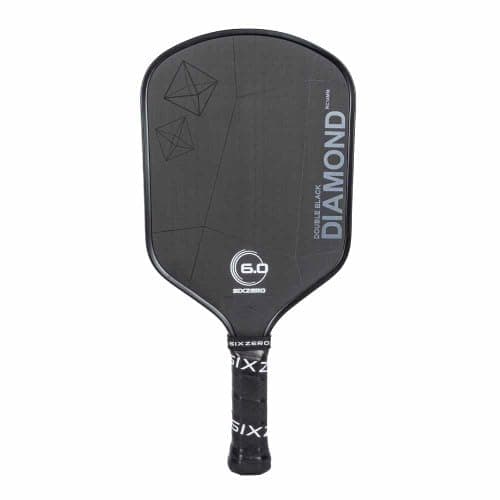 Six Zero Double Black Diamond 16mm All-court value with a huge sweet spot | The forgiving all-rounder | 8.5 | $180.00 · View on Amazon #adPrice as of October 23, 2026 |
| 2 | 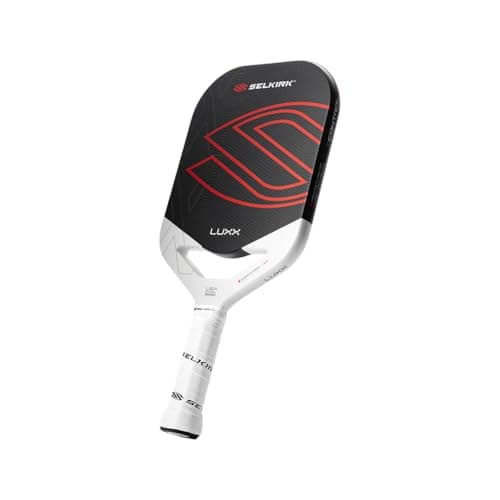 Selkirk LUXX Control Air Invikta Maximum control + soft touch | The touch specialist | 8.0 |
Tap any row to jump to the full write-up. Prices are pulled live from Amazon.
Six Zero Double Black Diamond 16mm
The internet's default 'do-it-all' recommendation: thermoformed power, a raw-carbon spin face, and a famously forgiving sweet spot at a fair price.
The DBD earned its reputation honestly. The 16mm Control build blends thermoformed pop with one of the most forgiving sweet spots in its class, and the raw T700 face grabs the ball for spin. It's the paddle we point undecided upgraders to first.
The default 'just tell me what to buy' paddle. A thermoformed 16mm build with one of the most forgiving sweet spots in its class, a raw Toray T700 face for spin, and enough pop to end a rally — at a fair price.
- Core
- 16 mm
- Shape
- Hybrid
- Face
- Raw Toray T700 carbon fiber
- Weight
- ~8.0 oz
- Build
- Thermoformed
- Gen
- Control (Gen 2 thermoformed)
Manufacturer-listed as USA Pickleball approved. Approvals and delistings change — verify against the current USAP equipment list before tournament play (checked 2026-07).
Selkirk LUXX Control Air Invikta
A thick-core, control-first paddle: a plush, soft-hands feel for dinking and resets, not a bomb-thrower.
The LUXX Control leans hard into touch — a thicker core and a muted face make the third-shot drop and the reset the strengths here. If your game wins on placement and hands speed rather than raw pace, this is the control end of the Selkirk line.
A thick 20mm core and a muted Florek carbon face tuned for the reset and the third-shot drop. If your points come from placement and hands speed rather than pace, this goes further in that direction than anything else we cover.
- Core
- 20 mm
- Shape
- Elongated
- Face
- Florek carbon face
- Weight
- ~8.0 oz
- Build
- Cold-pressed
- Gen
- LUXX
Manufacturer-listed as USA Pickleball approved. Approvals and delistings change — verify against the current USAP equipment list before tournament play (checked 2026-07).
Six Zero Double Black Diamond vs Selkirk LUXX Control: the specs
| Spec | Six Zero Double Black Diamond 16mm | Selkirk LUXX Control Air Invikta |
|---|---|---|
| Shape | Hybrid (16.3 x 7.7in) | Elongated (Invikta) |
| Core | 16 mm | 20 mm |
| Face | Raw Toray T700 carbon fiber | Florek carbon face |
| Build | Thermoformed, Control (Gen 2) | LUXX with the Air throat, not thermoformed |
| Leans toward | Forgiving all-court with real pop | Maximum soft touch and a plush feel |
| Best for | Undecided upgraders who want one paddle for everything | Kitchen-line players who win on placement and resets |
16mm vs 20mm: a bigger gap than it looks
Four millimeters does not sound like much. In paddle terms it is the difference between two categories. Core thickness governs how much of the ball's energy the paddle absorbs before returning it, and the relationship is not subtle — this is the single most consequential number on any paddle spec sheet, which is why we wrote a whole guide to core thickness around it.
At 16mm the DBD is already on the damped side of the market. Drops and resets are predictable, the response is quiet enough to shape a shot, and the sweet spot is broad. But it is still built to hit: a committed swing produces a genuinely fast ball, and nobody blocking your drive is going to mistake it for a control-only paddle.
At 20mm the LUXX is doing something different. That much core absorbs a large share of the incoming pace, which is precisely what you want when somebody drives at your feet and you need the ball to die in the kitchen. Resets that would rebound off a thinner paddle simply settle. Dinks come off the face slowly enough that you can place them within inches. The price is the top end — you cannot generate the same drive speed through that much damping, and against a team that attacks constantly you will need to win points a longer way around.
The useful way to decide is to look at your own losses. If you lose points because your resets pop up and your drops land at the kitchen line instead of in it, the 20mm core fixes real problems. If you lose points because you cannot put a ball away when you get one, it makes them worse.
Thermoformed vs the LUXX build
The DBD is thermoformed: a unibody carbon shell heated and formed around the core so the perimeter is rigid and returns energy instead of flexing it away. That is where its pop comes from despite the thick core, and it is the construction that reshaped the entire category. Our thermoformed paddles guide covers how it works and the caveats — most notably that rigid unibody builds across the industry have generated more edge and delamination complaints than traditional constructions. That is a category-wide pattern, not a specific accusation about this model.
The LUXX is not thermoformed, and Selkirk is not trying to be. Its build aims at a plush, composed response — the sensation of the ball settling into the face rather than springing off it. Combined with the Air throat, which removes material to trim swing weight, you get a long paddle that stays manageable in a hands exchange despite its length and its thick core.
This is the clearest example in our whole comparison set of two paddles engineered toward opposite goals. One wants energy back in the ball. The other wants energy absorbed so you can control what happens next. Neither is a compromise of the other; they are separate design targets.
Face materials and spin
The Six Zero runs a raw Toray T700 carbon face — unsealed, unpainted, and textured by the weave itself. That is the mechanism behind modern topspin generation, and it is why the DBD earns a place on our spin roundup as well as the control pages. Topspin dinks, dipping thirds and roll volleys all get easier when the face genuinely grabs.
The LUXX uses Selkirk's Florek carbon face, a more finished, more muted surface consistent with the paddle's control-first purpose. It generates real spin — this is not a slick face — but it is not built to maximize bite. In a control paddle that is a defensible choice, since the muting that costs you a little grip is the same muting that produces the soft touch you bought the paddle for.
If spin is high on your list, the gap favors the Six Zero clearly. How spin actually works explains why face texture dominates every other variable, and paddle grit and durability covers the fact that raw faces do lose bite over time.
Forgiveness: both strong, for different reasons
Unusually, this is the category where the two paddles converge. The DBD has one of the most forgiving sweet spots in its class, achieved through the combination of a thick core and a thermoformed perimeter that keeps the outer face behaving like the middle. The LUXX gets there through sheer core thickness plus the stability of a long, well-balanced frame — when the paddle absorbs that much energy, an off-center hit simply has less to go wrong with.
The property that actually predicts off-center behavior is twist weight, which no manufacturer publishes. Independent measurements across the market are available from Pickleball Studio, and our swing weight and twist weight guide explains how to read it. If you take one thing from that guide: a bigger paddle face does not mean a bigger effective sweet spot, and twist weight is the number that tells you the truth.
Shape, reach and the hands battle
Both paddles are longer than a standard shape, so this is not the usual long-versus-short argument. The LUXX uses Selkirk's true elongated Invikta outline; Six Zero publishes the DBD at 16.3 x 7.7in, which is a hybrid — a little shorter and a little wider. Both give you extra reach at the sideline and extra leverage on a drive, and both ask you to accept a little less maneuverability than a standard shape would, the DBD marginally less so. If you already know you dislike long paddles, neither of these is your answer and you should look at a standard-shape control frame instead — our elongated vs standard shape guide will tell you which camp you are in.
Where the shapes diverge is in what the length is for. On the Six Zero, length serves the drive: more leverage into a fourth-shot attack, and a hitting zone that sits high enough on the face to reward a full swing. On the LUXX, the Invikta shape serves the stretch. The extra reach is what lets you get to a wide dink that would otherwise force you off the kitchen line, and getting to that ball comfortably is worth more to a touch player than any amount of leverage.
The hands battle is the other consideration, and it is closer than the spec sheets suggest. The Six Zero is quicker off the mark simply because it has less core to move. The LUXX partly offsets its thicker core with the Air throat, which removes material to trim swing weight without shortening the frame — one of the few genuine engineering answers to the elongated trade-off rather than a name for a shape.
In practice, a player who counters aggressively will prefer the Six Zero; a player who blocks and resets under pressure will find the LUXX easier to keep low. Neither paddle is a liability at the net, which is more than can be said for a lot of elongated power frames.
Price and value
There is a real gap here. The Six Zero sits in the sensible middle of the market and is one of the reasons it gets recommended so relentlessly — you are not paying flagship money for a paddle that competes with flagships on most axes. The Selkirk is premium-priced, in line with the brand's position and the LUXX line's place at the top of it.
That gap changes the calculus for anyone who is not certain about their style. Buying the DBD and discovering you are a touch player costs you little; you upgrade later having learned something. Buying the LUXX and discovering you actually like to drive is an expensive lesson. Our control paddles for intermediate players page makes this argument at length, and CRBN vs Six Zero shows how the DBD holds up against a premium power frame.
The verdict, by player type
- Buy the Six Zero Double Black Diamond 16mm if you want one paddle that handles every part of the game, you are still working out what kind of player you are, or you value spin and forgiveness at a price that is not painful. It is the lowest-regret purchase of the two by a distance. The trade is that it is not as plush as the LUXX on pure touch shots, its 16.3-inch hybrid frame is still less nimble than a standard shape in a hands battle, and it carries the general thermoformed durability caveat. Read the full Six Zero DBD review.
- Buy the Selkirk LUXX Control Air Invikta if you have already settled into a soft game — you win with drops, resets, patience and hands speed at the kitchen, and you would rather absorb a drive than answer it. The 20mm core and muted face make those shots more repeatable than any other paddle we cover, and the Invikta shape adds reach for stretching to wide dinks. The trade is real: less power, less spin bite, and a premium price for a specialization you should be confident about before you commit. Compare it against a power Selkirk in Joola vs Selkirk.
If this page has made you realize you want touch and a finishing shot, the middle ground is on our control paddles that still hit hard page. If you are starting from scratch, how to choose a paddle walks the decision in order, and the main control roundup ranks the category as a whole.
If the brand rather than the model is the question
Both shelves are now covered end to end. Our best Selkirk pickleball paddles page ranks all five Selkirk and SLK paddles we cover, and best Six Zero pickleball paddles does the same on the other side — useful if you have not yet settled on which of the two models above you are really choosing between.
Is Six Zero or Selkirk better?
They are built for different jobs. The Six Zero Double Black Diamond 16mm is the better all-around paddle and the better value — forgiving, spinny, and capable of real pace. The Selkirk LUXX Control Air Invikta is better only if your game is genuinely built on the soft game, where its 20mm core makes drops and resets far more repeatable.
Is a 20mm paddle too thick?
It is not too thick, but it is specialized. A 20mm core absorbs a large share of incoming pace, which makes resets and drops much easier to control and produces a very forgiving response. The cost is top-end power, so it suits a player whose points come from placement rather than from putting balls away.
Which has more spin, the Six Zero DBD or the Selkirk LUXX?
The Six Zero. Its raw Toray T700 carbon face is unsealed so the weave texture itself grips the ball, which is the mechanism behind modern topspin. The LUXX's Florek carbon face is more muted by design — a deliberate choice that supports its soft-touch purpose but costs some bite.
Which is better for an intermediate player?
The Six Zero Double Black Diamond, in most cases. An improving player is usually still discovering their style, and the DBD is competent at every part of the game while costing considerably less. Buying a 20mm touch specialist before you know you are a touch player is an expensive way to find out you are not.