Best Control Paddles Under $150
Control is the cheapest property to buy in pickleball. Power costs money; dwell time mostly costs a few extra millimeters of polymer.
Disclosure: Drive Dink earns a commission from qualifying Amazon purchases at no extra cost to you. We accept no free products and no paid placements — commissions never change our picks. How this works.
Our spin roundup has an under $100 page and our power roundup has an under $200 page. Control sits between them for a reason: soft-game performance comes mostly from core thickness and damping, both of which are cheap to engineer, so the useful ceiling arrives earlier than it does for power.
Live Amazon prices render above and they move — a paddle listed here can drift above the threshold on any given day, so check the price before you decide. Units we claim to have tested: 0.
| # | Paddle | Best for | Score | Price |
|---|---|---|---|---|
| 1 | 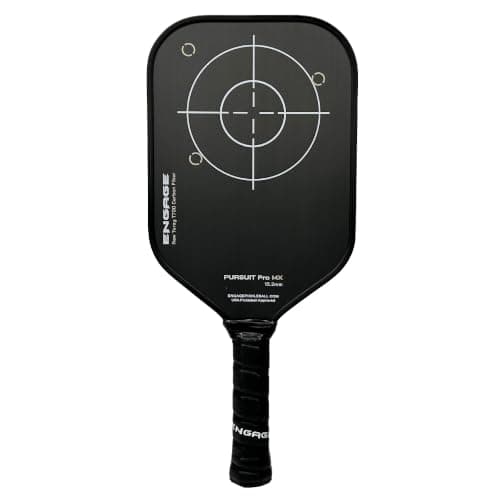 Engage Pursuit Pro MX 15.2 Elongated Control-forward power without the harsh feel | Best overall under $150 | 7.8 | $129.99 · View on Amazon #adPrice as of October 22, 2026 |
| 2 | 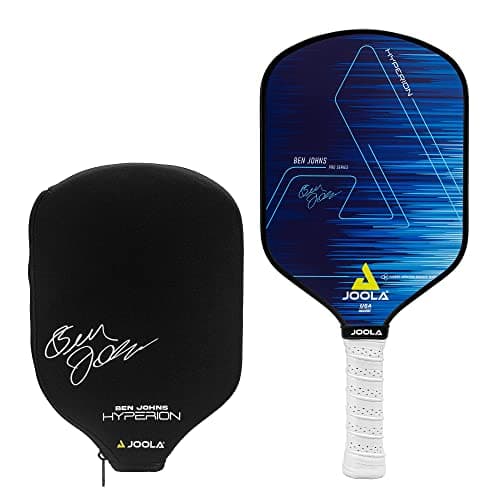 JOOLA Ben Johns Hyperion Pickleball Paddle Reach and spin on a last-generation flagship budget | Best last-generation flagship | 7.5 | $179.95 · View on Amazon #adPrice as of October 22, 2026 |
| 3 | 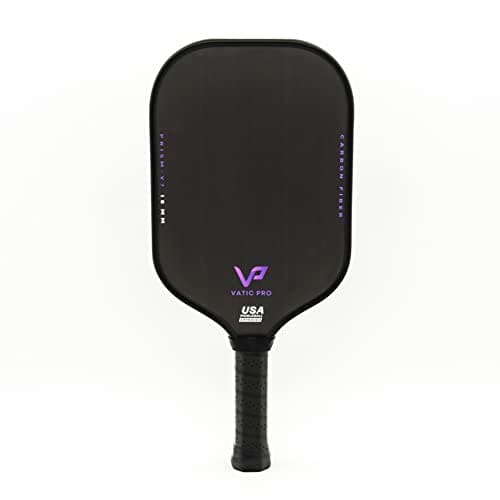 Vatic Pro Prism V7 16mm Value control in a standard shape | Best value | 7.8 | $99.99 · View on Amazon #adPrice as of October 22, 2026 |
| 4 | No image Ronbus R1 Pulsar Lowest-cost entry to thermoformed carbon | Best budget entry | 7.5 |
Tap any row to jump to the full write-up. Prices are pulled live from Amazon.
Engage Pursuit Pro MX 15.2 Elongated
Engage's calling card is a softer, more controllable power feel — the Pursuit Pro MX gives you drive without the trampoline harshness.
Engage tunes its paddles for a plusher, quieter response than the raw thermoformed crowd. The Pursuit Pro MX 15.2 is an elongated frame that still hits hard but keeps the ball on the face longer, which control players tend to prefer.
Engage builds for a plusher, quieter response rather than maximum energy return, which is exactly the priority a control buyer has — and the cold-pressed construction keeps the frame from feeling harsh. Our control and forgiveness scores both sit high, and unlike most soft paddles it still drives when the rally demands it. The con is the elongated frame: swing weight is higher than a standard shape, which is work in a fast hands exchange.
- Core
- 15 mm
- Shape
- Elongated
- Face
- Raw carbon-fiber face
- Weight
- ~8.0 oz
- Build
- Cold-pressed
- Gen
- Pursuit Pro MX
Manufacturer-listed as USA Pickleball approved. Approvals and delistings change — verify against the current USAP equipment list before tournament play (checked 2026-07).
JOOLA Ben Johns Hyperion Pickleball Paddle
The paddle that made JOOLA's name: a long, high-grit elongated frame now sold well below current-generation flagship money.
Before the thermoformed Perseus era, the Hyperion was the elongated paddle the top of the game played. It is cold-pressed rather than thermoformed, so it does not have the modern power ceiling — but the Carbon Friction Surface still grips, the reach is real, and it now sits a tier below the current flagships on price.
Buying the previous flagship is usually the smartest move in gear, and for a control buyer it genuinely is here — the Hyperion's cold-pressed build flexes more than the thermoformed paddles that replaced it, which softens the response and makes resets easier to judge. You also get a grippy Carbon Friction Surface and real reach. The con is power: this is a two-point drop against the current Perseus, and it is not a paddle to buy if pace is anywhere in your reasoning.
- Core
- 16 mm
- Shape
- Elongated
- Face
- Carbon Friction Surface (textured carbon)
- Weight
- ~8.0 oz
- Build
- Cold-pressed
- Gen
- Hyperion CFS
Manufacturer-listed as USA Pickleball approved. Approvals and delistings change — verify against the current USAP equipment list before tournament play (checked 2026-07).
Vatic Pro Prism V7 16mm
The standard-shape Prism: the same value-carbon face in a more control-friendly, maneuverable body.
The V7 is the Prism for players who prefer a standard shape — a lower, wider sweet spot and quicker hands than the elongated Flash, at the same wallet-friendly price. A lot of paddle for the money on the control end.
A standard outline, a 16mm core and a raw Toray T700 face at value-tier money. The standard shape is the important part: it puts more of the face near the sweet spot and keeps mass close to your hand, which produces a paddle that is both forgiving and quick at the kitchen line. The con is power — it is our lowest-scoring paddle on that axis, and the feel across the face is less consistent than the paddles above it.
- Core
- 16 mm
- Shape
- Standard
- Face
- Raw Toray T700 carbon fiber
- Weight
- ~8.0 oz
- Build
- Thermoformed
- Gen
- Prism
Manufacturer-listed as USA Pickleball approved. Approvals and delistings change — verify against the current USAP equipment list before tournament play (checked 2026-07).
Ronbus R1 Pulsar
The budget thermoformed pick: raw T700 carbon and a real thermoformed build at a price that undercuts almost everyone.
Ronbus is the value-brand's value brand. The R1 Pulsar gets you a raw-carbon, thermoformed paddle for the least money of anything we cover — a smart first 'real' upgrade from a big-box starter paddle before you commit to a $200 frame.
The cheapest route into a thermoformed 16mm carbon paddle that we cover. For a player who wants to find out whether a thicker core fixes their soft game before spending real money, it answers the question for the price of a couple of lessons. The con is everything refinement buys: the feel is less consistent, the damping less sophisticated, and our control score sits two points below the top of this list.
- Core
- 16 mm
- Shape
- Elongated
- Face
- Raw Toray T700 carbon fiber
- Weight
- ~8.0 oz
- Build
- Thermoformed
- Gen
- Pulsar
Manufacturer-listed as USA Pickleball approved. Approvals and delistings change — verify against the current USAP equipment list before tournament play (checked 2026-07).
Why control is the cheap property
Power in a modern paddle comes from construction: a thermoformed unibody shell, foam-injected walls, carefully engineered stiffness. All of that is expensive to make and it is where flagship money goes.
Control comes from something much simpler — more polymer between the faces, and a build that absorbs rather than returns. A 16mm core costs a manufacturer very little more than a 14mm one, and a cold-pressed frame is cheaper to produce than a hot-molded one. That is why a $100 paddle can be genuinely good at the soft game while a $100 paddle that hits like a flagship does not exist. Our guide to how much a paddle should cost maps where the diminishing returns sit across the whole market.
What you actually give up under $150
Consistency across the face. The clearest difference between a value paddle and a flagship is not the middle of the face — it is everywhere else. Premium paddles feel more alike from center to edge, which makes the paddle more predictable on the shots you did not hit perfectly.
Damping quality. Cheaper paddles can be soft without being refined. You get the dwell time; you may also get more vibration and a less pleasant response. If you have any elbow history, that is worth taking seriously — our paddles for tennis elbow page covers what to prioritize.
Weight tolerances. Flagship brands hold tighter tolerances, so two paddles of the same model play more alike. At the value end there is more variation, which matters if you buy a second one as a backup.
Not much else. Face material is largely the same across price tiers — raw Toray T700 carbon appears on paddles at every level — and so is core material. Our carbon fiber vs fiberglass guide covers why that convergence happened.
How we picked
We took every paddle in our catalog with a control score of 7 or higher that has recently listed under roughly $150, then ranked on control and forgiveness with a tiebreak for whether the paddle can still hit when it needs to. We did not include paddles that are only cheap in a specific colorway or size, and every price you see is pulled live rather than typed into the copy.
Two paddles that would otherwise qualify are excluded deliberately. The Selkirk LUXX is our softest paddle but sits above this bracket, and the Six Zero DBD 16mm — our joint-best control score — usually does too. If your budget stretches, both are better paddles than anything on this page.
Who should buy which
If you want the best paddle here full stop, the Engage Pursuit Pro MX. Our full review covers the damped-feel argument in detail.
If you want reach and a grippy face, the Hyperion. Our Hyperion vs Perseus comparison explains exactly what the generational discount is and is not buying you.
If you want hand speed at the kitchen line, the V7 — the only standard-shape paddle on this list, and the quickest to move. Our paddles for dinking page covers why shape matters so much for soft-game play.
If you are testing a theory rather than buying a paddle, the Ronbus R1 Pulsar. It is the cheapest honest answer to "would a thicker core help me?" — see our review.
The upgrade that costs less than a new paddle
Before you spend anything, two changes often produce more soft-game improvement than a paddle does. A grip that fits properly stops you squeezing, and a tense hand is the most common cause of dinks that sit up — our grip size guide covers it. And weight added at the butt cap lowers effective swing weight, which makes an elongated paddle feel quicker at the line without changing anything else; our lead tape guide covers how.
The bottom line
Under $150 buys a genuinely good control paddle, and unlike the power tier, you are not making a large compromise to shop here. Take the Engage if you want the best of them, the V7 if you want the quickest, and put the money you saved into shoes — where the price-to-performance curve is much steeper. Our pickleball shoes picks cover that, and our main control roundup covers what the money above this bracket buys.
Can you get a genuinely good control paddle under $150?
Yes, and more easily than you can get a genuinely good power paddle at that price. Control comes largely from core thickness and a damped build, both of which are cheap to engineer. Power comes from thermoformed construction and foam walls, which are not.
What do you give up buying a control paddle under $150?
Mostly consistency rather than capability. Flagships feel more alike from the center of the face to the edge, damp vibration more cleanly, and hold tighter weight tolerances between units. Face and core materials are broadly the same across price tiers.
Is a 16mm core enough on its own for a good soft game?
It is the single most useful specification, but not the whole story. How the paddle damps vibration and how stable it stays on off-center contact matter too, and those are where construction quality shows. A 16mm core is where to start looking, not where to stop.
Do the prices on this page stay under $150?
Not necessarily. Every price shown is pulled live from Amazon rather than typed into the article, and paddles drift above and below the threshold as retailers discount them. Check the live price before you decide — a paddle listed here may be above the bracket on the day you read it.