JOOLA Hyperion vs Perseus
Buying last year's flagship is usually the smartest move in gear. Between these two paddles it is the one decision where that rule of thumb can cost you.
Disclosure: Drive Dink earns a commission from qualifying Amazon purchases at no extra cost to you. We accept no free products and no paid placements — commissions never change our picks. How this works.
This is the question the enthusiast market asks most often about JOOLA: an older flagship is still on sale at a real discount, so is the newer one worth the difference? Usually, in gear, the answer is no. Here it depends entirely on what you want the paddle to do.
Live Amazon prices for both are above. Everything below is read from published specifications and the wider reviewer record. Units we claim to have tested: 0.
| # | Paddle | Best for | Score | Price |
|---|---|---|---|---|
| 1 | 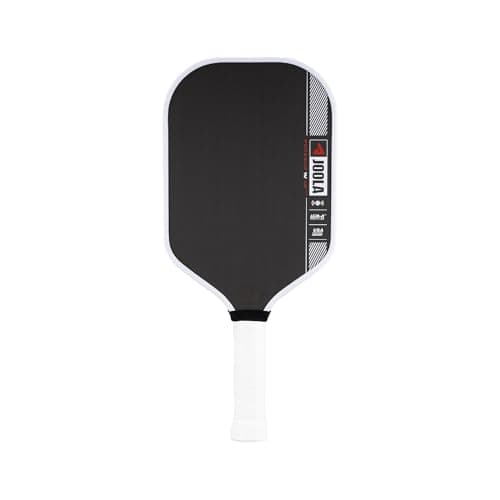 JOOLA Ben Johns Perseus Pro IV 16mm All-court power with a big sweet spot | The upgrade that is actually an upgrade | 8.3 | |
| 2 | 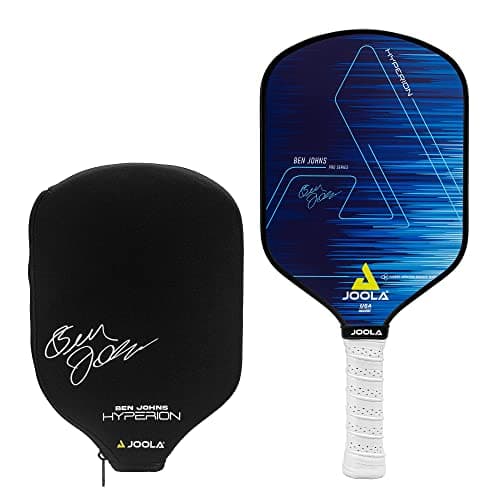 JOOLA Ben Johns Hyperion Pickleball Paddle Reach and spin on a last-generation flagship budget | The value play, with conditions | 7.5 | $179.95 · View on Amazon #adPrice as of October 24, 2026 |
Tap any row to jump to the full write-up. Prices are pulled live from Amazon.
JOOLA Ben Johns Perseus Pro IV 16mm
JOOLA's Gen-4 Perseus: thermoformed power and a grippy Charged surface, with the 16mm core adding forgiveness the 14mm gives up. Now the previous generation to the Pro V.
The Perseus Pro IV set the benchmark the rest of the power field chased, and JOOLA's March 2026 Pro V refines that formula rather than replacing it. The 16mm version trades a little raw pop for a larger, more forgiving sweet spot — the sensible pick if you want top-tier power without punishing off-center hits. Charged Surface Technology keeps spin high.
The Perseus Pro IV is not a refreshed Hyperion. It is a different construction — a thermoformed unibody shell with a Charged carbon surface — and that changes the power ceiling rather than the paint. If pace is what you want from a JOOLA, this is the only one of the two that delivers it, and the price gap is the price of that difference.
- Core
- 16 mm
- Shape
- Hybrid
- Face
- Charged carbon-fiber surface (Tech-Flex)
- Weight
- ~8.0 oz
- Build
- Thermoformed
- Gen
- Pro IV (Gen 4)
Manufacturer-listed as USA Pickleball approved. Approvals and delistings change — verify against the current USAP equipment list before tournament play (checked 2026-07).
JOOLA Ben Johns Hyperion Pickleball Paddle
The paddle that made JOOLA's name: a long, high-grit elongated frame now sold well below current-generation flagship money.
Before the thermoformed Perseus era, the Hyperion was the elongated paddle the top of the game played. It is cold-pressed rather than thermoformed, so it does not have the modern power ceiling — but the Carbon Friction Surface still grips, the reach is real, and it now sits a tier below the current flagships on price.
The Hyperion is long, grippy and refined, and it now sells well below current flagship money. For a control-leaning player who wants reach and a textured face, it is one of the better value buys in the market. It is the wrong purchase for anyone shopping for power, because the construction it uses is the reason the Perseus exists.
- Core
- 16 mm
- Shape
- Elongated
- Face
- Carbon Friction Surface (textured carbon)
- Weight
- ~8.0 oz
- Build
- Cold-pressed
- Gen
- Hyperion CFS
Manufacturer-listed as USA Pickleball approved. Approvals and delistings change — verify against the current USAP equipment list before tournament play (checked 2026-07).
Side by side
| Spec | JOOLA Perseus Pro IV 16mm | JOOLA Hyperion CFS |
|---|---|---|
| Core thickness | 16 mm | 16 mm |
| Shape | Hybrid | Elongated |
| Face | Charged carbon-fiber surface (Tech-Flex) | Carbon Friction Surface (textured carbon) |
| Build | Thermoformed | Cold-pressed |
| Generation | Pro IV (Gen 4) | Hyperion CFS |
| Our power score | 9 / 10 | 7 / 10 |
| Our spin score | 9 / 10 | 8 / 10 |
| Our control score | 7 / 10 | 8 / 10 |
| Our forgiveness score | 8 / 10 | 7 / 10 |
The gap is construction, not marketing
Most generational changes in gear are incremental. This one is not. The Hyperion is cold-pressed: the layers are bonded under pressure at ambient temperature, in a process that has built good paddles for a decade. The Perseus is thermoformed: the paddle is hot-molded as a single unibody unit with the edges compressed into a continuous shell.
That shell is what raises the power ceiling. A stiffer perimeter returns more of the ball's energy instead of absorbing it into flex, and it does so most noticeably on drives and serves. It is the single biggest determinant of how hard a modern paddle hits — bigger than core thickness, bigger than shape. Our thermoformed paddles guide explains the process and what it costs as well as what it buys.
So the two-point power gap in the table is not a scoring quirk. It is the whole story of why JOOLA replaced this paddle.
What the Hyperion still wins
Control and feel. Cold-pressed paddles flex more, and flex is not only a loss. It softens the response, which makes a paddle easier to reset with and easier to feel the ball on. Our control score favors the Hyperion, and that is not a consolation prize — plenty of strong players prefer exactly this response.
Reach. The Hyperion is a true elongated frame; the Perseus Pro IV is a hybrid. If you want the extra inch at full stretch — for a two-handed backhand, for singles coverage, for the reach on a cross-court dink — the older paddle is the longer one. Our best elongated paddles page covers what length is worth.
Price.Superseded flagships get discounted, and the Hyperion is discounted hard. The live prices above will show you today's gap; our guide to how much a paddle should cost covers where the diminishing returns start.
What you give up by saving the money
Pace, mostly, and the specific kind of pace that decides points at the 4.0-and-up level: the counter-attack off a speed-up, the drive that forces a pop-up, the serve that pushes a returner back. Those shots reward energy return from the frame, and cold-pressed construction returns less of it.
You also give up a slightly grippier face. Both paddles are textured carbon and both generate real spin, but JOOLA's Charged surface on the Pro IV is one of the more aggressive faces in the flagship field. We score it a point higher. Our best paddles for spin roundup puts both in the wider field.
One thing the older paddle does not have to worry about
Thermoformed construction is what made the modern power era possible, and it is also what introduced the era's characteristic failure modes — edge-wall foam settling, core crush behind the hitting area, face separation on hard-hit paddles. A cold-pressed paddle is not immune to wear, but it does not carry those specific risks.
That is a genuine point in the Hyperion's favor for a heavy hitter who plays five days a week. Our guide to paddle delamination and core crush sets out what to watch for and what the warranty landscape looks like.
Who should buy which
Buy the Perseus Pro IV if you want power, you are upgrading specifically because your current paddle feels underpowered, or you play a modern drive-and-counter game. This is the paddle the rest of the field is chasing, and the 16mm build keeps it forgiving — our Perseus 14mm vs 16mm comparison covers that choice.
Buy the Hyperion if you are a control player who wants reach and grip on a budget, you are buying a second paddle, or you have played a Hyperion before and want another one. Go in knowing it is a different class of paddle for power, not a cheaper version of the same thing.
There is a third answer if you want both. JOOLA also sells a Hyperion Pro IV — the Perseus Pro IV build, foam edge wall and Tech Flex Power throat included, under the curved Hyperion head. That means you can have the thermoformed power ceiling and the Hyperion's head shape in one paddle, at the same price as the Perseus. If what you actually liked about your old Hyperion was the shape rather than the soft cold-pressed feel, start there instead of with either paddle on this page.
Verdict
If power is anywhere in your reason for shopping, buy the Perseus. The generational change was structural, and no discount makes a cold-pressed frame hit like a thermoformed one.
If you are a touch player who wants a long, grippy, refined paddle and the price gap is meaningful to you, the Hyperion is one of the better value buys on the market and we say so in our JOOLA Hyperion review. Just buy it for what it is — a very good control paddle at a reduced price — rather than as a cheap route to thermoformed pace.
Is the JOOLA Hyperion still worth buying in 2026?
Yes, for a control-leaning player who wants an elongated frame and a textured carbon face at a reduced price. It is not worth buying as a cheaper route to Perseus-level power, because the difference between the two is cold-pressed versus thermoformed construction, and that is what sets a paddle's power ceiling.
What actually changed between the Hyperion and the Perseus?
The construction. The Hyperion is cold-pressed; the Perseus Pro IV is a thermoformed unibody with a compressed perimeter shell, which returns more energy on drives and serves. The Perseus is also a hybrid rather than a true elongated shape, and it uses JOOLA's Charged carbon surface rather than the older Carbon Friction Surface.
Which is better for control, the Hyperion or the Perseus?
The Hyperion, on our scoring. Cold-pressed paddles flex more at impact, which softens the response and makes resets and drops easier to feel. The Perseus 16mm closes some of that gap with its thicker core, but the Hyperion remains the more forgiving paddle on touch shots.
Does the older paddle have any durability advantage?
It avoids the failure modes specific to thermoformed construction — edge-wall foam settling, core crush and face separation. A cold-pressed paddle still wears out, primarily through the face losing its texture, but the structural risks that come with a hot-molded shell do not apply to it.