JOOLA Ben Johns Hyperion Review
The paddle that put JOOLA on the map, two generations later — still sold new, now at a very different price, with one specification that decides whether it is a bargain or a trap.
Disclosure: Drive Dink earns a commission from qualifying Amazon purchases at no extra cost to you. We accept no free products and no paid placements — commissions never change our picks. How this works.
The Hyperion is the paddle that made JOOLA a household name in pickleball, and unusually for a superseded flagship, it is still sold new — at a price that now sits well below the current Perseus line. That makes it one of the more interesting buys in the catalog, provided you understand exactly what changed between generations. Everything below is read from published specifications and the wider reviewer record; we have not hit this paddle ourselves.
JOOLA Ben Johns Hyperion Pickleball Paddle
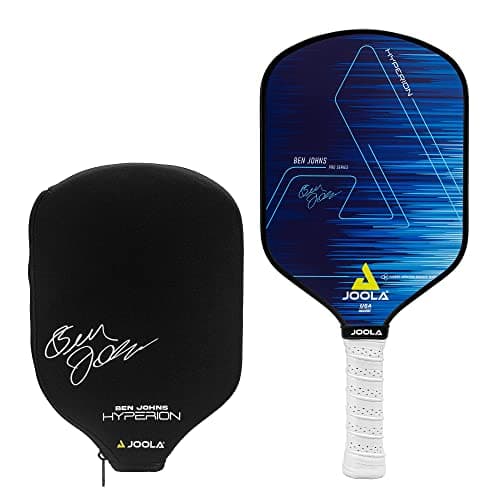
The paddle that made JOOLA's name: a long, high-grit elongated frame now sold well below current-generation flagship money.
Before the thermoformed Perseus era, the Hyperion was the elongated paddle the top of the game played. It is cold-pressed rather than thermoformed, so it does not have the modern power ceiling — but the Carbon Friction Surface still grips, the reach is real, and it now sits a tier below the current flagships on price.
Buying last year's flagship is usually the smartest move in any gear category, and in pickleball it usually is too — with one exception, and the Hyperion is standing right on it. The generational change from the Hyperion to the Perseus was not a marketing refresh; it was a construction change from cold-pressed to thermoformed, and that is the single biggest determinant of a paddle's power ceiling. So the Hyperion is a genuine bargain for a control-leaning player who wants reach and grip, and the wrong purchase for anyone shopping for pace.
- Core
- 16 mm
- Shape
- Elongated
- Face
- Carbon Friction Surface (textured carbon)
- Weight
- ~8.0 oz
- Build
- Cold-pressed
- Gen
- Hyperion CFS
Manufacturer-listed as USA Pickleball approved. Approvals and delistings change — verify against the current USAP equipment list before tournament play (checked 2026-07).
Who it's for
The JOOLA Ben Johns Hyperion is for the player who wants an elongated, high-grit paddle with a refined feel and does not need the modern power ceiling. That describes more players than the marketing suggests. If your game is built on placement, spin and reach — rolls, drives you aim rather than crush, stretch volleys — the Hyperion does all of it and costs less than the paddle that replaced it.
It also suits the player who has tried a thermoformed flagship and found it harsh. Cold-pressed construction gives a softer, less explosive response off the face, and a lot of players prefer it once they stop measuring paddles by pace. Our Engage Pursuit Pro MX review makes the same argument from a different brand.
Who it is not for: anyone shopping for power. This is the important sentence in the review. If you are upgrading because you cannot end points, the Hyperion is a lateral move at best, and the current generation exists precisely because that gap was real. Go to our power paddle roundup instead.
What actually changed after the Hyperion
This is the part most listings will not tell you, and it decides the whole purchase. The Hyperion is a cold-pressed paddle: a honeycomb core with a face bonded to it, assembled at low temperature. The Perseus generation that replaced it is thermoformed: the frame is heat-molded into a single stiff shell with a foam-filled perimeter, which makes the whole structure much stiffer and returns significantly more energy to the ball.
That is not an incremental spec bump. Thermoforming is the mechanism behind the entire modern power era — our thermoformed paddles guide walks through why. Buying a cold-pressed flagship in 2026 means deliberately opting out of that, and the price difference is the market pricing exactly that fact rather than a discount nobody noticed.
There is a real upside to the older construction. Cold-pressed paddles do not suffer the edge-foam cracking that early thermoformed frames across the industry became known for, and they generally feel softer and quieter at contact. Whether you read that as dated or as pleasant is a preference — but it is a genuine one, not a consolation prize.
One naming point that trips buyers up: JOOLA kept the Hyperion name through the generational change, so a paddle called Hyperion Pro IV also exists and is a completely different build — the Perseus Pro IV platform, with the foam edge wall and the Tech Flex Power throat, under the curved Aero Curve head. If you are shopping the Hyperion name because you want the modern power ceiling in that shape, that is the page you want; this one is the cold-pressed CFS.
How it plays
Spin
The Hyperion's Carbon Friction Surface was the high-grit face of its generation, and it is still a genuinely textured carbon surface rather than a painted one. Our spin score for it is strong — a notch below the current raw Toray T700 specialists, but comfortably in the range where the face is grabbing the ball and topspin is available to you. Our how paddle spin works guide explains why the surface is the variable that decides this.
For measured RPM across generations, independent labs such as Pickleball Studio publish calibrated results; we cite their testing rather than invent numbers. One age-specific caution: because the Hyperion has been on the market a long time, some listings carry stock that has been sitting. Grit does not wear in a box, but it is worth checking you are buying a current, first-party listing — see our grit durability guide for what to expect from a textured face over its life.
Power
Moderate. The elongated frame gives real leverage on a full swing, and the Hyperion drives well for a cold-pressed paddle — it was the paddle the best player in the world used, after all. But leverage is the only power mechanism it has, where a modern flagship has leverage and a stiff thermoformed shell. Our power score reflects that gap honestly, and it is the largest single difference between this paddle and its successors.
If you like the Hyperion's feel and want more drive out of it, adding a few grams of tape at 10 and 2 o'clock raises swing weight and gives you more mass behind the ball. That is a real, cheap improvement — see our paddle weights and tuning tape page and the swing weight guide — but it will not close a construction gap.
Control and feel
Better than its power score suggests, and the reason people still buy it. The 16mm core and cold-pressed build combine into a response that is softer and more predictable than the current stiff frames — resets take pace off, drops behave, and the ball does not rocket off the face on a block you did not fully commit to. Our control score for the Hyperion is solid.
The limit is shape rather than construction. This is a long paddle, and the elongated outline puts the sweet spot higher and narrower and slows the head in fast exchanges. Our forgiveness score sits mid-pack for exactly that reason. If you want the softer feel with a wider sweet spot, a standard shape like the JOOLA Scorpeus Pro IV is the better geometry — though it is a current-generation paddle at current-generation money.
Specs and build
Manufacturer-published specifications. The card above carries the live Amazon price and our editorial scores.
| Spec | JOOLA Ben Johns Hyperion |
|---|---|
| Shape | Elongated |
| Core thickness | 16mm |
| Face | Carbon Friction Surface (textured carbon) |
| Construction | Cold-pressed (not thermoformed) |
| Generation | Hyperion CFS |
| Listed weight | ~8.0 oz |
One line in that table is worth more than the rest combined. If you take nothing else from this review: cold-pressed versus thermoformed is the difference between this paddle and the ones that replaced it, and it is a power difference, not a quality difference.
A second practical note. JOOLA has sold several Hyperion variants over the years, including different core thicknesses and later CFS revisions. Read the listed core thickness and model designation on the specific listing rather than trusting the family name — this is the single most common way buyers end up with a paddle they did not intend. JOOLA lists the Hyperion as USA Pickleball approved, but approvals and delistings apply to specific revisions and change over time, so check the current USAP approved paddle list before tournament play — our USAP-approved paddles guide explains how that process works and why older models need checking more carefully than new ones.
Is a last-generation flagship a good buy?
Usually yes, and in this specific case, conditionally. The general argument is sound: superseded flagships carry the same build quality, the same brand support and most of the same performance, at a substantial discount, because the market prices novelty. Our paddle price guide makes the case that this is the most reliably underpriced part of the market.
The condition is that the generational change has to be incremental. For the Hyperion it was not — the industry moved from cold-pressed to thermoformed between the Hyperion and the Perseus, and that is the biggest single construction shift the sport has had. So the honest framing is: this is a very good cold-pressed paddle at a fair cold-pressed price, not a flagship at a discount.
Compare that with buying a previous-revision thermoformed paddle, where the generational gap really is incremental and the discount is close to free money. If that is the strategy you are after, the value tier in our power paddles under $200 list is where to look.
How it compares
Against the JOOLA Perseus Pro IV, the Hyperion gives up power and gains a softer feel and a lower price; that is the whole comparison. Against the Selkirk Amped Pro Air Invikta, another elongated cold-pressed paddle, the two are genuinely close in philosophy — the Selkirk is tuned harder toward drive, the JOOLA harder toward grip.
The comparison that should worry a prospective Hyperion buyer is against the value thermoformed field. A Vatic Pro Prism Flash or a Ronbus R1 Pulsarcosts less and is thermoformed with a raw T700 face, which means more spin and more pop for less money. What they do not have is JOOLA's finish, support and resale market — and for some buyers that is worth the difference. It is a real decision, not an obvious one.
Pros
- Flagship-grade finish and brand support below flagship money.
- Genuinely textured Carbon Friction Surface — real spin.
- Softer, quieter feel than the current thermoformed field.
- Elongated reach and leverage on drives and stretch volleys.
- No thermoformed edge-foam durability concerns.
Cons
- Cold-pressed — outside the modern power mechanism entirely.
- Value thermoformed paddles out-spin and out-hit it for less.
- Elongated shape narrows the sweet spot and slows the hands.
- Multiple historical variants; you must read the specific listing.
- An older model, so verify current USAP listing status.
The verdict
The Hyperion is a good paddle sold at a fair price for what it is, which is a refined cold-pressed flagship from the generation before the power era. Buy it if you want reach, grip and a soft, predictable response with a major brand behind it, and you have decided that maximum pace is not what your game is missing.
Do not buy it as a cheap route to the current flagship experience, because the thing that makes current flagships feel the way they do is precisely the thing this paddle does not have. If pace is the weakness you are fixing, read the most powerful paddles instead; if you want the modern surface for less, start with the best spin paddles under $100. Our methodology page explains how we score without running a lab.
Is the JOOLA Hyperion still worth buying in 2026?
For a control-leaning player who wants reach and grip, yes — it is a well-finished flagship-grade paddle now priced below the current Perseus line. For anyone shopping on power, no. The generational change from Hyperion to Perseus was cold-pressed to thermoformed construction, which is the single biggest determinant of a paddle's power ceiling, and the price gap reflects that rather than an unnoticed discount.
What is the difference between the JOOLA Hyperion and the Perseus?
Construction, primarily. The Hyperion is cold-pressed — a honeycomb core with a bonded face — while the Perseus generation is thermoformed into a stiff unibody shell with foam-filled perimeter walls. Thermoforming returns considerably more energy to the ball, so the Perseus hits harder. The Hyperion feels softer and quieter, and does not carry the edge-foam durability questions early thermoformed paddles raised.
Is the Hyperion good for spin?
Yes. The Carbon Friction Surface is a genuinely textured carbon face rather than a painted one, and it was the high-grit face of its generation. It sits a notch below the current raw Toray T700 specialists on our scoring. Independent labs such as Pickleball Studio publish measured RPM figures across generations if you want comparative numbers.
Should I buy a last-generation paddle to save money?
Often yes — superseded flagships keep the build quality and brand support while the price drops. The exception is when the generational change was structural rather than incremental, which is exactly the case here: the industry moved from cold-pressed to thermoformed construction between these two models. Buying a previous revision within the thermoformed era is the better version of this strategy.