The Most Powerful (USAP-Legal) Pickleball Paddles
Raw drive, ranked — and the tournament-legality asterisk nobody puts in the headline.
Disclosure: Drive Dink earns a commission from qualifying Amazon purchases at no extra cost to you. We accept no free products and no paid placements — commissions never change our picks. How this works.
Every paddle on this page is chasing one thing: how fast the ball leaves the face. But "most powerful" is a claim with an asterisk, and the asterisk is USA Pickleball. A paddle that returns too much energy never gets approved — or gets delisted after release — and a delisted paddle is a paddle you can't enter a tournament with.
So this is a ranking of the hottest frames that are still legal to compete with. Units we claim to have tested: 0. We compile manufacturer-published specs, weigh independent measurement and reviewer consensus, and tell you what each paddle gives up to hit that hard.
| # | Paddle | Best for | Score | Price |
|---|---|---|---|---|
| 1 | 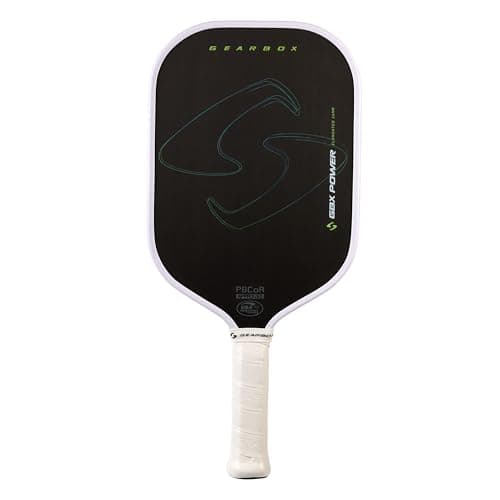 Gearbox GBX Power Elongated Raw drive power for big hitters | Most raw drive | 7.0 | $179.99 · View on Amazon #adPrice as of October 22, 2026 |
| 2 | 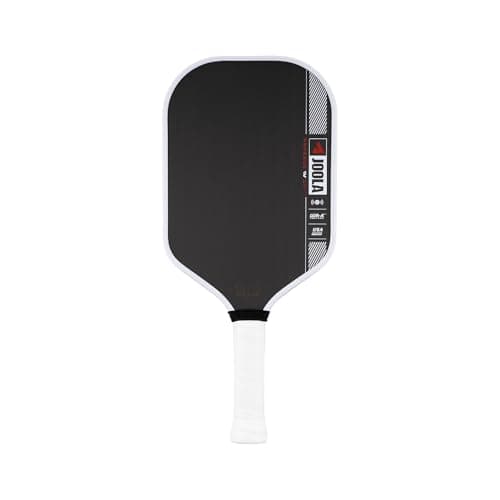 JOOLA Ben Johns Perseus Pro IV 14mm Fast hands + spin at the net | Best overall power | 7.8 | |
| 3 | 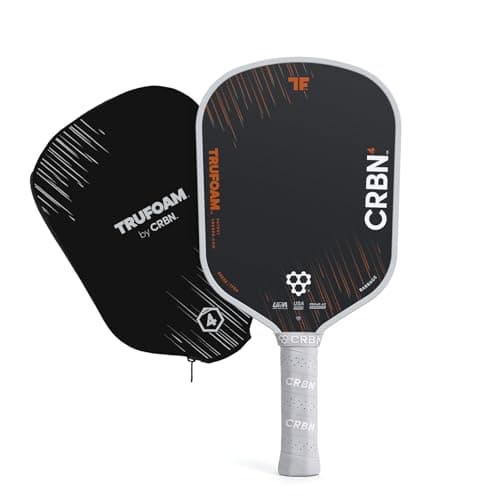 CRBN TruFoam Barrage Newest-gen foam power + stability | Best Gen-4 foam power | 8.3 | |
| 4 | 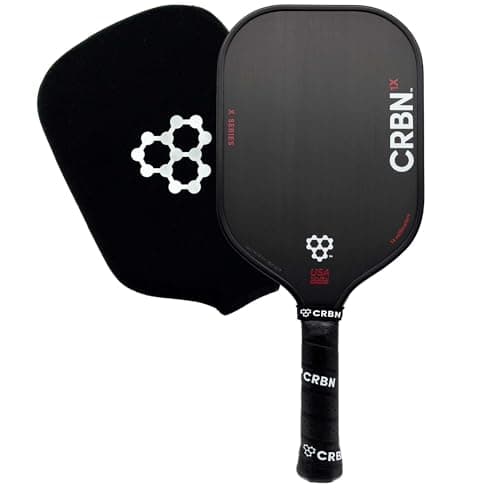 CRBN X-Series Power Clean, refined power feel | Best refined feel | 8.0 | $149.99 · View on Amazon #adPrice as of October 22, 2026 |
| 5 | 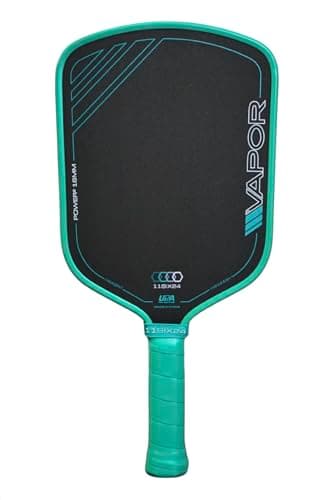 11Six24 Vapor Power 2 Gen-4 foam power with pro pedigree | Best pro-pedigree foam | 8.3 | $209.99 · View on Amazon #adPrice as of October 22, 2026 |
Tap any row to jump to the full write-up. Prices are pulled live from Amazon.
Gearbox GBX Power Elongated
A punchy, drive-first power paddle. Gearbox's construction is stiff and solid — you feel the ball leave.
The GBX Power is for the player whose game is put-aways and drives. It's a stiffer, less forgiving frame than the foam paddles, but the payoff is directness — the ball comes off fast and predictably. Not the pick if you need help on mishits.
The most direct, put-away-first paddle we cover. Gearbox builds stiff and solid, and the ball leaves the face fast and predictably. You pay for it in forgiveness — this is the least generous frame here on off-center contact.
- Core
- 16 mm
- Shape
- Elongated
- Face
- Raw unidirectional carbon fiber
- Weight
- 8.0 oz avg (7.8-8.2 oz)
- Build
- Thermoformed
- Gen
- GBX (Gen-3 suspended PPE honeycomb)
The Amazon listing title states USA Pickleball approved; Pickleball Central's certification field for this paddle lists UPA-A and PBCoR only. Those are different programs for different competitions — verify your exact model against the current USA Pickleball equipment list before sanctioned play (checked 2026-10).
JOOLA Ben Johns Perseus Pro IV 14mm
The 14mm Perseus is quicker and poppier than the 16mm — more spin and speed, less forgiveness. A hard-swinging aggressor's paddle.
Same Charged surface and thermoformed build as its 16mm sibling, but the thinner core makes it faster through the air and livelier off the face. You get more spin and more pop at the cost of a smaller margin for error — ideal if your game is built on speed and you catch the ball clean.
The 14mm Perseus Pro IV is the complete package: thermoformed pace, a Charged surface that keeps spin high, and a thinner core that makes it quicker through the air than its 16mm sibling. The margin for error shrinks accordingly.
- Core
- 14 mm
- Shape
- Hybrid
- Face
- Charged carbon-fiber surface (Tech-Flex)
- Weight
- ~8.0 oz
- Build
- Thermoformed
- Gen
- Pro IV (Gen 4)
Manufacturer-listed as USA Pickleball approved. Approvals and delistings change — verify against the current USAP equipment list before tournament play (checked 2026-07).
CRBN TruFoam Barrage
A Gen-4 foam-wall paddle: the foam core widens the sweet spot and adds stability on off-center hits without killing power.
Foam-injected 'Gen 4' construction is where the category is heading — the foam broadens the sweet spot and calms twisting on mishits while keeping the power high. The Barrage is CRBN's take, and it's one of the more polished foam builds you can buy.
Foam-injected construction is where the power category is heading. The TruFoam Barrage keeps the drive high while the foam widens the sweet spot and calms twisting on mishits — power with a safety net.
- Core
- 14 mm
- Shape
- Elongated
- Face
- Raw carbon face over a foam-injected core
- Weight
- ~8.0 oz
- Build
- Thermoformed
- Gen
- Gen 4 (foam)
Manufacturer-listed as USA Pickleball approved. Approvals and delistings change — verify against the current USAP equipment list before tournament play (checked 2026-07).
CRBN X-Series Power
CRBN's power line has a following for a reason: thermoformed pace with a cleaner, less hollow feel than some rivals.
The X-Series Power gives you the thermoformed power everyone wants but with a feel a lot of players describe as more solid and less 'tinny' than the cheaper thermoformed crowd. A dependable elongated power paddle from a respected brand.
CRBN's X-Series Power hits hard without the hollow, tinny feedback some thermoformed frames give you. If you want top-tier pace but hate the sensation of a cheap trampoline, this is the one.
- Core
- 14 mm
- Shape
- Elongated
- Face
- Raw carbon-fiber face
- Weight
- ~8.0 oz
- Build
- Thermoformed
- Gen
- X-Series
Manufacturer-listed as USA Pickleball approved. Approvals and delistings change — verify against the current USAP equipment list before tournament play (checked 2026-07).
11Six24 Vapor Power 2
A Gen-4 foam power paddle from a brand with real tour presence — broad sweet spot, strong pop, modern build.
11Six24 flies under the radar on Amazon but carries serious pro credibility. The Vapor Power 2 is the hybrid of the three Power 2 outlines at 16.25 x 7.75in, on a 16mm Gen 4 floating core behind a HexGrit face, with a 5.75in handle, a 4 1/8in grip and an 8.15 oz average. It sits deliberately between its siblings — quicker and more maneuverable than the elongated Hurache-X, less stable on a mishit than the widebody Pegasus — which makes it the one to buy if you do not have a specific shape complaint to fix.
A current-generation foam power paddle from a brand with genuine tour presence. Stable on off-center hits, plenty of drive, and far less hyped on Amazon than the flagships it competes with.
- Core
- 16 mm
- Shape
- Hybrid
- Face
- HexGrit face over a Gen 4 floating core
- Weight
- ~8.15 oz
- Build
- Thermoformed
- Gen
- Gen 4 (Power 2)
11Six24 lists the Power 2 line as UPA-A approved — the professional-tour certification, which is a separate program from USA Pickleball approval. Check the current USA Pickleball equipment list before amateur tournament play, and your event's own rules before professional play (checked 2026-10).
What "most powerful" actually means
A paddle has no strings, so it cannot store and release energy the way a tennis racket does. Everything it gives back comes from the face flexing and the core compressing and springing in the few milliseconds the ball is in contact. When people say a paddle is powerful, what they mean is that it returns a higher share of the energy you put into the swing. That is it. There is no hidden engine, no secret material that generates pace out of nothing.
Four levers move that number, and every paddle below pulls at least two of them. Thermoforming heat-molds the paddle into a single stiff unibody with a foam or bonded edge instead of a glued-on sandwich, so less energy is lost to the frame flexing in ways that do not help you — our thermoformed paddles guide walks through the construction. Core thickness works in the opposite direction to intuition: a thinner 14mm core is stiffer and poppier than a plush 16mm one, which is why so many of the hottest paddles are thin (see 14mm vs 16mm). Foam-injected walls, the current-generation approach, add a trampoline effect around the perimeter while stabilizing the frame against twisting — the shift explained in our foam paddle guide. And shape adds leverage: an elongated frame puts mass further from your hand, so the tip travels faster for the same arm speed.
Notice what is not on that list: raw weight. A heavier paddle is not automatically a harder-hitting one. What matters is swing weight — how heavy the paddle feels in motion, which depends on where the mass sits, not just how much of it there is. Two paddles with identical listed weights can feel like completely different tools, and the difference usually shows up as swing weight rather than anything on the spec sheet. Our swing weight and twist weight guide is the fastest way to stop being misled by an ounce figure.
The asterisk: power only counts if it is legal
USA Pickleball tests paddles for how much energy the face returns and how aggressively the surface grips the ball. A paddle that fails either test never makes the approved list, and — this is the part buyers miss — a paddle can be pulled from the list after it has been on sale for months. It has happened to popular models. When it does, the paddle does not stop working, but it does stop being tournament-legal, and its resale value falls off a cliff.
Every paddle on this page is manufacturer-listed as USA Pickleball approved as of our last check in July 2026. That is the best we can honestly tell you, because approvals and delistings are decided by USAP, not by us or by the brands. The only authoritative source is the list itself, so before you enter anything sanctioned, check the current USAP approved paddle list for your exact model and core thickness. Approval is granted per configuration, so a 14mm version and a 16mm version of the same paddle are separate entries.
There is a whole parallel market of "unlimited" or non-approved paddles that hit harder than anything here. We do not cover them, and you should not buy one unless you exclusively play social games with people who have agreed to it. Rec play rarely gets checked; leagues and tournaments do, and turning up with an illegal paddle is an embarrassing way to lose a match you already won. Our USAP approved paddles guide explains how the certification process works and what a delisting actually means for a paddle you already own.
How we ranked the field
Raw drive came first: how much pace the paddle produces on a full swing from the baseline and on a put-away from the transition zone. Then we asked the harder question — how much of the rest of your game survives. A paddle that bombs drives but cannot hold a reset is not the best power paddle for most people, it is a specialist tool, and we say so where that is the case rather than pretending one frame wins for everyone.
Where independent measurement exists, it beats marketing copy. The most useful public data set on paddle performance comes from Pickleball Studio, which measures things brands rarely publish honestly. We do not reproduce numbers we have not sourced, and we do not invent them. Where a figure is not published, we describe the behavior qualitatively instead of filling in a plausible-looking value.
The four recipes for a hot paddle
| Approach | How it creates pace | What it costs you |
|---|---|---|
| Thermoformed unibody | Heat-molded single-piece build returns more energy instead of losing it to frame flex | Can feel stiff, loud or hollow; cheaper thermoformed frames read as tinny |
| Thinner (14mm) core | Stiffer core rebounds faster, so the ball comes off hotter for the same swing | Smaller sweet spot; harsher mishits; harder soft resets |
| Foam-injected walls (Gen 4) | Perimeter foam adds rebound and resists twisting on off-center contact | Premium pricing; the construction is new enough that long-term durability data is thin |
| Elongated shape | Mass further from the hand means more tip speed and more leverage on drives | Sweet spot sits higher and narrower; slower hands in net exchanges |
The best modern power paddles stack two or three of these. That is why an elongated, thermoformed, foam-walled 14mm frame is the archetype at the top of the category — and also why it is the archetype that punishes sloppy contact the most.
Who should buy which
- You win points with drives and overheads, full stop: the Gearbox GBX Power. It is the most direct paddle here — you feel the ball leave. The honest con is forgiveness: it scores lowest in our catalog on both control and mishit tolerance, so a bad day of contact is a bad day of results.
- You want the most complete power paddle: the JOOLA Perseus Pro IV in 14mm. Thermoformed pace plus a Charged surface that keeps spin high, in the thinner core that makes it quicker through the air. The trade is real: the 14mm gives up meaningful forgiveness versus the 16mm, and it is priced at the top of the market. If you mishit under pressure, the 16mm version is the smarter buy.
- You want power that forgives you: the CRBN TruFoam Barrage or the 11Six24 Vapor Power 2. Both are foam builds that keep drive high while widening the usable face. The Barrage is still a 14mm elongated frame, so it is demanding in absolute terms, and foam paddles command a premium. The Vapor Power 2 is the quieter buy — its only real drawback is brand recognition, which matters exactly zero on court and quite a lot when you try to resell it.
- You hate how thermoformed paddles feel: the CRBN X-Series Power. It hits as hard as the field but reads solid rather than hollow. The flip side of that refinement is that it does not feel as explosive as a louder paddle, and some players read that as less power even when the ball says otherwise.
If you are still deciding between brands rather than models, our JOOLA vs CRBN comparison covers the two names that dominate this list, and the main power paddle roundup has the wider field including the value picks that did not make this raw-pace ranking.
Raw power versus usable power
Here is the uncomfortable truth about this category: the paddle that produces the highest ball speed in a lab is very often not the paddle that wins you the most games. Pickleball is not decided at the baseline. The overwhelming majority of rec and league points are decided in the transition zone and at the kitchen line, where the shots that matter are the drop, the reset and the block — three shots that stiff, hot paddles make measurably harder.
A hot face returns energy whether you want it to or not. That is wonderful on a drive and awful on a block, where the pace you did not ask for sails the ball out or pops it up for a put-away. Players who move from a soft control paddle to a raw power frame frequently report the same experience: more winners, more unforced errors, and a net result somewhere near zero until they adjust their hands. The adjustment is real and learnable, but it takes weeks, not one session.
This is exactly why the foam builds have taken over the top of the category. Foam does not just add rebound; it stabilizes the head against twisting, which is the thing that turns an off-center block into a giveaway. If you want the pace but you do not want your soft game rebuilt from scratch, a foam-walled 16mm frame is a far more sensible landing spot than the thinnest, stiffest paddle you can find. Players who want the pace without the punishment should read our power paddles for intermediate players page, which ranks the same idea with forgiveness weighted first.
The arm and elbow question
Stiff paddles transmit more shock into the hand and forearm. Thinner cores transmit more than thicker ones, and thermoformed frames transmit more than softer bonded builds. If you play several times a week, or if you have ever felt a twinge on the outside of the elbow, the most powerful paddle in the catalog is probably not the paddle you should be holding for three hours on a Saturday.
There are sensible mitigations. A thicker core dampens more than a thin one. Foam builds tend to feel calmer than bare thermoformed frames at the same stiffness. A softer grip build-up and a slightly larger grip size reduce how hard you have to squeeze, and grip pressure is a bigger contributor to arm strain than most players realize. None of that turns a stiff paddle into a soft one, but it is the difference between playing four times a week and playing twice.
Getting your money's worth out of a power paddle
Buying the hottest paddle is the easy part. Three things decide whether you actually see the pace on court. The first is contact: power paddles reward center-face contact far more steeply than forgiving ones, so the gap between your best and worst shots widens. If your contact is not consistent yet, you will feel the downside more often than the upside.
The second is swing path. Elongated power frames generate their advantage through tip speed, which means they reward a longer, more committed swing and punish a short, jabby one. Players who arm the ball with a compact motion often get less out of an elongated power paddle than they would from a standard shape they can accelerate properly. Our elongated vs standard shape guide covers where that line falls.
The third is grit. Raw carbon faces bite the ball and that bite is what turns pace into a heavy, dipping ball rather than a flat one that flies long. Grit wears, and a smooth-faced power paddle is a genuinely worse tool than a gritty one, because you lose the spin that keeps all that pace inside the lines. If you play high volume, the durability angle in our paddle grit and durability guide is worth reading before you spend flagship money.
The bottom line
For raw, uncomplicated drive, the Gearbox GBX Power is the most direct paddle we cover, and it asks the most of you in return. For the best blend of top-end pace and a game you can still play, the 14mm Perseus Pro IV is the benchmark. For power that does not punish a mishit, the foam builds — the CRBN TruFoam Barrage and the 11Six24 Vapor Power 2 — are the modern answer, and the CRBN X-Series Power is the pick if you want the pace with a cleaner, more connected feel.
Whichever you choose, check the model and core thickness against the current USAP list before you enter anything that matters. "Most powerful" is only a compliment while the paddle is still legal.
If raw drive power is the only axis you care about
One honest cross-shop for anyone on this page: Gearbox builds for pace more single-mindedly than any flagship does, and pays for it on forgiveness. Our JOOLA vs Gearbox comparison is that trade written out, and our GBX Power Elongated review is the single-paddle version.
What is the most powerful pickleball paddle you can legally use?
Among tournament-legal paddles, stiff thermoformed drivers like the Gearbox GBX Power and elongated foam-injected frames like the CRBN TruFoam Barrage and 11Six24 Vapor Power 2 sit at the top for raw pace, with the 14mm JOOLA Perseus Pro IV the most complete all-round power paddle. Legality is decided per model and per core thickness by USA Pickleball, so verify your exact configuration on the current approved list before you compete.
Can a pickleball paddle be too powerful to be legal?
Yes. USA Pickleball tests how much energy a paddle face returns and how aggressively the surface grips the ball. Paddles that exceed the limits are never approved, and a paddle can also be delisted after it has been on sale. A delisted paddle still works for social play but cannot be used in sanctioned events, and its resale value drops sharply.
Does a heavier paddle hit harder?
Not reliably. Power comes mostly from construction — thermoforming, core stiffness, foam walls and shape — rather than static weight. What matters more is swing weight, meaning how heavy the paddle feels in motion, which depends on where the mass is distributed. Two paddles with the same listed ounces can play completely differently.
Do foam (Gen 4) paddles hit harder than regular thermoformed ones?
Not necessarily harder, but they usually hit hard over a much bigger area of the face. Perimeter foam adds rebound and resists twisting on off-center contact, so mishits keep more of their pace. That is why foam builds have taken over the top of the power category: they deliver comparable drive with noticeably more forgiveness than a bare thermoformed frame.