Gearbox GBX Power Elongated Review
A stiff, unapologetic drive-first paddle. Gearbox's GBX Power, read from its published specs — the directness it gives you, and the forgiveness it does not.
Disclosure: Drive Dink earns a commission from qualifying Amazon purchases at no extra cost to you. We accept no free products and no paid placements — commissions never change our picks. How this works.
While most of the paddle industry spent the last two years engineering forgiveness, Gearbox kept building stiff frames that do exactly one thing extremely well. The GBX Power Elongated is a drive-first paddle with a direct, unpadded response and the narrowest margin for error in our lineup — a genuine weapon for a clean hitter and a genuine liability for everyone else. Everything below is read from published specs and reviewer consensus; we have not hit this paddle ourselves.
Gearbox GBX Power Elongated
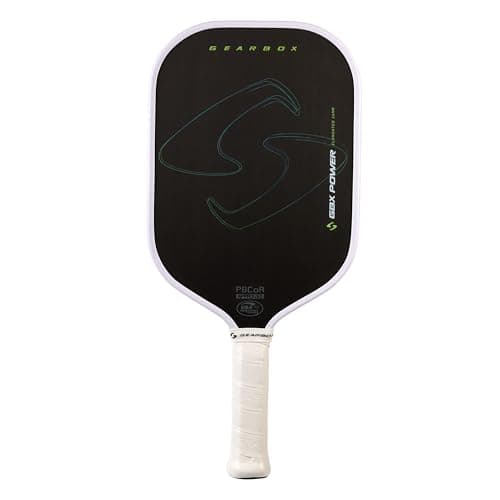
A punchy, drive-first power paddle. Gearbox's construction is stiff and solid — you feel the ball leave.
The GBX Power is for the player whose game is put-aways and drives. It's a stiffer, less forgiving frame than the foam paddles, but the payoff is directness — the ball comes off fast and predictably. Not the pick if you need help on mishits.
The GBX Power is a specialist, and it makes no attempt to hide it. Gearbox builds a stiff, solid frame that sends the ball out fast and predictably, which is exactly what a player whose game is drives and put-aways wants to feel. The trade is real and we score it honestly: this is the least forgiving paddle in our lineup, and a Gen-4 foam build will cover your off-center hits far better.
- Core
- 16 mm
- Shape
- Elongated
- Face
- Raw unidirectional carbon fiber
- Weight
- 8.0 oz avg (7.8-8.2 oz)
- Build
- Thermoformed
- Gen
- GBX (Gen-3 suspended PPE honeycomb)
The Amazon listing title states USA Pickleball approved; Pickleball Central's certification field for this paddle lists UPA-A and PBCoR only. Those are different programs for different competitions — verify your exact model against the current USA Pickleball equipment list before sanctioned play (checked 2026-10).
Who it's for
The Gearbox GBX Power Elongatedis for the player whose points end with a swing. If your game is built on serves, drives and put-aways — if you are the person on the court everyone braces for when the ball floats — the GBX is built around your habits rather than around the average buyer's. It is one of the most single-minded paddles we cover, and that is a compliment and a warning in the same sentence.
Gearbox has a long history in racquet sports manufacturing, and the brand's signature is structural stiffness. A stiffer frame flexes less on impact, which means less energy lost to the paddle bending and a more direct transfer to the ball. Players describe it as feeling the ball leave the face. That directness is the reason to buy this paddle and the reason a lot of people should not: it also means the frame does very little to hide a bad contact point. The GBX appears in our power paddles roundup and in our elongated power list for the drive, not for the safety net.
The player profile that fits: a 4.0-and-up hitter with a repeatable stroke and clean contact, often with a tennis or racquetball background — our power paddles for tennis players list is adjacent territory. The profile that does not: anyone still working on consistency, and anyone whose main frustration is mishits dying.
How it plays
Power
Power is where our editorial score sits at the top of the range, and the spec sheet explains why. The GBX is a thermoformed build — heat-molded into a stiff unibody shell, the construction that redefined how hard a pickleball paddle can hit, covered in our thermoformed paddles guide — on a 16mm Gen-3 suspended PPE honeycomb core behind a raw unidirectional carbon face. The pace does not come from a thin core here; it comes from the stiffness of the shell and from the narrowest outline Gearbox publishes, 16.5 x 7.375in. Stack those on each other and you get a paddle whose entire design converges on one outcome: pace.
The character of that power is worth describing precisely, because "powerful" is doing a lot of work in most reviews. The GBX is not a trampoline. It does not feel like the ball sinks in and springs back; it feels like the ball hits a wall and leaves. That produces excellent predictability on drives — you know what pace you are getting — which is a genuine advantage for a player who plays the same aggressive shot repeatedly and needs it to land in the same place.
Spin
Spin is the GBX's weakest published attribute relative to the modern field, and our spin score reflects that honestly. The face is a carbon-fiber hitting surface and it grips adequately, but this is a paddle tuned around drive mechanics rather than around brushing contact. The raw-carbon specialists — the paddles at the top of our highest-spin list — grab the ball more aggressively for topspin drives and dipping drops.
If you want measured comparison figures rather than adjectives, independent labs such as Pickleball Studio publish spin RPM across the field and are the reference we point at instead of inventing our own numbers. The practical read is this: if your winning shot is a flat, hard drive, the GBX's spin is sufficient. If your winning shot is a heavy topspin roll that dips at the last moment, you want a paddle from our spin roundup instead. Our guide to how spin works explains why face texture, not frame design, dominates that outcome.
Control and feel
Here is the honest part, and it is the reason this review exists in the shape it does. Our control and forgiveness scores for the GBX are the lowest of any paddle we cover, and that is not an oversight — it is the design. A stiff thermoformed frame in a 7.375in-wide elongated body concentrates performance into a smaller effective hitting area. Catch the ball clean and it is superb. Catch it toward the edge or high on the face and the paddle twists more and the shot loses more than it would on a forgiveness-engineered frame. Twist weight is the specification that governs that behavior, and our swing weight and twist weight guide explains why it predicts your bad days better than any power number predicts your good ones.
Feel at the kitchen follows from the same physics. The GBX is playable on resets and dinks — a competent player will not be helpless — but the stiffness means less dwell, less cushioning and less margin. It asks for soft hands rather than supplying them.
Specs and build
These are the manufacturer-published specs. The card above carries the live price and our editorial scores.
| Spec | Gearbox GBX Power Elongated |
|---|---|
| Shape | Elongated |
| Core thickness | 16mm |
| Core | Gen-3 suspended PPE honeycomb |
| Face | Raw unidirectional carbon fiber |
| Construction | Thermoformed |
| Generation | GBX |
| Listed weight | ~8.0 oz |
Three specs compound in the same direction here, which is unusual. Elongated moves mass away from your hand and shrinks the sweet spot while adding reach and leverage — see our elongated vs standard shape guide. At 7.375in wide it is the narrowest outline Gearbox publishes, which shrinks the usable face further — width is what raises twist weight, as our swing weight and twist weight guide explains. And a stiff thermoformed shell adds energy return while removing flex; the 16mm core is the one spec here pulling the other way, which is why this is a hard-hitting paddle rather than an unplayable one — see our 14mm vs 16mm guide. Most paddles balance these against each other. The GBX stacks the shape and the shell on the power side, which is precisely why it plays the way it does.
Gearbox lists the paddle as USA Pickleball approved. Approvals change, so check the current USAP approved paddle list before tournament play — our USAP-approved paddles guide explains how.
Stiff and direct vs foam and forgiving
The most useful way to understand the GBX in 2026 is against the direction the rest of the market has taken. The industry's current obsession is foam: injecting foam into the core to widen the sweet spot and resist twisting, which is what the Gen-4 paddles are built around and what our guide to foam-core paddle generations traces. Foam exists because power stopped being the hard problem — every serious paddle hits hard now, and the remaining differentiator is how well a paddle performs when you miss the middle.
The GBX answers a different question. It optimizes the good contact rather than the bad one. There is a legitimate argument for that: a player with a grooved, repeatable stroke gets more from a frame that maximizes clean-contact output than from one that spends engineering on mishits they rarely produce. There is also a legitimate counter-argument, which is that almost everybody produces more mishits than they think, and that on a bad day the forgiving paddle wins the match. Which side you land on is genuinely about your own stroke consistency, and it is worth being honest with yourself before you spend.
How it compares
Against the CRBN TruFoam Barrage, the contrast is exactly the one above: both are elongated thermoformed power paddles, but the Barrage's foam-injected core buys back a substantially wider sweet spot and better off-center stability, while the GBX gives a more direct, less cushioned response. For most buyers the Barrage is the safer purchase; for a pure hitter, the GBX feels more like a weapon. The same logic applies against the 11Six24 Vapor Power 2, which pairs foam with the same 16mm core thickness and is steadier still.
Against the Selkirk Amped Pro Air Invikta, the two share the elongated, reach-first idea but feel different in the hand: Selkirk tunes for a quieter, more refined response while Gearbox tunes for directness. And against the flagship benchmark, the JOOLA Perseus Pro IV offers comparable power with far more forgiveness thanks to its hybrid shape — the broader brand landscape is mapped across our head-to-head comparisons, including JOOLA vs Selkirk if you are weighing the two big power houses.
Pros
- Genuinely top-tier drive power with a stiff, direct response.
- Highly predictable pace — you know what you are getting on every clean hit.
- Elongated reach and leverage for serves, drives and stretch volleys.
- Solid, no-nonsense construction from a brand with deep racquet-sport engineering history.
Cons
- The least forgiving paddle we cover — off-center contact is punished.
- Spin trails the raw-carbon specialists.
- Stiff feel gives less dwell and less help on resets and dinks.
- Foam-core rivals now offer similar power with a much wider sweet spot.
What we'd skip it for
Skip the GBX if you are anything less than confident about your contact. This is the clearest case in our lineup where a paddle can make a good player worse on a bad day, and if your mishits already cost you points, a foam-core power paddle or a forgiving all-court frame from our control roundup is a better use of the same money.
Skip it if spin is what you are upgrading for — the raw-carbon field grabs the ball harder, and our spin paddles for power players list is the right shortlist. And skip it if you want one paddle to do everything; the GBX is a specialist tool and it plays like one. If you want maximum pace with a safety net, start from our most powerful paddles list and pick a foam build instead.
The verdict
The Gearbox GBX Power Elongated is a good paddle for a specific player and the wrong paddle for most. If you are a clean, aggressive hitter who wants the ball to leave the face fast and predictably — no trampoline effect, no mushiness, no help you did not ask for — the stiffness that defines Gearbox's construction is exactly the quality you are shopping for, and few paddles deliver it this directly.
For everyone else, the market has moved. Foam-core Gen-4 paddles now deliver comparable power with dramatically better behavior on off-center contact, and that is the single biggest practical improvement available in paddles right now. We rank the whole field in our power paddles roundup, and our methodology explains exactly how we score without running a lab.
If it is Gearbox specifically you want, this is not the only one worth looking at — and it is the least forgiving of the four. The wider GBX Power Hybrid shares this paddle's exact core, face, handle and weight in a 7.8in outline, and the CX14H models run on Gearbox's solid ribbed carbon core instead of honeycomb. All four are ranked on best Gearbox pickleball paddles, which also records the approval discrepancy between this paddle's Amazon listing and its retailer certification field.
Gearbox against the flagship it is priced near
The cross-shop most buyers of this paddle are actually making is against JOOLA, not against another value brand. Our JOOLA vs Gearbox comparison puts the GBX Power Elongated next to the Perseus Pro IV with both spec sheets side by side — and the verdict turns on whether you want raw drive power or a usable sweet spot.
Is the Gearbox GBX Power good for intermediate players?
Only for consistent ones. The stiff thermoformed frame and the narrow 7.375in elongated outline combine into the least forgiving paddle we cover, so a player still building repeatable contact will lose more to mishits than they gain in pace. An intermediate hitter with a grooved stroke and a drive-first game will get a lot from it; anyone else should look at a foam-core power paddle instead.
Why does the GBX Power feel stiffer than other paddles?
Gearbox builds structurally stiff frames, and a stiffer frame flexes less on impact. Less flex means less energy lost to the paddle bending, so the ball leaves faster and more predictably. The cost is dwell and cushioning: there is less give on resets and less margin when you catch the ball away from the middle.
Does the Gearbox GBX Power have good spin?
It is adequate rather than class-leading. The carbon-fiber face grips well enough for a drive-first game, but the dedicated raw-carbon spin paddles grab the ball harder for heavy topspin and dipping drops. Independent labs such as Pickleball Studio publish comparative spin RPM if you want measured figures.
GBX Power or a foam-core paddle like the CRBN TruFoam Barrage?
Take the foam paddle unless you specifically want the stiff, direct feel. Gen-4 foam builds deliver comparable power with a wider sweet spot and much better stability on off-center hits, which is the difference most players actually feel over a match. Choose the GBX if clean contact is reliable for you and you value directness over margin.