Best Pickleball Paddles for Spin and Power
Thermoformed frames, foam walls and raw-carbon grit — the paddles that shape the ball on the way in and still finish the point.
Disclosure: Drive Dink earns a commission from qualifying Amazon purchases at no extra cost to you. We accept no free products and no paid placements — commissions never change our picks. How this works.
This is the aggressive half of the spin conversation. Every paddle here has a face built to grab the ball, but the sorting criterion is what happens after contact: does the ball leave fast enough to end the point? Thermoformed frames and foam-injected cores are how modern paddles deliver that, and all five picks use one or both.
Units we claim to have tested: 0. We do not own a swing machine and we do not pretend otherwise. What we do is compile manufacturer-published specs, read the independent labs that measure spin and power, and rank paddles by who they actually suit. Live Amazon prices render at the top of the page — we never type a price into the copy.
| # | Paddle | Best for | Score | Price |
|---|---|---|---|---|
| 1 | 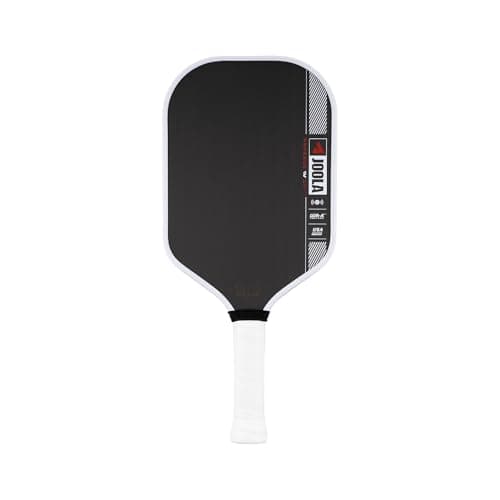 JOOLA Ben Johns Perseus Pro IV 14mm Fast hands + spin at the net | Best overall spin + power | 7.8 | |
| 2 | 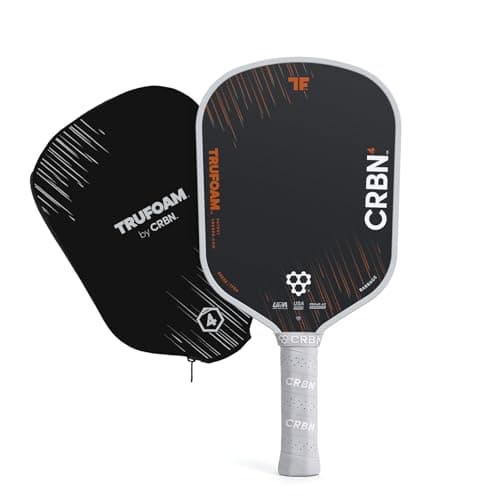 CRBN TruFoam Barrage Newest-gen foam power + stability | Best Gen-4 foam | 8.3 | |
| 3 | 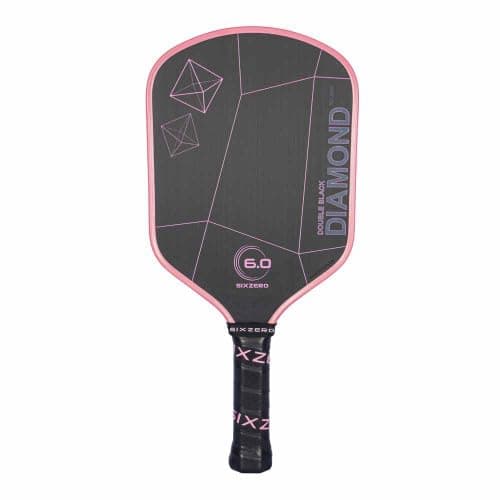 Six Zero Double Black Diamond 14mm More pop and speed than the 16mm | Best value | 7.8 | $180.00 · View on Amazon #adPrice as of October 22, 2026 |
| 4 | 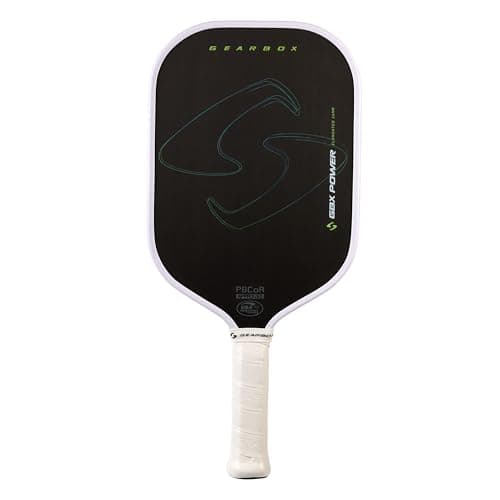 Gearbox GBX Power Elongated Raw drive power for big hitters | Best raw drive | 7.0 | $179.99 · View on Amazon #adPrice as of October 22, 2026 |
| 5 | 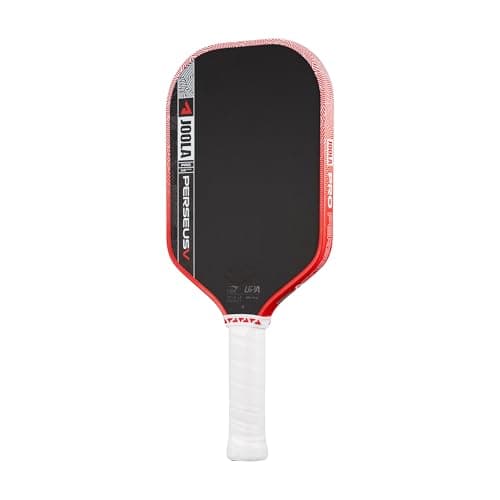 JOOLA Perseus Pro V Buyers who want JOOLA's newest generation | Newest generation | 8.3 | $299.95 · View on Amazon #adPrice as of October 22, 2026 |
Tap any row to jump to the full write-up. Prices are pulled live from Amazon.
JOOLA Ben Johns Perseus Pro IV 14mm
The 14mm Perseus is quicker and poppier than the 16mm — more spin and speed, less forgiveness. A hard-swinging aggressor's paddle.
Same Charged surface and thermoformed build as its 16mm sibling, but the thinner core makes it faster through the air and livelier off the face. You get more spin and more pop at the cost of a smaller margin for error — ideal if your game is built on speed and you catch the ball clean.
The 14mm Perseus is the paddle the rest of the power field is chasing. A thermoformed build gives it pace, the Charged surface gives it grit, and the thinner core makes it fast enough to whip through a topspin roll. The honest con is margin: the lowest control score on this list, and the smallest forgiveness cushion of the JOOLA options. You have to catch the ball clean.
- Core
- 14 mm
- Shape
- Hybrid
- Face
- Charged carbon-fiber surface (Tech-Flex)
- Weight
- ~8.0 oz
- Build
- Thermoformed
- Gen
- Pro IV (Gen 4)
Manufacturer-listed as USA Pickleball approved. Approvals and delistings change — verify against the current USAP equipment list before tournament play (checked 2026-07).
CRBN TruFoam Barrage
A Gen-4 foam-wall paddle: the foam core widens the sweet spot and adds stability on off-center hits without killing power.
Foam-injected 'Gen 4' construction is where the category is heading — the foam broadens the sweet spot and calms twisting on mishits while keeping the power high. The Barrage is CRBN's take, and it's one of the more polished foam builds you can buy.
Foam-injected construction is where the category is going, and the Barrage is one of the more polished versions you can buy: the foam widens the sweet spot and calms twisting on off-center hits without eating the power. It is still a 14mm elongated frame, so it is not a soft-touch paddle, and Gen-4 foam builds carry a premium over the equivalent thermoformed model.
- Core
- 14 mm
- Shape
- Elongated
- Face
- Raw carbon face over a foam-injected core
- Weight
- ~8.0 oz
- Build
- Thermoformed
- Gen
- Gen 4 (foam)
Manufacturer-listed as USA Pickleball approved. Approvals and delistings change — verify against the current USAP equipment list before tournament play (checked 2026-07).
Six Zero Double Black Diamond 14mm
The 14mm DBD trades some of the 16mm's plush forgiveness for extra pace and a quicker, poppier response.
If you loved the DBD's spin and value but wanted more pop, the 14mm delivers it — faster through the air and livelier off the face, with a slightly smaller margin on off-center hits. A strong pick for aggressive all-court players.
The 14mm Double Black Diamond takes everything people like about the DBD - the raw T700 spin face, the thermoformed build, the sane price - and trades some of the 16mm's plush forgiveness for real pop. It is the cheapest genuine spin-and-power paddle we would recommend without caveats. The caveat, such as it is: less margin on mishits than its 16mm sibling.
- Core
- 14 mm
- Shape
- Hybrid
- Face
- Raw Toray T700 carbon fiber
- Weight
- ~8.0 oz
- Build
- Thermoformed
- Gen
- Control (Gen 2 thermoformed)
Manufacturer-listed as USA Pickleball approved. Approvals and delistings change — verify against the current USAP equipment list before tournament play (checked 2026-07).
Gearbox GBX Power Elongated
A punchy, drive-first power paddle. Gearbox's construction is stiff and solid — you feel the ball leave.
The GBX Power is for the player whose game is put-aways and drives. It's a stiffer, less forgiving frame than the foam paddles, but the payoff is directness — the ball comes off fast and predictably. Not the pick if you need help on mishits.
If your game is drives and put-aways, the GBX is the most direct paddle here: stiff, solid, and the ball leaves fast and predictably. It also has the lowest control and forgiveness scores of anything on this page, and its face is not tuned for spin the way the raw T700 and Charged surfaces are. Buy it because you hit hard, not because you brush hard.
- Core
- 16 mm
- Shape
- Elongated
- Face
- Raw unidirectional carbon fiber
- Weight
- 8.0 oz avg (7.8-8.2 oz)
- Build
- Thermoformed
- Gen
- GBX (Gen-3 suspended PPE honeycomb)
The Amazon listing title states USA Pickleball approved; Pickleball Central's certification field for this paddle lists UPA-A and PBCoR only. Those are different programs for different competitions — verify your exact model against the current USA Pickleball equipment list before sanctioned play (checked 2026-10).
JOOLA Perseus Pro V
JOOLA's newest Perseus generation — a raw-carbon face for spin and a flexing KineticFrame throat over the familiar thermoformed power, offered in 14mm and 16mm.
Launched in March 2026, the Pro V changes the Perseus formula in two places: a raw-carbon hitting surface aimed at spin, and JOOLA's patent-pending KineticFrame, a slimmer throat built to flex on contact. It's the priciest paddle we cover; whether it's worth the jump over a Pro IV comes down to feel preference more than a spec gap.
The Pro V is JOOLA's newest Perseus, pairing a raw-carbon hitting surface with the familiar thermoformed power in a 16mm build that is more forgiving than the Pro IV 14mm. It is also the most expensive paddle we cover, and the jump over a Pro IV is more a matter of feel preference than a spec gap - so buy it for the feel, not because the numbers demand it.
- Core
- 16 mm
- Shape
- Hybrid
- Face
- Raw carbon-fiber texture
- Weight
- ~8.0 oz
- Build
- Thermoformed
- Gen
- Pro V (Gen 5)
Manufacturer-listed as USA Pickleball approved. Approvals and delistings change — verify against the current USAP equipment list before tournament play (checked 2026-07).
Where modern paddle power comes from
Power in a pickleball paddle is mostly a construction story, not a weight story. Two things generate it. The first is thermoforming: the paddle is molded as a single unibody with a foam-filled perimeter and compressed under heat, which stiffens the frame and lets the face act like a trampoline instead of flexing away energy. The second is foam-injected cores— the "Gen 4" approach — where foam is placed inside or around the honeycomb to broaden the effective hitting area and stop the head twisting on off-center contact.
The reason this matters for a spin page is that the same construction that adds pace also adds swing speed potential. A stiff frame with a grippy face converts a fast, brushing swing into a lot of rotation because the ball does not sink into the face and lose the brush. That is why the biggest measured-spin paddles and the biggest power paddles are so often the same paddles. Our thermoformed paddle guide and Gen-3 and foam-core guide cover the engineering in more depth.
The cost is honesty about feel. Stiff, powerful paddles punish the soft game. Resets pop up, drops sail, and blocks come off harder than you meant. If that sounds like the problem you are actually trying to solve, stop here and read spin and control instead — it is a genuinely different list.
How we picked
Every paddle had to clear three bars. It needed a face built for spin — raw carbon fiber or a current-generation textured surface, not paint over composite. It needed a construction that produces real pace, meaning thermoformed, foam-injected, or both. And it needed a live, first-party Amazon listing so the buy link goes somewhere real.
From there we scored each on spin, power, control and forgiveness. Those scores are our editorial read of the compiled specs and the wider reviewer consensus — they are not measurements, and we never publish them as a star rating in structured data. For measured numbers, we defer to Pickleball Studio, which runs calibrated spin and power testing and publishes the results. Linking to their data is more useful to you than us inventing our own. The full process is written up on our methodology page.
14mm or 16mm for a power-and-spin paddle
Three of these five paddles use a 14mm core, and that is not an accident. A thinner core is stiffer, returns more energy, and moves faster through the air, which suits a player who is already swinging hard. A 16mm core flexes more, absorbs more incoming pace, and gives you a bigger, plusher margin for error.
The interesting exception is the Perseus Pro V, which is a 16mm frame and still one of the highest-power paddles we cover — modern thermoforming has gotten good enough that thickness no longer maps cleanly onto pace. If you have been avoiding 16mm because you assumed it meant slow, that assumption is out of date. Read our 14mm vs 16mm guide before you default to thin.
Practical rule: if you mishit more than a couple of balls a game under pressure, the forgiveness of a thicker core will win you more points than the extra pop of a thinner one. Power you cannot aim is not power.
Shape, reach and the swing-weight tax
Four of these paddles are elongated or hybrid shapes, which push mass toward the tip. That is where the leverage on a drive comes from — a longer lever arm means more racquet-head speed at contact for the same arm speed. It is also where the tax comes from: a tip-heavy paddle is slower to start moving, harder to redirect in a fast exchange, and more prone to twisting when you catch the ball near the edge.
This is the single most common upgrade regret we see. Players buy the most powerful paddle on the list, love it on drives, and then get eaten alive in hands battles at the net. If you are coming from a light, standard-shape paddle, expect a real adjustment period. Our swing weight and twist weight guide explains why two paddles that both list at about eight ounces can feel completely different, and the elongated vs standard shape guide covers the geometry trade directly.
Who should buy which
- You want the best combination of grit and pace, budget aside: the JOOLA Perseus Pro IV 14mm. It is the benchmark for a reason.
- You want that power but you mishit under pressure: the CRBN TruFoam Barrage. The foam wall is the most effective forgiveness technology in the current generation.
- You want most of it for a lot less money: the Six Zero Double Black Diamond 14mm. The value pick of the category by a clear margin.
- You end points with flat drives, not brushed rolls: the Gearbox GBX Power. Direct, stiff, unambiguous.
- You want JOOLA's newest and the price is not the issue: the Perseus Pro V, in a more forgiving 16mm build.
How the picks compare to each other
The Perseus Pro IV 14mm and the Six Zero DBD 14mm are the two paddles most people are genuinely choosing between, and they are closer than the price gap suggests. Both are thermoformed, both are elongated or hybrid, both have grit-forward faces. The Perseus edges it on spin surface and overall polish; the DBD gives up very little and costs far less. If you are not yet certain the sport has you for good, buy the DBD.
The Barrage is the paddle to buy if the Perseus tempts you but its forgiveness worries you. Foam construction is genuinely different technology, not marketing — it widens the usable face and steadies the head. You pay for it, and you still do not get a soft-game paddle out of the deal.
The GBX is the outlier. It is the most power-specialized paddle here and the least spin-specialized, with the lowest control and forgiveness scores on the page. It belongs on this list because plenty of players genuinely want that — a paddle that does one thing without apology. It does not belong in your bag if your third shot is a drop.
The Pro V sits slightly apart as the newest-generation option. A raw carbon face and a 16mm core make it the more forgiving JOOLA, but it is the priciest paddle we cover and the improvement over a Pro IV is a feel question rather than a specification leap. Buy it if you have hit one and preferred it. Do not buy it on the assumption that newer is automatically better.
If you want the head-to-head versions of these arguments, we have written up JOOLA vs CRBN and CRBN vs Six Zero, plus a full Perseus Pro IV review.
The honest trade-offs
JOOLA Perseus Pro IV 14mm
Lowest control rating on this page and a modest forgiveness cushion. A thin, stiff, fast paddle is a demanding paddle — off-center hits are punished, and the soft game takes work. It is also flagship-priced.
CRBN TruFoam Barrage
Gen-4 foam builds command a premium, and the Barrage is no exception. It is also a 14mm elongated frame with high power, so despite the widened sweet spot it is still an aggressive paddle, not a control conversion.
Six Zero Double Black Diamond 14mm
You give up the 16mm version's famously plush margin. On a bad day — tired legs, late reactions — the 16mm is the easier paddle to play well. Choose the 14mm only if you are confident you catch the ball cleanly.
Gearbox GBX Power
The stiffest, least forgiving frame here, and the least spin-oriented face on a spin page. Mishits are unrewarding and the soft game is hard work. It is a specialist tool.
JOOLA Perseus Pro V
The price. It is the most expensive paddle in our catalog, and the case for it over a Pro IV is preference rather than performance on paper. New generations also tend to soften in price after launch.
What a power paddle will not fix
It is worth being blunt about the limits, because this is the category where equipment gets asked to do the most work. A powerful paddle raises the ceiling on shots you already hit well. It does not create a shot you do not have.
It will not fix a serve or a return that lacks depth. Depth is a swing-path and contact-point problem. Extra pace on a shallow ball just means your opponent attacks it faster.
It will not fix a third shot. If your drives get counter-attacked, the answer is usually shot selection and height, not more pace — and the paddle that makes your drive faster is also the paddle that makes the drop you should have hit instead harder to execute.
It will not fix positioning. Most points at the recreational level are lost by being in the wrong place or hitting the wrong shot, not by lacking a gear. This is the honest reason we push forgiveness so hard on every list we publish: a wider usable face turns your bad contact into a playable ball, which is worth more over a session than a small pace increase on your good contact.
What a power paddle genuinely does deliver is put-away confidence — the knowledge that when you get a high ball at the net, it ends the point. That is a real advantage and it changes how you play the shots leading up to it. Just buy it for that reason rather than as a general fix. If you are on the fence about how much paddle you need at your current level, the intermediate power paddle picks are calibrated for exactly that question, and the wider control paddle roundup is worth a look if this section is describing your last three matches.
Buying power without wrecking your soft game
The most common failure mode with a power-and-spin paddle is that drives get better and everything else gets worse. Two things help. First, go one step more forgiving than your ego wants — the foam Barrage or a 16mm build rather than the thinnest, stiffest option. Second, give it three or four sessions before judging: stiff paddles reward an adjusted, more compact swing, and the first week is not representative.
If you are coming from tennis, the leverage of an elongated frame will feel natural and the net game will feel alien; our paddles for tennis players page is written for exactly that transition. If you are still deciding whether power is even the upgrade you need, start with how to choose a paddle and the broader power paddle roundup.
Grit, wear and USAP legality
Raw-carbon and textured faces lose bite as the grit polishes down, and hard-swinging players wear faces faster than gentle ones — which means the audience for this page is also the audience most affected by grit decay. If longevity matters more to you than peak numbers, the abrasion-resistant option on our highest-spin page is worth a look, and our grit durability guide covers what actually wears and how fast.
Every paddle here is manufacturer-listed as USA Pickleball approved, but approvals and delistings change, and high-power and high-grit paddles sit nearest the limits. If you compete in sanctioned events, check the current USAP approved paddle list before your next tournament rather than trusting a listing page.
Do power paddles actually spin the ball more?
Not because they are powerful, but the two often travel together. A stiff, thermoformed frame keeps the ball from sinking into the face, so more of your brushing swing becomes rotation, and the same players who swing hard also swing fast. Spin still comes from the face texture — a stiff paddle with a painted face will not out-spin a softer paddle with raw carbon.
What is a Gen-4 foam paddle and is it worth the money?
Gen-4 refers to paddles with foam injected into or around the core rather than just a foam perimeter strip. The foam widens the effective sweet spot and reduces head twisting on off-center hits while keeping power high. It is worth the premium if you mishit under pressure; if you consistently find the center of the face, a good thermoformed paddle gets you most of the way for less.
Should a 3.5 player buy a high-power spin paddle?
Only with eyes open. Powerful, stiff paddles improve drives and make resets, drops and blocks harder, which is usually where a 3.5 game is won or lost. A more forgiving build — a 16mm core or a foam-core paddle — tends to add more points than the extra pace. Our intermediate-focused power page walks through the same trade in detail.
Is 14mm always more powerful than 16mm?
No. Thinner cores are stiffer and poppier all else being equal, but modern thermoforming has narrowed the gap so much that some 16mm flagships hit as hard as thinner paddles while staying more forgiving. Treat thickness as a feel and forgiveness dial first, and judge power by the specific model rather than the number.