The Highest-Spin Pickleball Paddles
The grippiest faces on the market — and a straight answer about who actually measures spin RPM and how those numbers are produced.
Disclosure: Drive Dink earns a commission from qualifying Amazon purchases at no extra cost to you. We accept no free products and no paid placements — commissions never change our picks. How this works.
Spin is the most upgradeable property of a modern paddle. Face material and surface texture decide how hard the ball is gripped at contact, and unlike raw power, more grip almost never hurts the rest of your game. This page ranks the grippiest faces we cover — and, just as importantly, the ones that stay grippy.
Units we claim to have tested: 0. We do not own a spin machine and we will not print a spin RPM figure as though we produced it. Measured spin numbers come from independent labs — chiefly Pickleball Studio, which tests on calibrated equipment and publishes its results. Our job is compiling published specs, citing other people's measurements clearly, and telling you what the numbers mean for your game.
| # | Paddle | Best for | Score | Price |
|---|---|---|---|---|
| 1 | 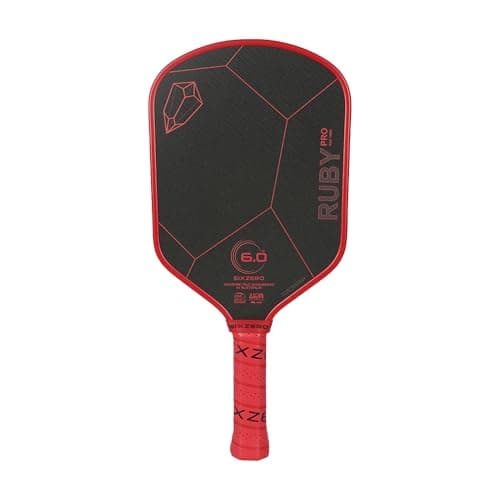 Six Zero Ruby Pro 14mm Spin durability (grit that lasts) | Longest-lasting grit | 7.8 | $225.00 · View on Amazon #adPrice as of October 22, 2026 |
| 2 | 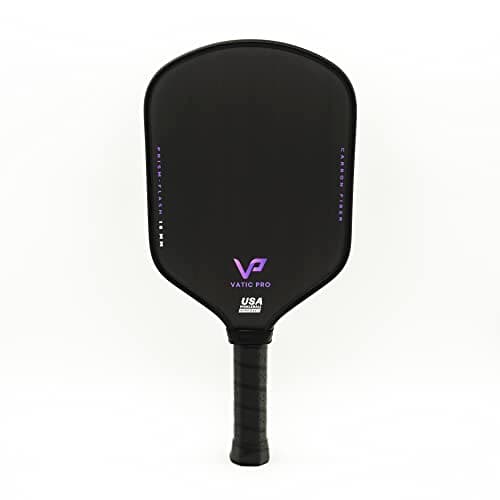 Vatic Pro Prism Flash 16mm The value spin champion (best under ~$110) | Best value spin | 8.0 | $99.99 · View on Amazon #adPrice as of October 22, 2026 |
| 3 | 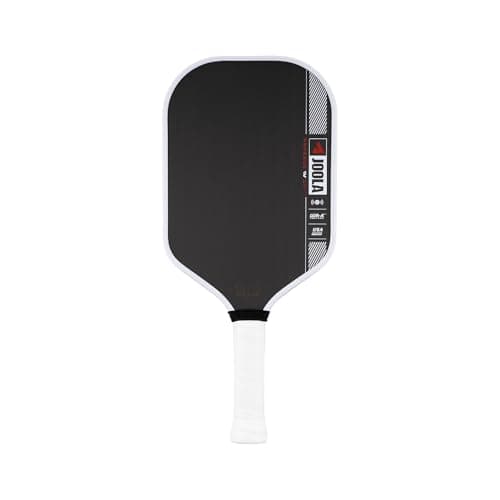 JOOLA Ben Johns Perseus Pro IV 14mm Fast hands + spin at the net | Best premium spin | 7.8 | |
| 4 | 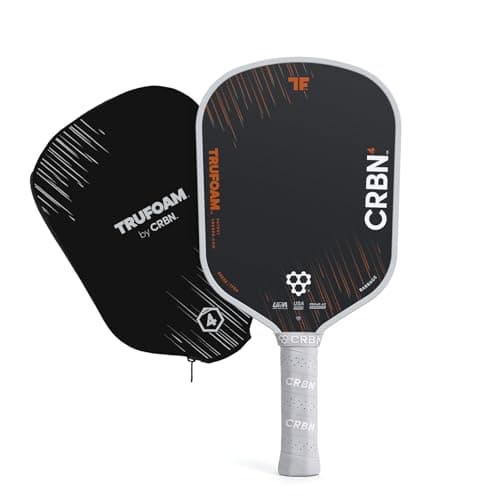 CRBN TruFoam Barrage Newest-gen foam power + stability | Best foam-core spin | 8.3 | |
| 5 | 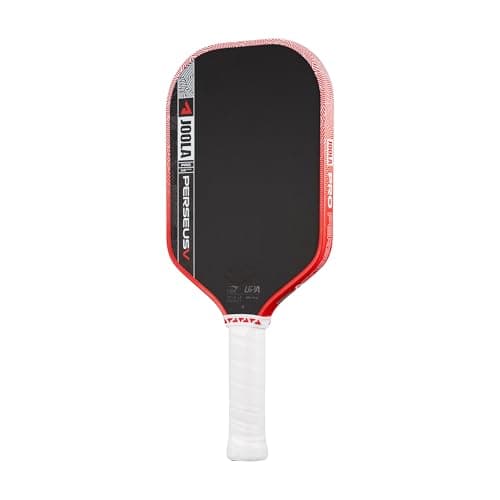 JOOLA Perseus Pro V Buyers who want JOOLA's newest generation | Newest spin surface | 8.3 | $299.95 · View on Amazon #adPrice as of October 22, 2026 |
Tap any row to jump to the full write-up. Prices are pulled live from Amazon.
Six Zero Ruby Pro 14mm
Six Zero's answer to the industry's biggest spin complaint — a tougher face built to hold its grit longer than typical raw carbon.
Raw-carbon spin is great until the grit wears smooth. The Ruby's abrasion-resistant face is designed to keep biting longer, which matters most to the high-volume player who replaces paddles when the spin dies. Premium price, but the durability angle is real.
Raw-carbon spin is fantastic right up until the grit polishes smooth. The Ruby's abrasion-resistant face is Six Zero's answer to that, and it targets the complaint that actually costs high-volume players money: replacing a paddle because the bite died, not because anything broke. It carries a premium price, and its 14mm elongated frame is not the most forgiving option here.
- Core
- 14 mm
- Shape
- Elongated
- Face
- Diamond-tough abrasion-resistant face
- Weight
- ~8.0 oz
- Build
- Thermoformed
- Gen
- Ruby
Manufacturer-listed as USA Pickleball approved. Approvals and delistings change — verify against the current USAP equipment list before tournament play (checked 2026-07).
Vatic Pro Prism Flash 16mm
The value-shopper's spin paddle: raw T700 carbon and a thermoformed build that punches well above its price.
Vatic built a reputation on giving you 90% of a $250 paddle for around a hundred bucks. The Prism Flash's raw T700 face grips for spin and the elongated frame adds reach — the paddle we recommend when 'best spin under $100' is the search.
A raw Toray T700 face and a thermoformed build for a fraction of flagship money. This is the paddle we recommend whenever the search is 'best spin under a hundred', and it is genuinely competitive on grip with paddles costing much more. What you give up is brand support and retail presence, not surface texture.
- Core
- 16 mm
- Shape
- Elongated
- Face
- Raw Toray T700 carbon fiber
- Weight
- ~8.0 oz
- Build
- Thermoformed
- Gen
- Prism
Manufacturer-listed as USA Pickleball approved. Approvals and delistings change — verify against the current USAP equipment list before tournament play (checked 2026-07).
JOOLA Ben Johns Perseus Pro IV 14mm
The 14mm Perseus is quicker and poppier than the 16mm — more spin and speed, less forgiveness. A hard-swinging aggressor's paddle.
Same Charged surface and thermoformed build as its 16mm sibling, but the thinner core makes it faster through the air and livelier off the face. You get more spin and more pop at the cost of a smaller margin for error — ideal if your game is built on speed and you catch the ball clean.
JOOLA's Charged surface on a thin, fast, thermoformed frame — the combination that keeps the Perseus at the top of the spin conversation. It is also the least forgiving paddle on this list and the lowest-scoring on control, so the spin ceiling is high but you have to hit the middle of the face to reach it.
- Core
- 14 mm
- Shape
- Hybrid
- Face
- Charged carbon-fiber surface (Tech-Flex)
- Weight
- ~8.0 oz
- Build
- Thermoformed
- Gen
- Pro IV (Gen 4)
Manufacturer-listed as USA Pickleball approved. Approvals and delistings change — verify against the current USAP equipment list before tournament play (checked 2026-07).
CRBN TruFoam Barrage
A Gen-4 foam-wall paddle: the foam core widens the sweet spot and adds stability on off-center hits without killing power.
Foam-injected 'Gen 4' construction is where the category is heading — the foam broadens the sweet spot and calms twisting on mishits while keeping the power high. The Barrage is CRBN's take, and it's one of the more polished foam builds you can buy.
The Barrage keeps a grippy raw-carbon face and adds a foam-injected core that widens the sweet spot, which matters more for spin than people expect: rotation you generate on an off-center brush is rotation you actually keep. It is priced as a current-generation flagship and it is still a power-leaning paddle, not a touch paddle.
- Core
- 14 mm
- Shape
- Elongated
- Face
- Raw carbon face over a foam-injected core
- Weight
- ~8.0 oz
- Build
- Thermoformed
- Gen
- Gen 4 (foam)
Manufacturer-listed as USA Pickleball approved. Approvals and delistings change — verify against the current USAP equipment list before tournament play (checked 2026-07).
JOOLA Perseus Pro V
JOOLA's newest Perseus generation — a raw-carbon face for spin and a flexing KineticFrame throat over the familiar thermoformed power, offered in 14mm and 16mm.
Launched in March 2026, the Pro V changes the Perseus formula in two places: a raw-carbon hitting surface aimed at spin, and JOOLA's patent-pending KineticFrame, a slimmer throat built to flex on contact. It's the priciest paddle we cover; whether it's worth the jump over a Pro IV comes down to feel preference more than a spec gap.
The Pro V moves the Perseus to a raw-carbon hitting surface in a 16mm frame, so you get a spin-focused face with more forgiveness than the Pro IV 14mm. It is the priciest paddle in our catalog, and JOOLA's own positioning makes the case for it on feel rather than a measurable spin leap over the Pro IV.
- Core
- 16 mm
- Shape
- Hybrid
- Face
- Raw carbon-fiber texture
- Weight
- ~8.0 oz
- Build
- Thermoformed
- Gen
- Pro V (Gen 5)
Manufacturer-listed as USA Pickleball approved. Approvals and delistings change — verify against the current USAP equipment list before tournament play (checked 2026-07).
Where spin RPM numbers actually come from
Start with the thing most "highest spin paddle" pages will not tell you: measuring spin properly is laboratory work. It requires a ball-launching or paddle-swinging rig that delivers a repeatable contact angle and speed, high-frame-rate capture to count the ball's rotation, and a controlled ball and surface temperature, because both change the friction coefficient. Change any one of those variables and the RPM figure moves. That is why two published charts can rank the same two paddles differently and both be honest.
The best-known publisher of this data is Pickleball Studio, which runs a calibrated spin test across a large paddle library and — more usefully than the headline number — tracks how measured spin decays as a face is worn in over hundreds of games. If you want a specific RPM figure for a specific paddle, that is where to get it.
We do not run a spin machine, so we do not publish RPM numbers.We compile the manufacturers' published specifications — face material, core, construction, shape — and we cite the labs that measure. Every ranking below is an editorial read of those published specs plus the wider reviewer consensus, not a measurement. If a page anywhere tells you a paddle produces an exact RPM figure and does not say who measured it or on what equipment, treat the number as marketing. Our full stance is on the methodology page.
What actually creates spin
Three variables decide how much the ball rotates, and only two of them belong to the paddle.
- Face material and texture. Unpainted raw carbon fiber — Toray T700 is the material named most often — has a coarse, exposed weave that grabs the ball. Paint and clear coat fill that texture in, which is why an otherwise identical painted paddle grips noticeably less.
- Dwell and stability at contact. The longer and more squarely the ball stays on the face, the more of your brush gets converted. This is why sweet-spot size shows up in spin discussions at all: an off-center hit twists the head and loses rotation, so a forgiving paddle protects the spin you generate.
- Your swing path. A paddle can only convert the brush you give it. A high-grip face with a flat stroke produces a flat ball.
Notice what is not on that list: core thickness. Spin is a face property. A 14mm and a 16mm version of the same paddle grip the ball about the same; what changes is the feel and forgiveness around it. Our how spin works guide goes deeper on the physics, and carbon fiber vs fiberglass explains why face material dominates the conversation.
How we picked
Three requirements. The face had to be a genuine spin surface — raw carbon, an abrasion-resistant grit face, or a current-generation textured surface. The paddle needed a real, first-party Amazon listing so the buy link works. And it had to earn a top-tier spin score in our own scoring, which weighs the published face specification and the consensus of reviewers who have hit it.
We then broke the ties on the axis nobody markets: how long the grit lasts. Two paddles that grip identically out of the box are not equivalent purchases if one is slick in three months. That is why the Six Zero Ruby Pro sits at the top of this particular list rather than the paddle with the loudest spin marketing.
Grit durability: the number that should decide this page
Every raw-carbon face polishes down with play. Ball impacts, court grit, and simple abrasion wear the exposed weave smooth, and the spin fades gradually enough that most players do not notice until a familiar shot stops dipping. Heavy daily players commonly report a real drop within months; a couple of sessions a week can stretch that past a year. Playing outdoors on abrasive concrete with a hard outdoor ball wears a face faster than indoor play.
This is why we rank an abrasion-resistant face first. If you play five days a week, a paddle that holds 90 percent of its bite for a year is worth more than one that starts fractionally grippier and is smooth by the spring. If you play twice a week, the calculation flips and value matters more than longevity — which is the case for the Vatic Prism Flash.
Two practical habits help either way: keep the face clean (a damp cloth removes the ball residue that fills the texture), and stop dragging the paddle face on the court to pick up balls. Our paddle grit durability guide covers care and expected life in more detail.
Who should buy which
- You play most days and keep replacing paddles when the spin dies: the Six Zero Ruby Pro. Durability is the whole pitch.
- You want top-tier grip for the least money: the Vatic Pro Prism Flash. The value story of the category.
- You want the highest ceiling and you strike the ball cleanly: the JOOLA Perseus Pro IV 14mm.
- You generate good spin but lose it on off-center hits: the CRBN TruFoam Barrage. The foam core protects the rotation you create.
- You want the newest JOOLA spin surface with more margin: the Perseus Pro V, in a 16mm frame.
How the picks compare
The Ruby Pro and the Perseus Pro IV 14mm are the two highest spin scores in our catalog, and they get there differently. The Perseus leans on JOOLA's Charged surface and a thin, stiff, fast frame; the Ruby leans on a face engineered to survive. If you replace paddles yearly anyway, the Perseus is the more exciting paddle. If you play daily, the Ruby is the cheaper paddle over two years even though it costs more today.
The Prism Flash is the honest value comparison to both. Raw T700 is the same family of material used across the premium field, and a 16mm thermoformed build makes it more forgiving than either 14mm option. What you do not get is the polish, the retail support, or the resale interest of a flagship brand. For most club players that is a trade worth making — we lay it out in Six Zero vs Vatic Pro and in the full Prism Flash review.
The Barrage and the Pro V represent the two current directions of travel: foam-injected cores and revised raw-carbon surfaces. Neither is a step-change in grip over a good Gen-4 paddle. What they change is how much of your spin survives an imperfect swing, and how the paddle feels while doing it. Read the foam-core guide before paying the newest-generation premium.
The honest trade-offs
Six Zero Ruby Pro 14mm
Premium price for a durability benefit you only cash in over time, and a 14mm elongated frame that is less forgiving than the 16mm paddles here. Durability claims are also inherently hard to verify at purchase — you find out over a season.
Vatic Pro Prism Flash 16mm
Smaller brand, thinner retail footprint, and less chance of finding one to demo before you commit. It is also the least powerful of the top three spin faces here, so put-away pace is not its strength.
JOOLA Perseus Pro IV 14mm
The lowest control score on this page and a modest forgiveness margin. A high spin ceiling is only reachable if you find the middle of the face consistently, and the soft game takes real work on a paddle this stiff and fast.
CRBN TruFoam Barrage
Flagship pricing, and it is a power-leaning 14mm elongated paddle underneath the foam. The widened sweet spot helps mishits; it does not turn the Barrage into a control paddle.
JOOLA Perseus Pro V
The most expensive paddle we cover, and the case for it over a Pro IV rests on feel rather than a demonstrated specification gap. Newer is not automatically grippier.
The variables nobody accounts for: ball, court and temperature
Two players with identical paddles will not generate the same spin, and neither will the same player on two different days. Friction is a physical relationship between two surfaces, and the ball is half of that relationship.
The ball matters more than most people think. Hard outdoor balls with small drilled holes have a slick, rigid shell that deforms less at contact, which reduces the contact patch the face has to grab. Softer indoor balls deform more, sit on the face longer, and generally take spin more readily. If you switch between indoor and outdoor play, some of the difference you feel in your paddle is actually the ball — our ball picks cover the differences.
Court surface accelerates wear. Outdoor concrete and asphalt shed abrasive grit that gets picked up by the ball and dragged across your face on every contact. Indoor wood and cushioned courts do far less of this. A face that lasts a year indoors can lose meaningful bite in a fraction of that time on a dusty outdoor court, which is why durability rankings should be read alongside where you actually play.
Temperature changes the ball, not the paddle. Cold balls get harder and less grippy; warm balls soften. Play the same paddle in winter and midsummer and the spin will not feel identical, and that has nothing to do with the grit wearing.
None of this changes which paddle to buy. It does mean you should be skeptical of any spin comparison that does not state the ball, the court and the conditions — including your own back-to-back comparisons at the local courts.
The paddle sets the ceiling — your swing decides the number
It is worth repeating because the marketing works so well: no paddle creates spin on its own. The face determines how much of your brush converts into rotation, and the brush is yours to supply. Players who upgrade to a high-grip face and swing exactly as before usually report a modest change; players who upgrade and start swinging low-to-high with a genuinely brushing contact report a dramatic one.
If you are early in that process, spend the first few weeks on topspin dinks and rolls rather than serves — the short game is where a grippy face pays off fastest, because the margin between a dipping roll and a pop-up is small enough that extra rotation changes the outcome. If you are not sure spin is even your priority upgrade, work through how to choose a paddle first, and consider whether spin with control or spin with power describes your game better than raw grip does. On a tighter budget, our spin paddles under 100 page covers the value end.
Surface roughness and USAP legality
High-grip faces sit closest to USA Pickleball's surface-roughness limits, and this is the category where delistings have actually happened after launch. Every paddle here is manufacturer-listed as approved, and we date-stamp that note on each product card — but the list changes. If you play sanctioned tournaments, verify against the current USAP approved paddle list before you enter, and re-check after any paddle revision. Our guide to USAP-approved paddles explains how the process works and why a paddle can lose approval.
If you are already generating the spin
Raw face grip is only half of it — a paddle that spins hard is no use if you cannot place the ball at the pace you play at. Our best spin paddles for advanced players page ranks the same field for players whose technique is not the limiting factor, which weights control and stability far more heavily than this list does.
Which pickleball paddle has the highest measured spin RPM?
We do not publish RPM figures because we do not run a spin machine. Measured spin data comes from independent labs — Pickleball Studio is the best-known publisher, testing on calibrated equipment and also tracking how spin decays as a face wears. Check their current charts for exact numbers. Structurally, the highest-spin paddles all share the same traits: an unpainted raw carbon or abrasion-resistant grit face and a stiff, modern build.
Does a thicker or thinner core give more spin?
Neither, meaningfully. Spin is a face property — the texture of the hitting surface is what grips the ball. Core thickness changes feel, forgiveness and pace. A 14mm core is faster and poppier, a 16mm core is more forgiving and absorbs more pace, and both can carry the same spin surface. Choose thickness for feel, and choose the face for spin.
How long will a high-spin face keep its grit?
It depends almost entirely on volume and surface. Players on outdoor concrete several times a week often notice the bite fading within a few months; two sessions a week indoors can stretch well past a year. Faces marketed as abrasion-resistant, like the Six Zero Ruby, are designed specifically to slow that decay. Keeping the face clean and never scraping it on the court both help.
Are the grippiest paddles legal for tournament play?
The paddles here are all manufacturer-listed as USA Pickleball approved, but high-grip faces sit nearest the surface-roughness limits and paddles have been delisted after launch before. Approvals also apply to specific model revisions. If you compete in sanctioned events, check the current USAP approved paddle list before you enter rather than relying on a retail listing.
- Best Spin Paddles for Advanced Players
- How pickleball paddles are tested
- Best paddles for spin serves
- Best Pickleball Paddles for Spin (2026)
- Best Spin Paddles Under $100
- How spin actually works on a paddle face
- Six Zero Ruby Pro — full review
- Best spin paddles for advanced players
- How to clean a pickleball paddle