Best Pickleball Paddles for Spin and Control
Grit that bites without a face that launches — spin paddles built for the player who wins points at the kitchen line.
Disclosure: Drive Dink earns a commission from qualifying Amazon purchases at no extra cost to you. We accept no free products and no paid placements — commissions never change our picks. How this works.
Spin and control pull on different parts of a paddle. Spin lives on the face; control lives in the core, the shape and the balance. The paddles below are the ones that manage both — enough surface grit to shape a topspin drop, enough stability and dwell time that a fast ball at your chest does not rocket into the fifth row.
Units we claim to have tested: 0.We do not run a spin machine or a swing-weight rig. We compile the manufacturers' published specs, cite the independent labs that do measure, and tell you who each paddle is genuinely for — including who should skip it. Prices are pulled live from Amazon at the top of the page, never typed into the text.
| # | Paddle | Best for | Score | Price |
|---|---|---|---|---|
| 1 | 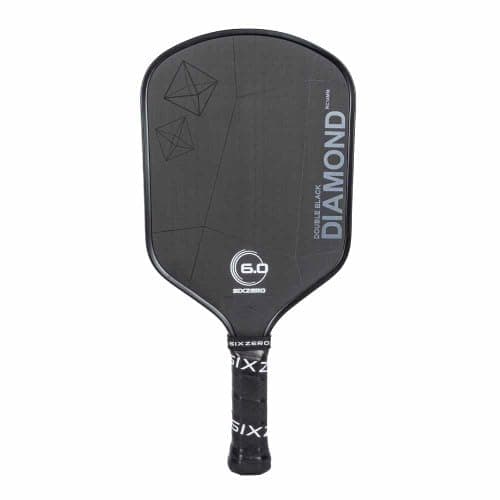 Six Zero Double Black Diamond 16mm All-court value with a huge sweet spot | Best overall spin + control | 8.5 | $180.00 · View on Amazon #adPrice as of October 24, 2026 |
| 2 | 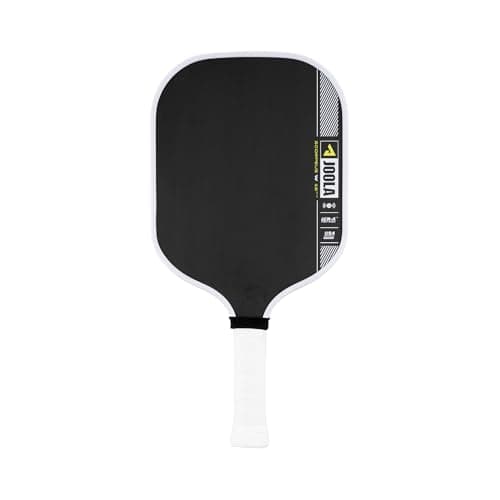 JOOLA Collin Johns Scorpeus Pro IV 16mm Standard-shape all-court control + spin | Best standard shape | 8.0 | |
| 3 | 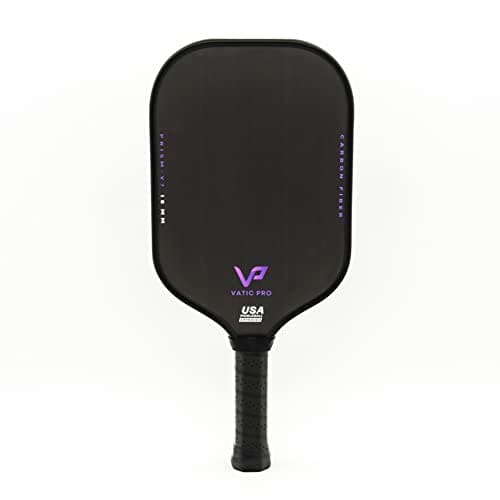 Vatic Pro Prism V7 16mm Value control in a standard shape | Best value | 7.8 | $99.99 · View on Amazon #adPrice as of October 24, 2026 |
| 4 | 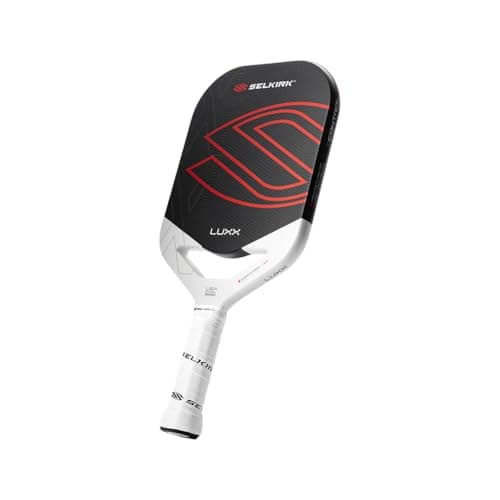 Selkirk LUXX Control Air Invikta Maximum control + soft touch | Best soft touch | 8.0 | |
| 5 | 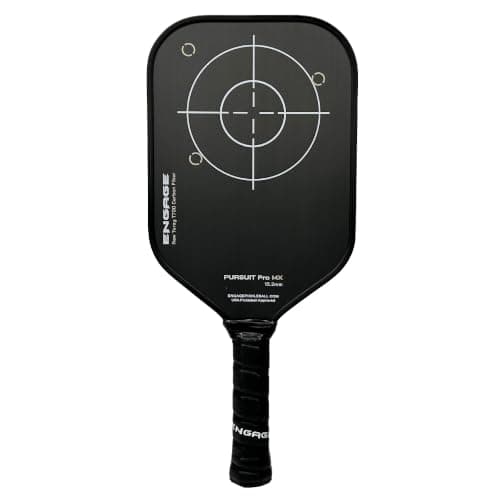 Engage Pursuit Pro MX 15.2 Elongated Control-forward power without the harsh feel | Best softened power | 7.8 | $129.99 · View on Amazon #adPrice as of October 24, 2026 |
Tap any row to jump to the full write-up. Prices are pulled live from Amazon.
Six Zero Double Black Diamond 16mm
The internet's default 'do-it-all' recommendation: thermoformed power, a raw-carbon spin face, and a famously forgiving sweet spot at a fair price.
The DBD earned its reputation honestly. The 16mm Control build blends thermoformed pop with one of the most forgiving sweet spots in its class, and the raw T700 face grabs the ball for spin. It's the paddle we point undecided upgraders to first.
The 16mm Double Black Diamond is the paddle we point undecided upgraders to first: a raw Toray T700 face that grabs the ball for spin, married to one of the most forgiving sweet spots in the sport. It is not the fastest paddle here through the air, and hard hitters may find the thicker core mutes their put-aways — but for shaping the ball and resetting under pressure, nothing in this price band is easier to play well.
- Core
- 16 mm
- Shape
- Hybrid
- Face
- Raw Toray T700 carbon fiber
- Weight
- ~8.0 oz
- Build
- Thermoformed
- Gen
- Control (Gen 2 thermoformed)
Manufacturer-listed as USA Pickleball approved. Approvals and delistings change — verify against the current USAP equipment list before tournament play (checked 2026-07).
JOOLA Collin Johns Scorpeus Pro IV 16mm
The standard-shape Perseus. A more balanced, control-leaning face for players who don't get on with elongated handles — and now the previous generation to JOOLA's Scorpeus Pro V.
Same Gen-4 tech as the Perseus in a standard shape, which brings the sweet spot lower and wider and makes hands battles easier to win. If you want JOOLA's power tech but prefer an all-court, control-first feel, this is the one. JOOLA launched a Scorpeus Pro V in its 2026 Pro V collection at roughly twice the Pro IV's current price; the change is a KineticFrame throat and a raw carbon face rather than a new spec sheet.
The Scorpeus takes JOOLA's Gen-4 Charged surface and puts it in a standard body, which drops the sweet spot lower and widens it. That makes hands battles winnable in a way an elongated paddle rarely is. The trade is reach and leverage: you lose the extra length on stretch volleys and on drives from the baseline, and it sits at the premium end of this list.
- Core
- 16 mm
- Shape
- Standard
- Face
- Charged carbon-fiber surface
- Weight
- ~8.0 oz
- Build
- Thermoformed
- Gen
- Pro IV (Gen 4)
Manufacturer-listed as USA Pickleball approved. Approvals and delistings change — verify against the current USAP equipment list before tournament play (checked 2026-07).
Vatic Pro Prism V7 16mm
The standard-shape Prism: the same value-carbon face in a more control-friendly, maneuverable body.
The V7 is the Prism for players who prefer a standard shape — a lower, wider sweet spot and quicker hands than the elongated Flash, at the same wallet-friendly price. A lot of paddle for the money on the control end.
The standard-shape Prism gives you a raw T700 spin face and a thermoformed build in a maneuverable, control-leaning body for a fraction of what the flagships cost. Power is the compromise — this is the lowest-power paddle on the list by design — so if you need to end points from the baseline, look elsewhere. If you win with placement, it is a lot of paddle for the money.
- Core
- 16 mm
- Shape
- Standard
- Face
- Raw Toray T700 carbon fiber
- Weight
- ~8.0 oz
- Build
- Thermoformed
- Gen
- Prism
Manufacturer-listed as USA Pickleball approved. Approvals and delistings change — verify against the current USAP equipment list before tournament play (checked 2026-07).
Selkirk LUXX Control Air Invikta
A thick-core, control-first paddle: a plush, soft-hands feel for dinking and resets, not a bomb-thrower.
The LUXX Control leans hard into touch — a thicker core and a muted face make the third-shot drop and the reset the strengths here. If your game wins on placement and hands speed rather than raw pace, this is the control end of the Selkirk line.
A thick 20mm core and a muted Florek carbon face make this the plushest paddle we cover. Drops die where you aim them and hard drives get absorbed instead of ricocheting. The honest con is spin ceiling and pace: it is not built to out-grip a raw-carbon Gen-4 face, and you will have to generate your own power on drives.
- Core
- 20 mm
- Shape
- Elongated
- Face
- Florek carbon face
- Weight
- ~8.0 oz
- Build
- Cold-pressed
- Gen
- LUXX
Manufacturer-listed as USA Pickleball approved. Approvals and delistings change — verify against the current USAP equipment list before tournament play (checked 2026-07).
Engage Pursuit Pro MX 15.2 Elongated
Engage's calling card is a softer, more controllable power feel — the Pursuit Pro MX gives you drive without the trampoline harshness.
Engage tunes its paddles for a plusher, quieter response than the raw thermoformed crowd. The Pursuit Pro MX 15.2 is an elongated frame that still hits hard but keeps the ball on the face longer, which control players tend to prefer.
Engage tunes for a longer dwell time, so the ball sits on the face a beat longer than it does on the thermoformed crowd — which is exactly what a control player wants when resetting a fast ball. It is not thermoformed and it is not a spin monster, so treat it as a control paddle that still drives rather than a spin flagship that happens to be soft.
- Core
- 15 mm
- Shape
- Elongated
- Face
- Raw carbon-fiber face
- Weight
- ~8.0 oz
- Build
- Cold-pressed
- Gen
- Pursuit Pro MX
Manufacturer-listed as USA Pickleball approved. Approvals and delistings change — verify against the current USAP equipment list before tournament play (checked 2026-07).
What "spin plus control" actually means
Spin comes from friction at contact. An unpainted, raw carbon-fiber surface with real texture grabs the ball and converts your brush into rotation; a painted or heavily sanded face slips. Control is a different property entirely — it comes from how long the ball stays on the face, how much pace the core absorbs, and how little the head twists when you catch the ball off center. You can have a paddle that grips beautifully and is still miserable to reset with.
That is the trap most spin shoppers fall into. The paddles that top the spin conversation are usually thin-core, thermoformed power frames with a grippy face bolted on. They bite the ball wonderfully on a full swing and then launch every block and every dink you try to keep low. If your game is built at the kitchen line — resets, rolls, patient hands exchanges, third-shot drops that actually land in the kitchen — you want the grit without the trampoline.
So the question this page answers is narrower than "which paddle spins the most." It is: which paddles give you a genuinely grippy face and leave you in command of the soft game? If you only care about maximum rotation, our highest-spin paddles page is the right list. If you want spin that helps you finish points, read spin and power instead.
How we picked
We started with paddles that have a real, first-party Amazon listing, then scored each on the four axes we publish on every product card: spin, power, control and forgiveness. Those numbers are our editorial read of compiled manufacturer specs and the wider reviewer consensus. They are not lab data, and we never dress them up as a star rating in our structured data. For this list we weighted control and forgiveness heaviest, then required a face that is genuinely built for spin — raw carbon or a current-generation textured surface, not a painted composite.
Where measured numbers exist, we point at the people who measured them. Pickleball Studio runs a calibrated spin machine and publishes RPM figures, including how the grit decays over hundreds of games. We link to that rather than pretend we generated it. Our job is compiling published specs, reading them honestly, and sorting paddles by who they suit — you can read the whole approach on our methodology page.
Core thickness is the control dial
If you change one spec to buy control, change core thickness. A thicker core flexes more at impact, absorbs incoming pace, and keeps the ball on the face marginally longer. That extra dwell time is what lets you feel a reset instead of guessing at it, and it is also — usefully — a little more time for the face texture to bite. A thinner core is stiffer, poppier and faster through the air, which is great for put-aways and awful for absorbing a hard body shot.
In practice, 16mm is the sweet spot for most control-first players. It is why four of our five picks sit at 15mm or thicker, and why the 16mm Double Black Diamond tops the list rather than its 14mm sibling. If you want to go further, the Selkirk LUXX Control's 20mm core is the thickest thing we cover, and it feels like it — plush, quiet, and deliberately hard to hit a wild ball with. The cost is pace: you will be supplying the power yourself. Our 14mm vs 16mm guide walks through the trade in more detail.
Worth saying plainly: core thickness does not create spin. Spin is a face property. What thickness changes is how easy it is to apply spin under pressure, because a paddle you can control is a paddle you can swing at confidently.
Shape, balance and why standard shapes win here
Elongated paddles move mass toward the tip. That buys reach and leverage on drives, and it costs you maneuverability and twist resistance at the net — the head takes longer to get moving and rotates more when you catch the ball toward the edge. Standard shapes do the opposite: a lower, wider sweet spot, faster hands, more stability on off-center contact.
That is why the Scorpeus and the Prism V7 are here. Both take a spin face that also exists in an elongated frame and put it in a body that is easier to defend with. If you have ever lost a hands battle because the paddle was still turning when the ball arrived, this is the fix. Our elongated vs standard shape guide covers the geometry, and swing weight and twist weight explains why two paddles that both weigh about eight ounces can feel a world apart in the hand.
The counterpoint is that plenty of excellent control players use long frames — the LUXX Invikta is a true elongated paddle and the Double Black Diamond is a 16.3-inch hybrid, and both are on this list because their cores and face tuning give back what the length takes away. Shape is a preference to test against your own hands, not a rule.
Who should buy which
- You are upgrading from a starter paddle and want one paddle that does everything: the Six Zero Double Black Diamond 16mm. Biggest margin for error on the list, real spin face, sensible price.
- You keep losing hands battles at the net: the JOOLA Scorpeus Pro IV. A standard body with Gen-4 grit is the fastest fix for slow hands.
- You want the control build without the flagship spend: the Vatic Pro Prism V7. Accept less power and you keep most of the spin.
- Your whole game is dinks, drops and resets: the Selkirk LUXX Control Air Invikta. The thickest, softest, most absorbent paddle we cover.
- You hit hard but hate a harsh, hollow feel: the Engage Pursuit Pro MX. Drive power with a longer, plusher dwell.
| If this is your problem | Start here |
|---|---|
| My drops keep sailing long | Thicker core — Double Black Diamond 16mm or LUXX Control |
| I get jammed and beaten at the net | Standard shape — Scorpeus Pro IV or Prism V7 |
| My paddle feels harsh and hollow | A non-thermoformed build — Engage Pursuit Pro MX |
| I mishit constantly on the run | Forgiveness first — Double Black Diamond 16mm |
| I need this to cost less | Prism V7, or see our under-100 picks |
The honest trade-offs
Six Zero Double Black Diamond 16mm
The compromise is pace. A 16mm core and a big, plush sweet spot mean the ball does not leave the face as fast as it does off a 14mm thermoformed power paddle. Players who end points with a hard drive sometimes find it one gear short. It is also elongated, so it does not solve slow hands.
JOOLA Scorpeus Pro IV 16mm
You are paying flagship money for a standard shape, and the standard shape costs you reach — stretch volleys and wide dig shots are simply harder to get to. If your problem is coverage rather than hand speed, this is the wrong end of the trade.
Vatic Pro Prism V7 16mm
It is the least powerful paddle on this page. That is the deal: you save a lot of money and give up put-away pace. Vatic is also a smaller brand with less retail presence than JOOLA or Selkirk, which matters if you want a shop to hand you one to demo.
Selkirk LUXX Control Air Invikta
Two honest cons. First, spin: a muted control face is not built to out-grip a raw-carbon Gen-4 surface, so this is the softest-touch pick rather than the grippiest. Second, power — a 20mm core absorbs so much that you have to swing to generate pace. It is also premium-priced.
Engage Pursuit Pro MX 15.2
It is not thermoformed, and against the current thermoformed field that shows up as less free power and a less aggressive spin ceiling. Engage has also revised this line more than once; make sure you are looking at the model designation currently being sold before you buy.
Setting a control paddle up properly
A paddle is a platform, not a finished product, and control players get more out of setup than power players do. Three adjustments are worth knowing before you decide a paddle does not suit you.
Grip size and build-up.A grip that is too small makes you squeeze, and a tight forearm is the fastest way to kill touch — the paddle stops absorbing pace because your hand is not letting it. Most players benefit from adding a single overgrip and re-testing before judging the paddle's feel. A slightly larger grip also reduces unwanted head rotation on off-center contact, which is the same benefit you would otherwise pay for in twist weight.
Weight placement. Adding a small amount of lead tape at the throat, just above the handle, raises total weight without slowing the head much — it makes the paddle feel more planted on blocks while keeping your hands quick. Tape at the tip does the opposite: more leverage and more power, less maneuverability. Control players almost always want the former. Add a little, play a session, then decide; changing several things at once tells you nothing. Our swing weight and twist weight guide explains why placement matters more than the number on the scale.
The break-in period. Give any new paddle three or four sessions before you form an opinion. The first time out you are recalibrating every reset and every dink height, and almost everyone overhits early. That is especially true moving between core thicknesses, where the change in dwell time is enough to make familiar shots land differently for a week.
Beyond the paddle, court shoes matter more for control than most players expect — you cannot reset a ball you arrived at off balance. Our gear picks cover shoes, balls and bags if the rest of the kit is due an update too.
How to think about the upgrade
Most players buying a "control" paddle are really trying to fix one of three things: drops that sail, blocks that pop up, or hands that arrive late. Diagnose which one before you spend. Sailing drops are a core-thickness problem. Popped-up blocks are usually a core and dwell problem too. Late hands are a shape and swing-weight problem, and no amount of core thickness fixes it.
If you are not sure yet, start with how to choose a paddle and then browse the wider control paddle roundup, which includes control-first paddles that are not primarily spin plays. For the opposite end of the spectrum, the power paddle roundup covers what you give up when you chase pace instead.
Grit durability and USAP legality
Raw carbon grit polishes smooth with play. Heavy daily players often notice the bite fading within months; a couple of times a week and you may get a year or more. This is the single most under-discussed cost of a spin paddle, and it is why we keep a separate grit durability guide and why the abrasion-resistant Six Zero Ruby shows up at the top of our highest-spin list.
Spin faces also sit close to USA Pickleball's surface-roughness limits, and the approved list changes — paddles have been delisted after launch. Every paddle here is manufacturer-listed as approved, but if you play sanctioned tournaments, verify against the current USAP approved paddle list before you compete. We date-stamp the approval note on every product card and re-check it on each update.
The bottom line
For most players reading this page, the Six Zero Double Black Diamond 16mm is the right paddle, and the rest of the list exists because "most players" is not everyone. Buy the Scorpeus if your hands are the weak link, the Prism V7 if the budget is, the LUXX if you want the softest possible touch, and the Engage if thermoformed paddles feel harsh to you. All five will spin the ball. Which one keeps you in the point is the actual decision.
Can one paddle really be good at both spin and control?
Yes, because they are governed by different parts of the paddle. Spin is a face property — raw, textured carbon grips the ball. Control comes from core thickness, dwell time and head stability. A 16mm raw-carbon paddle like the Six Zero Double Black Diamond gets grit from the face and control from the core, so nothing has to be traded away except top-end pace.
Is a 16mm paddle better than 14mm for control?
Generally yes. The thicker core flexes more at impact, absorbs incoming pace and keeps the ball on the face slightly longer, which makes resets and drops far more predictable. A 14mm core is faster and poppier but gives you less margin when a hard ball comes at your chest. Core thickness does not change spin, though — that is decided by the face.
Does a control paddle mean I lose power?
You lose some free power, not all power. Thicker, softer builds absorb energy rather than returning it, so you supply more of the pace with your own swing. Paddles like the Engage Pursuit Pro MX are tuned to soften the feel while keeping drive, and thermoformed control builds like the Double Black Diamond 16mm still hit harder than a traditional composite paddle.
Should I buy an elongated or standard shape for control?
Standard shapes are easier to defend with: the sweet spot sits lower and wider, the head turns faster, and off-center hits twist less. Elongated shapes buy reach and leverage instead. If you lose hands battles at the net, go standard; if you get stretched wide and need coverage, elongated is worth the trade.