Best Paddles for Spin Serves
The serve is the one shot where you control everything — the toss, the timing, the contact. A paddle that grips is worth more here than anywhere else on court.
Disclosure: Drive Dink earns a commission from qualifying Amazon purchases at no extra cost to you. We accept no free products and no paid placements — commissions never change our picks. How this works.
The serve is the only shot in pickleball where nobody is doing anything to you. No pace to absorb, no angle to cover, no time pressure. That makes it the shot where equipment differences show up most cleanly — if a paddle grips the ball, you will see it here first.
It is also the shot most constrained by the rules, and any page ranking paddles for spin serves that does not mention that is selling you something. Live Amazon prices render above. Units we claim to have tested: 0.
| # | Paddle | Best for | Score | Price |
|---|---|---|---|---|
| 1 | 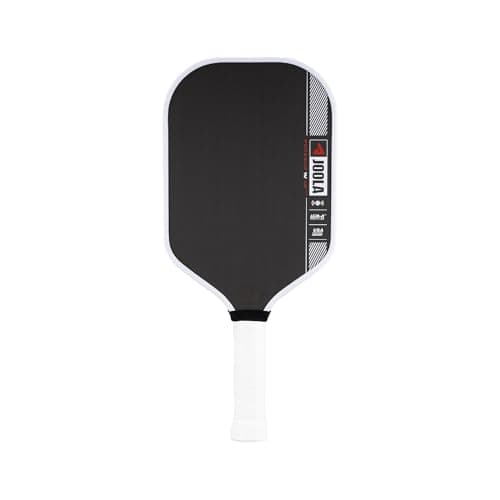 JOOLA Ben Johns Perseus Pro IV 16mm All-court power with a big sweet spot | Best overall | 8.3 | |
| 2 | 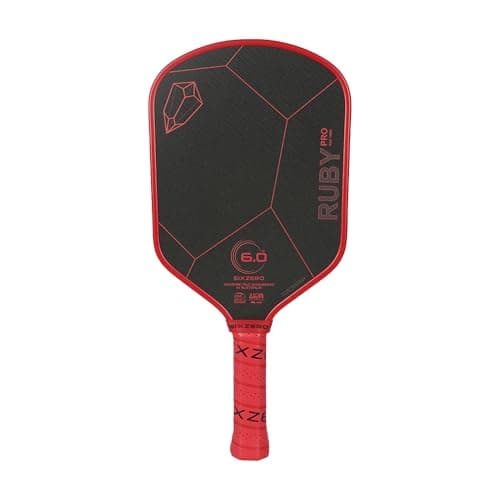 Six Zero Ruby Pro 14mm Spin durability (grit that lasts) | Best for grit that lasts | 7.8 | $225.00 · View on Amazon #adPrice as of October 24, 2026 |
| 3 | 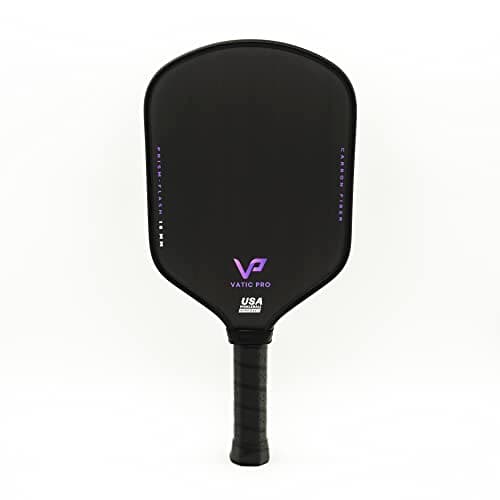 Vatic Pro Prism Flash 16mm The value spin champion (best under ~$110) | Best value | 8.0 | $99.99 · View on Amazon #adPrice as of October 24, 2026 |
| 4 | 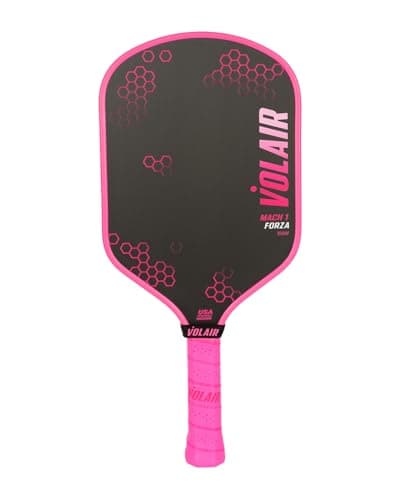 Volair Mach 1 Forza 16mm Foam-wall power and reach at value money | Best for a heavy serve | 8.3 |
Tap any row to jump to the full write-up. Prices are pulled live from Amazon.
JOOLA Ben Johns Perseus Pro IV 16mm
JOOLA's Gen-4 Perseus: thermoformed power and a grippy Charged surface, with the 16mm core adding forgiveness the 14mm gives up. Now the previous generation to the Pro V.
The Perseus Pro IV set the benchmark the rest of the power field chased, and JOOLA's March 2026 Pro V refines that formula rather than replacing it. The 16mm version trades a little raw pop for a larger, more forgiving sweet spot — the sensible pick if you want top-tier power without punishing off-center hits. Charged Surface Technology keeps spin high.
JOOLA's Charged carbon surface is among the grippiest faces in the flagship field, and the hybrid frame gives you enough leverage to swing fast without the paddle feeling unwieldy on a full-motion serve. The 16mm core adds the forgiveness that a hard serve wants, because the toss is never quite where you planned. The con is price — this is flagship money, and the spin advantage over a good value paddle is real but not proportional to the gap.
- Core
- 16 mm
- Shape
- Hybrid
- Face
- Charged carbon-fiber surface (Tech-Flex)
- Weight
- ~8.0 oz
- Build
- Thermoformed
- Gen
- Pro IV (Gen 4)
Manufacturer-listed as USA Pickleball approved. Approvals and delistings change — verify against the current USAP equipment list before tournament play (checked 2026-07).
Six Zero Ruby Pro 14mm
Six Zero's answer to the industry's biggest spin complaint — a tougher face built to hold its grit longer than typical raw carbon.
Raw-carbon spin is great until the grit wears smooth. The Ruby's abrasion-resistant face is designed to keep biting longer, which matters most to the high-volume player who replaces paddles when the spin dies. Premium price, but the durability angle is real.
Servers wear faces out faster than anyone else, because a spin serve is a full-speed brush across the surface every single point. The Ruby Pro's abrasion-resistant face is built specifically to slow that decline, which for a heavy server is worth more than a marginally grippier surface that goes smooth in four months. The con is the 14mm core: it is quick and punchy, but the sweet spot is narrower than the paddles either side of it here.
- Core
- 14 mm
- Shape
- Elongated
- Face
- Diamond-tough abrasion-resistant face
- Weight
- ~8.0 oz
- Build
- Thermoformed
- Gen
- Ruby
Manufacturer-listed as USA Pickleball approved. Approvals and delistings change — verify against the current USAP equipment list before tournament play (checked 2026-07).
Vatic Pro Prism Flash 16mm
The value-shopper's spin paddle: raw T700 carbon and a thermoformed build that punches well above its price.
Vatic built a reputation on giving you 90% of a $250 paddle for around a hundred bucks. The Prism Flash's raw T700 face grips for spin and the elongated frame adds reach — the paddle we recommend when 'best spin under $100' is the search.
A raw Toray T700 face on a 16.5-inch elongated frame is the value formula for spin, and the length adds head speed at contact on a brushing stroke — exactly the input a spin serve needs. It is our value spin pick for good reason. The con is consistency: the feel varies more across the face than on the flagships, which matters on a shot you are trying to repeat identically a hundred times a session.
- Core
- 16 mm
- Shape
- Elongated
- Face
- Raw Toray T700 carbon fiber
- Weight
- ~8.0 oz
- Build
- Thermoformed
- Gen
- Prism
Manufacturer-listed as USA Pickleball approved. Approvals and delistings change — verify against the current USAP equipment list before tournament play (checked 2026-07).
Volair Mach 1 Forza 16mm
A thermoformed unibody frame with foam-injected edge walls and a long 5.5in handle — flagship construction at roughly half flagship money.
The Mach 1 Forza is the cheapest way we know to buy the full modern power recipe: hot-molded unibody build, raw T700 carbon face, and foam packed into the perimeter walls to widen the sweet spot. At 16.5in long with a 5.5in handle it is a genuine elongated frame, and the listed 8.2oz average weight tells you it is not a light paddle to swing.
A thermoformed unibody with foam-injected edge walls and a listed average weight around 8.2oz is a lot of paddle to bring through a serve, and that is the point — mass plus a raw T700 face produces a serve with weight behind the spin. If your goal is pushing the returner back rather than shaping the ball, this is the pick. The con is the same weight: it is work to swing, and it is not the paddle to buy if the rest of your game needs hand speed.
- Core
- 16 mm
- Shape
- Elongated
- Face
- Toray T700 raw carbon fiber
- Weight
- ~8.2 oz
- Build
- Thermoformed
- Gen
- Foam-injected edge walls (Gen 3)
Manufacturer-listed as USA Pickleball approved. Approvals and delistings change — verify against the current USAP equipment list before tournament play (checked 2026-07).
Start with what the rules allow
In 2022 USA Pickleball banned the so-called spin serve, in which the server imparted rotation on the ball with the free hand before striking it. That technique is gone from sanctioned play, and no paddle brings it back.
What remains legal is spin generated the ordinary way: by the paddle face brushing across the ball at contact, from a serve that meets the standard requirements — struck below the waist, with an upward arc, and with the contact point below the highest point of the wrist. Within those constraints there is a lot of available rotation, and the paddle is a genuine variable.
The current rulebook is the authority here, and it changes. Our guide to USAP approved paddles covers the equipment side of the same problem, including why a manufacturer's approval claim needs checking against the live list.
What actually generates spin on a serve
Two inputs, in this order.
Face grip. The surface has to hold the ball long enough for the brush to bite. Raw carbon faces and textured carbon surfaces do this well; smoother or heavily painted faces do not. This is the variable a paddle controls, and it is why every pick on this page has a spin score at or near the top of our range. Our how paddle spin works guide covers the mechanism properly.
Head speed at contact. Faster brush, more rotation. This is mostly technique, but the paddle contributes through leverage — a longer frame moves faster at the tip for the same arm speed. It is why elongated paddles tend to out-spin standard ones on a full swing even when the faces are identical.
What does not generate serve spin, despite the marketing: core thickness, weight, and generation number. Those affect how the paddle feels and how hard it hits, not how much the face grips.
Why servers should care about face wear
This is the argument specific to this page. A spin serve is a full-speed, high-friction brush across the paddle face, executed on every single point you serve. Nothing else in the game abrades a surface that consistently.
Raw carbon works by having a microscopically rough surface, and repeated hard contact polishes those peaks down. The paddle does not break — it simply stops gripping, and the serve that used to dip starts floating. Our guide to paddle grit and durability covers the timeline and the things that accelerate it, and our paddle cleaning guide covers the routine that slows it — which, for a heavy server, is genuinely worth the two minutes.
How we picked
We filtered our catalog to paddles with spin scores at the top of our range, then ranked on three things a server specifically needs: how aggressively the face grips, whether the frame gives you leverage on a full swing, and how well the surface is expected to hold up under repeated high-friction contact.
We did not rank on published RPM figures. Independent labs publish measured spin numbers and they are useful, but they are measured under conditions that are not your serve, and we will not present a lab figure as a prediction of what you will produce. Our guide to how paddles are tested explains what those numbers do and do not tell you.
Who should buy which
If you want the best face available and price is not the constraint, the Perseus Pro IV. Our full review covers it, and our 14mm vs 16mm comparison covers which core to take.
If you serve heavily and often, the Ruby Pro — you are buying the second half of the paddle's life. See our DBD vs Ruby Pro comparison for the trade against Six Zero's more forgiving frame.
If you want most of the spin for a third of the money, the Vatic Prism Flash, which also leads our spin paddles under $100 list.
If your serve is a weapon of pressure rather than shape, the Volair Mach 1 Forza. Read our review for the weight caveat first.
The honest caveat about equipment and serves
A grippier paddle multiplies what your technique already produces. If you are hitting a flat serve, a better face gives you a slightly different flat serve. The brush across the ball has to exist before the surface has anything to grip during.
Which is to say: if your serve does not currently have spin on it, the paddle is not the bottleneck, and the money is better spent elsewhere — a lesson, or simply time. For the buyers this page is for — players who already generate rotation and want more of it — the equipment difference is real and measurable.
The bottom line
Buy for the face first, leverage second, and face durability third if you serve a lot. Ignore core thickness and generation numbers entirely for this purpose — they are decided by the rest of your game. Our main spin roundup covers the field in full, and our highest-spin page ranks purely on grip.
Is the spin serve legal in pickleball?
The pre-toss spin serve — where the server imparts rotation on the ball with the free hand before striking it — was banned by USA Pickleball in 2022. Spin generated the ordinary way, by the paddle face brushing across the ball on a legal serve motion, remains entirely legal, and that is what the paddles on this page help with.
Which paddle face generates the most spin on a serve?
Raw carbon and textured carbon surfaces grip best. In our catalog that means JOOLA's Charged surface, Six Zero's abrasion-resistant Ruby face, and the raw Toray T700 faces used across the value tier. Core thickness, weight and generation number do not affect how much the face grips.
Does an elongated paddle help my serve?
Somewhat. A longer frame moves faster at the tip for the same arm speed, and head speed at contact is one of the two inputs to spin. The cost is swing weight, which makes the paddle more work to bring through a full serve motion and slower everywhere else.
How quickly does a paddle face stop gripping?
Nobody publishes a verifiable figure, and we will not invent one. What is well established is the mechanism — raw carbon works through a microscopically rough surface, and repeated high-friction contact polishes it down. Servers see it first because a spin serve is the highest-friction shot in the game and you hit it every point you serve.