Best Power Paddles for Intermediate Players
More pace, same margin for error. The power paddles that do not punish a 3.0-4.0 game.
Disclosure: Drive Dink earns a commission from qualifying Amazon purchases at no extra cost to you. We accept no free products and no paid placements — commissions never change our picks. How this works.
At 3.0 to 4.0 the game changes shape. Rallies get longer, opponents start blocking your drives instead of shanking them, and the points you lose are increasingly the ones you gave away rather than the ones they earned. That is the moment most players go shopping for power — and the moment buying the hottest paddle on the market backfires.
This list ranks pace with forgiveness weighted first. Every paddle here adds real drive, but none of them ask you to have a 4.5 player's contact to get it. Units we claim to have tested: 0 — we compile published specs, weigh independent measurement and reviewer consensus, and name the trade-off on every pick.
| # | Paddle | Best for | Score | Price |
|---|---|---|---|---|
| 1 | 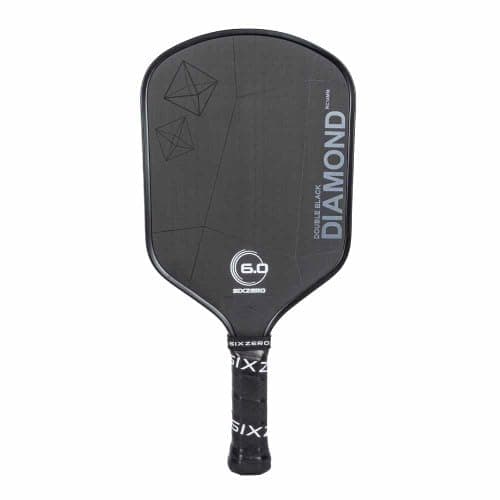 Six Zero Double Black Diamond 16mm All-court value with a huge sweet spot | Best overall for intermediates | 8.5 | $180.00 · View on Amazon #adPrice as of October 23, 2026 |
| 2 | 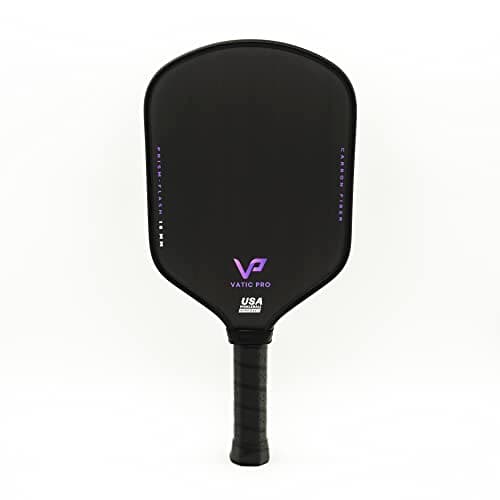 Vatic Pro Prism Flash 16mm The value spin champion (best under ~$110) | Best value | 8.0 | $99.99 · View on Amazon #adPrice as of October 23, 2026 |
| 3 | 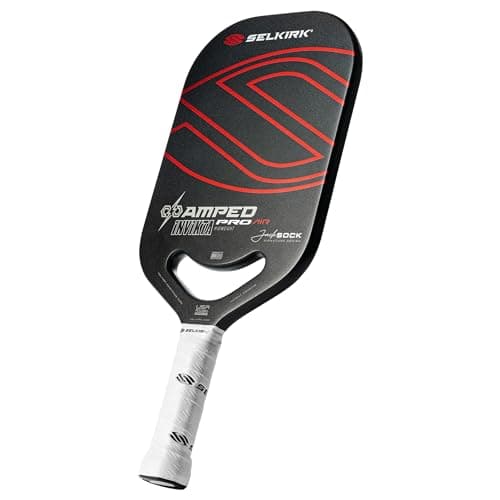 Selkirk Amped Pro Air Invikta Reach + leverage in an elongated frame | Best reach | 7.5 | $99.99 · View on Amazon #adPrice as of October 23, 2026 |
| 4 | No image Ronbus R1 Pulsar Lowest-cost entry to thermoformed carbon | Best budget entry | 7.5 | |
| 5 | 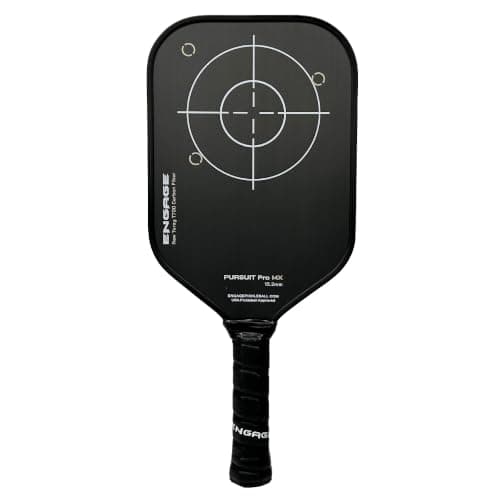 Engage Pursuit Pro MX 15.2 Elongated Control-forward power without the harsh feel | Softest feel | 7.8 | $129.99 · View on Amazon #adPrice as of October 23, 2026 |
Tap any row to jump to the full write-up. Prices are pulled live from Amazon.
Six Zero Double Black Diamond 16mm
The internet's default 'do-it-all' recommendation: thermoformed power, a raw-carbon spin face, and a famously forgiving sweet spot at a fair price.
The DBD earned its reputation honestly. The 16mm Control build blends thermoformed pop with one of the most forgiving sweet spots in its class, and the raw T700 face grabs the ball for spin. It's the paddle we point undecided upgraders to first.
The Double Black Diamond in 16mm is the paddle we point undecided upgraders to first: thermoformed pop, a raw T700 face that grips for spin, and one of the most forgiving sweet spots in its class at a fair price.
- Core
- 16 mm
- Shape
- Hybrid
- Face
- Raw Toray T700 carbon fiber
- Weight
- ~8.0 oz
- Build
- Thermoformed
- Gen
- Control (Gen 2 thermoformed)
Manufacturer-listed as USA Pickleball approved. Approvals and delistings change — verify against the current USAP equipment list before tournament play (checked 2026-07).
Vatic Pro Prism Flash 16mm
The value-shopper's spin paddle: raw T700 carbon and a thermoformed build that punches well above its price.
Vatic built a reputation on giving you 90% of a $250 paddle for around a hundred bucks. The Prism Flash's raw T700 face grips for spin and the elongated frame adds reach — the paddle we recommend when 'best spin under $100' is the search.
Vatic built its reputation on giving you most of a flagship for a fraction of the money. The Prism Flash pairs a raw T700 carbon face with a thermoformed elongated build — the smart pick if you want the upgrade without flagship spending.
- Core
- 16 mm
- Shape
- Elongated
- Face
- Raw Toray T700 carbon fiber
- Weight
- ~8.0 oz
- Build
- Thermoformed
- Gen
- Prism
Manufacturer-listed as USA Pickleball approved. Approvals and delistings change — verify against the current USAP equipment list before tournament play (checked 2026-07).
Selkirk Amped Pro Air Invikta
Selkirk's elongated reach option — the Invikta shape gives real reach and leverage, with the open Air throat trimming swing weight.
The Invikta is one of the longest-standing elongated shapes in the sport, and the Amped Pro Air pairs that reach with Selkirk's open Air Dynamic Throat, which the brand says raises swing speed through the air. The FiberFlex+ fiberglass face and 16mm X5+ honeycomb core are tuned for balanced power and a large sweet spot rather than raw thermoformed pace, so it is a former-tennis-player favorite: leverage on drives, a long paddle face, and a quieter, more refined feel than the raw thermoformed crowd.
The Invikta shape gives you genuine reach and leverage, and the Air throat trims swing weight so the extra length does not turn into a slow paddle. A refined, less harsh feel than the raw thermoformed crowd.
- Core
- 16 mm
- Shape
- Elongated
- Face
- FiberFlex+ fiberglass face over an X5+ honeycomb core
- Weight
- 7.8-8.2 oz
- Build
- Cold-pressed
- Gen
- Amped Pro Air
Manufacturer-listed as USA Pickleball approved. Approvals and delistings change — verify against the current USAP equipment list before tournament play (checked 2026-07).
Ronbus R1 Pulsar
The budget thermoformed pick: raw T700 carbon and a real thermoformed build at a price that undercuts almost everyone.
Ronbus is the value-brand's value brand. The R1 Pulsar gets you a raw-carbon, thermoformed paddle for the least money of anything we cover — a smart first 'real' upgrade from a big-box starter paddle before you commit to a $200 frame.
The cheapest way into a real thermoformed carbon paddle. If you are stepping up from a big-box starter and are not ready to commit serious money, this is the sensible first upgrade.
- Core
- 16 mm
- Shape
- Elongated
- Face
- Raw Toray T700 carbon fiber
- Weight
- ~8.0 oz
- Build
- Thermoformed
- Gen
- Pulsar
Manufacturer-listed as USA Pickleball approved. Approvals and delistings change — verify against the current USAP equipment list before tournament play (checked 2026-07).
Engage Pursuit Pro MX 15.2 Elongated
Engage's calling card is a softer, more controllable power feel — the Pursuit Pro MX gives you drive without the trampoline harshness.
Engage tunes its paddles for a plusher, quieter response than the raw thermoformed crowd. The Pursuit Pro MX 15.2 is an elongated frame that still hits hard but keeps the ball on the face longer, which control players tend to prefer.
Engage tunes for a plusher, quieter response than the thermoformed field. The Pursuit Pro MX still drives well but keeps the ball on the face longer, which makes the soft game far easier to keep.
- Core
- 15 mm
- Shape
- Elongated
- Face
- Raw carbon-fiber face
- Weight
- ~8.0 oz
- Build
- Cold-pressed
- Gen
- Pursuit Pro MX
Manufacturer-listed as USA Pickleball approved. Approvals and delistings change — verify against the current USAP equipment list before tournament play (checked 2026-07).
What actually changes between 3.0 and 4.0
A 3.0 player is still building repeatable strokes. A 4.0 player has them, and is losing points to shot selection and hands speed instead. In between sits the largest group of paddle buyers in the sport, and they share one specific problem: their contact is good enough that a stiffer paddle rewards them, and inconsistent enough that a stiffer paddle also punishes them. Both statements are true at the same time, which is why "just buy the most powerful paddle" is bad advice at this level.
The other thing that changes is who you are playing. Below 3.0, drives win points outright because opponents cannot block them. From 3.5 upward, a drive that is not heavy and dipping simply comes back, and now you are the one dealing with pace at the kitchen line. That is the real argument for adding power at this level: not to hit winners from the baseline, but to make your drives heavy enough that the fifth shot is your opponent's problem instead of yours.
So the goal is not maximum pace. The goal is more pace on the shots you already hit well, without losing the margin that keeps your resets and dinks in. If your soft game gets worse, a faster drive is a bad trade — because at this level far more points are decided at the kitchen than at the baseline.
Why forgiveness is the criterion that matters
Forgiveness is a vague word, so here is what it means mechanically. Every paddle has a region of the face where the ball leaves fast and straight. Hit outside it and two things happen: you lose pace, and the head twists in your hand so the ball leaves in a direction you did not choose. The size of that region and the paddle's resistance to twisting are what separate a forgiving paddle from a demanding one.
Three construction choices grow that region. A thicker 16mm core dwells on the ball marginally longer and stabilizes off-center contact — the whole trade is laid out in our 14mm vs 16mm guide. Higher twist weight, which comes from mass spread toward the edges of the head, resists the rotation that sends mishits sideways; our swing weight and twist weight guide explains why this number tells you more about a paddle than its listed ounces do. And foam or perimeter-stabilized builds do the same job with material rather than mass.
Here is the part intermediates underestimate: forgiveness is not just about bad shots. It is about how the paddle behaves when you are tired at the end of the third game, when the sun is in your eyes, and when someone hits a body shot you have to handle in a hundredth of a second. A demanding paddle is fine when everything is under control. Games are not decided when everything is under control.
How we ranked these
We started from the power field and filtered it. A paddle qualified for this page only if it produced meaningfully more drive than a control-first frame and kept a sweet spot big enough that a developing player is not fighting it. Where a paddle is excellent but demanding — a thin-core flagship, for instance — it stayed on the main power roundup and off this one.
Price mattered too, but not the way it usually does in buying guides. Intermediates change paddles more often than any other group, because their game is still moving. Spending flagship money on a paddle you may outgrow in a season is a worse decision than spending mid-tier money on one that fits you now. Two of the five picks here are deliberately in the value bracket for exactly that reason.
Match the paddle to the problem
| What loses you points | What to look for | Where to start |
|---|---|---|
| Your drives get blocked back and you lose the point anyway | Grippy raw-carbon face for a heavier, dipping ball | Six Zero DBD 16mm or Vatic Pro Prism Flash |
| You mishit under pressure and give away free points | 16mm core, high twist weight, wide sweet spot | Six Zero DBD 16mm |
| You get passed and cannot cover the court | Elongated shape for reach and leverage | Selkirk Amped Pro Air Invikta |
| Your resets and drops keep popping up | Softer, non-thermoformed build with longer dwell | Engage Pursuit Pro MX |
| Your paddle came in a two-pack with a net | Any real thermoformed raw-carbon frame | Ronbus R1 Pulsar |
Who should buy which
- You want one paddle that does everything well: the Six Zero Double Black Diamond 16mm. It is the default recommendation for a reason — thermoformed pace, a raw T700 face that grabs for spin, and a famously forgiving sweet spot. The honest con is that it is tuned as a control build, so it is not the hottest paddle on this page; if maximum pop is the only thing you want, a thinner core beats it. Our full DBD review goes deeper.
- You want most of that for much less: the Vatic Pro Prism Flash. Raw T700 carbon and a thermoformed elongated build at a fraction of flagship money. The trade-offs are the ones value brands always carry: less refined fit and finish than a premium frame, thinner resale demand, and the same raw-carbon grit wear question that affects everything in this face material. See Six Zero vs Vatic Pro if those two are your shortlist.
- You keep getting passed or stretched: the Selkirk Amped Pro Air Invikta. The elongated shape buys real reach and leverage, and the Air throat keeps it from feeling sluggish. The honest con is inherent to the shape: the sweet spot on an elongated frame sits higher and narrower than on a standard paddle, so you are spending some of the forgiveness you came here for. It is also the priciest pick on this page.
- You are upgrading from a starter paddle: the Ronbus R1 Pulsar. A genuine thermoformed raw-carbon paddle for the least money we cover, which makes it the sensible first real purchase. It is less forgiving than the DBD and the feel is more basic than the premium frames — but it is a category leap from anything that came in a boxed set. Vatic vs Ronbus settles the budget-tier question.
- Your soft game is your best asset:the Engage Pursuit Pro MX. It drives well but keeps the ball on the face longer than the thermoformed crowd, which makes drops and resets noticeably easier to hold. The con is the ceiling: this is the least explosive paddle here, and if your complaint is specifically "I cannot generate pace," it will not fix that as directly as the others.
Four mistakes intermediates make buying power
Buying the pro's paddle. Touring professionals play thin-core, high-swing-weight frames because they make clean contact under extreme pressure and they want every last unit of pace. Their paddle is optimized for a problem you do not have. Copying it usually costs you more in errors than it gives you in winners.
Chasing weight instead of construction. Adding a quarter-ounce of lead tape is not the same as buying a paddle that returns more energy, and a heavy paddle you cannot accelerate produces less pace, not more. If the paddle feels slow in hands battles, the problem is swing weight, and swing weight is a distribution question rather than a total-weight question.
Blaming the paddle for a technique gap. If your drives float long, the fix is usually more topspin, not more pace — a heavy, dipping drive at moderate speed beats a flat fast one at every level below the pro tour. Our how spin works guide explains why the face material does more for your drive than the core does.
Ignoring the soft game entirely. Count your points for one session. If more of them end at the kitchen line than at the baseline — and they will — then a paddle that improves your drive by a little and hurts your reset by a lot is a net loss. Several genuinely strong options sit on the control side of the line; the control paddles with power page covers the same middle ground from the other direction.
Core thickness and shape at this level
The default answer for an intermediate is a 16mm core, and four of the five picks here are 16mm or close to it. The thinner 14mm core is faster and poppier, but it shrinks the sweet spot exactly when you most need it, and it makes soft resets harder to keep low. You can always add pace to a forgiving paddle by improving your swing; no amount of technique makes a small sweet spot big.
Shape is more personal. An elongated frame gives reach and leverage on drives and serves, and costs you hand speed and a little sweet spot area. A standard shape puts a wider sweet spot lower on the face and wins more hands battles. Most intermediates get on with an elongated paddle fine, but if you play a lot of doubles at the line and you find yourself late on speed-ups, that is the signal to try a standard shape. Our elongated vs standard shape guide has the full breakdown, and our elongated power ranking covers the long-frame field specifically.
Cheap tweaks worth trying before you spend
Three adjustments cost almost nothing and change how a paddle plays more than intermediates expect. The first is grip size. A grip that is too small makes you squeeze, and squeezing kills touch and loads the forearm; a grip that is too large slows your wrist on speed-ups. Adding an overgrip is the standard way to nudge the size up, and it is reversible in thirty seconds, which is more than you can say for a paddle purchase.
The second is lead tape, and the placement matters more than the amount. Tape at the tip adds swing weight and power but makes the paddle slower to maneuver. Tape at the sides of the head raises twist weight and stabilizes off-center contact without much speed penalty — usually the better first experiment for an intermediate, because stability is what you are short of. Tape at the throat adds heft you can still swing quickly. Add a little at a time and play a full session with each change rather than judging it on a warm-up.
The third is the ball. Outdoor balls differ noticeably in hardness and flight, and a harder, faster ball makes a hot paddle feel wilder while a truer one flatters your control. If your paddle feels uncontrollable at one venue and fine at another, the ball is a likelier explanation than the paddle — our pickleball ball picks cover the two that most leagues actually use.
When to upgrade again
Two honest signals. The first is grit: raw carbon faces wear smooth, and when your topspin drive stops dipping the way it used to, the face is the reason, not you. The second is that you have genuinely outgrown the forgiveness — you are catching the ball clean, your errors are decisions rather than mishits, and you can feel the paddle holding you back on put-aways. That is when a thinner core or a hotter flagship starts to make sense.
What is not a signal: losing to a player who has a more expensive paddle. If you are unsure where you sit, work through how to choose a paddle before spending anything.
The bottom line
For most 3.0-4.0 players adding power, the Six Zero Double Black Diamond 16mm is the paddle to beat: it adds pace without asking you to give up the sweet spot you still rely on. The Vatic Pro Prism Flash delivers a large share of that for far less money, the Selkirk Invikta is the answer if reach is your gap, the Ronbus R1 Pulsar is the smartest first real upgrade, and the Engage Pursuit Pro MX is the pick if you refuse to trade away your soft game. Buy the one that fixes the points you are actually losing.
What is the best power paddle for a 3.5 player?
For most 3.5 players the Six Zero Double Black Diamond 16mm is the best starting point: it adds thermoformed pace and a grippy raw-carbon face while keeping one of the more forgiving sweet spots in its class. If budget is the constraint, the Vatic Pro Prism Flash covers similar ground for considerably less.
Should an intermediate player use a 14mm or 16mm paddle?
16mm for most intermediates. The thinner 14mm core is poppier and quicker but shrinks the sweet spot and makes soft resets harder to control, which costs a developing player more in errors than it returns in pace. Move to 14mm once your contact is consistently center-face and you can feel the paddle limiting your put-aways.
Will a power paddle make my dinks and resets worse?
It can. The same stiffness that adds pace also returns energy on soft shots you wanted to absorb, so blocks and resets tend to sit up until you adjust your hands. Paddles with a thicker core, high twist weight or a softer non-thermoformed build minimize this, which is why every pick on this page leans that way.
How much should an intermediate spend on a paddle?
Less than you think. Intermediates change paddles more often than any other group because their game is still developing, so a strong mid-tier paddle usually beats a flagship you may outgrow in a season. Two of our five picks sit deliberately in the value bracket for that reason; live prices are shown on each card above.