Best Elongated Pickleball Paddles
Reach and leverage on one side of the ledger, a narrower sweet spot and slower hands on the other. Here is the honest trade.
Disclosure: Drive Dink earns a commission from qualifying Amazon purchases at no extra cost to you. We accept no free products and no paid placements — commissions never change our picks. How this works.
Elongated paddles are the default at the top of the power category, and for a specific reason: length is leverage. Move mass further from your hand and the tip travels faster for the same arm speed, which means more pace on drives and serves and a bigger reach on everything you have to stretch for.
The part the marketing skips is what you pay. USA Pickleball caps combined length plus width, so every bit of extra length is taken out of the width — a narrower head, a sweet spot that sits higher up the face, and slower hands in a firefight. Below are the elongated frames we think are worth that trade, and who should not make it at all.
| # | Paddle | Best for | Score | Price |
|---|---|---|---|---|
| 1 | 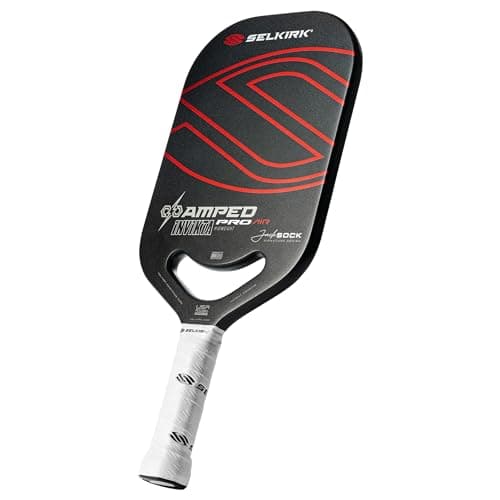 Selkirk Amped Pro Air Invikta Reach + leverage in an elongated frame | Best overall elongated | 7.5 | $99.99 · View on Amazon #adPrice as of October 23, 2026 |
| 2 | 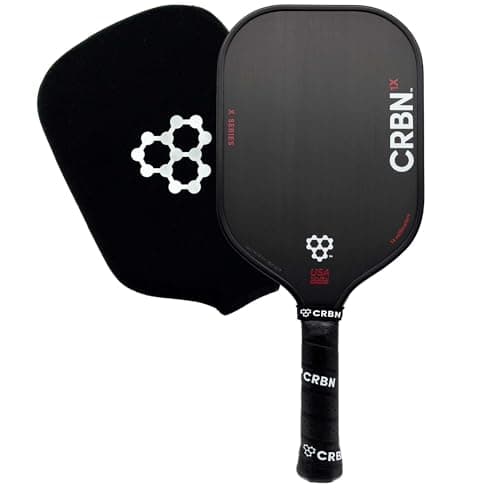 CRBN X-Series Power Clean, refined power feel | Best refined power | 8.0 | $149.99 · View on Amazon #adPrice as of October 23, 2026 |
| 3 | 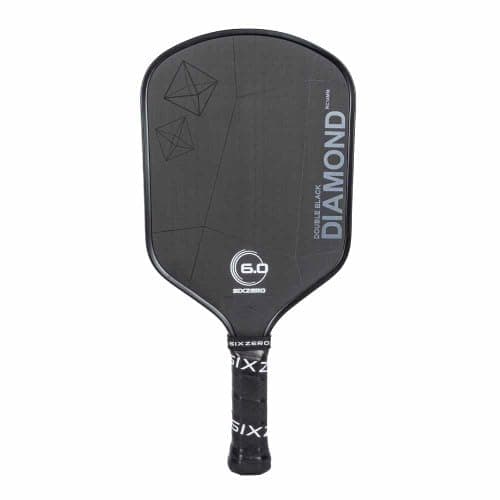 Six Zero Double Black Diamond 16mm All-court value with a huge sweet spot | Best long-frame alternative | 8.5 | $180.00 · View on Amazon #adPrice as of October 23, 2026 |
| 4 | 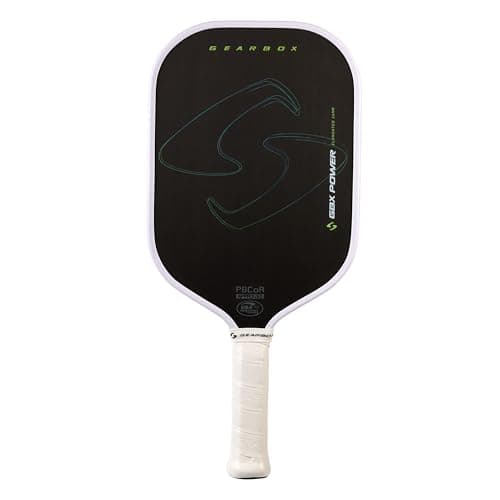 Gearbox GBX Power Elongated Raw drive power for big hitters | Most drive | 7.0 | $179.99 · View on Amazon #adPrice as of October 23, 2026 |
| 5 | No image Ronbus R1 Pulsar Lowest-cost entry to thermoformed carbon | Best budget elongated | 7.5 |
Tap any row to jump to the full write-up. Prices are pulled live from Amazon.
Selkirk Amped Pro Air Invikta
Selkirk's elongated reach option — the Invikta shape gives real reach and leverage, with the open Air throat trimming swing weight.
The Invikta is one of the longest-standing elongated shapes in the sport, and the Amped Pro Air pairs that reach with Selkirk's open Air Dynamic Throat, which the brand says raises swing speed through the air. The FiberFlex+ fiberglass face and 16mm X5+ honeycomb core are tuned for balanced power and a large sweet spot rather than raw thermoformed pace, so it is a former-tennis-player favorite: leverage on drives, a long paddle face, and a quieter, more refined feel than the raw thermoformed crowd.
The Invikta is one of the longest-standing elongated shapes in the sport, and the Amped Pro Air build pairs that reach with real drive. The Air throat trims swing weight, so the length does not turn the paddle into a plank.
- Core
- 16 mm
- Shape
- Elongated
- Face
- FiberFlex+ fiberglass face over an X5+ honeycomb core
- Weight
- 7.8-8.2 oz
- Build
- Cold-pressed
- Gen
- Amped Pro Air
Manufacturer-listed as USA Pickleball approved. Approvals and delistings change — verify against the current USAP equipment list before tournament play (checked 2026-07).
CRBN X-Series Power
CRBN's power line has a following for a reason: thermoformed pace with a cleaner, less hollow feel than some rivals.
The X-Series Power gives you the thermoformed power everyone wants but with a feel a lot of players describe as more solid and less 'tinny' than the cheaper thermoformed crowd. A dependable elongated power paddle from a respected brand.
CRBN's X-Series Power delivers thermoformed pace with a solid, connected feel rather than the hollow feedback some long frames give you. The elongated head makes it a genuine reach paddle, not just a power one.
- Core
- 14 mm
- Shape
- Elongated
- Face
- Raw carbon-fiber face
- Weight
- ~8.0 oz
- Build
- Thermoformed
- Gen
- X-Series
Manufacturer-listed as USA Pickleball approved. Approvals and delistings change — verify against the current USAP equipment list before tournament play (checked 2026-07).
Six Zero Double Black Diamond 16mm
The internet's default 'do-it-all' recommendation: thermoformed power, a raw-carbon spin face, and a famously forgiving sweet spot at a fair price.
The DBD earned its reputation honestly. The 16mm Control build blends thermoformed pop with one of the most forgiving sweet spots in its class, and the raw T700 face grabs the ball for spin. It's the paddle we point undecided upgraders to first.
The honest entry on this page: Six Zero publishes the DBD at 16.3 x 7.7in, which is a hybrid rather than a true elongated frame. It is here because it is the shape to buy if the reach is what appeals but the narrow face is what worries you - longer than a standard paddle, with a famously wide usable face and a grippy raw T700 surface. If you want the full 16.5-inch outline, buy one of the four around it.
- Core
- 16 mm
- Shape
- Hybrid
- Face
- Raw Toray T700 carbon fiber
- Weight
- ~8.0 oz
- Build
- Thermoformed
- Gen
- Control (Gen 2 thermoformed)
Manufacturer-listed as USA Pickleball approved. Approvals and delistings change — verify against the current USAP equipment list before tournament play (checked 2026-07).
Gearbox GBX Power Elongated
A punchy, drive-first power paddle. Gearbox's construction is stiff and solid — you feel the ball leave.
The GBX Power is for the player whose game is put-aways and drives. It's a stiffer, less forgiving frame than the foam paddles, but the payoff is directness — the ball comes off fast and predictably. Not the pick if you need help on mishits.
A stiff, direct, drive-first elongated frame. Gearbox construction is solid and the ball leaves fast and predictably — the pick if put-aways and overheads are how you win points.
- Core
- 16 mm
- Shape
- Elongated
- Face
- Raw unidirectional carbon fiber
- Weight
- 8.0 oz avg (7.8-8.2 oz)
- Build
- Thermoformed
- Gen
- GBX (Gen-3 suspended PPE honeycomb)
The Amazon listing title states USA Pickleball approved; Pickleball Central's certification field for this paddle lists UPA-A and PBCoR only. Those are different programs for different competitions — verify your exact model against the current USA Pickleball equipment list before sanctioned play (checked 2026-10).
Ronbus R1 Pulsar
The budget thermoformed pick: raw T700 carbon and a real thermoformed build at a price that undercuts almost everyone.
Ronbus is the value-brand's value brand. The R1 Pulsar gets you a raw-carbon, thermoformed paddle for the least money of anything we cover — a smart first 'real' upgrade from a big-box starter paddle before you commit to a $200 frame.
A real thermoformed raw-carbon elongated paddle for the least money we cover. The cheapest honest way to find out whether the long shape suits your game before you commit real money to it.
- Core
- 16 mm
- Shape
- Elongated
- Face
- Raw Toray T700 carbon fiber
- Weight
- ~8.0 oz
- Build
- Thermoformed
- Gen
- Pulsar
Manufacturer-listed as USA Pickleball approved. Approvals and delistings change — verify against the current USAP equipment list before tournament play (checked 2026-07).
What "elongated" actually means
USA Pickleball limits a paddle's combined length plus width to 24 inches. That single rule is why paddle shapes exist as a spectrum rather than a free-for-all: manufacturers are trading one dimension against the other inside a fixed budget. A standard shape spends more of that budget on width. An elongated shape spends it on length. A hybrid sits between the two. Nobody gets to have both.
So an elongated paddle is a longer, narrower head, usually paired with a longer handle. The longer head puts more of the paddle's mass out past your hand, which is where the leverage comes from. The longer handle is not incidental either — it is what makes a two-handed backhand practical, and it changes where you can choke up when you want more control.
Everything else about an elongated paddle follows from that geometry. The reach is longer. The tip speed is higher. The head is more resistant to rotating around its long axis and less resistant to rotating around its short one. The sweet spot moves up the face and gets narrower. None of this is a manufacturer choosing to make a worse paddle in some dimension — it is arithmetic. Our elongated vs standard shape guide works through the geometry properly.
The trade, stated honestly
What you gain. Reach is the obvious one, and it is not marginal — the difference shows up on wide balls, on low volleys you had to lunge for, and on the overhead you can now cover instead of watching. Leverage is the second: a longer frame generates more tip speed, which translates directly into pace on drives and serves. The third is more subtle. Because the mass sits further out, an elongated paddle carries through contact better, so a heavy ball stays heavy even when you are not perfectly balanced.
What you lose. The sweet spot is narrower and sits higher, which is a real problem near the throat where a lot of defensive contact actually happens. Hand speed drops, because the same mass distribution that gives you tip speed on a full swing makes the paddle slower to whip around in a two-foot punch exchange at the line. And stability against twisting on wide contact — twist weight — is generally lower on a narrow head than a wide one, so an off-center ball near the edge deflects more. Our swing weight and twist weight guide explains why those two numbers, not the shape label, are what you are really buying.
The honest summary is that an elongated paddle is better everywhere the ball is far away from you and worse everywhere the ball is close and fast. Which of those situations decides more of your points is a question about your game, not about the paddle.
Elongated versus standard, side by side
| Attribute | Elongated | Standard |
|---|---|---|
| Reach | Longer — covers wide balls and lunges better | Shorter — you have to move to the ball |
| Power on a full swing | Higher — more tip speed and leverage | Lower for the same build and swing |
| Sweet spot | Narrower, sits higher on the face | Wider, sits lower and closer to the hand |
| Hand speed at the line | Slower to redirect in fast exchanges | Quicker — easier to win firefights |
| Off-center stability | Generally lower on wide contact | Generally higher across the face |
| Two-handed backhand | Comfortable — the longer handle is built for it | Cramped on most standard handles |
| Suits | Singles players, tennis converts, drive-first games | Doubles net players, hands-battle specialists |
Who should buy which
- You want the reference elongated paddle: the Selkirk Amped Pro Air Invikta. Real reach, an open Air throat and a more refined, less harsh feel than the raw thermoformed field, with the Air throat keeping swing weight in check. Two honest cons: it is not thermoformed, so it gives up the power ceiling of the stiff-shell frames on this page, and its FiberFlex+ fiberglass face does not grip the ball as aggressively as the raw T700 surfaces on the value picks here, so it is not the spin leader. The full Amped Pro Air review covers it in detail.
- You want power without the hollow feel: the CRBN X-Series Power. It hits as hard as anything on this list and feels solid rather than tinny doing it. The con is core thickness: this is a thinner-core frame, so the already-narrow elongated sweet spot is narrower still, and refined feel means it does not sound or feel as explosive as a louder paddle even when the ball speed is there. Detail in our CRBN X-Series Power review.
- You want the length without the punishment: the Six Zero Double Black Diamond 16mm. It is the most forgiving long frame we cover, and part of the reason is that it is not a full elongated paddle — at 16.3 x 7.7in it is a hybrid, so the face stays wider and the sweet spot sits lower than on the four frames around it. The trades are at both ends: slightly less reach than a true elongated paddle, and a control-leaning build that does not produce the raw pace of the Gearbox or the CRBN.
- You win points with drives and overheads:the Gearbox GBX Power. The most direct elongated frame here — stiff, solid, and fast off the face. The con is blunt and worth taking seriously: this is the least forgiving paddle in our catalog, and combining "least forgiving" with "narrowest sweet spot" is only a good idea if your contact is genuinely reliable.
- You want to find out if elongated suits you: the Ronbus R1 Pulsar. A real thermoformed raw-carbon elongated paddle for the least money we cover, which makes it the cheapest honest test of the shape. It is less refined than the premium frames and less forgiving than the DBD, but it will tell you within two sessions whether the length helps your game or fights it.
If your shortlist is down to two brands rather than five models, CRBN vs Selkirk and Six Zero vs Selkirk both settle head-to-heads that come up constantly in this shape.
Who should not buy an elongated paddle
Three groups, and it is worth being direct about them. The first is players whose points are decided in hands battles at the kitchen line. If you are regularly late on speed-ups, the last thing you need is a paddle that is slower to redirect. The extra reach does not help when the ball is already at your chest.
The second is players who still mishit under pressure. An elongated frame concentrates its best contact area higher up the face, and the further your contact drifts from that band, the more pace and direction you lose. Adding shape difficulty on top of contact inconsistency is how people end up convinced that an expensive paddle is worse than the one it replaced.
The third is anyone with a wrist or elbow that already complains. Leverage cuts both ways — more mass further from your hand means more torque coming back through the wrist on off-center contact. That is a manageable load if you play twice a week and a genuine problem if you play six times. If any of the three describe you, a standard or hybrid shape from the main power roundup or the control roundup is a better starting point.
Singles versus doubles changes the answer
The elongated shape is close to standard equipment in singles, and the reason is simple: singles is a court-coverage problem. You are defending the full width alone, rallies contain far more balls you have to stretch for, and the serve and the drive matter more because there is no partner at the net to punish a floaty ball. Every one of those conditions rewards reach and leverage, and the narrow sweet spot costs you least in a game with fewer close-range firefights.
Doubles is the opposite argument. Four players at two kitchen lines produce constant fast exchanges at close range, and the shot that decides those exchanges is a quick hand, not a long paddle. The elongated paddle's slower redirection is felt on exactly the ball that matters most — the surprise speed-up at your hip that you have a fraction of a second to block. That is why plenty of very strong doubles players use standard or hybrid shapes even though they could generate more pace with a long frame.
If you play both, pick for the format you play more, not the one you enjoy more. And if you are genuinely split, a hybrid is the honest compromise rather than a fudge — it gives you a meaningful share of the reach while keeping a usable lower face for the volleys. The main power roundup includes hybrid options alongside the long frames on this page.
What about hybrid shapes?
Hybrids split the difference: a bit more length than a standard paddle, a bit more width than a true elongated one. They are a genuinely good answer for players who want some reach without giving up a usable lower face — which is why several flagship power paddles, including the JOOLA Perseus Pro IV line, are built as hybrids rather than full elongated frames.
The catch is that "hybrid" is a marketing term, not a regulated category, and different brands mean noticeably different shapes by it. Read the published dimensions rather than the label, and if a brand does not publish them, treat that as information in itself.
Adjusting to a long frame
Give it three sessions before you judge it. Almost everyone who switches to an elongated paddle mishits low on the face for the first hour, because their hands are calibrated to a sweet spot that is no longer there. That resolves. What does not resolve on its own is a swing that is too short to use the leverage — long frames reward committing to the stroke and punish jabbing at the ball.
Two practical adjustments help. Choking up on the longer handle brings the contact point closer to your hand and makes the paddle feel quicker for dinks and blocks, which is a free control lever most players never use. And if the paddle feels unstable on wide contact rather than slow, a small amount of lead tape at the sides of the head raises twist weight and calms it down — a different fix from adding weight at the tip, which makes the paddle more powerful and slower still. The core thickness guide is the other lever worth pulling: an elongated 16mm frame is a much friendlier object than an elongated 14mm one.
The bottom line
The Selkirk Amped Pro Air Invikta is the elongated paddle we would hand to most people who want the shape: real reach, real drive, refined feel. The CRBN X-Series Power is the pick for a cleaner, more connected power sensation, the Six Zero DBD 16mm is the forgiving hybrid for players who want some length without the penalty, the Gearbox GBX Power is the specialist drive tool, and the Ronbus R1 Pulsar is the cheap way to test the theory.
Just be honest with yourself about where your points are won. If it is at the baseline and on the stretch, elongated is a genuine upgrade. If it is in two-second exchanges at the net, the shape is working against you no matter how good the paddle is. Former tennis players in particular should read our paddles for tennis players page, where the long-frame case is strongest.
What is an elongated pickleball paddle?
An elongated paddle is longer and narrower than a standard shape, usually with a longer handle. USA Pickleball caps combined length plus width at 24 inches, so extra length is always paid for in width. The result is more reach and more tip speed on a full swing, with a narrower sweet spot that sits higher on the face.
Are elongated paddles more powerful?
Generally yes, for the same construction. Moving mass further from your hand increases tip speed and leverage, so a full swing produces more pace. The gain is largest on drives, serves and overheads, and smallest in quick net exchanges where you never get to accelerate the paddle in the first place.
What is the downside of an elongated paddle?
Three things: a narrower sweet spot positioned higher up the face, slower hands when you need to redirect the paddle in a firefight, and generally lower stability on wide off-center contact. Players who mishit under pressure or who lose most of their points at the kitchen line usually do better with a standard or hybrid shape.
Is an elongated paddle good for a two-handed backhand?
Yes — it is one of the strongest arguments for the shape. Elongated paddles almost always pair the longer head with a longer handle, which leaves room for a second hand without cramping. On most standard-shape handles a two-handed backhand feels crowded, which is why tennis converts gravitate to long frames.