Best Paddles for a Two-Handed Backhand
A second hand on the handle needs somewhere to go. Handle length is the specification that decides this, and almost no listing puts it in the headline.
Disclosure: Drive Dink earns a commission from qualifying Amazon purchases at no extra cost to you. We accept no free products and no paid placements — commissions never change our picks. How this works.
The two-handed backhand is the clearest tennis import in pickleball, and it comes with a specific equipment requirement that most paddle listings bury: handle length. A second hand needs somewhere to sit, and on a short-handled paddle it sits on the face — which is uncomfortable, unstable and, if your bottom hand rides up far enough, the reason your backhand feels cramped.
Units we claim to have tested: 0. We compile manufacturer-published specifications and rank by fit. Handle lengths are not always published in a directly comparable way, so we treat frame shape as the reliable proxy — elongated paddles have longer handles, essentially without exception. Prices move; the live Amazon price above is the only one to trust.
| # | Paddle | Best for | Score | Price |
|---|---|---|---|---|
| 1 | 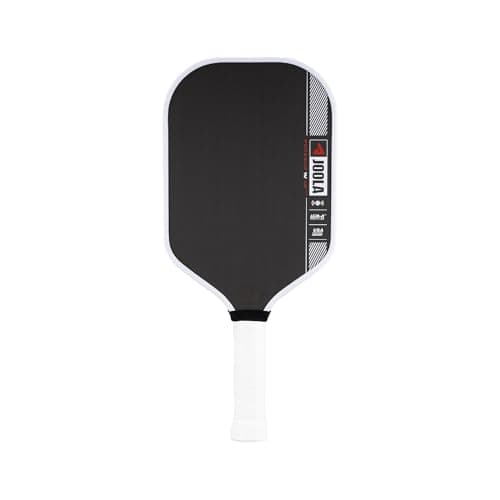 JOOLA Ben Johns Perseus Pro IV 16mm All-court power with a big sweet spot | Best overall for two hands | 8.3 | |
| 2 | 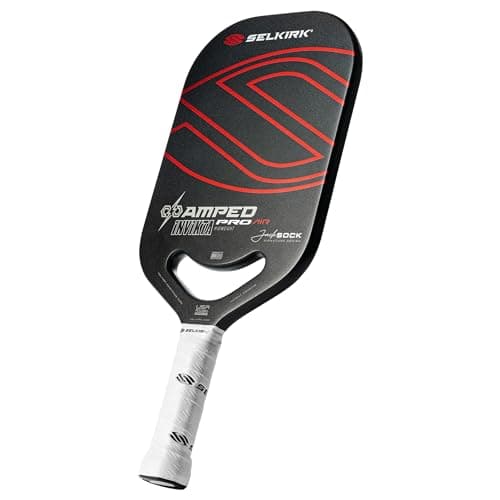 Selkirk Amped Pro Air Invikta Reach + leverage in an elongated frame | Best reach and leverage | 7.5 | $99.99 · View on Amazon #adPrice as of October 23, 2026 |
| 3 | 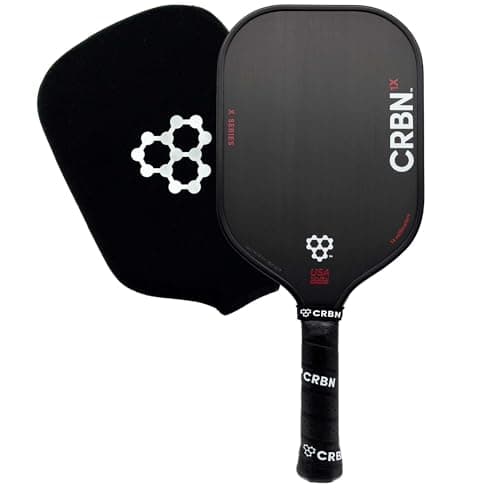 CRBN X-Series Power Clean, refined power feel | Best pace for a clean striker | 8.0 | $149.99 · View on Amazon #adPrice as of October 23, 2026 |
| 4 | 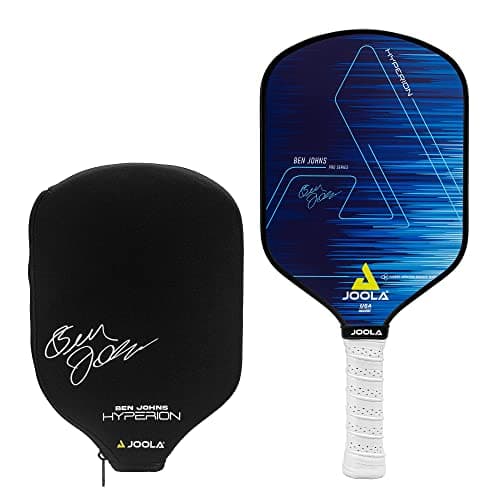 JOOLA Ben Johns Hyperion Pickleball Paddle Reach and spin on a last-generation flagship budget | Best value long handle | 7.5 | $179.95 · View on Amazon #adPrice as of October 23, 2026 |
| 5 | 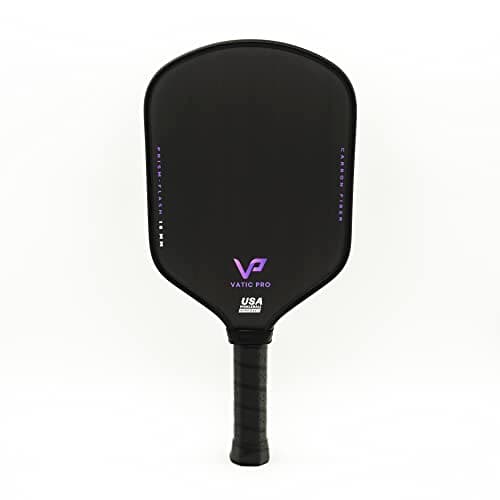 Vatic Pro Prism Flash 16mm The value spin champion (best under ~$110) | Best budget option | 8.0 | $99.99 · View on Amazon #adPrice as of October 23, 2026 |
Tap any row to jump to the full write-up. Prices are pulled live from Amazon.
JOOLA Ben Johns Perseus Pro IV 16mm
JOOLA's Gen-4 Perseus: thermoformed power and a grippy Charged surface, with the 16mm core adding forgiveness the 14mm gives up. Now the previous generation to the Pro V.
The Perseus Pro IV set the benchmark the rest of the power field chased, and JOOLA's March 2026 Pro V refines that formula rather than replacing it. The 16mm version trades a little raw pop for a larger, more forgiving sweet spot — the sensible pick if you want top-tier power without punishing off-center hits. Charged Surface Technology keeps spin high.
The Perseus Pro IV is the default answer here for a reason: a long hybrid frame with the handle length a second hand needs, thermoformed power that rewards the extra stability two hands give you, and a genuinely grippy Charged face for the topspin drive this stroke is built to hit. The 16mm build is the right one — a two-handed backhand generates plenty of pace on its own and benefits more from a forgiving sweet spot than from extra pop.
- Core
- 16 mm
- Shape
- Hybrid
- Face
- Charged carbon-fiber surface (Tech-Flex)
- Weight
- ~8.0 oz
- Build
- Thermoformed
- Gen
- Pro IV (Gen 4)
Manufacturer-listed as USA Pickleball approved. Approvals and delistings change — verify against the current USAP equipment list before tournament play (checked 2026-07).
Selkirk Amped Pro Air Invikta
Selkirk's elongated reach option — the Invikta shape gives real reach and leverage, with the open Air throat trimming swing weight.
The Invikta is one of the longest-standing elongated shapes in the sport, and the Amped Pro Air pairs that reach with Selkirk's open Air Dynamic Throat, which the brand says raises swing speed through the air. The FiberFlex+ fiberglass face and 16mm X5+ honeycomb core are tuned for balanced power and a large sweet spot rather than raw thermoformed pace, so it is a former-tennis-player favorite: leverage on drives, a long paddle face, and a quieter, more refined feel than the raw thermoformed crowd.
The Invikta has been one of the longest shapes in the sport for years, and length is exactly what a two-hander wants — reach on the stretch backhand and leverage on the drive. The Air throat keeps the swing weight manageable despite the length. The con is construction: it is cold-pressed rather than thermoformed, so the power ceiling sits below the paddles above and below it here.
- Core
- 16 mm
- Shape
- Elongated
- Face
- FiberFlex+ fiberglass face over an X5+ honeycomb core
- Weight
- 7.8-8.2 oz
- Build
- Cold-pressed
- Gen
- Amped Pro Air
Manufacturer-listed as USA Pickleball approved. Approvals and delistings change — verify against the current USAP equipment list before tournament play (checked 2026-07).
CRBN X-Series Power
CRBN's power line has a following for a reason: thermoformed pace with a cleaner, less hollow feel than some rivals.
The X-Series Power gives you the thermoformed power everyone wants but with a feel a lot of players describe as more solid and less 'tinny' than the cheaper thermoformed crowd. A dependable elongated power paddle from a respected brand.
A thermoformed 14mm elongated frame with a refined, solid feel and serious pace on tap. A two-handed backhand is usually a player's most reliable stroke, which makes the demanding 14mm core more defensible than it would be otherwise. The con is what it costs you elsewhere: on the forehand side and on rushed volleys, that thin core gives you a much narrower margin.
- Core
- 14 mm
- Shape
- Elongated
- Face
- Raw carbon-fiber face
- Weight
- ~8.0 oz
- Build
- Thermoformed
- Gen
- X-Series
Manufacturer-listed as USA Pickleball approved. Approvals and delistings change — verify against the current USAP equipment list before tournament play (checked 2026-07).
JOOLA Ben Johns Hyperion Pickleball Paddle
The paddle that made JOOLA's name: a long, high-grit elongated frame now sold well below current-generation flagship money.
Before the thermoformed Perseus era, the Hyperion was the elongated paddle the top of the game played. It is cold-pressed rather than thermoformed, so it does not have the modern power ceiling — but the Carbon Friction Surface still grips, the reach is real, and it now sits a tier below the current flagships on price.
The previous-generation JOOLA flagship keeps the long elongated frame and the textured Carbon Friction Surface at a materially lower price than the current line. For a two-hander who wants reach and grip without flagship money, it is a strong buy. The con is important: it is cold-pressed, not thermoformed, so it sits outside the modern power mechanism entirely.
- Core
- 16 mm
- Shape
- Elongated
- Face
- Carbon Friction Surface (textured carbon)
- Weight
- ~8.0 oz
- Build
- Cold-pressed
- Gen
- Hyperion CFS
Manufacturer-listed as USA Pickleball approved. Approvals and delistings change — verify against the current USAP equipment list before tournament play (checked 2026-07).
Vatic Pro Prism Flash 16mm
The value-shopper's spin paddle: raw T700 carbon and a thermoformed build that punches well above its price.
Vatic built a reputation on giving you 90% of a $250 paddle for around a hundred bucks. The Prism Flash's raw T700 face grips for spin and the elongated frame adds reach — the paddle we recommend when 'best spin under $100' is the search.
An elongated thermoformed frame with a raw Toray T700 face at the bottom of the real-paddle market. It gives a two-hander the shape and the spin surface that matter most, and the 16mm core keeps the sweet spot usable. The con is pace: this is a strong spin paddle and a moderate power paddle, so finishing points from the baseline takes more work than it does on the paddles above.
- Core
- 16 mm
- Shape
- Elongated
- Face
- Raw Toray T700 carbon fiber
- Weight
- ~8.0 oz
- Build
- Thermoformed
- Gen
- Prism
Manufacturer-listed as USA Pickleball approved. Approvals and delistings change — verify against the current USAP equipment list before tournament play (checked 2026-07).
Why handle length is the whole story
A pickleball paddle is constrained by a combined length-plus-width limit rather than by either dimension alone. That means every inch of handle a manufacturer adds is an inch of face they cannot add, and every design is a choice about how to spend that budget.
For a one-handed player, spending it on face area is usually correct — a bigger face is a bigger sweet spot. For a two-handed player, it is not. If your top hand does not fit on the grip, three things happen: your hands crowd each other and the stroke shortens, your top hand contacts the throat or face and the paddle feels unstable, and you lose the rotational control that is the entire reason to use two hands.
This is why every paddle on this page is elongated. Elongated frames spend more of the length budget on the handle, and they are the only category that reliably accommodates two hands. Our elongated vs standard shape guide covers the wider trade-off — the honest version of which is that you accept a narrower, higher sweet spot to get the handle you need.
How we picked
Three requirements. The paddle had to be an elongated frame, because that is the only reliable proxy for a handle long enough to hold two hands. It had to score above average on power in our scoring, because a two-handed backhand is an offensive stroke and there is no point pairing it with a paddle that will not drive. And it had to have a real first-party Amazon listing.
Our scores for spin, power, control and forgiveness are our editorial read of compiled specifications and reviewer consensus — not measurements, and never published as a star rating in structured data. For measured spin figures we defer to Pickleball Studio, which runs calibrated testing. The full approach is on our methodology page.
What two hands change about paddle choice
You need less help with power on that side.Two hands recruit the torso and remove the wrist as a weak link, which is why the two-handed backhand is usually the most reliable driving stroke in a converted tennis player's game. That means you can prioritize forgiveness and spin over raw pop on your paddle, because the stroke is already supplying pace.
You need more help with swing weight. Two hands make a heavy head easier to control on the backhand and no easier on the forehand or at the net. If a paddle feels good on your best stroke and sluggish everywhere else, the swing weight is too high — our swing weight and twist weight guide explains how to think about it, and it is worth reading before you buy an elongated paddle.
Spin becomes more available, not less. The two-handed stroke naturally brushes up on the ball, which is exactly the motion a raw carbon face converts into rotation. A gritty surface pays off more for a two-hander than for a flat-hitting one-hander. Our how paddle spin works guide covers the mechanism.
Your net game does not improve. The stroke that wins you baseline exchanges does nothing for you in a hands battle at 8 feet, where the long paddle you bought for the backhand is now a liability. This is the honest cost of everything on this page.
If you came from tennis
Most players reading this page hit a two-handed backhand because they played tennis, and that background carries a second set of equipment implications — around swing length, contact point and the habit of generating pace with a full stroke rather than a compact one. Our best power paddles for former tennis players page covers those in detail, and there is deliberate overlap between the two lists.
One transition note worth stating plainly: the biggest adjustment for tennis players is not the backhand, it is the soft game. A long, powerful paddle makes third-shot drops and dinks harder, not easier, and those shots decide more recreational doubles points than drives do. If you find your errors are all on soft shots rather than drives, the paddles in our control and all-court roundup are worth a look even if they cost you some backhand pace.
Who should buy which
- You want the best all-round paddle for this stroke: the JOOLA Perseus Pro IV 16mm. Long handle, real power, grippy face, usable sweet spot.
- Reach is what you are missing: the Selkirk Amped Pro Air Invikta. Length is its defining feature.
- You strike the ball cleanly and want maximum pace: the CRBN X-Series Power.
- You want the long frame without flagship money: the JOOLA Hyperion — as long as you accept the cold-pressed power gap.
- Your budget is around a hundred dollars: the Vatic Pro Prism Flash.
Grip size and tuning matter more here
Two hands on one handle makes grip circumference more consequential than it is for anyone else. Too thick and your hands cannot both close properly; too thin and the paddle twists in the bottom hand under load. Most players buying an elongated paddle for a two-handed backhand end up adjusting the grip, and it is a cheap change — our grip size guide covers how to work out what you need and our grips and overgrips page covers what to buy.
Weight tuning is the other lever. If an elongated paddle feels head-heavy on your forehand and at the net, moving a few grams toward the handle rebalances it without changing the paddle; if you want more drive, weight at the tip does the opposite. Our paddle weights and tuning tape page covers the options, and both changes are reversible.
What to avoid
Standard-shape paddles, however good. This is the one category where a specification genuinely rules a paddle out. A standard outline does not have the handle length, and no amount of quality elsewhere compensates. That includes excellent paddles like the JOOLA Scorpeus Pro IV, which we recommend widely and would not recommend here.
Very high swing weights. A long paddle with a heavy head feels wonderful on the backhand and slow everywhere else. Buy for your whole game, not your best shot.
Assuming length equals power. Two of the five paddles here are not thermoformed, which means the elongated shape is doing the power work on its own without a thermoformed shell behind it. That is a legitimate choice, but read the construction line before you assume a long paddle hits hard. Our thermoformed paddles guide explains what the difference is worth.
A note on USAP legality
Every paddle here is manufacturer-listed as USA Pickleball approved, and we date-stamp that note on each product card. Approvals and delistings change and apply to specific model revisions, so check the current USAP approved paddle list before sanctioned play — our USAP-approved paddles guide explains how the process works.
The bottom line
The Perseus Pro IV 16mm is the paddle we would hand to most two-handed players: it has the handle, the power and the face, and the 16mm core keeps the sweet spot usable on the shots your best stroke is not covering. The Selkirk buys more reach, the CRBN more pace, the Hyperion the same shape for less, and the Vatic the whole idea at value money.
The one thing worth repeating: every paddle here costs you speed at the net. If you are losing more points in hands battles than you are winning with your backhand, the honest recommendation is to reconsider the whole category — read how to choose a pickleball paddle and look at power paddles for intermediate players for shorter options that still drive.
Do I need a special paddle for a two-handed backhand?
You need a long enough handle, which in practice means an elongated frame. A pickleball paddle is limited by combined length plus width, so every inch of handle costs face area — and standard-shape paddles spend that budget on the face. If your top hand does not fit on the grip, the stroke shortens and the paddle feels unstable.
What handle length do I need for a two-handed backhand?
Longer is generally better, and elongated paddles are the reliable category rather than a specific number — manufacturers do not always publish handle length in comparable terms. The practical test is whether both hands fit fully on the grip with your top hand clear of the throat. If your top hand is touching the face, the handle is too short.
Are elongated paddles harder to use?
In some situations, yes. They buy reach and leverage at the cost of a higher, narrower sweet spot and slower head rotation in fast exchanges. A two-handed player accepts that trade because the handle length is non-negotiable. If you are losing more points in hands battles than you win with your backhand, the trade may not be worth it.
Should I get a 14mm or 16mm core for a two-handed backhand?
Usually 16mm. A two-handed stroke recruits the torso and removes the wrist as a weak link, so it already generates plenty of pace — you gain more from a forgiving sweet spot than from a thinner, poppier core. Stacking an elongated shape with a 14mm core produces a genuinely demanding paddle.