Best Paddles for Tennis Elbow
Equipment cannot cure an injury, but it can stop making one worse. These are the paddles that transmit the least shock into your arm — and the cheaper changes to try first.
Disclosure: Drive Dink earns a commission from qualifying Amazon purchases at no extra cost to you. We accept no free products and no paid placements — commissions never change our picks. How this works.
First, the honest disclaimer: we are not medical professionals and this is not medical advice. Lateral epicondylitis has causes — technique, volume, strength, recovery — that no paddle addresses. If your elbow hurts, the highest-value action is to see a physiotherapist or doctor, not to buy equipment.
What equipment can do is change how much shock reaches your arm on every contact, and that is a real variable. This page ranks paddles on the specifications that govern it and is explicit about which changes are likely to matter most. Units we claim to have tested: 0. Live Amazon prices render above; we never type one into the copy.
| # | Paddle | Best for | Score | Price |
|---|---|---|---|---|
| 1 | 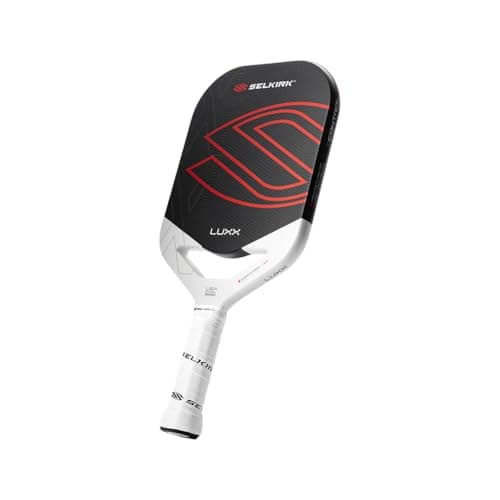 Selkirk LUXX Control Air Invikta Maximum control + soft touch | Softest paddle we cover | 8.0 | |
| 2 | 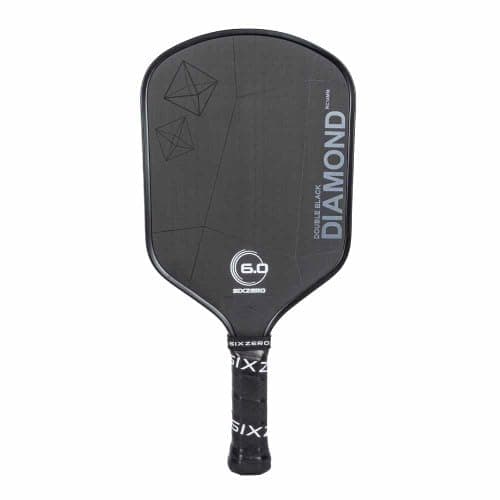 Six Zero Double Black Diamond 16mm All-court value with a huge sweet spot | Best forgiving all-rounder | 8.5 | $180.00 · View on Amazon #adPrice as of October 23, 2026 |
| 3 | 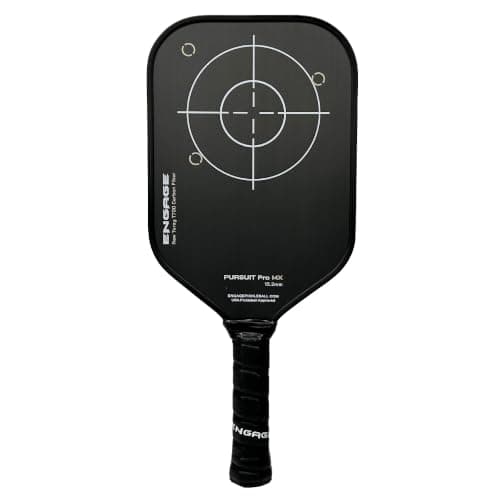 Engage Pursuit Pro MX 15.2 Elongated Control-forward power without the harsh feel | Best damped feel with drive | 7.8 | $129.99 · View on Amazon #adPrice as of October 23, 2026 |
| 4 | 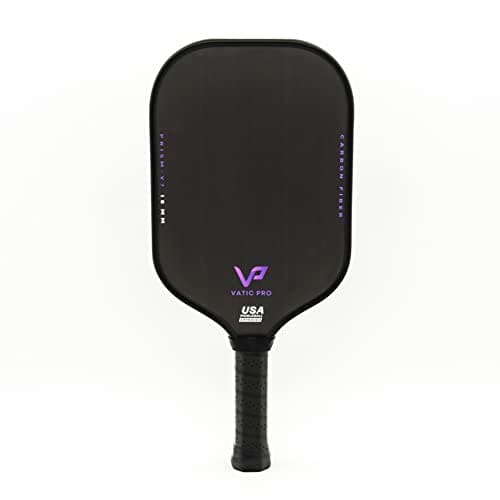 Vatic Pro Prism V7 16mm Value control in a standard shape | Best low-swing-weight budget option | 7.8 | $99.99 · View on Amazon #adPrice as of October 23, 2026 |
Tap any row to jump to the full write-up. Prices are pulled live from Amazon.
Selkirk LUXX Control Air Invikta
A thick-core, control-first paddle: a plush, soft-hands feel for dinking and resets, not a bomb-thrower.
The LUXX Control leans hard into touch — a thicker core and a muted face make the third-shot drop and the reset the strengths here. If your game wins on placement and hands speed rather than raw pace, this is the control end of the Selkirk line.
A 20mm core is a genuine outlier in a market that standardized on 14mm and 16mm, and thicker cores flex more at impact — which means more of the collision is absorbed by the paddle instead of traveling up your arm. Combined with Selkirk's damped Florek face, this is the least harsh paddle in our catalog. The honest con is that it is also the least powerful at its price, and it is a long frame, so swing weight is not its strong suit.
- Core
- 20 mm
- Shape
- Elongated
- Face
- Florek carbon face
- Weight
- ~8.0 oz
- Build
- Cold-pressed
- Gen
- LUXX
Manufacturer-listed as USA Pickleball approved. Approvals and delistings change — verify against the current USAP equipment list before tournament play (checked 2026-07).
Six Zero Double Black Diamond 16mm
The internet's default 'do-it-all' recommendation: thermoformed power, a raw-carbon spin face, and a famously forgiving sweet spot at a fair price.
The DBD earned its reputation honestly. The 16mm Control build blends thermoformed pop with one of the most forgiving sweet spots in its class, and the raw T700 face grabs the ball for spin. It's the paddle we point undecided upgraders to first.
Off-center hits are where shock spikes, because a twisting paddle sends a jolt through the wrist and forearm. The DBD 16mm has one of the widest, most stable sweet spots in its class, which means fewer of those jolts over a session. The con is that it is thermoformed and therefore stiffer and livelier than the softer paddles here — you are buying fewer bad contacts rather than a gentler good one.
- Core
- 16 mm
- Shape
- Hybrid
- Face
- Raw Toray T700 carbon fiber
- Weight
- ~8.0 oz
- Build
- Thermoformed
- Gen
- Control (Gen 2 thermoformed)
Manufacturer-listed as USA Pickleball approved. Approvals and delistings change — verify against the current USAP equipment list before tournament play (checked 2026-07).
Engage Pursuit Pro MX 15.2 Elongated
Engage's calling card is a softer, more controllable power feel — the Pursuit Pro MX gives you drive without the trampoline harshness.
Engage tunes its paddles for a plusher, quieter response than the raw thermoformed crowd. The Pursuit Pro MX 15.2 is an elongated frame that still hits hard but keeps the ball on the face longer, which control players tend to prefer.
Engage tunes for a plusher, quieter response rather than maximum energy return, and a cold-pressed build keeps the frame from being harsh. It is the pick if you still want a paddle that drives but cannot live with a stiff thermoformed feel. The con is the elongated shape: length raises swing weight, and swing weight is one of the things an aching elbow reacts to.
- Core
- 15 mm
- Shape
- Elongated
- Face
- Raw carbon-fiber face
- Weight
- ~8.0 oz
- Build
- Cold-pressed
- Gen
- Pursuit Pro MX
Manufacturer-listed as USA Pickleball approved. Approvals and delistings change — verify against the current USAP equipment list before tournament play (checked 2026-07).
Vatic Pro Prism V7 16mm
The standard-shape Prism: the same value-carbon face in a more control-friendly, maneuverable body.
The V7 is the Prism for players who prefer a standard shape — a lower, wider sweet spot and quicker hands than the elongated Flash, at the same wallet-friendly price. A lot of paddle for the money on the control end.
A standard shape keeps mass close to your hand, which lowers swing weight and reduces the load your forearm carries through every stroke — often a bigger factor than core softness. That the V7 also has a 16mm core and a value price makes it the sensible first experiment. The con is that it is thermoformed, so the face itself is livelier than the LUXX or the Engage, and it is the lowest-power paddle we cover.
- Core
- 16 mm
- Shape
- Standard
- Face
- Raw Toray T700 carbon fiber
- Weight
- ~8.0 oz
- Build
- Thermoformed
- Gen
- Prism
Manufacturer-listed as USA Pickleball approved. Approvals and delistings change — verify against the current USAP equipment list before tournament play (checked 2026-07).
What actually sends shock into your arm
Four properties do most of the work, and they are not the ones marketing emphasizes.
Core thickness and flex. A thicker, more flexible core compresses more at impact, spreading the collision over more time and absorbing energy that a stiff core would return — to the ball, and to your hand. This is why 16mm and 20mm paddles feel softer than 14mm ones. Our core thickness guide covers the trade in full.
Off-center contact. This is the underrated one. When you hit away from the sweet spot, the paddle twists in your hand, and arresting that twist loads the forearm sharply. A paddle with high twist weight and a wide sweet spot produces fewer of those events over a session, which for many players matters more than how soft the paddle feels on a clean hit. Our swing weight and twist weight guide explains the property.
Swing weight. The effective mass you accelerate and decelerate on every stroke. A high swing weight means more load on the arm thousands of times a session, independent of what happens at contact. Elongated paddles and head-weighted paddles have higher swing weights; standard shapes and handle-weighted paddles have lower ones.
Grip size and grip material. Too small a grip forces you to squeeze harder to stop the paddle turning, and a permanently tense forearm is exactly the condition that aggravates tennis elbow. A cushioned grip also damps vibration before it reaches your hand. Our grip size guide covers how to work out what you need.
Try these before buying a paddle
If your current paddle is otherwise fine, three cheap changes are worth making before you spend on a new one — and any of them may be enough.
Build up the grip. Adding an overgrip or two increases circumference, which reduces how hard you have to squeeze. This is the single highest-value-per-dollar change on this page. A cushioned, vibration-damping grip goes further — the Hesacore-style structured grips are specifically marketed for load spreading and elbow comfort. Our grips and overgrips page covers the options.
Add weight at 3 and 9 o'clock. Weight at the sides raises twist weight, which is the property that resists the paddle rotating on off-center contact. Fewer twists means fewer jolts. It costs a few dollars and is fully reversible — our paddle weights and tuning tape page covers what to buy. Be aware this also raises total weight slightly, which cuts the other way, so add a little at a time.
Check whether your paddle is worn out. A paddle with a dead core transmits more and returns less, and it is easy to keep playing one for months past its useful life. Our guide to when a paddle is done covers the signs.
How we picked
Every paddle here had to score at or above average on forgiveness in our scoring, and had to be either soft-core, damped-construction or low-swing-weight by design — ideally more than one. We deliberately did not include the stiffest, poppiest paddles in our catalog regardless of how well they perform elsewhere.
Our scores are our editorial read of compiled manufacturer specifications and reviewer consensus. They are not measurements, and we do not publish them as a star rating in structured data. No paddle here is claimed to prevent or treat injury — we are ranking on shock transmission characteristics, not on medical outcomes. Our full approach is on the methodology page.
Why shape complicates this list
There is a genuine tension in these picks that is worth naming. The softest-feeling paddles in the category tend to be thick-core elongated frames, and elongated frames have higher swing weights — so the paddle that is gentlest at contact may be the one that loads your arm most over the course of a session.
Which matters more depends on your specific pattern. If your elbow complains about hard, jarring contacts — blocking drives, mis-hits — the soft core is what you want. If it complains about volume and fatigue over a long session, the low swing weight of a standard shape is more likely to help. Our elongated vs standard shape guide covers the geometry, and the Vatic Prism V7 is on this list specifically to represent the low-swing-weight route.
Who should buy which
- Hard contacts are what hurt: the Selkirk LUXX Control Air Invikta. Nothing else we cover absorbs as much at impact.
- Mis-hits are what hurt: the Six Zero Double Black Diamond 16mm. Fewer bad contacts beats a softer good one.
- You want damping without giving up drive: the Engage Pursuit Pro MX.
- Session-length fatigue is the pattern, or budget is tight: the Vatic Pro Prism V7. Low swing weight, low price, easy to pair with a grip change.
What to avoid
Stiff, thin-core power paddles. A 14mm thermoformed frame is the opposite prescription: stiffer at contact, less forgiving on mishits, livelier off the face. Excellent paddles — the Gearbox GBX Power is one — and the wrong tool here. Our most powerful paddles page is where those live, and it is worth knowing what you are steering away from.
Very heavy paddles. Static weight and swing weight are different things, but both add load. A heavy paddle with a heavy head is the worst combination for an aching arm.
Grips that are too small. The default grip on most paddles runs on the thin side, and thin grips make you squeeze. Building the grip up is nearly free and is the change we would make first.
Any product claiming to cure tennis elbow. Paddles, grips and braces change load and vibration. They do not treat an injury. Manufacturers who imply otherwise are overreaching, and we are not going to repeat their claims.
A note on USAP legality
Every paddle here is manufacturer-listed as USA Pickleball approved, and we date-stamp that note on each product card. Approvals and delistings change and apply to specific model revisions, so check the current USAP approved paddle list before sanctioned play — our USAP-approved paddles guide explains the process.
The bottom line
If you buy one paddle from this page, make it the Selkirk LUXX Control Air Invikta — a 20mm core is the most direct way to reduce what reaches your arm at contact, and Selkirk's damped construction reinforces it. If you would rather attack the problem from the mis-hit side, the Six Zero DBD 16mm gives you the widest sweet spot in the group at a lower price. Both lead our most forgiving paddles page for the same reasons, and our sweet spot guide explains why a thick core and a stable frame reduce what reaches the arm.
But the recommendation we would actually lead with is cheaper than any of them: build up your grip, add a few grams at 3 and 9 o'clock, and see a professional about the arm. Equipment is a contributing factor, not the cause, and the paddles here are the best version of a supporting role. For the wider control field, start with our control and all-court paddle roundup and control paddles for intermediate players.
If the pain is in your hands rather than your elbow
These two searches get treated as one and the equipment answers diverge. Tennis elbow responds to a thicker core, a bigger sweet spot and higher twist weight; arthritic hands are loaded mostly by sustained grip force and the effort of moving the paddle, so grip shape comes first. Our guide to paddles for arthritic hands sets out the four levers in that order.
What kind of pickleball paddle is best for tennis elbow?
Broadly, a paddle with a thicker, more flexible core, a damped rather than stiff construction, a wide and stable sweet spot, and a swing weight your arm can handle over a full session. Those properties reduce how much shock reaches your arm at contact and how much load it carries between contacts. No paddle treats an injury — see a professional about the arm itself.
Does a thicker paddle core help with tennis elbow?
It reduces shock at contact. A thicker core compresses more at impact, spreading the collision over more time and absorbing energy that a stiff core would return. That is why 16mm and 20mm paddles feel softer than 14mm ones. The trade is a lower power ceiling, and on an elongated frame a thick core can still carry a high swing weight.
Should I change my grip before buying a new paddle?
Yes — it is the cheapest change and often the most effective. A grip that is too thin forces you to squeeze harder to stop the paddle turning, and a permanently tense forearm is exactly what aggravates tennis elbow. Adding an overgrip increases circumference, and cushioned or structured grips also damp vibration before it reaches your hand.
Does adding weight to a paddle help or hurt an aching elbow?
It can do either, which is why you add it a little at a time. Weight at 3 and 9 o'clock raises twist weight, so the paddle rotates less on off-center contact and produces fewer sharp jolts — that helps. But all added weight raises the load your arm carries through every swing, so too much works against you.