Best Paddles for Senior Players
There is no such thing as a senior paddle, and any brand selling you one is selling a label. What does exist is a set of specifications worth prioritizing.
Disclosure: Drive Dink earns a commission from qualifying Amazon purchases at no extra cost to you. We accept no free products and no paid placements — commissions never change our picks. How this works.
Let us be direct about the category first. Paddles marketed to senior players are usually ordinary paddles with a lighter listed weight and a larger typeface on the packaging. Age is not a paddle specification, and a 70-year-old 4.5 player and a 45-year-old beginner need completely different equipment.
What does change with age, for most people, is a set of physical realities — recovery time, joint tolerance, reaction speed, shoulder endurance — and those map onto real specifications. This page ranks on those. Live Amazon prices render above. Units we claim to have tested: 0.
| # | Paddle | Best for | Score | Price |
|---|---|---|---|---|
| 1 | 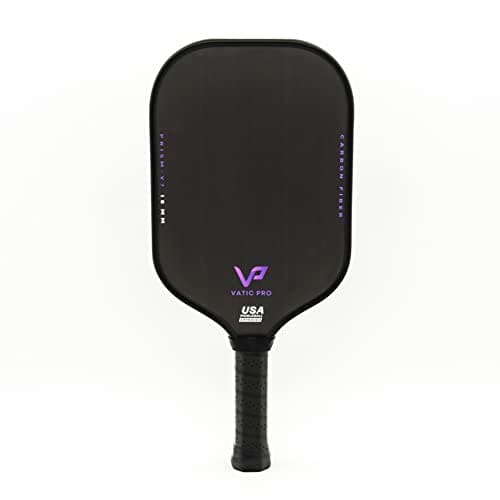 Vatic Pro Prism V7 16mm Value control in a standard shape | Best low swing weight | 7.8 | $99.99 · View on Amazon #adPrice as of October 23, 2026 |
| 2 | 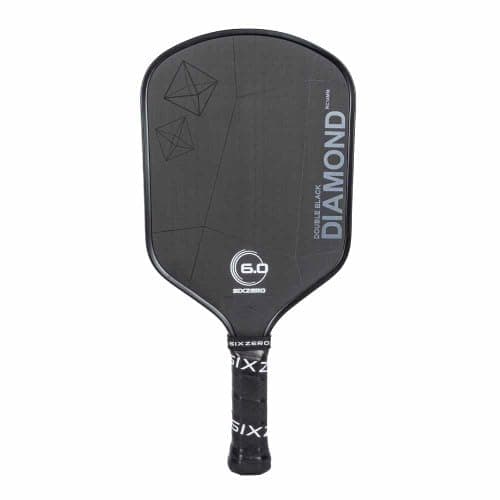 Six Zero Double Black Diamond 16mm All-court value with a huge sweet spot | Best sweet spot | 8.5 | $180.00 · View on Amazon #adPrice as of October 23, 2026 |
| 3 | 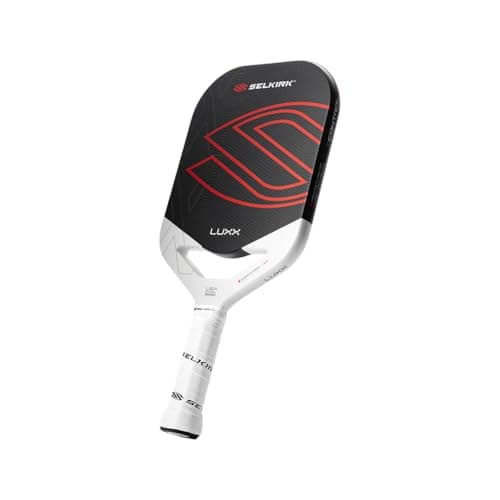 Selkirk LUXX Control Air Invikta Maximum control + soft touch | Softest feel | 8.0 | |
| 4 | 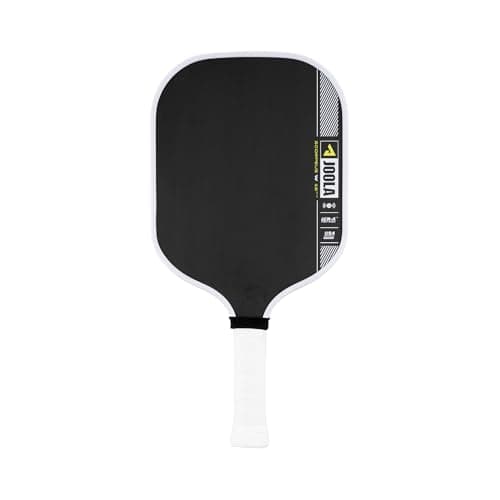 JOOLA Collin Johns Scorpeus Pro IV 16mm Standard-shape all-court control + spin | Best standard-shape all-rounder | 8.0 |
Tap any row to jump to the full write-up. Prices are pulled live from Amazon.
Vatic Pro Prism V7 16mm
The standard-shape Prism: the same value-carbon face in a more control-friendly, maneuverable body.
The V7 is the Prism for players who prefer a standard shape — a lower, wider sweet spot and quicker hands than the elongated Flash, at the same wallet-friendly price. A lot of paddle for the money on the control end.
A standard outline keeps mass close to your hand, and that lowers swing weight — the property that decides how much work every stroke is and how late you can still get the paddle round on a fast ball. Combined with a 16mm core and value pricing, it is the most sensible starting point on this page. The con is power: it is the lowest-scoring paddle we cover on that axis, so drives take more effort.
- Core
- 16 mm
- Shape
- Standard
- Face
- Raw Toray T700 carbon fiber
- Weight
- ~8.0 oz
- Build
- Thermoformed
- Gen
- Prism
Manufacturer-listed as USA Pickleball approved. Approvals and delistings change — verify against the current USAP equipment list before tournament play (checked 2026-07).
Six Zero Double Black Diamond 16mm
The internet's default 'do-it-all' recommendation: thermoformed power, a raw-carbon spin face, and a famously forgiving sweet spot at a fair price.
The DBD earned its reputation honestly. The 16mm Control build blends thermoformed pop with one of the most forgiving sweet spots in its class, and the raw T700 face grabs the ball for spin. It's the paddle we point undecided upgraders to first.
Our joint-highest forgiveness score, which in practice means more of your slightly-off contacts stay playable. If the shots costing you points are the ones you caught towards the tip or the edge rather than the ones you misjudged, this is the direct fix, and it is a paddle that still drives properly when you want it to. The con is the elongated frame: it is a longer, heavier-swinging paddle than the V7 and it demands more from the shoulder.
- Core
- 16 mm
- Shape
- Hybrid
- Face
- Raw Toray T700 carbon fiber
- Weight
- ~8.0 oz
- Build
- Thermoformed
- Gen
- Control (Gen 2 thermoformed)
Manufacturer-listed as USA Pickleball approved. Approvals and delistings change — verify against the current USAP equipment list before tournament play (checked 2026-07).
Selkirk LUXX Control Air Invikta
A thick-core, control-first paddle: a plush, soft-hands feel for dinking and resets, not a bomb-thrower.
The LUXX Control leans hard into touch — a thicker core and a muted face make the third-shot drop and the reset the strengths here. If your game wins on placement and hands speed rather than raw pace, this is the control end of the Selkirk line.
A 20mm core plus Selkirk's damped Florek face is the least harsh combination in our catalog, and less transmitted shock means less accumulated load on the elbow and shoulder over a long session. If joint comfort is the priority above everything else, this is the pick. The con is that it is both the least powerful paddle here and a long frame, so it is comfort bought at the cost of both pace and quickness.
- Core
- 20 mm
- Shape
- Elongated
- Face
- Florek carbon face
- Weight
- ~8.0 oz
- Build
- Cold-pressed
- Gen
- LUXX
Manufacturer-listed as USA Pickleball approved. Approvals and delistings change — verify against the current USAP equipment list before tournament play (checked 2026-07).
JOOLA Collin Johns Scorpeus Pro IV 16mm
The standard-shape Perseus. A more balanced, control-leaning face for players who don't get on with elongated handles — and now the previous generation to JOOLA's Scorpeus Pro V.
Same Gen-4 tech as the Perseus in a standard shape, which brings the sweet spot lower and wider and makes hands battles easier to win. If you want JOOLA's power tech but prefer an all-court, control-first feel, this is the one. JOOLA launched a Scorpeus Pro V in its 2026 Pro V collection at roughly twice the Pro IV's current price; the change is a KineticFrame throat and a raw carbon face rather than a new spec sheet.
A flagship-grade paddle in a standard outline is a rarer thing than it should be, and the Scorpeus is exactly that: even scores across all four of our axes, a grippy Charged carbon face, and mass kept close to the hand. It is the pick for a player who wants a genuinely good paddle without taking on an elongated frame's swing weight. The con is price — this is flagship money for a paddle that does not lead any single category.
- Core
- 16 mm
- Shape
- Standard
- Face
- Charged carbon-fiber surface
- Weight
- ~8.0 oz
- Build
- Thermoformed
- Gen
- Pro IV (Gen 4)
Manufacturer-listed as USA Pickleball approved. Approvals and delistings change — verify against the current USAP equipment list before tournament play (checked 2026-07).
The three specifications that matter
Swing weight, not static weight. This is the most commonly confused pair in paddle shopping. Static weight is what the paddle reads on a scale; swing weight is how heavy it feels to accelerate, and it depends on where the mass sits. A 7.9 oz elongated paddle can be far more work to swing than an 8.2 oz standard one, because length moves mass away from your hand.
Swing weight is what decides whether you are still getting the paddle round on a fast ball in the third game, and whether your shoulder is sore the next morning. Buy on that, not on the number printed on the listing. Our swing weight and twist weight guide explains both, and our paddle weight guide covers why the lightest paddle is usually the wrong answer.
Sweet-spot width. Reaction time shortens with age for almost everyone, and shorter reaction time means more contacts away from the middle of the face. A paddle with high twist resistance turns more of those into playable shots. This is the single highest-value property on this page and it is almost never marketed.
Damping. How much of the impact the paddle absorbs before it reaches your hand. Thicker cores and cold-pressed or well-damped builds transmit less shock, which matters over a long season rather than in a single session. Our paddles for tennis elbow page goes deeper on the shock-transmission question specifically.
The lightest-paddle mistake
The most common recommendation given to older players is "get a lighter paddle", and it is often wrong. A very light paddle has less mass to resist the ball, so it gets pushed around on contact — it twists more on off-center hits and it transmits more of the shock into your arm, not less, because there is less material absorbing it.
What people actually want when they ask for a lighter paddle is a lower swing weight, and the way to get that is a shorter frame or mass moved towards the handle, not a lighter paddle overall. Two of our four picks are standard-shape paddles for exactly this reason.
How we picked
We ranked our catalog on forgiveness first, then on how much of the paddle's mass sits close to the hand, then on damping. We did not rank on listed weight, and we excluded paddles marketed by age bracket rather than by specification.
We have also not assumed a skill level. Every paddle here is one we would recommend to any player with the same priorities — our control paddles for intermediate players page overlaps heavily, and that is not an accident.
Who should buy which
If your shoulder or arm tires before your legs do, the V7 — the lowest swing weight here by a clear margin. Our full review covers it.
If you are losing points on mishits, the DBD 16mm. Our review explains the sweet-spot advantage, and our 14mm vs 16mm comparison explains why the thicker core is the one to take.
If your elbow or wrist is the limiting factor, the LUXX — and read our tennis elbow page first, because the cheaper changes there often matter more than the paddle does.
If you want one very good paddle and are not budget-limited, the Scorpeus. Our review covers why a standard-shape flagship is unusual, and our Perseus vs Scorpeus comparison covers the choice within JOOLA.
Three cheaper changes worth making first
Fix the grip size. A handle that is too thin makes you squeeze, and a permanently tense forearm is the fastest route to an aching elbow. Two overgrips is a change that costs less than a court fee — our grip size guide explains how to check.
Move weight to the handle. Tape at the butt cap lowers effective swing weight, which makes the head feel quicker without buying anything else. Our lead tape guide covers the method and our paddle weights picks cover the materials.
Replace the shoes before the paddle. Court shoes with real lateral support do more for joint load and for confidence moving than any paddle change. Our pickleball shoes picks cover the field, and our shoes comparison covers what to do if you own tennis shoes already.
And wear something over your eyes. In the published emergency-department study of pickleball eye injuries, 70 percent occurred in players aged 50 or older — and two of the three leading mechanisms, a ball to the face and a paddle strike, happen at the kitchen line where reaction time is shortest. Our pickleball eye protection picks start at roughly the price of a tube of balls and explain which impact standard is actually current, since almost every listing still quotes an old one.
The bottom line
Ignore any paddle marketed by age. Buy for low swing weight, a wide sweet spot and a damped feel, in that order, and start with a standard-shape 16mm paddle unless you have a specific reason to want reach. For most players reading this page, the V7 answers the question cheaply and the DBD 16mm answers it well. Our main control roundup covers the wider field.
If arthritis is the specific issue
This page ranks on swing weight and sweet-spot size, which is the right cut for most senior players. If what limits your sessions is pain in the hands specifically, the ordering changes — grip shape becomes the first lever and core thickness the last. Our guide to paddles for arthritic hands covers it, including the cheapest change that is worth making first.
Is there such a thing as a paddle designed for seniors?
Not in any meaningful sense. Paddles marketed to senior players are usually ordinary paddles with a lighter listed weight. Age is not a specification — what matters is swing weight, sweet-spot width and how much shock the paddle transmits, and those apply to any player with the same priorities.
Should an older player use a lighter paddle?
Usually not the lightest available. A very light paddle has less mass to resist the ball, so it twists more on off-center contact and transmits more shock rather than less. What most people want is a lower swing weight, which comes from a shorter frame or mass moved towards the handle, not from a lighter paddle overall.
What is the most important paddle specification for an older player?
Swing weight, followed by sweet-spot width. Swing weight decides how much work each stroke is and whether you can still get the paddle round late in a match; sweet-spot width decides how many of your imperfect contacts stay playable. Neither is the number printed on the listing.
Will a thicker core help with joint pain?
It helps with shock transmission, which is one factor. A thicker core compresses more at impact and absorbs energy that a stiff paddle would send into your arm. It is not a treatment for an injury — for that, see a physiotherapist — and grip size and swing weight often matter more than core thickness does.