Pickleball Paddle Brands, Explained
Most brand comparisons are just logo rankings. This one is about what each company is actually trying to build — which is the only part that helps you shop.
Disclosure: Drive Dink earns a commission from qualifying Amazon purchases at no extra cost to you. We accept no free products and no paid placements — commissions never change our picks. How this works.
JOOLA Ben Johns Perseus Pro IV 16mm
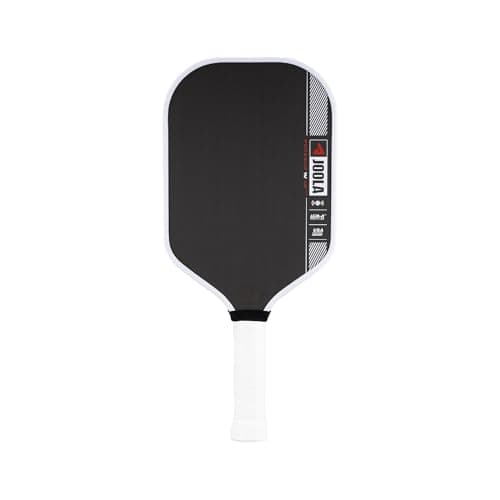
JOOLA's Gen-4 Perseus: thermoformed power and a grippy Charged surface, with the 16mm core adding forgiveness the 14mm gives up. Now the previous generation to the Pro V.
The Perseus Pro IV set the benchmark the rest of the power field chased, and JOOLA's March 2026 Pro V refines that formula rather than replacing it. The 16mm version trades a little raw pop for a larger, more forgiving sweet spot — the sensible pick if you want top-tier power without punishing off-center hits. Charged Surface Technology keeps spin high.
JOOLA arrived from table tennis with a manufacturing background and turned that into the paddle everyone else is measured against. The Perseus Pro IV is the clearest expression of what the brand is good at: thermoformed pace, a genuinely aggressive Charged carbon face, and enough engineering budget to keep the 16mm version forgiving. It is also priced accordingly — this is the top of the market and it charges like it.
- Core
- 16 mm
- Shape
- Hybrid
- Face
- Charged carbon-fiber surface (Tech-Flex)
- Weight
- ~8.0 oz
- Build
- Thermoformed
- Gen
- Pro IV (Gen 4)
Manufacturer-listed as USA Pickleball approved. Approvals and delistings change — verify against the current USAP equipment list before tournament play (checked 2026-07).
Selkirk LUXX Control Air Invikta
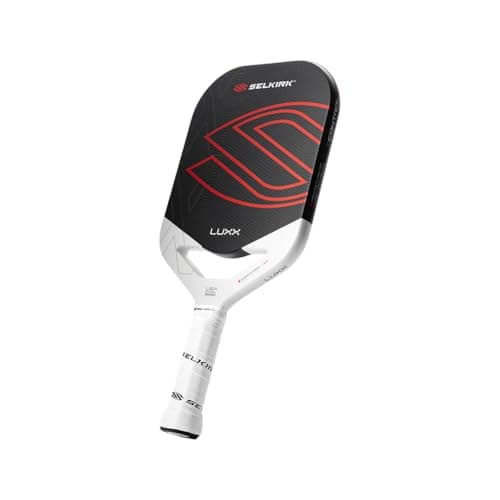
A thick-core, control-first paddle: a plush, soft-hands feel for dinking and resets, not a bomb-thrower.
The LUXX Control leans hard into touch — a thicker core and a muted face make the third-shot drop and the reset the strengths here. If your game wins on placement and hands speed rather than raw pace, this is the control end of the Selkirk line.
Selkirk is the American incumbent, and where it stays ahead is feel rather than pace. The LUXX Control uses a 20mm core — an outlier in a market that standardized on 14 and 16 — with a damped Florek face, and the result is the softest, most absorbent paddle we cover. Selkirk also has the longest warranty record in the sport, which matters more in the thermoformed era than it used to.
- Core
- 20 mm
- Shape
- Elongated
- Face
- Florek carbon face
- Weight
- ~8.0 oz
- Build
- Cold-pressed
- Gen
- LUXX
Manufacturer-listed as USA Pickleball approved. Approvals and delistings change — verify against the current USAP equipment list before tournament play (checked 2026-07).
Six Zero Double Black Diamond 16mm
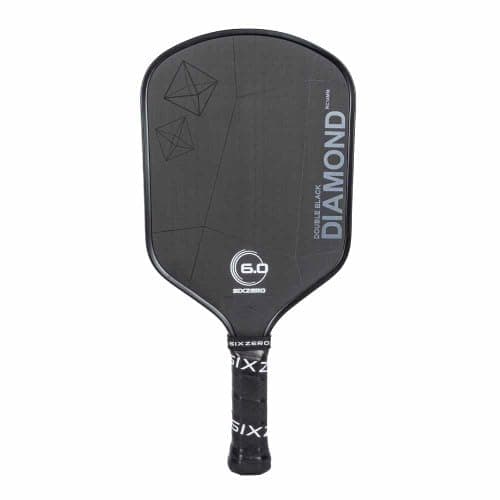
The internet's default 'do-it-all' recommendation: thermoformed power, a raw-carbon spin face, and a famously forgiving sweet spot at a fair price.
The DBD earned its reputation honestly. The 16mm Control build blends thermoformed pop with one of the most forgiving sweet spots in its class, and the raw T700 face grabs the ball for spin. It's the paddle we point undecided upgraders to first.
Six Zero built its reputation on paddles that do not have a weak spot, and the Double Black Diamond is the one that did it: our joint-highest control and forgiveness scores on a thermoformed frame that still drives properly. It sits below the flagship brands on price and above the value tier on refinement, which is a narrow and useful place to be.
- Core
- 16 mm
- Shape
- Hybrid
- Face
- Raw Toray T700 carbon fiber
- Weight
- ~8.0 oz
- Build
- Thermoformed
- Gen
- Control (Gen 2 thermoformed)
Manufacturer-listed as USA Pickleball approved. Approvals and delistings change — verify against the current USAP equipment list before tournament play (checked 2026-07).
Vatic Pro Prism Flash 16mm
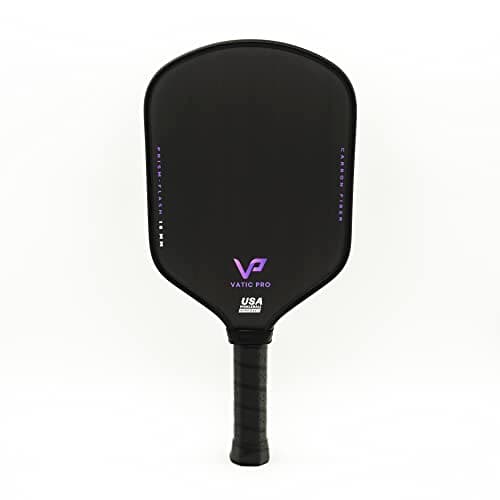
The value-shopper's spin paddle: raw T700 carbon and a thermoformed build that punches well above its price.
Vatic built a reputation on giving you 90% of a $250 paddle for around a hundred bucks. The Prism Flash's raw T700 face grips for spin and the elongated frame adds reach — the paddle we recommend when 'best spin under $100' is the search.
Vatic Pro is the clearest example of what happened to this market: the same headline specification as a flagship — thermoformed build, raw Toray T700 face, 16mm core — at a fraction of the money, because there is no endorsement budget attached. The Prism Flash is our value spin pick. What you give up is refinement rather than specification, and that is a genuine question rather than a rhetorical one.
- Core
- 16 mm
- Shape
- Elongated
- Face
- Raw Toray T700 carbon fiber
- Weight
- ~8.0 oz
- Build
- Thermoformed
- Gen
- Prism
Manufacturer-listed as USA Pickleball approved. Approvals and delistings change — verify against the current USAP equipment list before tournament play (checked 2026-07).
There are now well over a hundred pickleball paddle brands, and the honest position is that most of them are buying from the same handful of factories and differentiating on marketing. What distinguishes the companies worth knowing about is not who they sponsor — it is what they have chosen to be good at, and whether they engineer anything themselves.
This guide covers the brands we actually cover on this site, what each one leads on, and where the money goes.
The flagship tier
JOOLA. A table tennis company with real manufacturing depth, which turned out to be an enormous advantage when pickleball went thermoformed. JOOLA leads on power and on face grip, and it iterates faster than anyone — the Perseus line has moved through generations while competitors released one update. The cost is price and a certain amount of churn. Our reviews: Perseus Pro IV, Perseus Pro V, Scorpeus Pro IV and the older Hyperion.
Selkirk. The established American brand, and the one with the deepest control line. Selkirk paddles tend to be softer and more damped than the market average, and the company has historically stood behind its products better than most. Our reviews: Amped Pro Air Invikta and LUXX Control Invikta.
CRBN. A specialist that does one thing extremely well: refined power. CRBN paddles are stiff and fast without being harsh, which is a harder combination to achieve than it sounds, and the brand has moved into foam cores with the TruFoam line. Our reviews: X Power and TruFoam Barrage.
The specialists
Gearbox. The genuine outlier. Gearbox builds for structural stiffness rather than using the mainstream shell-and-foam recipe, producing a direct, unmediated response that its users are fiercely loyal to and everyone else finds harsh. The lowest forgiveness score in our catalog, entirely on purpose. Its CX line is the only paddle in this market built on a solid ribbed carbon core instead of plastic honeycomb. Our best Gearbox paddles page ranks the whole shelf, and our GBX Power review and CRBN vs Gearbox comparison go deeper on the thermoformed line.
Paddletek. One of the oldest names in the sport, and the most prominent brand to have largely stayed out of the thermoform arms race. Its Bantam line gets flagship-adjacent pop out of a honeycomb core and layered carbon plies — no shell, no foam walls, and none of the failure modes that come with them. Our Bantam TKO-CX review and Paddletek vs JOOLA comparison cover the argument.
Engage. Tunes for a plusher, quieter response rather than maximum energy return, which produces paddles that feel connected rather than explosive. A good fit for players who find modern thermoformed paddles muted or harsh. It also has the hardest-to-shop catalog in the sport — two construction generations sold at once under near-identical Pursuit names — which our best Engage paddles page untangles. See also our Pursuit Pro MX review and Pursuit Pro1 vs Pursuit Alpha Pro.
Six Zero. Sits between the flagships and the value tier and competes on balance. It is also one of the few brands competing on how long a paddle stays good rather than how good it is new — see our Ruby Pro review and our DBD vs Ruby Pro comparison.
The value tier, and why it exists
The most important development in this market over the last three years is that the specification gap closed. Raw Toray T700 carbon, thermoformed construction and 16mm polymer cores are available at a third of flagship money, from brands with no endorsement budget and a direct-to-consumer model.
Vatic Pro is the best known and the most consistent. Ronbus goes cheaper still — our R1 Pulsar review covers the lowest-cost route into a thermoformed carbon paddle we cover. Volair adds foam-injected edge walls at value pricing — our Mach 1 Forza review covers it. 11Six24 sits at the upper end of the tier with Gen-4 foam construction — our Vapor review covers that.
What flagship money still buys is refinement rather than specification: more consistent response across the face, better damping, tighter weight tolerances between units, and — not nothing — a warranty process that answers. Our guide to how much a paddle should cost works through whether that is worth the difference for you.
What the brand does not tell you
Brands are not consistent within themselves. Selkirk makes the softest paddle we cover and also one of the most powerful. JOOLA makes a hybrid flagship and a standard-shape one that plays completely differently. Buying a brand because a friend likes their other paddle is a surprisingly common way to end up with the wrong one.
The specifications that decide how a paddle plays are the same regardless of the logo: core thickness, shape, handle length, face material and where the mass sits. Our core thickness guide, shape guide and handle length guide cover the three that matter most, and our how to choose a paddle guide puts them in order.
Where brand genuinely matters
Three places, and they are not the ones marketing emphasizes.
Quality control. How closely two units of the same model match. Flagship brands hold tighter tolerances; the value tier varies more. This matters if you buy a backup paddle expecting it to play the same.
Warranty support. In an era where paddles can delaminate or crush their cores, a brand that answers a warranty claim is worth real money. Our delamination and core crush guide covers what typically is and is not covered.
Availability and continuity. Established brands keep models in production and stock replacement parts. A paddle you love from a brand that disappears is a paddle you cannot replace.
The bottom line
Shop by specification first and brand second. Once you know you want a 16mm hybrid with a grippy face and a medium handle, the brand question becomes a budget question — and at that point the value tier is a genuinely good answer rather than a compromise.
Where brand earns its premium is in consistency, warranty and staying in business. If you play four times a week and hit hard, those are worth paying for. If you play twice a week, they may not be. Start from our spin, power or control roundups, which are ordered by fit rather than by logo.
Two brands now have their own ranked page rather than a paragraph here. Our best JOOLA pickleball paddles page decodes the Perseus, Scorpeus and Hyperion grid and ranks six models, and our best Six Zero pickleball paddles page covers the Double Black Diamond in both core thicknesses plus the Ruby Pro. They are the two brands our readers cross-shop against each other most often, and they win on different axes.
Brand-by-brand shelves
Seven brands now have a ranked page of their own, which is where to go once you have narrowed to a maker: JOOLA, Six Zero, Selkirk, CRBN, 11Six24, Engage and Gearbox. Each one decodes that brand's own naming scheme — which is usually the real obstacle — and ranks every model we can point at a verified live listing.
What is the best pickleball paddle brand?
There is no single answer, because the brands lead on different things. JOOLA leads on power and face grip, Selkirk on touch and warranty support, CRBN on refined power, Six Zero on balance, and Vatic Pro on value. Shop by the specification you need first, then choose the brand that does it best at your budget.
Are cheap pickleball paddle brands actually worse?
Not on specification. Raw Toray T700 carbon, thermoformed construction and 16mm cores are available at a third of flagship money. What you give up is refinement — consistency of feel across the face, damping quality, tighter weight tolerances between units, and a warranty process that reliably answers.
Which brands do not use thermoformed construction?
Paddletek is the most prominent, building its Bantam line around a polymer honeycomb core with layered carbon and glass-epoxy plies rather than a hot-molded shell. Engage also leans towards cold-pressed, more damped construction. Both avoid the core crush and delamination failure modes specific to thermoformed builds.
Does buying a big brand mean a better warranty?
Usually a more reliable one. Established brands have a warranty process that answers and hold parts and stock for longer, which matters in a market where structural failures are a live topic. Terms vary enough between companies that it is worth checking the specific policy rather than assuming.