Paddletek vs JOOLA
One of these paddles is built the way every flagship is built in 2026. The other deliberately is not — and that turns out to be the interesting part.
Disclosure: Drive Dink earns a commission from qualifying Amazon purchases at no extra cost to you. We accept no free products and no paid placements — commissions never change our picks. How this works.
Almost every paddle in the current power conversation is built the same way: layers hot-molded into a single unibody shell, often with foam packed into the edge walls. Paddletek has largely stayed out of that arms race, and the Bantam TKO-CX is the argument for why.
This comparison is therefore less about which brand is better and more about whether you want a thermoformed paddle at all. Live Amazon prices for both are above. Units we claim to have tested: 0.
| # | Paddle | Best for | Score | Price |
|---|---|---|---|---|
| 1 | 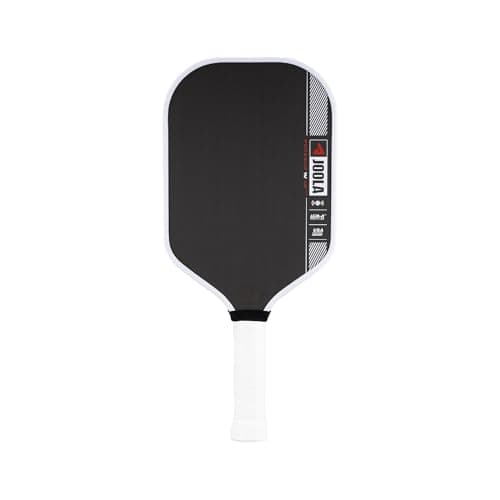 JOOLA Ben Johns Perseus Pro IV 16mm All-court power with a big sweet spot | The benchmark flagship | 8.3 | |
| 2 | 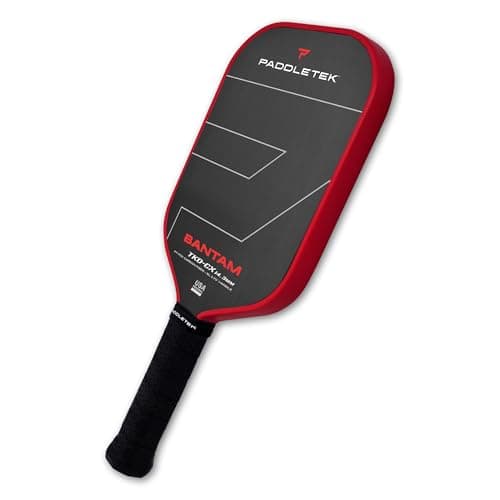 Paddletek Bantam TKO-CX 14.3mm Thermoform-grade pop without a thermoformed frame | The no-shell alternative | 7.8 |
Tap any row to jump to the full write-up. Prices are pulled live from Amazon.
JOOLA Ben Johns Perseus Pro IV 16mm
JOOLA's Gen-4 Perseus: thermoformed power and a grippy Charged surface, with the 16mm core adding forgiveness the 14mm gives up. Now the previous generation to the Pro V.
The Perseus Pro IV set the benchmark the rest of the power field chased, and JOOLA's March 2026 Pro V refines that formula rather than replacing it. The 16mm version trades a little raw pop for a larger, more forgiving sweet spot — the sensible pick if you want top-tier power without punishing off-center hits. Charged Surface Technology keeps spin high.
The Perseus Pro IV is the paddle the power field measures itself against: thermoformed pace, a genuinely aggressive Charged carbon surface, and in the 16mm build a sweet spot wide enough to hit hard without perfect contact. If you want the current state of the art and are comfortable with what a hot-molded shell involves, this is it.
- Core
- 16 mm
- Shape
- Hybrid
- Face
- Charged carbon-fiber surface (Tech-Flex)
- Weight
- ~8.0 oz
- Build
- Thermoformed
- Gen
- Pro IV (Gen 4)
Manufacturer-listed as USA Pickleball approved. Approvals and delistings change — verify against the current USAP equipment list before tournament play (checked 2026-07).
Paddletek Bantam TKO-CX 14.3mm
Paddletek gets flagship pop out of a classic honeycomb core and layered carbon plies — no thermoform shell, and none of the core-crush failure mode that comes with one.
The Bantam TKO-CX is the counter-argument to the thermoformed arms race. A 14.3mm Bantam polymer honeycomb core sits under glass-epoxy plies and an outer layer of PT-700 unidirectional raw carbon, which produces pop and bite comparable to hot-molded rivals from a construction that has no foam-filled walls to crush and no shell to delaminate. Elongated, with a long 5.75in handle.
Paddletek gets comparable pop out of a Bantam polymer honeycomb core, glass-epoxy plies and an outer layer of PT-700 unidirectional raw carbon — no thermoform shell, no foam walls. That means none of the core-crush or delamination failure modes that come with one, and a long 5.75in handle for two-handed backhands. It is stiffer through the face than its spec sheet suggests.
- Core
- 14.3 mm
- Shape
- Elongated
- Face
- PT-700 unidirectional raw carbon fiber over glass-epoxy plies
- Weight
- ~7.9 oz (7.7-8.1 oz range)
- Build
- Cold-pressed
- Gen
- Bantam polymer honeycomb (non-thermoformed)
Manufacturer-listed as USA Pickleball approved. Approvals and delistings change — verify against the current USAP equipment list before tournament play (checked 2026-07).
Side by side
| Spec | JOOLA Perseus Pro IV 16mm | Paddletek Bantam TKO-CX 14.3mm |
|---|---|---|
| Shape | Hybrid | Elongated |
| Core thickness | 16 mm | 14.3 mm |
| Core material | Polymer honeycomb | Bantam polymer honeycomb |
| Face | Charged carbon-fiber surface (Tech-Flex) | PT-700 unidirectional raw carbon over glass-epoxy plies |
| Build | Thermoformed unibody | Cold-pressed, layered |
| Listed weight | ~8.0 oz | ~7.9 oz (7.7-8.1 oz range) |
| Handle | Standard hybrid handle | Long (5.75 in as listed) |
| Our power score | 9 / 10 | 8 / 10 |
| Our spin score | 9 / 10 | 8 / 10 |
| Our control score | 7 / 10 | 8 / 10 |
| Our forgiveness score | 8 / 10 | 7 / 10 |
Thermoformed shell versus layered honeycomb
JOOLA's Perseus is hot-molded as one piece, with the perimeter compressed into a continuous shell. That shell is stiff, and stiffness at the edges is what returns energy to the ball instead of absorbing it into flex. It is the reason modern paddles hit harder than the generation before them. Our thermoformed paddles guide covers the process.
Paddletek gets its pop from the layup instead: a Bantam polymer honeycomb core, a base layer of glass epoxy on each side, and an outer ply of unidirectional PT-700 raw carbon. Stiff plies over a honeycomb core produce a lively face without a molded shell — which is why the TKO-CX hits harder than a spec sheet reading "polymer honeycomb core" would lead you to expect.
The argument nobody makes in the marketing
Thermoformed paddles introduced a set of failure modes that did not exist before them: foam settling in the edge walls, core cells crushing behind the hitting area on hard-hit paddles, and separation between the face and what sits under it. Those are not universal and they are not immediate, but they are real, and they are specific to the construction.
A layered honeycomb paddle with no shell and no foam walls cannot fail in those particular ways. It still wears — the face polishes down like any raw carbon surface, and honeycomb cores soften over years of play — but the structural risks are different in kind. Our guide to delamination and core crush explains what to look and listen for, and when a paddle is worn out covers the checks.
For a heavy hitter who plays several times a week and has already replaced a paddle under warranty, that is a legitimate reason to choose the Paddletek — arguably a better one than any performance number in the table.
Shape and handle length
The Perseus Pro IV is a hybrid: shorter and slightly wider, which keeps more of the face near the sweet spot and makes it quicker to move. The TKO-CX is a genuine elongated frame with a long handle listed at 5.75 inches.
Handle length is the quietly decisive spec here. If you hit a two-handed backhand, a short handle forces your top hand onto the face and compromises the stroke; the TKO-CX has room for both hands with none of that. If you do not, the extra handle is length you are carrying for no benefit. Our handle length guide covers how to work out what you need, and our two-handed backhand picks cover the rest of the field.
Feel and feedback
The two paddles feel different in a way that survives every specification argument. A thermoformed frame delivers a firmer, more unified response — the whole paddle behaves as one object. A layered honeycomb build gives more localized feedback: you feel the face more and the frame less.
Neither is better. It is closer to a preference about how much information you want back from the paddle, and it is the main reason long-time Paddletek players tend to stay with the brand. Our how to choose a paddle guide works through the properties that are genuinely worth prioritizing.
Who should buy which
Buy the JOOLA Perseus Pro IV if you want maximum pace and grip, you play doubles where the counter-attack decides points, or you simply want the current benchmark. It leads our best power paddles roundup, and our 14mm vs 16mm comparison covers which version to take.
Buy the Paddletek Bantam TKO-CX if you hit a two-handed backhand, you want a long handle without a thermoformed shell, or durability has burned you before. Our Bantam TKO-CX review goes into the layup in more detail.
Verdict
On raw performance the Perseus wins: a point more power, a point more spin, and a wider sweet spot in the 16mm build. If you are shopping purely on what the paddle does when it is new, take the JOOLA.
The Paddletek is the more interesting purchase for a specific player — the two-handed backhand hitter, the heavy hitter who has watched a thermoformed paddle go soft, the person who wants flagship-adjacent pop from a construction with a longer track record. That is a narrower case, but for the player it fits, it is a better paddle than the scores make it look.
Is the Paddletek Bantam TKO-CX thermoformed?
No. It uses a Bantam polymer honeycomb core with a base layer of glass epoxy on each side and an outer ply of PT-700 unidirectional raw carbon fiber. There is no hot-molded unibody shell and no foam in the edge walls, which is why it avoids the core-crush and delamination failure modes associated with thermoformed construction.
Which hits harder, the Perseus or the TKO-CX?
The Perseus, by a point on our scoring. Its thermoformed shell returns more energy to the ball, particularly on drives. The TKO-CX is closer than its construction suggests because stiff carbon and glass-epoxy plies over a honeycomb core produce a lively face, but the flagship still has the edge.
Does Paddletek's construction actually last longer?
It avoids the specific structural failures that come with a molded shell and foam edge walls. It is not immune to wear — the raw carbon face polishes down like any other, and honeycomb cores soften over years of hard play — but the risks are different in kind, which matters most to heavy hitters who play several times a week.
Which is better for a two-handed backhand?
The TKO-CX, comfortably. Its handle is listed at 5.75 inches, which leaves room for both hands without your top hand riding onto the face. The Perseus Pro IV's hybrid shape uses a shorter handle, and no amount of paddle quality compensates for a handle that does not fit the stroke.