Best Carbon Fiber Pickleball Paddles
Almost every serious paddle has a carbon face now, so the word stopped being a recommendation. This page ranks on what kind of carbon, how it is finished, how long the grit lasts and what sits underneath it.
Disclosure: Drive Dink earns a commission from qualifying Amazon purchases at no extra cost to you. We accept no free products and no paid placements — commissions never change our picks. How this works.
Three years ago "carbon fiber" on a listing told you something. Today it tells you almost nothing, because nearly every paddle a serious player would consider has a carbon face — the fiberglass era is over above the starter tier. What still separates one carbon paddle from another is the kind of carbon, whether the weave is left raw or treated, how long the grit survives, and what the face is bonded to. This page ranks on those four things. Our carbon fiber vs fiberglass guide explains why the material matters at all; our main spin roundup covers the wider category; this page picks the carbon.
Units we claim to have tested: 0. Picks are ranked on manufacturer-published face and construction specifications and on our editorial scores, compiled from those specs and the consistent reviewer record — including the measured spin data independent labs publish. Live Amazon prices render below and move daily.
| # | Paddle | Best for | Score | Price |
|---|---|---|---|---|
| 1 | 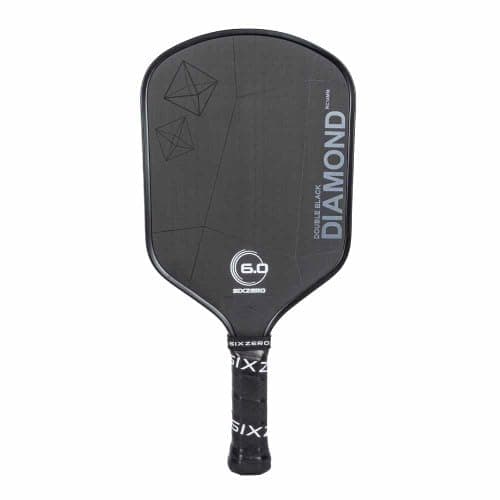 Six Zero Double Black Diamond 16mm All-court value with a huge sweet spot | Best carbon fiber paddle overall | 8.5 | $180.00 · View on Amazon #adPrice as of September 17, 2026 |
| 2 | 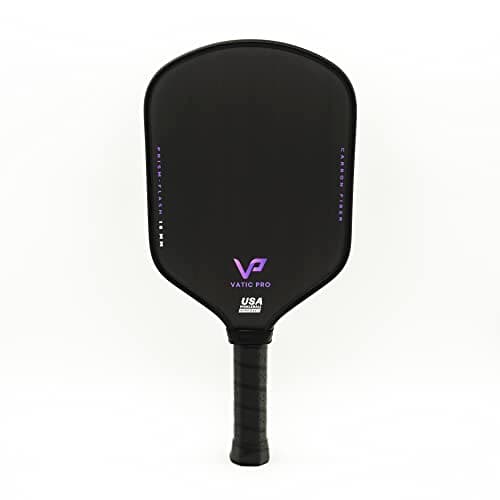 Vatic Pro Prism Flash 16mm The value spin champion (best under ~$110) | Best carbon fiber under $100 | 8.0 | $99.99 · View on Amazon #adPrice as of September 17, 2026 |
| 3 | 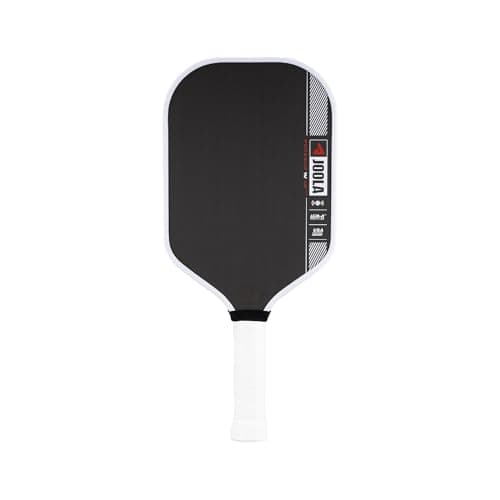 JOOLA Ben Johns Perseus Pro IV 16mm All-court power with a big sweet spot | Best treated carbon surface | 8.3 | |
| 4 | 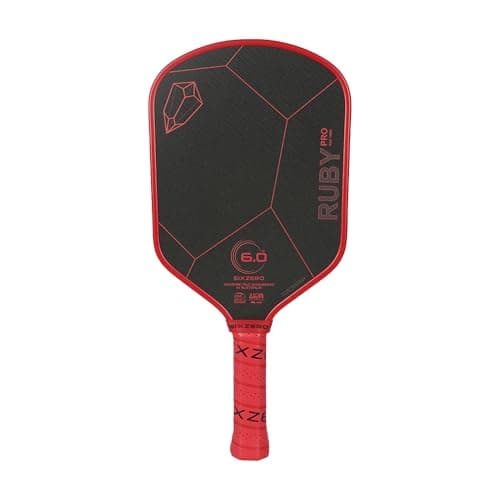 Six Zero Ruby Pro 14mm Spin durability (grit that lasts) | Most durable carbon face | 7.8 | $225.00 · View on Amazon #adPrice as of September 17, 2026 |
| 5 | 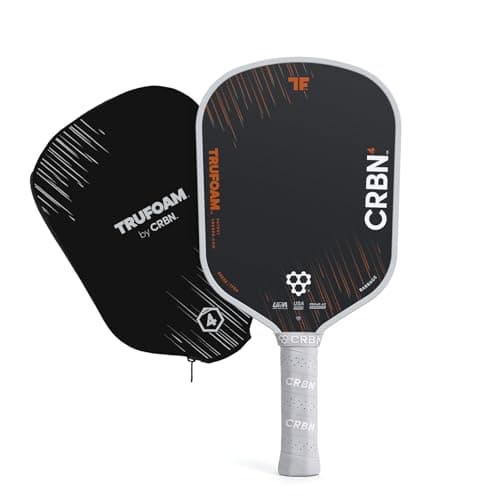 CRBN TruFoam Barrage Newest-gen foam power + stability | Best carbon face over a foam core | 8.3 | $279.99 · View on Amazon #adPrice as of September 17, 2026 |
| 6 | 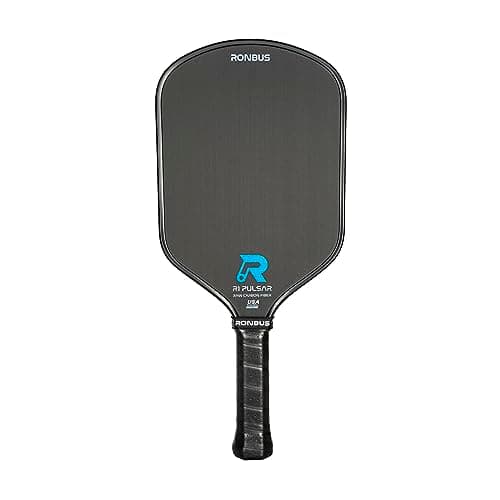 Ronbus R1 Pulsar Lowest-cost entry to thermoformed carbon | Cheapest raw carbon face we cover | 7.5 | $39.99 · View on Amazon #adPrice as of September 17, 2026 |
Tap any row to jump to the full write-up. Prices are pulled live from Amazon.
Six Zero Double Black Diamond 16mm
The internet's default 'do-it-all' recommendation: thermoformed power, a raw-carbon spin face, and a famously forgiving sweet spot at a fair price.
The DBD earned its reputation honestly. The 16mm Control build blends thermoformed pop with one of the most forgiving sweet spots in its class, and the raw T700 face grabs the ball for spin. It's the paddle we point undecided upgraders to first.
The raw Toray T700 face that made raw carbon the standard. The Double Black Diamond's 16mm Control build exposes the natural weave of a genuine T700 sheet over a thermoformed unibody, and the result is an 8 on our spin axis paired with a 9 on control and forgiveness — the best score spread we publish. It is the carbon paddle we point undecided upgraders to first, because the face grips, the core forgives and the price sits in the middle of the market. The con is the one every raw face carries: the texture that grabs the ball is a consumable, and a heavy topspin player who plays outdoors will polish it smooth faster than the durable-face pick below.
- Core
- 16 mm
- Shape
- Elongated
- Face
- Raw Toray T700 carbon fiber
- Weight
- ~8.0 oz
- Build
- Thermoformed
- Gen
- Control (Gen 2 thermoformed)
Manufacturer-listed as USA Pickleball approved. Approvals and delistings change — verify against the current USAP equipment list before tournament play (checked 2026-07).
Vatic Pro Prism Flash 16mm
The value-shopper's spin paddle: raw T700 carbon and a thermoformed build that punches well above its price.
Vatic built a reputation on giving you 90% of a $250 paddle for around a hundred bucks. The Prism Flash's raw T700 face grips for spin and the elongated frame adds reach — the paddle we recommend when 'best spin under $100' is the search.
The paddle that proved a raw T700 carbon face does not need flagship money. The Prism Flash is a genuine thermoformed unibody with a raw Toray T700 face and a 16mm core, and our spin score — a 9 — matches the most expensive paddles on this page. It is the answer to the most-searched version of this query, and the paddle we recommend when 'best carbon fiber paddle under $100' is the actual question. The cons are value-tier refinement — the feel is less consistent across the face than the Six Zero and JOOLA builds — and the build variance that has historically shown up at this money, so check the edges on arrival.
- Core
- 16 mm
- Shape
- Elongated
- Face
- Raw Toray T700 carbon fiber
- Weight
- ~8.0 oz
- Build
- Thermoformed
- Gen
- Prism
Manufacturer-listed as USA Pickleball approved. Approvals and delistings change — verify against the current USAP equipment list before tournament play (checked 2026-07).
JOOLA Ben Johns Perseus Pro IV 16mm
JOOLA's Gen-4 Perseus: thermoformed power and a grippy Charged surface, with the 16mm core adding forgiveness the 14mm gives up. Now the previous generation to the Pro V.
The Perseus Pro IV set the benchmark the rest of the power field chased, and JOOLA's March 2026 Pro V refines that formula rather than replacing it. The 16mm version trades a little raw pop for a larger, more forgiving sweet spot — the sensible pick if you want top-tier power without punishing off-center hits. Charged Surface Technology keeps spin high.
Not every carbon face is raw, and JOOLA's Charged carbon-fiber surface is the strongest argument for the alternative. The Perseus Pro IV 16mm scores a 9 on spin from a treated carbon face rather than an exposed weave, paired with a 9 on power from the thermoformed hybrid frame beneath it. It is the carbon paddle for a player whose weakness is pace as much as bite. The con is that it is now the previous generation — JOOLA moved the Pro V to a raw carbon texture, which tells you where the brand thinks the category has landed — and the live price on the buy button will say whether that makes the Pro IV a bargain.
- Core
- 16 mm
- Shape
- Hybrid
- Face
- Charged carbon-fiber surface (Tech-Flex)
- Weight
- ~8.0 oz
- Build
- Thermoformed
- Gen
- Pro IV (Gen 4)
Manufacturer-listed as USA Pickleball approved. Approvals and delistings change — verify against the current USAP equipment list before tournament play (checked 2026-07).
Six Zero Ruby Pro 14mm
Six Zero's answer to the industry's biggest spin complaint — a tougher face built to hold its grit longer than typical raw carbon.
Raw-carbon spin is great until the grit wears smooth. The Ruby's abrasion-resistant face is designed to keep biting longer, which matters most to the high-volume player who replaces paddles when the spin dies. Premium price, but the durability angle is real.
The paddle built around the raw-carbon problem. Every exposed weave polishes smooth with play, and the Ruby Pro's abrasion-resistant face is Six Zero's answer: a surface designed to hold its grit longer than typical raw carbon, on a thermoformed 14mm elongated frame that earns our top spin score of 9. It is the carbon paddle for the high-volume topspin player who currently replaces paddles when the bite dies. The cons are premium money and a 14mm core with a 7 on control and forgiveness — the durable face does nothing for a miss, and this is a narrower player's paddle than the DBD above it.
- Core
- 14 mm
- Shape
- Elongated
- Face
- Diamond-tough abrasion-resistant face
- Weight
- ~8.0 oz
- Build
- Thermoformed
- Gen
- Ruby
Manufacturer-listed as USA Pickleball approved. Approvals and delistings change — verify against the current USAP equipment list before tournament play (checked 2026-07).
CRBN TruFoam Barrage
A Gen-4 foam-wall paddle: the foam core widens the sweet spot and adds stability on off-center hits without killing power.
Foam-injected 'Gen 4' construction is where the category is heading — the foam broadens the sweet spot and calms twisting on mishits while keeping the power high. The Barrage is CRBN's take, and it's one of the more polished foam builds you can buy.
What sits under the carbon matters as much as the carbon. The Barrage puts a raw carbon face over a foam-injected core rather than a honeycomb with foam walls, and the payoff is stability: mishits twist less and the effective sweet spot grows, which is why a 14mm elongated frame scores an 8 on forgiveness and control here. Spin is an 8 — the face is a genuine raw carbon surface — and power is a 9. It is the carbon paddle for a player who wants the newest construction beneath the weave. The con is that it is the most expensive paddle on the page, and a 14mm core that rewards clean contact more than it forgives sloppy contact.
- Core
- 14 mm
- Shape
- Elongated
- Face
- Raw carbon face over a foam-injected core
- Weight
- ~8.0 oz
- Build
- Thermoformed
- Gen
- Gen 4 (foam)
Manufacturer-listed as USA Pickleball approved. Approvals and delistings change — verify against the current USAP equipment list before tournament play (checked 2026-07).
Ronbus R1 Pulsar
The budget thermoformed pick: raw T700 carbon and a real thermoformed build at a price that undercuts almost everyone.
Ronbus is the value-brand's value brand. The R1 Pulsar gets you a raw-carbon, thermoformed paddle for the least money of anything we cover — a smart first 'real' upgrade from a big-box starter paddle before you commit to a $200 frame.
The lowest-cost way to find out what a raw carbon face does for your game. The R1 Pulsar puts a raw Toray T700 sheet on a genuine thermoformed 16mm elongated frame for the least money of anything we cover, and our scores — an 8 on spin and power — say the grip is real rather than nominal. It is the sensible first carbon paddle for a player upgrading from a fiberglass or composite big-box face. The cons are 7s on control and forgiveness — it is the least refined paddle on the page — and thinner documentation than the brands above it, which is what the price gap buys.
- Core
- 16 mm
- Shape
- Elongated
- Face
- Raw Toray T700 carbon fiber
- Weight
- ~8.0 oz
- Build
- Thermoformed
- Gen
- Pulsar
Manufacturer-listed as USA Pickleball approved. Approvals and delistings change — verify against the current USAP equipment list before tournament play (checked 2026-07).
Why carbon faces took over
A paddle face does two jobs: it returns energy to the ball, and it grips the ball for long enough that your swing sets it spinning. Fiberglass is springier and returns more energy at the cost of a narrower, sharper sweet spot; carbon is stiffer, spreads energy across a wider area, and — crucially — can be left unpainted so the natural texture of the weave does the gripping. That last property is why carbon won. Once thermoformed shells took over the power job, the face was free to do the spin job, and a raw carbon weave does it better than any paint or grit coating. Our how paddle spin works guide explains the mechanism.
The four things this page ranks on
1. Which carbon.You will see T700 attached to most of these listings. It is a Toray-designated grade of carbon fiber, and a brand quoting it is naming the material it actually bought rather than writing "carbon". Four of the six picks specify raw Toray T700. It is a genuine signal of a real carbon face, but not a spin rating on its own — our T700 carbon fiber guide covers what the grade does and does not tell you.
2. Raw or treated.A raw face exposes the weave; a treated face — JOOLA's Charged surface is the best-known — applies an engineered finish over the carbon. Both can score a 9 on our spin axis, and the Perseus is on this list to make that point. The difference is feel and, arguably, wear pattern rather than peak grip.
3. How long the grit lasts. This is the criterion the listings never mention. The same abrasion that grabs the ball polishes the peaks of the weave down over time, and a raw face that has gone glassy spins measurably less than it did new. The Ruby Pro is on the list because it is built specifically around that problem; our grit durability guide treats it as the real cost of a carbon paddle.
4. What is under it. A carbon face over a cold-pressed honeycomb, over a foam-walled thermoformed shell and over a foam-injected core are three different paddles. Five picks here are foam-wall thermoformed builds; the Barrage is a foam-core build. Our thermoformed paddles guide and best thermoformed paddles page rank on the construction alone.
Who should buy which
You want the safe, complete carbon paddle: the Six Zero Double Black Diamond 16mm. Our full review and the 14mm vs 16mm comparison cover the two cores.
You want a real raw carbon face for under $100: the Vatic Pro Prism Flash. Our Prism Flash review and the best spin paddles under $100 page compare the value tier, and the Six Zero vs Vatic Pro comparison puts it against the DBD directly.
You want spin and a top power score: the JOOLA Perseus Pro IV 16mm — our Perseus review and best spin + power paddles page are the reads.
You hit heavy topspin and your faces go smooth: the Six Zero Ruby Pro. Our Ruby Pro review and the DBD vs Ruby Pro comparison make the durability case.
You want the newest construction under the carbon: the CRBN TruFoam Barrage — see our Barrage review.
You are upgrading from fiberglass on a tight budget: the Ronbus R1 Pulsar. Our Vatic vs Ronbus comparison explains what the extra money for the Prism Flash buys.
Carbon paddles we cover but did not rank
The JOOLA Perseus Pro V moved the Perseus to a raw carbon texture and carries the same 9 on spin as the Pro IV at a higher price; our Pro IV vs Pro V comparison finds the difference is feel rather than specification, so the Pro IV takes the slot on price. The Volair Mach 1 Forza is a raw T700 face on a foam-edge frame at budget money with a 9 on spin, and it lost the value slot only on its listed 8.2oz swing weight. The JOOLA Hyperionruns the Carbon Friction Surface that made JOOLA's name — a textured carbon face on a cold-pressed frame from the generation before thermoforming, now sold well below flagship money. The Paddletek Bantam TKO-CX layers PT-700 unidirectional raw carbon over glass-epoxy plies — a genuinely different carbon construction with a durability argument, on our most durable paddles page. And every paddle on our highest-spin paddles list is carbon-faced; that page ranks on measured spin data alone.
Keeping a carbon face gripping
Two habits move the grit's lifespan more than anything on a spec sheet. First, clean the face: the valleys of a raw weave fill with ball residue, court dust and skin oil, and a face that feels smooth is often just dirty — our paddle cleaning guide covers the method. Second, keep the edge off the court: digging a paddle into the surface on low balls does concentrated damage in seconds that normal play takes weeks to do. When the grit is genuinely gone, our worn-out paddle guide explains how to tell, and how much a paddle should cost covers what to spend when it is.
How we picked
We started from the face — every pick is a manufacturer-stated carbon fiber hitting surface — and then ranked on the four criteria above so the list covers a raw T700 all-rounder, a sub-$100 raw face, a treated surface, a durable weave, a foam-core build and a budget entry rather than six near-identical raw-carbon elongated frames. Scores are our editorial assessment from the makers' published specifications and the consistent reviewer record, including independent measurement where it exists; we do not run a lab and we do not claim to. Every listing was confirmed live and in stock on September 17, 2026, and prices are pulled live rather than typed in. The full approach is on our methodology page, and how paddles are tested explains what a measured spin RPM figure means.
The bottom line
Stop shopping for "carbon fiber" and start shopping for the kind. The DBD 16mm is the raw T700 reference; the Prism Flash is the same grade of face at a fraction of flagship money; the Perseus Pro IV is the case for a treated surface; the Ruby Pro is the face that lasts; the Barrage is the newest thing under the carbon; and the R1 Pulsar is the cheapest honest way in. Whichever you choose, clean it — most of the grip people think they have lost is sitting in the weave.
What is the best carbon fiber pickleball paddle?
For most upgrading players, the Six Zero Double Black Diamond 16mm: a raw Toray T700 face over a thermoformed frame with the best score spread we publish. If the budget is under $100, the Vatic Pro Prism Flash puts the same grade of raw carbon on a real thermoformed build and matches the flagships on our spin score.
What does T700 carbon fiber mean on a pickleball paddle?
T700 is a grade of carbon fiber designated by the manufacturer Toray. A brand quoting it is naming the material it actually used rather than just saying carbon. It signals a genuine carbon face, but it is not a spin rating on its own — how the sheet is finished and how coarse the weave is left matter as much as the grade.
Is raw carbon fiber better than a treated carbon surface?
Not automatically. A raw face exposes the natural weave to grip the ball; a treated surface like JOOLA's Charged carbon applies an engineered finish over it. Both score at the top of our spin range. The difference is feel and wear pattern rather than peak grip, and JOOLA moving its newest Perseus to a raw texture tells you where the market has landed.
Do carbon fiber paddles lose spin over time?
Yes. The same abrasion that grips the ball polishes the peaks of the weave down with play, and a raw face that has gone glassy spins measurably less than it did new. Outdoor play, heavy topspin and scraping the court accelerate it. Cleaning the face restores some of the grip people think they have lost; an abrasion-resistant face like the Six Zero Ruby Pro is built to delay the rest.
Is a carbon fiber paddle worth it over fiberglass?
For spin and forgiveness, yes, and the price gap has almost closed — the Ronbus R1 Pulsar and Vatic Pro Prism Flash put real raw carbon faces at value money. Fiberglass still returns slightly more energy off the face, which some power-first players like, but above the starter tier nearly every paddle worth buying is carbon-faced now.
- Six Zero — Double Black Diamond and Ruby Pro face specifications
- Vatic Pro — Prism Flash raw T700 face specifications
- JOOLA — Perseus Pro IV Charged surface and Pro V specifications
- CRBN — TruFoam Barrage product information
- Ronbus — R1 Pulsar specifications
- Toray — T700S carbon fiber data sheet
- Pickleball Studio — measured spin RPM data