Most Durable Pickleball Paddles
A paddle dies in one of three ways, and no single paddle is the most durable against all three. This page names the failure mode first and the paddle built against it second.
Disclosure: Drive Dink earns a commission from qualifying Amazon purchases at no extra cost to you. We accept no free products and no paid placements — commissions never change our picks. How this works.
"Most durable" is a question with three answers, because a paddle can die in three different ways, and the construction that resists one of them does nothing for the others. Buy a face built to hold its grit and the core can still crush. Buy a paddle with no shell to delaminate and the face still wears smooth. So this page does not hand you one paddle. It names each failure mode, explains what construction resists it, and picks the paddle in our registry that is built against it — three picks, one per way of dying. Our worn-out paddle guide covers how to tell which one has happened to the paddle you already own.
Units we claim to have tested: 0, and we have not run any of these paddles to failure.Every durability claim below is a construction argument read from the makers' published build and the consistent reviewer record, not a lifespan we measured. Live Amazon prices render below and move daily.
| # | Paddle | Best for | Score | Price |
|---|---|---|---|---|
| 1 | 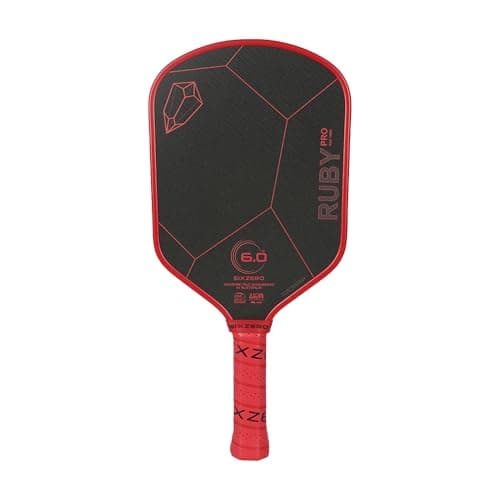 Six Zero Ruby Pro 14mm Spin durability (grit that lasts) | Most durable face (grit that lasts) | 7.8 | $225.00 · View on Amazon #adPrice as of September 17, 2026 |
| 2 | 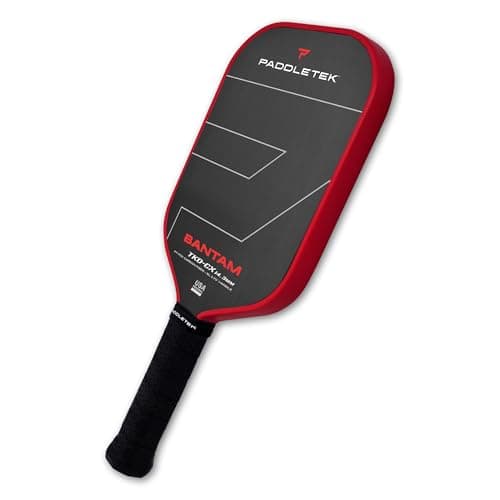 Paddletek Bantam TKO-CX 14.3mm Thermoform-grade pop without a thermoformed frame | Most durable construction (no shell to fail) | 7.8 | |
| 3 | 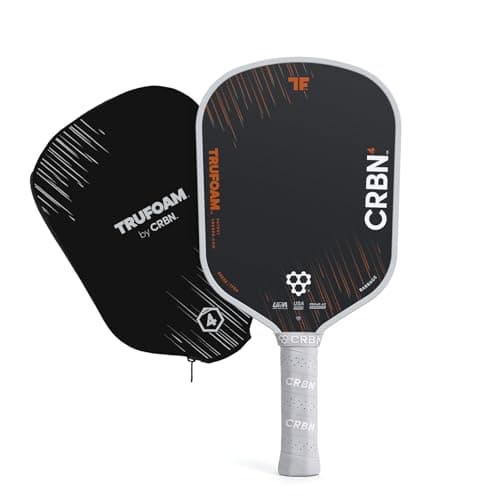 CRBN TruFoam Barrage Newest-gen foam power + stability | Most durable thermoformed build (foam core) | 8.3 | $279.99 · View on Amazon #adPrice as of September 17, 2026 |
Tap any row to jump to the full write-up. Prices are pulled live from Amazon.
Six Zero Ruby Pro 14mm
Six Zero's answer to the industry's biggest spin complaint — a tougher face built to hold its grit longer than typical raw carbon.
Raw-carbon spin is great until the grit wears smooth. The Ruby's abrasion-resistant face is designed to keep biting longer, which matters most to the high-volume player who replaces paddles when the spin dies. Premium price, but the durability angle is real.
The most common way a modern paddle dies is that its raw carbon face polishes smooth, and the Ruby Pro is the paddle built specifically against that. Six Zero pairs a thermoformed 14mm elongated frame with an abrasion-resistant face designed to hold its grit longer than typical raw carbon, and it still earns our top spin score of 9 — the durability argument does not cost bite on day one. It is the pick for a high-volume topspin player who currently replaces paddles when the spin dies. The cons are premium money and a 14mm core with a 7 on control and forgiveness; the durable face does nothing for a miss, and this is a narrower player's paddle than the DBD it shares a brand with.
- Core
- 14 mm
- Shape
- Elongated
- Face
- Diamond-tough abrasion-resistant face
- Weight
- ~8.0 oz
- Build
- Thermoformed
- Gen
- Ruby
Manufacturer-listed as USA Pickleball approved. Approvals and delistings change — verify against the current USAP equipment list before tournament play (checked 2026-07).
Paddletek Bantam TKO-CX 14.3mm
Paddletek gets flagship pop out of a classic honeycomb core and layered carbon plies — no thermoform shell, and none of the core-crush failure mode that comes with one.
The Bantam TKO-CX is the counter-argument to the thermoformed arms race. A 14.3mm Bantam polymer honeycomb core sits under glass-epoxy plies and an outer layer of PT-700 unidirectional raw carbon, which produces pop and bite comparable to hot-molded rivals from a construction that has no foam-filled walls to crush and no shell to delaminate. Elongated, with a long 5.75in handle.
The counter-argument to the thermoformed arms race, and the pick for the two failure modes hot-molding introduced. The Bantam TKO-CX gets flagship-grade pop from a classic 14.3mm Bantam polymer honeycomb core under glass-epoxy plies and an outer layer of PT-700 unidirectional raw carbon — a construction with no foam-filled walls to crush and no unibody shell to delaminate. Paddletek is one of the oldest names in the sport and the most prominent brand to have largely stayed out of thermoforming, which is a track record rather than a promise. Our scores are an 8 on spin, power and control with a 7 on forgiveness. The cons are that a raw carbon face still wears like any other, and an elongated 14.3mm frame with a long 5.75in handle is not the most forgiving outline we cover.
- Core
- 14.3 mm
- Shape
- Elongated
- Face
- PT-700 unidirectional raw carbon fiber over glass-epoxy plies
- Weight
- ~7.9 oz (7.7-8.1 oz range)
- Build
- Cold-pressed
- Gen
- Bantam polymer honeycomb (non-thermoformed)
Manufacturer-listed as USA Pickleball approved. Approvals and delistings change — verify against the current USAP equipment list before tournament play (checked 2026-07).
CRBN TruFoam Barrage
A Gen-4 foam-wall paddle: the foam core widens the sweet spot and adds stability on off-center hits without killing power.
Foam-injected 'Gen 4' construction is where the category is heading — the foam broadens the sweet spot and calms twisting on mishits while keeping the power high. The Barrage is CRBN's take, and it's one of the more polished foam builds you can buy.
If you want a thermoformed paddle — and most upgrading players do — the durable version of the construction is the one with the most foam in it. Early thermoformed builds put foam only in the perimeter walls, and edge-foam cracking alongside core crush is the failure our worn-out paddle guide describes as the second way a paddle dies. The Barrage is built around a foam-injected core under a raw carbon face, which is the construction our foam guide describes as more robust than those early builds, and it scores a 9 on power with an 8 on spin, control and forgiveness. The cons are that it is the most expensive paddle on the page, that a raw face still wears, and that 'more robust' is a construction argument rather than a guarantee — thermoformed execution still varies.
- Core
- 14 mm
- Shape
- Elongated
- Face
- Raw carbon face over a foam-injected core
- Weight
- ~8.0 oz
- Build
- Thermoformed
- Gen
- Gen 4 (foam)
Manufacturer-listed as USA Pickleball approved. Approvals and delistings change — verify against the current USAP equipment list before tournament play (checked 2026-07).
How paddles actually die
1. The face polishes smooth. By far the most common. A raw or textured carbon surface grips the ball because of a microscopic texture, and every spin shot drags an abrasive plastic ball across the peaks of that texture under load. Peaks come down, valleys fill with residue, the profile flattens, and a paddle that looks fine simply stops making the ball rotate. Outdoor play, heavy topspin and scraping the court accelerate it. Our grit durability guide covers the mechanism and a cost-per-session way to think about it.
2. The core goes dead. Honeycomb cores compress thousands of times a session, and cells eventually crush and stop springing back — the paddle feels muted and you swing harder for the same result. On thermoformed paddles this can happen alongside the foam in the perimeter walls cracking, which produces the same symptom. Our delamination and core crush guide explains why the hot-molded era brought this on.
3. Something delaminates. The face separates from the core or the edge lifts, and the paddle goes hollow and rattly, often with a soft or springy patch under your thumb. This is the failure that is also a rules problem: a delaminated paddle can play unpredictably hot and is non-compliant equipment in sanctioned play.
What construction resists each one
Against face wear: an engineered abrasion-resistant surface rather than a plain raw weave. Only one paddle we cover is built specifically around this, and it is the first pick. Cleaning the face regularly does more than most people expect, because the valleys filling with residue is half of the flattening.
Against core crush and delamination:either a construction that has neither foam walls nor a hot-molded shell — the classic honeycomb-and-plies build that Paddletek stayed with — or, if you want thermoformed, the newest foam-core version of it, which replaces the cracking-prone hollow perimeter with structural foam. The second and third picks take those two routes. A thick cold-pressed core is a third route: Selkirk's LUXX Control Air has no thermoformed shell and a 20mm core, and it is the durable-build answer for a touch player who does not want a 14mm elongated frame.
Against nothing: price. A flagship paddle wears its face at the same rate as a value one with the same surface, and thermoformed execution varies more at the value tier — which is why two of the three picks here are premium and why our paddle price guide argues durability is one of the few things flagship money reliably buys.
The value-tier warning
We recommend the value tier enthusiastically on our spin paddles under $100 page, and we would not send a durability-first buyer there. Value-tier thermoformed paddles are where build-quality variance has historically shown up — a face that lifts at the edge, a hollow spot near the throat — and the defenses are the ones our delamination guide lists: buy from a brand with a real warranty, inspect the paddle on arrival with the two-minute tap-and-press check, and know that a paddle which develops a dead spot has become non-compliant equipment, not just a worse paddle. None of that makes a value paddle a bad buy. It makes it the wrong buy for this page.
Who should buy which
Your paddles die when the spin dies, and you play a lot: the Six Zero Ruby Pro. Our Ruby Pro review and the DBD vs Ruby Pro comparison make the case in full.
You have had a thermoformed paddle crack, crush or delaminate and do not want another: the Paddletek Bantam TKO-CX. Our TKO-CX review and the Paddletek vs JOOLA comparison cover what you give up against a hot-molded flagship, which is less than you would think.
You want the thermoformed feel with the most robust version of the construction: the CRBN TruFoam Barrage. Read our Barrage review and our best thermoformed paddles page, which ranks the field on foam placement.
The habits that outlast any paddle
Whichever pick you choose, the way you treat it moves its lifespan more than the spec sheet does. Clean the face — a face that feels smooth is often just dirty, and our paddle cleaning guide covers the method. Keep the edge off the court: digging a paddle into the surface on a low ball does concentrated damage in seconds. Do not leave it in a hot car; heat is bad for the whole construction and bakes contamination into the weave. Check the edge guard — or the bare rim on an edgeless paddle — after any hard knock, as our edge guard guide explains. And rotate two paddles if you play daily; the face wears per contact, so two paddles each last roughly twice as long, and you always have a legal spare.
How we picked
We started from the three failure modes in our worn-out paddle guide, identified the construction that resists each one, and picked the paddle in our registry whose manufacturer-published build most directly embodies it. Scores are our editorial assessment from those published specifications and the consistent reviewer record; we have not run a lab and we have not run any paddle to failure, so nothing here is a measured lifespan. Every listing was confirmed live and in stock on September 17, 2026, and prices are pulled live rather than typed in. The full approach is on our methodology page.
The bottom line
Decide which way your last paddle died, then buy against it. The Ruby Pro if the face went; the Bantam TKO-CX if the shell or core went and you want no shell at all; the Barrage if the core went and you want thermoformed anyway. And whichever you buy, clean it, keep it off the court surface and out of the car — the paddle that lasts longest is usually the one that was looked after.
What is the most durable pickleball paddle?
There is no single answer, because paddles fail in three different ways. For a face that holds its grit longest, the Six Zero Ruby Pro's abrasion-resistant surface. For a construction with no thermoformed shell to delaminate and no foam walls to crush, the Paddletek Bantam TKO-CX. For the most robust thermoformed build, the foam-core CRBN TruFoam Barrage.
How long should a pickleball paddle last?
It depends far more on frequency, surface and style than on the paddle. A daily outdoor topspin player can polish a raw carbon face smooth in months; a weekly indoor flat hitter can get years from the same paddle. Cores and shells fail on a longer timescale but less predictably. Our worn-out paddle guide has a five-minute check to tell which has happened.
Are thermoformed paddles less durable?
They introduced two failure modes cold-pressed paddles largely did not have — foam-wall cracking with core crush, and shell delamination — and the first wave earned a reputation for both. The construction has matured and current foam-core builds are more robust, but execution still varies, especially at the value tier. A classic honeycomb-and-plies build like Paddletek's avoids those two modes entirely.
Which pickleball paddle surface lasts the longest?
An engineered abrasion-resistant face outlasts a plain raw carbon weave, which is the Six Zero Ruby Pro's whole argument. Every exposed weave polishes smooth with play; the Ruby Pro is designed to delay that. Regular cleaning matters too, because residue filling the valleys of the texture is half of what makes a face feel smooth.
Does a more expensive paddle last longer?
Partly. A flagship face wears at the same rate as a value face with the same surface, so price does nothing for grit. But thermoformed build quality varies more at the value tier, and durability is one of the few things flagship money reliably buys. If you are shopping for durability specifically, the mid-to-premium tier is where to look.
- Six Zero — Ruby Pro abrasion-resistant face information
- Paddletek — Bantam TKO-CX construction and specifications
- CRBN — TruFoam Barrage product information
- Selkirk — LUXX Control Air specifications
- USA Pickleball — equipment standards (paddle surface and delamination rules)
- Pickleball Studio — measured spin data and wear observations