JOOLA vs Vatic Pro: Is the Flagship Premium Real?
The brand that sets the flagship price against the brand that undercuts it. On our four axes the scores are identical — so this page is about what the gap actually buys, and about how much the gap moves.
Disclosure: Drive Dink earns a commission from qualifying Amazon purchases at no extra cost to you. We accept no free products and no paid placements — commissions never change our picks. How this works.
Verdict first: buy the JOOLA Perseus Pro IV 16mm if you want the paddle with the known track record, the published warranty and the widest circulation, and the price is not what is stopping you. Buy the Vatic Pro V-Sol Pro V7 16mmif it is — on our four axes the two score identically, and Vatic charges less. How much less is the part to check rather than assume: the Pro IV is the superseded generation now that the Pro V exists, so its discount moves and the two buy buttons on this page are the only numbers we will quote. Whatever the gap is on the day you read this, what it buys is certainty, not performance. And if you want Vatic's pricing without buying an unproven core, the Prism Flash is the third paddle on this page and the one we point most value shoppers to.
Both of these brands are honestly represented by the paddle we chose for them. JOOLA is the flagship maker: a signature athlete, a numbered generation that keeps moving on, a full certification and warranty trail, and a price that assumes you want all of it. Vatic Pro built its reputation on giving upgrading players most of a flagship's specification for value money, and the V-Sol is the first generation where Vatic is ahead of the flagships on construction rather than chasing them.
| # | Paddle | Best for | Score | Price |
|---|---|---|---|---|
| 1 | 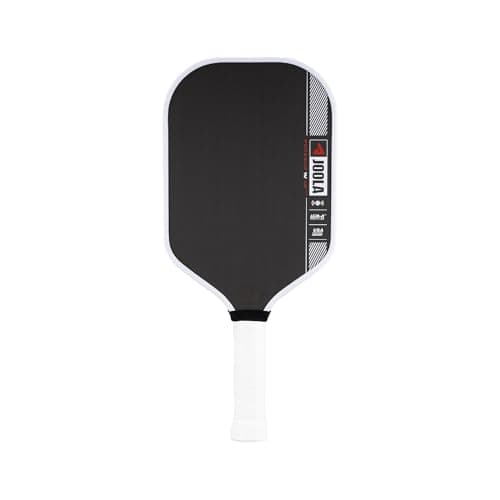 JOOLA Ben Johns Perseus Pro IV 16mm All-court power with a big sweet spot | Wins on proven record and face grip | 8.3 | |
| 2 | 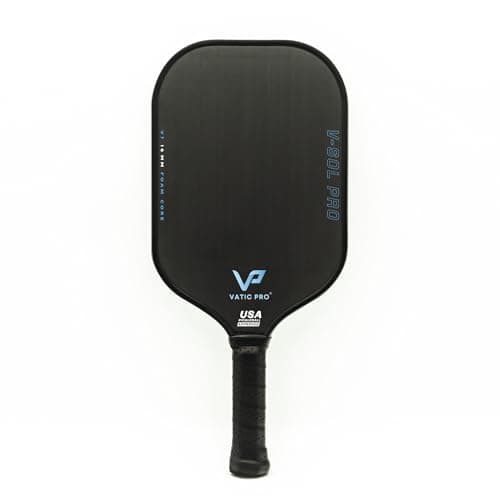 Vatic Pro V-Sol Pro V7 16mm A full foam core at value-tier money | Wins on price-to-specification, by a wide margin | 8.3 | $109.99 · View on Amazon #adPrice as of October 5, 2026 |
| 3 | 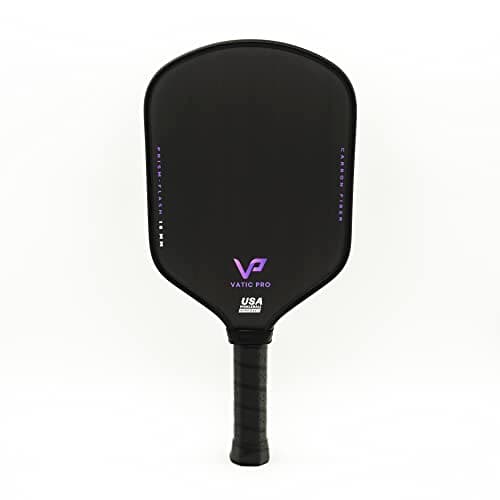 Vatic Pro Prism Flash 16mm The value spin champion (best under ~$110) | The Vatic to buy if you want the proven core | 8.0 | $99.99 · View on Amazon #adPrice as of October 5, 2026 |
Tap any row to jump to the full write-up. Prices are pulled live from Amazon.
JOOLA Ben Johns Perseus Pro IV 16mm
JOOLA's Gen-4 Perseus: thermoformed power and a grippy Charged surface, with the 16mm core adding forgiveness the 14mm gives up. Now the previous generation to the Pro V.
The Perseus Pro IV set the benchmark the rest of the power field chased, and JOOLA's March 2026 Pro V refines that formula rather than replacing it. The 16mm version trades a little raw pop for a larger, more forgiving sweet spot — the sensible pick if you want top-tier power without punishing off-center hits. Charged Surface Technology keeps spin high.
The paddle the rest of the power field measured itself against, and the safer of the two buys. JOOLA pairs a thermoformed hybrid frame with the Charged carbon surface and a polypropylene honeycomb core carrying a foam edge wall and throat foam, and our scores are a 9 on spin and power with a 7 on control and an 8 on forgiveness. What the premium buys is documented: a published 12-month warranty with registration, a UPA-A and USAP certification trail, enough units in circulation that the failure modes are known, and a hybrid outline that keeps most of an elongated frame's reach with quicker hands. The cons are the price, that it is now the previous generation to the Pro V, and a treated rather than raw face - strong on spin but not class-leading.
- Core
- 16 mm
- Shape
- Hybrid
- Face
- Charged carbon-fiber surface (Tech-Flex)
- Weight
- ~8.0 oz
- Build
- Thermoformed
- Gen
- Pro IV (Gen 4)
Manufacturer-listed as USA Pickleball approved. Approvals and delistings change — verify against the current USAP equipment list before tournament play (checked 2026-07).
Vatic Pro V-Sol Pro V7 16mm
Vatic's foam-core answer to the Gen-4 flagships: a floating EPP core inside an EVA perimeter ring under a raw T700 face, in the 16.5in elongated V7 outline.
The V-Sol Pro is the generational step the Prism never took — out goes the honeycomb core with foam-injected walls, in comes a full EPP foam core ringed by firmer EVA. The V7 is the elongated shape of the three, so it carries the most reach and the most leverage on a drive. Pickleball Studio measured the standard-handle V7 at 8.09 oz static with a 114 swing weight, which is light for a 16mm foam paddle.
The same scores for less money, with newer construction and less history behind it. Vatic lists the V-Sol Pro as a floating EPP foam core inside an EVA perimeter ring under a raw Toray T700 face - a full foam core, where JOOLA's Pro IV puts foam only in the edge wall and throat - and our scores match the Perseus at a 9 on spin and power with a 7 on control and an 8 on forgiveness. Pickleball Studio measured the standard-handle V7 at 8.09 oz with a 114 swing weight. This is the pick if price is what is stopping you upgrading - check both buy buttons rather than assuming the gap, because the Pro IV is the superseded generation to the Pro V and its discount comes and goes. The cons are the ones money usually buys away: Vatic publishes no molding method for the line, foam cores have no multi-season durability record anywhere, and the 4.125in grip is thin enough that most players will build it up.
- Core
- 16 mm
- Shape
- Elongated
- Face
- Raw Toray T700 carbon fiber (heat-compressed texturing)
- Weight
- ~8.0-8.3 oz (listed)
- Build
- Not published
- Gen
- V-Sol (Gen 4 foam core)
Manufacturer-listed as USA Pickleball approved. Approvals and delistings change — verify against the current USAP equipment list before tournament play (checked 2026-07).
Vatic Pro Prism Flash 16mm
The value-shopper's spin paddle: raw T700 carbon and a thermoformed build that punches well above its price.
Vatic built a reputation on giving you 90% of a $250 paddle for around a hundred bucks. The Prism Flash's raw T700 face grips for spin and the elongated frame adds reach — the paddle we recommend when 'best spin under $100' is the search.
The third answer, and the right one more often than the page title suggests. The Prism Flash is Vatic's previous generation - a thermoformed unibody with foam-injected walls around a polypropylene honeycomb core, under the same raw Toray T700 face - and that construction has three seasons of record behind it where the V-Sol has none. Our scores are a 9 on spin with an 8 on power, a 7 on control and an 8 on forgiveness: one power point behind both paddles above it and level with the Perseus on forgiveness. It is the cheapest paddle of the three and the one we recommend when someone wants Vatic's pricing without being an early adopter. The cons are value-tier consistency across the face and the honest fact that it is a generation old.
- Core
- 16 mm
- Shape
- Elongated
- Face
- Raw Toray T700 carbon fiber
- Weight
- ~8.0 oz
- Build
- Thermoformed
- Gen
- Prism
Manufacturer-listed as USA Pickleball approved. Approvals and delistings change — verify against the current USAP equipment list before tournament play (checked 2026-07).
Side by side
Manufacturer-published figures. Where a maker publishes nothing, the row says so — we do not repeat a retailer's number as a spec.
| Spec | JOOLA Perseus Pro IV 16mm | Vatic Pro V-Sol Pro V7 16mm |
|---|---|---|
| Core | 16mm polypropylene honeycomb | 16mm floating EPP foam, EVA perimeter ring |
| Where the foam is | Edge wall + throat (Tech-Flex) | The entire core |
| Face | Charged carbon-fiber surface (treated) | Raw Toray T700, heat-compressed texturing |
| Shape | Hybrid | Elongated 16.5 x 7.5in |
| Listed weight | ~8.0 oz | 8.0-8.3 oz |
| Molding method | Not published by JOOLA (reviewer record: thermoformed) | Not published by Vatic |
| Measured swing weight | 116 (Pickleball Studio, Perseus Pro IV 16mm) | 114 standard handle / 114 long handle (Pickleball Studio) |
| Our scores (spin/power/control/forgiveness) | 9 / 9 / 7 / 8 | 9 / 9 / 7 / 8 |
Identical scores are the point, not a cop-out
Two paddles landing on the same four numbers looks like a failure to choose. It is actually the finding. We score from published construction and the consistent reviewer record, and on both of those inputs these paddles are peers: a 16mm core, a carbon face with real texture, a stiff frame, and modern foam somewhere in the build. The flagship is not measurably ahead on any axis we can defend. If you were expecting the price gap to show up as a performance gap, it does not — and a site that claimed otherwise would be inventing the difference.
Where they genuinely differ is the two rows above the scores: the Charged treated surface against a raw T700 weave, and foam in the edge wall against foam as the whole core.
Spin: treated surface against raw weave
JOOLA's Charged surface is a treated carbon face — texture applied to the sheet — and Vatic's is raw T700 with the weave exposed and heat-compressed. Both grip. The practical difference is how they age: a treated surface holds its texture longer and tends to lose grip gradually, while a raw weave starts grippier and polishes smooth faster under heavy outdoor topspin. Our grit durability guide covers that trade honestly, and our T700 guide explains what the grade does and does not tell you. If face grip is the specific thing you are shopping for, our highest-spin paddles page ranks on it alone.
Core: edge-wall foam against a foam core
This is the real split, and Vatic is on the newer side of it. JOOLA builds a honeycomb core and uses foam to stiffen the frame around it; Vatic has removed the honeycomb. A foam core flattens the response across the face, so the region outside the middle plays more like the middle — the edge of the sweet spot becomes a slope rather than a cliff. That is a genuine advantage and the reason we rank the V-Sol first on our best foam core paddles page.
It also has no history. Honeycomb paddles have a documented failure mode — the face separates from the core, and you can hear it; see our delamination guide. Nobody can tell you what a compressed EPP core does after three seasons, because no EPP core has had three seasons. Our Gen 3 and Gen 4 foam guide lays out the generations; the honest summary is that JOOLA is selling you the proven build and Vatic is selling you the newer one.
What the flagship premium actually buys
Four things, none of which is a point on a score:
- A warranty you can read. JOOLA publishes a 12-month term with registration. Vatic publishes a one-year warranty on the V-Sol line; the difference is less in the term than in how easy each is to actually claim against.
- Circulation. Tens of thousands of Perseus units are in play, so if a batch has a problem you will read about it before you buy. A newer line from a smaller brand gives you less of that safety net.
- Resale. A used Perseus has a market. A used V-Sol largely does not yet.
- A hybrid outline.JOOLA's shape is genuinely easier to play with at the net than Vatic's elongated V7 — see our paddles for hand speed page for why head length is the dominant factor there. If you want Vatic's core in a quicker shape, the V-Sol Pro Flash is the hybrid version.
What it does not buy: more spin, more power, a bigger sweet spot, or a USAP approval the Vatic lacks. Both are manufacturer-listed as approved, and both approvals need checking against the current list before tournament play — our USAP approved paddles guide covers that.
The rest of each line
JOOLA. The Perseus Pro V is the current generation above the Pro IV — our Pro IV vs Pro V comparison finds the difference is feel rather than specification. The Scorpeus Pro IV is the standard-shape sibling, the Hyperion Pro IV the round-head one, and the original Hyperion is the cold-pressed generation now sold well below flagship money.
Vatic Pro. The V-Sol Pro review covers all three shapes of the foam line; the Prism Flash and Prism V7 are the honeycomb generation, and V-Sol vs Prism isolates the core as the only variable between them. If you want to see Vatic against the other value brands, we have Six Zero vs Vatic Pro and Vatic vs Ronbus.
Who should buy which
Buy the Perseus Pro IV 16mm if you want one paddle for two or three seasons and would rather not be the person finding out how a new construction ages. It is also our top power pick, so you are buying the consensus answer.
Buy the V-Sol Pro V7 if price is the reason you are still playing the paddle you want to replace. Same scores, newer core, less money, and the risk is a durability unknown rather than a performance deficit.
Buy the Prism Flashif you want Vatic's pricing and the proven construction — it is the lowest-risk, lowest-cost paddle on this page and it loses one power point to the two above it.
Buy neither if your weakness is control rather than pace: both of these score a 7 there, and the Six Zero Double Black Diamond scores a 9 at a price between them. Our control roundup is the page for that.
Verdict
JOOLA wins the comparison on everything that is not a performance spec, and Vatic wins it on price. If you can comfortably afford the Perseus, buy it and stop reading reviews. If you cannot, the V-Sol Pro V7 is not a compromise on our scorecard — it is the same paddle on paper with a newer core and less history, and the money you keep is real. The one answer we will not give is that the flagship plays better, because from the published specifications it does not.
Is JOOLA or Vatic Pro better?
On our four axes they tie: the Perseus Pro IV 16mm and the V-Sol Pro V7 16mm both score 9 on spin, 9 on power, 7 on control and 8 on forgiveness. JOOLA wins on the things that are not performance — a known track record, wide circulation, resale value and a hybrid outline that is quicker at the net. Vatic wins on price. By how much depends on the day: the Pro IV is the superseded generation now that the Pro V exists, so check both buy buttons rather than assuming a multiple.
Is a Vatic Pro paddle as good as a JOOLA?
From the published specifications, yes, for the pairing on this page. Both run a 16mm core and a textured carbon face in a stiff modern frame, and Vatic's V-Sol goes further than JOOLA on core construction by replacing the honeycomb with foam entirely. What Vatic cannot offer is history: the foam core has no multi-season durability record, and that is the real difference you are paying JOOLA to avoid.
Which Vatic Pro paddle should I compare to the JOOLA Perseus?
The V-Sol Pro V7 16mm, because it matches the Perseus Pro IV on core thickness, face type and our scores. If you want Vatic's proven construction rather than its newest, compare the Prism Flash instead — it is a generation older, cheaper still, and gives up one power point.
Does the JOOLA Perseus have a foam core?
No. JOOLA builds a polypropylene honeycomb core and adds foam to the edge wall and the throat. Vatic's V-Sol Pro replaces the honeycomb with a floating EPP foam core inside an EVA perimeter ring. Both are sold under the Gen 4 banner, which is why the label on the box is not a reliable guide to what is inside the paddle.
Are both paddles USAP approved?
Both are manufacturer-listed as USA Pickleball approved. Approvals and delistings change, so verify either paddle against the current USAP equipment list before tournament play rather than trusting a listing or a review — including ours.