Perseus Pro IV vs Hyperion Pro IV
JOOLA sells two Pro IV flagships with almost identical published specs. The difference is the shape of the top edge — and it is worth more than it sounds.
Disclosure: Drive Dink earns a commission from qualifying Amazon purchases at no extra cost to you. We accept no free products and no paid placements — commissions never change our picks. How this works.
Buy the Perseus Pro IV 16mm if you need more pace, and the Hyperion Pro IV 16mm if you need faster hands. That really is the whole comparison, and it is unusually clean because JOOLA publishes the same construction for both paddles: the same 16mm Propulsion honeycomb core, the same Hyper-Foam Edge Wall, the same Tech Flex Power throat foam, the same 16.5 x 7.5in outline and the same 5.5in handle. Two things differ — the shape of the top edge, and the face treatment — and they produce a one-point gap on power in the Perseus's favor and a head the Hyperion turns over faster.
If you are a 3.5-to-4.5 player upgrading one weakness rather than buying a first serious paddle, that framing is the decision. The third card below, the 14mm Hyperion, exists for the player who picks the curved head and then wants to push head speed further — at a cost we state plainly.
Units we claim to have tested: 0. Every dimension and material here is JOOLA-published; the four scores are our editorial assessment compiled from those specs and the consistent reviewer record. Live Amazon prices render on every card and move daily.
| # | Paddle | Best for | Score | Price |
|---|---|---|---|---|
| 1 | 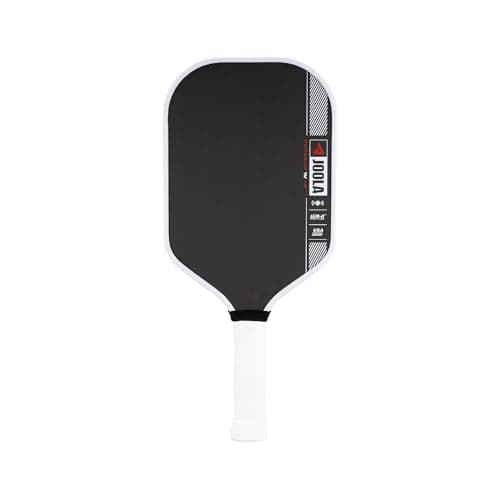 JOOLA Ben Johns Perseus Pro IV 16mm All-court power with a big sweet spot | Wins on raw power | 8.3 | |
| 2 | 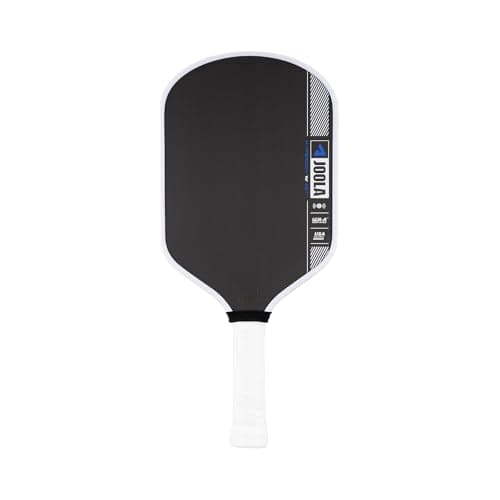 JOOLA Ben Johns Hyperion Pro IV 16mm Perseus power with a faster head through the air | Wins on head speed | 8.0 | $149.95 · View on Amazon #adPrice as of October 24, 2026 |
| 3 | 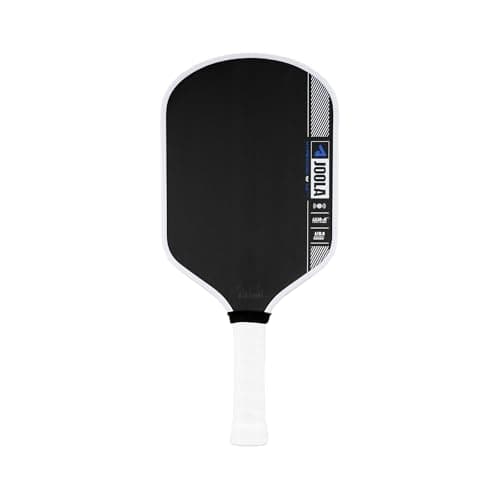 JOOLA Ben Johns Hyperion Pro IV 14mm The quickest Pro IV JOOLA sells | The tie-break for fast hands | 7.5 | $149.95 · View on Amazon #adPrice as of October 24, 2026 |
Tap any row to jump to the full write-up. Prices are pulled live from Amazon.
JOOLA Ben Johns Perseus Pro IV 16mm
JOOLA's Gen-4 Perseus: thermoformed power and a grippy Charged surface, with the 16mm core adding forgiveness the 14mm gives up. Now the previous generation to the Pro V.
The Perseus Pro IV set the benchmark the rest of the power field chased, and JOOLA's March 2026 Pro V refines that formula rather than replacing it. The 16mm version trades a little raw pop for a larger, more forgiving sweet spot — the sensible pick if you want top-tier power without punishing off-center hits. Charged Surface Technology keeps spin high.
Buy this one if the weakness you are fixing is pace - it is the harder-hitting of the two and the flat top edge gives you the most hitting area JOOLA will sell you in this outline. The Perseus Pro IV is the paddle the rest of the power field chased: a thermoformed hybrid frame at 16.5 x 7.5in with a 5.5in handle, a 16mm Propulsion honeycomb core, a Hyper-Foam Edge Wall and the Charged carbon-fiber surface, scoring a 9 on spin and power with a 7 on control and an 8 on forgiveness. Against the Hyperion it takes one clear point on power and matches it everywhere else. The cons: it is now the previous generation to the Pro V, which moves its price around week to week, and the flatter, fuller head carries more mass up at the tip, so it is the slower of the two to turn over in a hands exchange.
- Core
- 16 mm
- Shape
- Hybrid
- Face
- Charged carbon-fiber surface (Tech-Flex)
- Weight
- ~8.0 oz
- Build
- Thermoformed
- Gen
- Pro IV (Gen 4)
Manufacturer-listed as USA Pickleball approved. Approvals and delistings change — verify against the current USAP equipment list before tournament play (checked 2026-07).
JOOLA Ben Johns Hyperion Pro IV 16mm
The Perseus Pro IV platform under JOOLA's curved Aero Curve head — the same core, face and throat foam, built to swing quicker and sitting a generation behind the current Pro V on price.
JOOLA publishes the same build for this paddle as for the Perseus Pro IV: a 16mm Propulsion polypropylene honeycomb core with a Hyper-Foam Edge Wall, a Textured Carbon Fiber face, and the Tech Flex Power throat foam that narrows the honeycomb channel to add flex. What differs is the outline — the Hyperion's top edge is curved rather than flat, which reviewers describe as quicker in hand battles at the cost of a little hitting area and mass at the top of the face. The 16mm core is the forgiving one, with a 4 1/4in grip.
Buy this one if the weakness you are fixing is being late at the kitchen rather than short on pace. JOOLA publishes the same build as the Perseus - 16mm Propulsion honeycomb, Hyper-Foam Edge Wall, Tech Flex Power throat foam, 16.5 x 7.5in with a 5.5in handle - under the curved Aero Curve head, with a Textured Carbon Fiber face rather than the Charged surface. Our scores land at a 9 on spin, an 8 on power, a 7 on control and an 8 on forgiveness: one point behind the Perseus on power, level on everything else. What you buy with that point is a head reviewers consistently describe as quicker through the air, because curving the top edge removes mass from the furthest point from your hand. The cons are the flip side - a little less hitting area at the very top of the face - plus a listed 8.1 oz average that runs slightly heavier than the Perseus.
- Core
- 16 mm
- Shape
- Hybrid
- Face
- Textured carbon-fiber surface (Tech Flex Power)
- Weight
- ~8.1 oz (7.9-8.3)
- Build
- Thermoformed
- Gen
- Pro IV (Gen 4)
Manufacturer-listed as USA Pickleball approved. Approvals and delistings change — verify against the current USAP equipment list before tournament play (checked 2026-07).
JOOLA Ben Johns Hyperion Pro IV 14mm
Same curved head and same Pro IV build on a 14mm core — the lightest and liveliest paddle in the Hyperion line, and the least forgiving.
Two millimeters of core is the whole difference, and JOOLA's own listings show where it lands: 7.9 oz average against the 16mm's 8.1 oz, and a thinner 4 1/8in grip. A thinner core is poppier off the face and faster through the air, which stacks with the Aero Curve head. The cost is the usual one — less cushioning behind the ball on a reset and a smaller margin when you catch it off-center.
Here because it settles the argument for one specific player: if you chose the Hyperion for head speed and want more of it, this is the only lever JOOLA gives you. Same curved head, same Pro IV build, 2mm less core - and JOOLA's own listings show where that lands: 7.9 oz average against the 16mm's 8.1 oz, with a thinner 4 1/8in grip. A thinner core is poppier off the face and faster through the air, and it stacks with the Aero Curve outline, which makes this the quickest Pro IV JOOLA sells. The cost is stated plainly on our scorecard: control drops from a 7 to a 6 and forgiveness from an 8 to a 7. Do not buy it unless your contact is reliably centered - if you are not sure, you are not, and the 16mm is the paddle.
- Core
- 14 mm
- Shape
- Hybrid
- Face
- Textured carbon-fiber surface (Tech Flex Power)
- Weight
- ~7.9 oz (7.7-8.1)
- Build
- Thermoformed
- Gen
- Pro IV (Gen 4)
Manufacturer-listed as USA Pickleball approved. Approvals and delistings change — verify against the current USAP equipment list before tournament play (checked 2026-07).
Side by side, on JOOLA's own numbers
| Perseus Pro IV 16mm | Hyperion Pro IV 16mm | |
|---|---|---|
| Outline | 16.5 x 7.5in, flat top edge | 16.5 x 7.5in, curved Aero Curve head |
| Handle | 5.5in | 5.5in |
| Core | 16mm Propulsion polypropylene honeycomb | 16mm Propulsion polypropylene honeycomb |
| Edge wall | Hyper-Foam Edge Wall | Hyper-Foam Edge Wall |
| Face | Charged carbon-fiber surface (Tech-Flex) | Textured carbon-fiber surface (Tech Flex Power) |
| Build | Thermoformed | Thermoformed |
| Listed weight | ~8.0 oz | ~8.1 oz (7.9-8.3) |
| Grip circumference | 4 1/4in | 4 1/4in |
| Our scores (spin/power/control/forgiveness) | 9 / 9 / 7 / 8 | 9 / 8 / 7 / 8 |
| Buy it if | You are losing points to a lack of pace | You are losing points by being late at the kitchen |
Nine rows and two of them differ. This is what a platform looks like when a manufacturer builds two flagships off one tooling program, and it is why most of the internet's answer to this question is guesswork dressed up as feel — there is very little in the spec sheet to point at.
What the curved head actually does
Removing material from the top corners of a paddle takes mass away from the point furthest from your hand. That lowers swing weight — the number that describes how hard a paddle is to accelerate — without changing static weight much at all, which is why the Hyperion can be listed at a slightly higher 8.1 oz average and still feel quicker. Mass near the handle costs you almost nothing to swing; mass at the tip costs you a great deal. Our swing weight and twist weight guide works through the arithmetic.
You pay for it twice, in small amounts. The first cost is hitting area: the corners that got rounded off were part of the face, and while almost nobody hits a ball there deliberately, the margin is real on a stretched overhead. The second is leverage — the same mass that was slowing the head down was also helping the ball leave faster. That is the mechanism behind the one-point power gap on our scorecard, and it is a genuinely small gap: both paddles are at the top of this market for pace.
What the curve does not change is spin. Both score a 9, because spin is a property of the face texture rather than the outline — see how paddle spin actually works. JOOLA names the two face treatments differently (Charged versus Textured Carbon Fiber), and we are not going to pretend we can separate them on grip from published material alone.
Pick by the weakness, not by the paddle
The honest diagnostic takes one game of paying attention. Count the points you lose and sort them into two piles.
Pile one: the ball came back. You drove a third shot, your opponent handled it, and the rally reset against you. You hit a drive from the baseline and nobody was troubled. That is a pace problem, and the Perseus Pro IV is the paddle — it is the harder hitter of the two and it leads our most powerful paddles page.
Pile two: you were late. Someone sped the ball up at the kitchen and it was past you before the paddle arrived. You got caught on the shoulder in a hands battle. That is a swing weight problem, and the Hyperion is the paddle — the Aero Curve head is the single reason it exists. Our paddles for hand speed page takes the same logic further than JOOLA will.
If both piles are the same size, buy on price. These two paddles move independently on Amazon, the Perseus Pro IV sits a generation behind the Pro V and discounts accordingly, and a flagship paddle at a non-flagship number is the best value in this category. The live buy buttons above are the only honest way to compare them on money, which is why we do not print prices in prose.
The two variables most people get wrong
Grip circumference, not paddle. Both 16mm paddles here are listed at 4 1/4in. If your hand is between sizes, JOOLA also sells the 16mm Hyperion Pro IV as the Simone Jardim signature, which matches the Ben Johns 16mm on every published spec except the grip, listed at 4 1/8in. That is the smarter starting point if you overgrip every paddle you own, since an overgrip adds roughly an eighth of an inch back. Our grip size guide covers how to measure rather than guess.
Core thickness, not head shape. If you are reading this page while also wondering about 14mm, understand that core thickness is a much bigger lever than the outline. Going from 16mm to 14mm on the Hyperion costs a point of control and a point of forgiveness on our scorecard; going from the Perseus head to the Hyperion head costs a point of power. Decide the core first, then the head. Our 14mm vs 16mm guide is the one to read first, and Perseus 14mm vs 16mm is the same decision inside one model.
And if neither is the answer
Two honest alternatives. If what you actually want is the newest JOOLA rather than the best-value one, the Perseus Pro V is the current generation and our Pro IV vs Pro V comparison tells you whether the upgrade is real. If you want this much power with a flatter control curve, the brand you should be cross-shopping is Six Zero rather than another JOOLA — JOOLA vs Six Zero is the comparison most of our readers are making. Our best JOOLA paddles page ranks the whole shelf.
How we decided this
Every dimension, material and listed weight above is JOOLA-published and cross-checked against the retailer spec tables we cite in Sources. Where JOOLA publishes no number — swing weight, for instance, which neither paddle lists — we describe the mechanism rather than invent a figure. The four scores are our editorial assessment compiled from the published specs and the consistent reviewer record; we have not tested either paddle and do not claim to. Both listings were confirmed in the registry on October 11, 2026. Our methodology page sets out the whole approach, and how paddles are tested explains what the labs that do run tests actually measure.
The verdict
The Perseus Pro IV 16mm wins on power by a point and is the paddle for a player whose problem is pace. The Hyperion Pro IV 16mm matches it everywhere else and turns over faster, which makes it the paddle for a player whose problem is speed at the kitchen. Neither is a bad buy, the gap between them is one axis wide, and if the weakness you are fixing is honestly neither of those, you should be reading how to choose a paddle rather than this page.
What is the difference between the JOOLA Perseus Pro IV and the Hyperion Pro IV?
JOOLA publishes the same construction for both — a 16mm Propulsion polypropylene honeycomb core, a Hyper-Foam Edge Wall, Tech Flex Power throat foam, a 16.5 x 7.5in outline and a 5.5in handle. Two things differ: the Hyperion uses the curved Aero Curve head where the Perseus has a flatter top edge, and the face treatments are named differently (Charged versus Textured Carbon Fiber). In practice the Perseus hits harder and the Hyperion turns over faster.
Which is better, the Perseus Pro IV or the Hyperion Pro IV?
Neither, across the board. Our scorecard gives the Perseus Pro IV 16mm a 9 on power against the Hyperion's 8, and they are level on spin, control and forgiveness. Buy the Perseus if the points you lose are ones where the ball came back; buy the Hyperion if the points you lose are ones where you were late at the kitchen line.
Is the Hyperion Pro IV lighter than the Perseus Pro IV?
No — JOOLA lists the 16mm Hyperion Pro IV at about 8.1 oz average against roughly 8.0 oz for the Perseus Pro IV. It feels quicker anyway, because the curved head removes mass from the tip, which is the mass that costs the most to accelerate. Static weight and swing weight are different things.
Should I buy the Hyperion Pro IV in 14mm or 16mm?
16mm for most players. The 14mm is JOOLA's quickest Pro IV — listed at 7.9 oz average with a thinner 4 1/8in grip — and it is poppier off the face. The cost on our scorecard is a point of control and a point of forgiveness, which is a bigger trade than anything the head shape does. Choose the 14mm only if your contact is reliably centered.
Is the Perseus Pro IV still worth buying now the Pro V exists?
Often, yes — it is the previous generation rather than a discontinued paddle, and that is exactly what moves its street price around. The Pro V is a refinement of the same formula rather than a replacement, so the honest answer depends on what the two cost on the day you shop. Compare the live buy buttons rather than a review's price.
Are both paddles USA Pickleball approved?
Both are manufacturer-listed as USA Pickleball approved. Approvals and delistings change, so verify your exact model against the current USA Pickleball equipment list before tournament play rather than relying on a product listing or a review, including ours.