When to Replace Your Pickleball Shoes
The upper looks fine, so the shoes must be fine. That is the mistake — the two parts of a court shoe that fail first are both invisible from the outside.
Disclosure: Drive Dink earns a commission from qualifying Amazon purchases at no extra cost to you. We accept no free products and no paid placements — commissions never change our picks. How this works.
The short answer: replace court shoes on hours played, not months owned, and check the tread rather than the upper. If you play three or more times a week, plan on a new pair roughly twice a year; if you play once a week, a pair should last you a year or more. But the calendar is a weak proxy, because what actually wears out is the compressed foam in the midsole and the flattened tread on the outsole — and both are close to invisible while the upper still looks new. The five-point check below takes a minute and is a far better answer than any mileage number.
Why this matters more in this sport than in most. Pickleball is played on abrasive hard courts in a confined space, which means short lateral steps, hard stops and pivots — the three movements that destroy an outsole and that depend most on the shoe not deforming. A worn court shoe does not just perform worse. It is the mechanism behind a lot of rolled ankles, and it quietly undoes the cushioning you paid for.
Units we claim to have tested: 0, and no shoe maker on this page publishes an outsole durability figure or a stack height — so this guide is built on observable wear signs rather than on numbers we cannot source.
The five-point wear check
Do this with the shoes off and in good light. Any two of these means replace; the first one on its own means replace.
1. The tread is smooth at the forefoot outside edge. Look at the ball of the foot on the little-toe side — the part that takes the load when you push off laterally. On a new court shoe that area has a defined pattern, usually a herringbone. When it has worn flat and shiny, the shoe has lost the grip it needs in exactly the movement it is for, and that is the end of its useful life regardless of how the rest looks. This is the sign that matters most and the one almost nobody checks.
2. The midsole is creased and does not spring back. Look at the foam from the side. Fine horizontal wrinkles near the heel and forefoot are normal; deep compression creases that stay put when you press and release mean the cushioning has packed out. Compare against the pair in the box if you have one. A midsole can lose a large fraction of its shock absorption with no visible damage at all, which is why heel pain that arrives gradually is often a shoe-age problem rather than a shoe-model problem — see shoes for plantar fasciitis.
3. The shoe twists too easily. Hold the heel in one hand and the toe in the other and twist. A court shoe should resist; that torsional stiffness is what stops your foot deforming through a lateral cut. If it now wrings out like a dish cloth, the structure has gone.
4. The upper has stretched over the little toe. A bulge or a visible stress line on the outside of the forefoot means your foot is now moving inside the shoe rather than with it. That is both a performance problem and a blister problem, and it cannot be laced out.
5. The heel counter is soft. Squeeze the back of the shoe. New, it should be firm enough to hold its shape. Once it collapses between your fingers, the shoe no longer holds your heel down, which loads the plantar fascia on every step.
The sign that is not on this list: how the upper looks. Scuffing, dirt and faded colour tell you nothing about whether a shoe is still doing its job, and a shoe can be cosmetically perfect and functionally finished. The three replacements below are the ones we would buy, and the value pick exists specifically because replacing on time beats replacing well.
Skechers Viper Court Pro 2.0 (Men's)
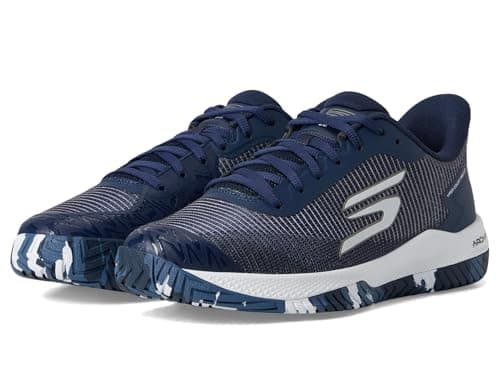
A dedicated pickleball court shoe with lateral support and a non-marking outsole — comfortable enough for long sessions.
Skechers went after pickleball specifically with the Viper Court line, and it shows: real lateral containment for side-to-side play, a grippy non-marking sole, and the cushioning Skechers is known for. The default recommendation for most men.
The shoe we would put most men back into once the wear check above says it is time. Skechers went after pickleball specifically with the Viper Court line rather than adapting a tennis model, and the three things it publishes are the three that matter for a replacement: real lateral containment for side-to-side play, a grippy non-marking sole, and the cushioned midsole Skechers is known for. It is the default recommendation on our main shoe roundup for the same reason - it is the shoe with the fewest reasons not to buy it. The cons: Skechers publishes no stack height, drop or outsole durability figure, so there is no way to compare its lifespan on paper against anything else here; and if your heel is already hurting, the ASICS options carry a named rearfoot cushioning technology and this one does not.
- Spec 1
- Court-specific lateral support
- Spec 2
- Non-marking outsole
- Spec 3
- Cushioned midsole
Skechers Viper Court Pro 2.0 (Women's)
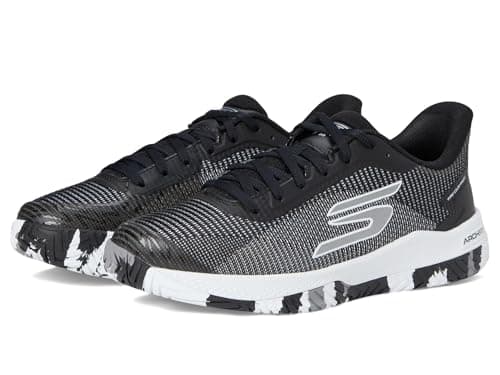
The women's cut of our top overall pick — court-tuned support and cushioning in a women's-specific fit.
Same court-focused design as the men's Viper Court Pro 2.0 in a women's-specific last: lateral support for quick changes of direction, a non-marking outsole, and all-day cushioning. Our top overall women's court shoe.
The same shoe in a women's-specific last, and worth naming separately rather than as a footnote because fit is the thing people compromise on when they are replacing in a hurry. Same court-focused design - lateral support for quick changes of direction, non-marking outsole, all-day cushioning - built on a women's last rather than a smaller men's one. If you have been playing in men's shoes sized down because that is what was in stock, this is the change to make at the same time as the replacement, because a shoe that is slightly too long lets your heel lift on every step. The cons mirror the men's version: no published stack height or durability figure, and less named cushioning than the ASICS alternatives if joint comfort is your priority.
- Spec 1
- Women's-specific fit
- Spec 2
- Lateral court support
- Spec 3
- Non-marking outsole
FILA Volley Zone Pickleball
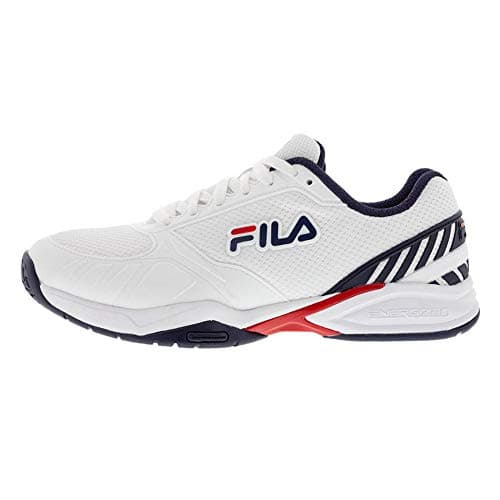
The value pick: a genuine court shoe with pickleball-appropriate support at a budget-friendly price.
You don't have to spend big for a proper court shoe. The FILA Volley Zone delivers the lateral support and non-marking sole you need for pickleball at a price well under the specialty options — the smart budget choice.
For the player whose real problem is that replacing shoes properly costs too much to do as often as they should. This is the argument for the value pick: a shoe you replace on schedule protects you better than a better shoe you keep for three times as long, because a compressed midsole does not care what it cost. FILA publishes court-appropriate support and a non-marking sole at a price well under the specialty options, and it is the budget pick on our main roundup. Buy two pairs and rotate them if you play often - alternating days lets the midsole foam recover between sessions, which is the one free way to extend the life of both. The cons: the least supportive upper of the three here, no named cushioning technology, and a build that will reach the end of its life sooner than the Skechers - which on this page is partly the point.
- Spec 1
- Budget-friendly
- Spec 2
- Court-appropriate support
- Spec 3
- Non-marking sole
Hours played, not months owned
Running shoes get talked about in miles because the loading is reasonably uniform. Court shoes have no equivalent unit, and the honest reason is that two players with the same number of hours can be an order of magnitude apart in wear. Three things drive the difference.
Surface. An outdoor acrylic hard court is abrasive and eats tread. An indoor wood or sport-tile surface barely touches it. Players who move indoors in winter often find a pair lasts twice as long over those months.
Style. A player who slides into shots and stops hard wears a shoe out far faster than one who takes small steps and plays the soft game. If you come from tennis, you are probably in the first group — see paddles for former tennis players for the related equipment point.
Weight and stopping force. More mass arriving faster compresses a midsole sooner. This is not a judgement, it is physics, and it is why heavier players should expect a shorter replacement cycle and should prioritise structure. Our men's shoe roundup names the structured option explicitly.
As a working rule rather than a rule: 3+ sessions a week on outdoor courts puts most players on a 4-to-6-month cycle. One session a week indoors can stretch past a year. But run the five-point check every couple of months and let the shoes tell you, because the range around those figures is enormous.
The two things that actually extend shoe life
Rotate two pairs. Midsole foam recovers some of its thickness given a day to decompress, and playing alternate days in two pairs means both spend more of their life near their best. Two cheaper pairs rotated will outlast one expensive pair played daily, and will protect you better for most of that time. This is the single most effective thing on this page and almost nobody does it.
Keep court shoes for the court. Wearing them to walk the dog adds compression cycles to the midsole with no playing benefit, and walking on grit or concrete abrades the outsole pattern you need. If the same pair is doing double duty, it is not a court shoe, it is a trainer that happens to be non-marking.
Two things that do not help: resoling, which is not a thing on court shoes at this price, and new insoles, which replace the thinnest and least important layer of cushioning while leaving the compressed midsole exactly as it was. An insole can fix a fit or an arch support problem. It cannot fix a dead shoe.
What to replace them with
Three honest paths, depending on what the old pair told you.
The shoes were fine, they just wore out. Buy the same model again, or the Skechers Viper Court Pro 2.0 above, which is the default on our main best pickleball shoes roundup. There is no prize for novelty here.
Your joints complained before the shoes died.Move to a shoe with a named cushioning technology rather than a generic “cushioned midsole” claim, and read shoes for plantar fasciitis even if that is not your diagnosis — the reasoning about named rearfoot cushioning applies to any heel or knee complaint.
Your foot moved inside the shoe.That is a fit and structure problem rather than a wear problem, and buying the same model again will reproduce it. Look at the structured options and, if you have been wearing the wrong gender's last because of stock, fix that. Our women's roundup and men's roundup split the field properly.
And if you are tempted to replace them with running shoes because the cushioning is better — read running shoes for pickleball first. The cushioning genuinely is better. The lateral stability is not, and this sport is lateral.
The same question, for the rest of your kit
Shoes are not the only thing on a replacement cycle, and the others are cheaper to get right. A paddle face wears smooth and quietly stops producing the spin you bought it for — our when a paddle is worn out guide covers the signs and grit durability covers the mechanism. Balls crack and go soft faster than most players admit; see how long pickleball balls last. And an overgrip is the cheapest thing you own and the one most overdue for replacement — replacing a paddle grip takes five minutes.
How often should you replace pickleball shoes?
Judge it on hours played rather than months owned. As a working rule, three or more outdoor sessions a week puts most players on a four-to-six-month cycle, while one indoor session a week can stretch past a year. The range is wide enough that the five-point wear check is a better guide than any calendar figure.
What is the first sign pickleball shoes are worn out?
The tread going smooth and shiny at the forefoot on the little-toe side — the part that takes the load when you push off laterally. On its own that is enough to replace them, because the shoe has lost grip in exactly the movement it exists for. It is also the sign almost nobody checks, because the upper usually still looks fine.
Can worn-out shoes cause heel or knee pain?
They can contribute. Midsole foam compresses with use and can lose a large share of its shock absorption with no visible damage, so pain that arrives gradually in a well-played pair may be a shoe-age problem rather than a shoe-model problem. Replacing them is cheaper than most of the alternatives, though persistent pain is a clinician's question rather than a shopping one.
Does rotating two pairs of shoes actually help?
Yes, and it is the most effective thing on this page. Midsole foam recovers some thickness given a day to decompress, so alternating two pairs means both spend more of their life near their best. Two cheaper pairs rotated will outlast one expensive pair played daily and protect you better for most of that time.
Will new insoles extend the life of my court shoes?
No. An insole replaces the thinnest and least important cushioning layer and leaves the compressed midsole exactly as it was. Insoles can fix a fit or arch-support problem; they cannot fix a dead shoe, and they do nothing at all about a flattened outsole.
Do indoor and outdoor play wear shoes differently?
Substantially. Outdoor acrylic hard courts are abrasive and wear the outsole quickly; indoor wood and sport-tile surfaces barely touch it. Players who move indoors for the winter often find the same pair lasts roughly twice as long over those months.