How Long Do Pickleball Balls Last?
Nobody publishes a figure, because there is no single answer — a ball dies three different ways depending on where you play, how hard, and how cold it is. Here is how to tell which one is happening.
Disclosure: Drive Dink earns a commission from qualifying Amazon purchases at no extra cost to you. We accept no free products and no paid placements — commissions never change our picks. How this works.
The honest answer: nobody publishes a number, and anyone who quotes you one is guessing. No manufacturer we cover states a lifespan for a pickleball, for a good reason — the same ball that survives months of indoor social play can crack in a single cold morning outdoors. What you can do is understand the three distinct ways a ball dies, recognise which one is happening to yours, and stop playing on a dead one without noticing.
If you want the practical version: outdoors, buy the Franklin X-40 by the dozen and accept that cold weather is what kills them. Indoors, buy the Franklin X-26 and expect it to last considerably longer.
The three ways a ball dies
1. Cracking — the outdoor failure. An outdoor ball is a hard, thin, injection-moulded shell with 40 small holes in it. Hitting it hard puts the shell under tension; the holes are stress concentrators; eventually a crack starts at a hole and runs. This is sudden and obvious, it is the dominant failure mode outdoors, and it is enormously accelerated by cold — plastic gets brittle as the temperature drops, so the same ball that would have lasted weeks in July can split on the third point in February.
2. Going out of round — the hard-hitter's failure. Before a ball cracks it often deforms. Repeated hard contact flattens it unevenly, and an out-of-round ball flies and bounces unpredictably — a dink that should sit up jumps sideways, a drive curves off line. This is the failure most players miss, because the ball looks fine. It is especially common where play involves heavy topspin, which is why it shows up more on courts full of spin paddles than on social courts.
3. Softening — the indoor failure. Indoor balls use a softer, lighter shell with 26 larger holes. They almost never crack; they go gradually soft and lose their bounce, which makes rallies feel heavy and resets die at your feet. This is the slowest and least annoying death — and it is why a group that plays indoors spends a fraction of what an outdoor group spends on balls.
One thing that is not on that list: scuffing. A ball with the print worn off and the surface roughed up is cosmetically finished and mechanically fine. Do not throw those away.
The three balls below are the ones we would standardise on, with live Amazon prices. Our best pickleball balls page ranks the field, and indoor vs outdoor pickleballs covers why the two are genuinely different objects.
Franklin X-40 Outdoor Pickleballs
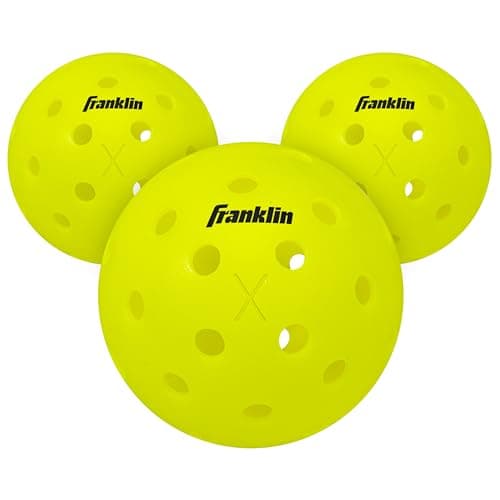
The most-played outdoor ball in the sport — the USA Pickleball national championship ball and a durable, true-flying default.
If you play outdoors, the Franklin X-40 is the ball you'll see most and the one most tournaments use. Consistent flight, a hard outdoor shell, and the official-ball pedigree make it the easy default for outdoor play.
If the section above has you reconsidering how often you replace balls, this is the one to standardise on. The X-40 is the most-played outdoor ball in the sport and the USA Pickleball national championship ball, with a 40-hole outdoor design and a hard shell that flies true. The reason it matters for lifespan specifically: it is the ball your group almost certainly already uses, so a cracked one can be swapped mid-session from someone else's bag rather than ending the game. Buy it in quantity rather than in threes - the per-ball cost drops and you stop playing on cracked ones out of inconvenience. The con is the one every hard outdoor ball shares: it is the most crack-prone construction in cold weather, which is the failure mode described below.
- Spec 1
- 40-hole outdoor design
- Spec 2
- USA Pickleball approved
- Spec 3
- Tournament standard
Onix Pure 2 Outdoor Pickleballs
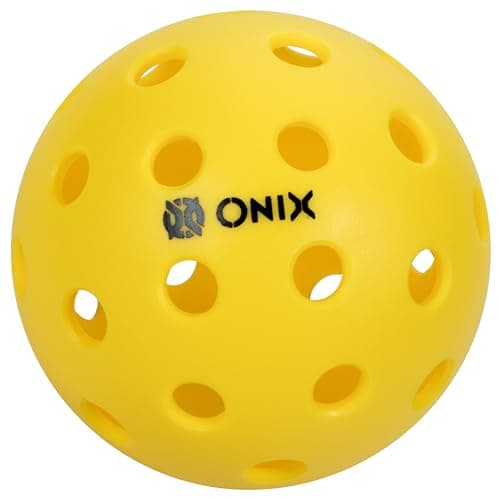
The main challenger to the X-40 — praised for a very true, consistent flight and a slightly softer feel off the paddle.
The Onix Pure 2 is the outdoor ball players reach for when they want the truest flight. It's a touch softer than the X-40 with excellent balance and durability — the alternative worth trying if the X-40 feels too firm.
The main challenger, and the one to try if your X-40s are cracking faster than your group can absorb. The Pure 2 is a seamless outdoor construction praised for a very true, consistent flight with a slightly softer feel off the paddle - and a marginally softer shell is less brittle in the cold, which is the single biggest driver of outdoor ball death. It is USA Pickleball approved and the standard alternative when a group wants to change balls without changing the standard of play. The cons are that it is less universal than the X-40, so matching balls across a group takes more coordination, and that softer shells go out of round a little sooner under heavy hitting.
- Spec 1
- Seamless outdoor construction
- Spec 2
- Very true flight
- Spec 3
- USA Pickleball approved
Franklin X-26 Indoor Pickleballs (12-pack)
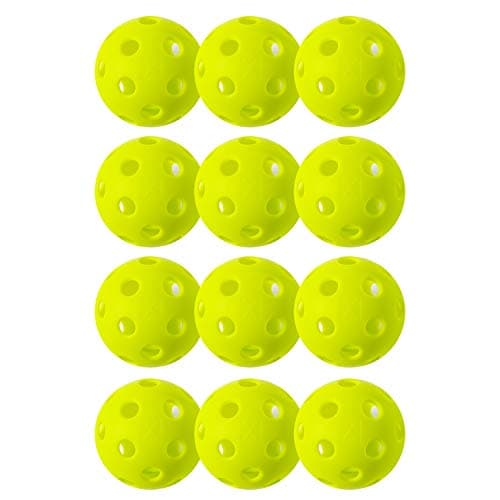
The indoor counterpart to the X-40: 26 larger holes, a softer shell, and the ball most indoor leagues put on the floor.
Indoor balls are a different object from outdoor balls, not a color variant. The X-26 uses 26 larger holes and a softer, lighter shell that carries less speed through gym air and skids less on a wood or sport-court floor. Buying it by the dozen is how most indoor groups stay stocked.
The ball to buy if you play indoors, where the maths is completely different. The X-26 uses 26 larger holes and a softer, lighter shell that carries less speed through gym air and skids less on a wood or sport-court floor, and it is USA Pickleball approved. Indoor balls almost never crack, because the thing that cracks a ball is a hard shell meeting a hard surface at speed in the cold; they fail by going soft and out of round instead, which is a far slower and more forgiving death. Buying it by the dozen is how most indoor groups stay stocked. The cons are that it is not an outdoor ball and will not behave like one if you take it outside - different hole pattern, different weight, different flight.
- Spec 1
- 26-hole indoor design
- Spec 2
- USA Pickleball approved
- Spec 3
- 12-ball pack
Which failure applies to you
| Failure mode | What you see | What it does to play | Most common when |
|---|---|---|---|
| Cracking | A visible split, usually running from a hole | Ball is instantly dead — rattles and flies short | Outdoor hard shells, especially below about 50 °F |
| Out of round | Nothing obvious; it looks like a good ball | Unpredictable bounce and flight; dinks jump, drives curve | Heavy hitters, heavy topspin, hot courts |
| Softening | Squeezes easily; feels dull off the face | Low bounce, slow rallies, resets die short | Indoor balls, over a long period |
The ten-second test for a dead ball
Three checks, in order, and they take less time than arguing about it between points:
- Squeeze it. A healthy outdoor ball barely gives. If you can deform it easily between thumb and fingers, it is done.
- Roll it on the court. An out-of-round ball wobbles visibly as it rolls. This is the only reliable way to catch the failure mode that looks fine.
- Drop it from shoulder height next to a new one. Two balls, same height, same hand. A dead ball comes back noticeably lower, and the comparison makes obvious what a single ball never does.
Keep one new ball in the bag purely as a reference for that last test. It is the single most useful thing in a paddle bag that is not a paddle.
Cold weather is the biggest variable, by a wide margin
If you play outdoors in winter, temperature does more to your ball budget than your paddle, your level or your brand choice. Plastic stiffens as it cools, and a stiffer shell cracks instead of flexing. Two practical consequences:
Keep spare balls warm, not in the car boot. A ball that has been at ambient temperature overnight is at its most brittle on the first hit. A jacket pocket or an insulated bag pocket — the kind our top bag picks include — genuinely extends life.
Rotate rather than replace. Groups that put one ball in play and keep hitting it until it fails get through more balls than groups that rotate three. The cold ball that is resting is also recovering.
There is no equivalent effect indoors, which is the main reason indoor play is cheaper. Heat has the opposite problem outdoors: a hot ball is softer and goes out of round rather than cracking.
What playing on a dead ball actually costs you
More than people assume, and in a sneaky way. An out-of-round or soft ball does not just bounce oddly — it changes what your practice teaches you. If the ball is dying, your third-shot drops are landing short because the ball is not carrying, so you start hitting them harder; then you put a new ball in play and every drop sails. Hours of drilling against a bad ball builds a compensation you then have to unlearn. If you drill with a machine this matters even more, because machine feeding is harder on balls than play is — one of the running costs in our ball machine guide.
The same logic applies to a worn paddle face, incidentally: a raw carbon face that has polished smooth quietly changes what your swing produces. Our grit durability guide and when a paddle is worn out cover that side of it.
How many to buy, and why threes are a trap
The standard retail unit is three balls, and it is the worst way to buy them. Three balls is one session's supply outdoors in cold weather, the per-ball price is the highest, and running low is exactly what makes people keep playing on a cracked one. Buying a dozen or more does three things: lowers the unit cost, removes the temptation, and lets you rotate.
For a regular outdoor group, standardising on one model matters as much as quantity. Different balls fly differently, and a session that switches between two models is a session where nobody's drop shots calibrate. The X-40 is the practical standard because it is what everyone else already has — our balls page covers the alternatives and why you might choose one.
If you are buying for someone else, a dozen balls is one of the few pickleball gifts that is genuinely always welcome and impossible to get wrong — see pickleball gifts under $50.
A note on approved balls and tournaments
If you play sanctioned events, the ball is specified by the tournament and the USA Pickleball approved list changes, so check the current list rather than trusting a listing — the same caution we apply to paddles in our USAP approved paddles guide. All three balls on this page are listed by their makers as USA Pickleball approved. For recreational play it matters less than consistency does: an approved ball that is out of round is worse than an unapproved ball that is not.
The bottom line
There is no published lifespan for a pickleball and there cannot usefully be one, because a ball dies three different ways and the dominant one depends on whether you play indoors or out, how hard your group hits, and how cold it is. Outdoors, cracking is what gets them and cold is what accelerates it — buy the Franklin X-40 in quantity, keep spares warm, and rotate. Indoors, softening is what gets them and it takes a long time — buy the X-26 by the dozen and forget about it. Either way, roll the ball on the court before you blame your paddle.
How long do pickleball balls last?
No manufacturer publishes a figure, and there is no single honest answer — it depends on whether you play indoors or outdoors, how hard your group hits and, above all, the temperature. Outdoor balls die by cracking and cold weather accelerates that dramatically; indoor balls die slowly by going soft and out of round. Judge by condition, not by a number.
How do I know when a pickleball is dead?
Three checks. Squeeze it: a healthy outdoor ball barely gives. Roll it on the court: an out-of-round ball wobbles visibly, which is the only reliable way to catch the failure that looks fine. And drop it from shoulder height beside a new ball — a dead one comes back noticeably lower. Keep one new ball in your bag purely as that reference.
Why do pickleball balls crack in cold weather?
Plastic stiffens as it cools, and a stiffer shell cracks instead of flexing. An outdoor ball is already a hard, thin shell with 40 holes in it, and each hole concentrates stress — so in cold conditions a crack starts at a hole and runs. Keeping spare balls warm rather than in the car, and rotating two or three balls instead of hammering one, both genuinely extend life.
Do indoor pickleballs last longer than outdoor ones?
Generally yes, by a wide margin. Indoor balls use a softer, lighter shell with 26 larger holes, and they almost never crack — they fail by gradually losing bounce, which is slower and much less abrupt. That is the main reason indoor groups spend far less on balls than outdoor groups do.
Should I throw away scuffed pickleballs?
No. A ball with the print worn off and a roughed-up surface is cosmetically finished and mechanically fine. The three things that actually end a ball's life are a crack, losing its round shape, and going soft — none of which is visible as scuffing.