Best Pickleball Ball Machines (2026)
The most expensive thing you can buy in this sport, and the only piece of gear that adds repetitions instead of adding milliseconds. Here is what actually separates one machine from another.
Disclosure: Drive Dink earns a commission from qualifying Amazon purchases at no extra cost to you. We accept no free products and no paid placements — commissions never change our picks. How this works.
A ball machine is the only purchase in pickleball that buys you repetitions instead of milliseconds. A new paddle changes the margin on shots you already hit; a machine changes how many of them you hit. That is why it is the one piece of gear worth more than the paddle to a player who has plateaued — and also why it is the easiest thing in the sport to overspend on.
Four published specifications decide whether a machine is right for you, and everything else is packaging: the feed pattern (does the ball always arrive in the same place?), spin control (can it throw the low, floating backspin ball you actually struggle with?), feed rate and speed (can it go fast enough for volleys and slow enough for dinks?), and hopper capacity against carry weight— the trade-off between how often you stop to pick up balls and whether you can get the machine to the court by yourself. Every pick below is ranked on those four, using each manufacturer's own published numbers.
Live Amazon prices render above. Units we claim to have tested: 0. We do not run a court-side lab, so we compile what the makers publish, say where they publish nothing, and tell you which trade-off each machine is asking you to accept.
| # | Paddle | Best for | Score | Price |
|---|---|---|---|---|
| 1 | 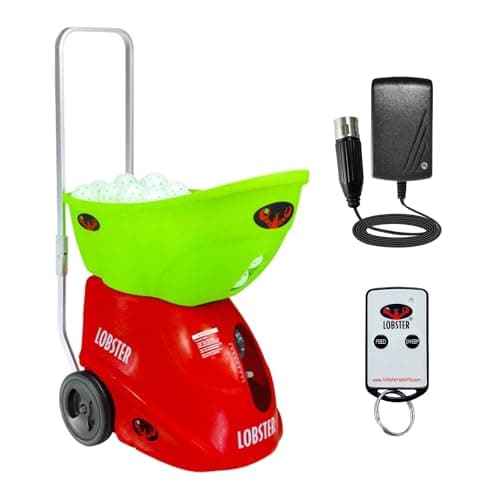 Lobster Sports The Pickle Best all-round solo drilling machine | Best overall | — | $1,139.00 · View on Amazon #adPrice as of October 23, 2026 |
| 2 | 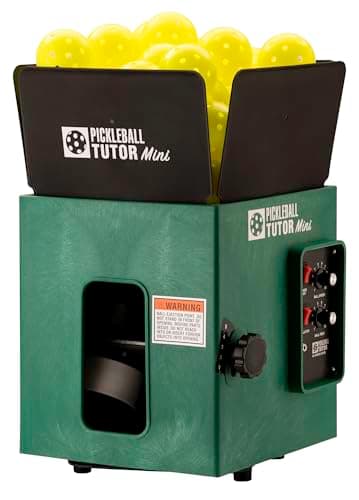 Pickleball Tutor Mini Best lightweight machine to carry alone | Best lightweight | — | $979.00 · View on Amazon #adPrice as of October 23, 2026 |
| 3 | 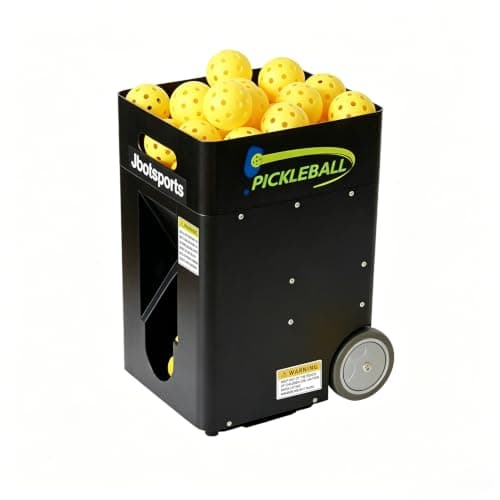 jbotsports JP-02 Pickleball Launcher Cheapest machine we would still recommend | Best entry-level | — | $539.00 · View on Amazon #adPrice as of October 23, 2026 |
| 4 | 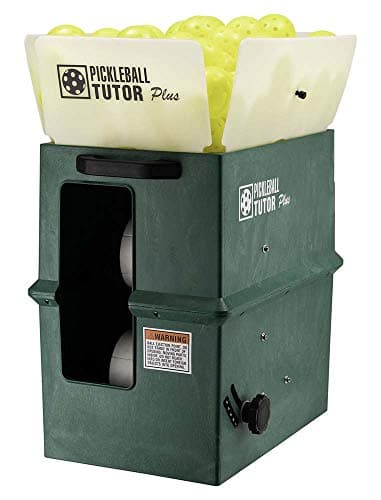 Pickleball Tutor Plus (with remote) Best spin control for shot-specific drilling | Best spin control | — | $1,519.00 · View on Amazon #adPrice as of October 23, 2026 |
| 5 | 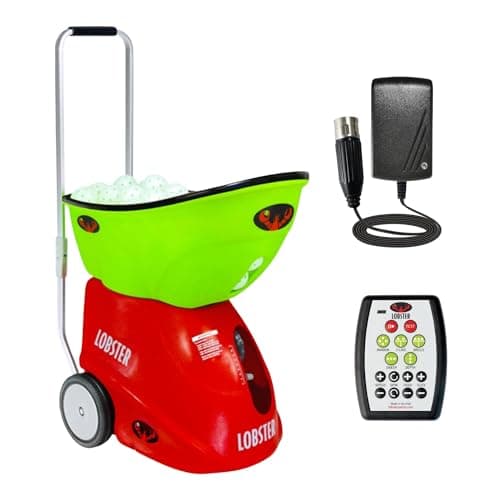 Lobster Sports The Pickle Champion Best for match-realistic random drilling | Best for drill variety | — | $1,999.00 · View on Amazon #adPrice as of October 23, 2026 |
| 6 | 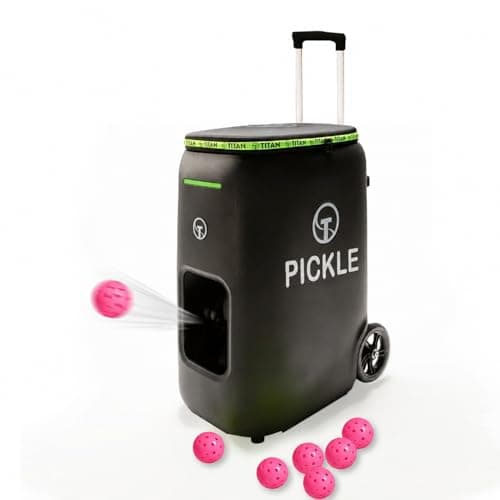 Titan ONE Pickleball Machine Best app-driven drill programming | Best app-driven drilling | — | $2,199.00 · View on Amazon #adPrice as of October 23, 2026 |
Tap any row to jump to the full write-up. Prices are pulled live from Amazon.
Lobster Sports The Pickle
The lightest full-featured machine from the brand that has built ball machines the longest — 125 balls, real topspin and backspin, and 35 lb you can actually carry.
Lobster publishes a complete spec sheet for The Pickle and it reads like the sensible middle of the category: a 125-ball hopper, 10-60 mph, a 2-12 second feed, random horizontal oscillation, manual elevation from drive to lob, and 2-4 hours on a charge. At 35 lb it is the lightest machine here that still does spin and oscillation, which is what makes it the one most people will keep using.
This is the machine most players should buy, and the reason is the weight. Lobster lists it at 35 lb, which is the difference between a machine that lives in your trunk and one that lives in your garage — and a machine you do not carry is a machine you do not drill with. You still get the things that matter: a 125-ball hopper so you are not collecting balls every four minutes, 10-60 mph, a 2-12 second feed, real topspin and backspin, and random horizontal oscillation so the ball is not always arriving at the same spot. The honest con is that the randomness is horizontal only and the elevation is a manual knob, so the depth of the feed stays where you set it. If you want a machine that mixes a deep drive with a short ball inside the same drill, that is the Champion below, and it costs roughly twice as much.
- Spec 1
- 125-ball capacity
- Spec 2
- 10-60 mph, 2-12 s feed
- Spec 3
- 35 lb, 2-4 hr battery
- Spec 4
- Random horizontal oscillation, top/backspin
Pickleball Tutor Mini
A stripped-back, US-built feeder that does the two things that matter — pace and placement — without the weight or the price of a full drill machine.
Sports Tutor publishes a 60-ball hopper (one standard pick-up basket), speeds up to 50 mph, a 2-10 second feed and up to three hours per charge, with manual elevation from groundstroke to lob. The Amazon listing is the random-oscillator version, so it moves the ball across the court rather than firing at one spot. It is the machine to buy if getting the thing out of the trunk is the deciding factor.
The Mini is what you buy when the deciding factor is whether you will actually get the thing to the court. Sports Tutor publishes a 60-ball hopper — one standard pick-up basket, which is a genuinely useful way to think about it — speeds up to 50 mph, a 2-10 second feed and up to three hours per charge, and this Amazon listing is the random-oscillator version rather than the fixed one. It is built in the USA by the company that has been making ball machines the longest, and it does the two things a feeder has to do: put the ball at a pace you choose, somewhere you have to move to. The cons are real and you should price them in. There is no spin control at all, so every ball arrives flat; the elevation is a manual adjustment; and 60 balls means you will be picking up more often than on the 110- and 125-ball machines. It is a feeder, not a drill machine.
- Spec 1
- 60-ball capacity
- Spec 2
- Up to 50 mph, 2-10 s feed
- Spec 3
- Up to 3 hr battery
- Spec 4
- Random oscillator, manual elevation
jbotsports JP-02 Pickleball Launcher
A 22 lb, app-and-remote launcher aimed at juniors and beginners — the entry point to the category, with the compromises that price implies.
jbotsports publishes a 40-ball hopper (80 with the extension panels), a 20-70 degree launch angle, 2-4 hours per charge, 22 lb carry weight and both remote and phone control, with adjustable topspin and backspin and a 2-line oscillation. What it does not publish is a ball-speed range, and the machine is explicitly built around gentler feeds — so treat it as a soft-game and reset trainer, not a drive machine.
The cheapest machine on this page that we would still put money on, and it earns the spot on carry weight and control options rather than raw capability. jbotsports publishes 22 lb, a 40-ball hopper that doubles to 80 with the extension panels, a 20-70 degree launch range, 2-4 hours per charge, adjustable topspin and backspin, a 2-line oscillation, and both a handheld remote and a phone app — a feature list that machines at three times the price were not offering two years ago. The cons are the reason it is ranked third and not first. jbotsports does not publish a ball-speed range anywhere we could find, the machine is marketed for junior and beginner players and is explicitly built around gentler feeds, and a 40-ball hopper empties fast. Buy it to drill dinks, resets and third-shot drops. Do not buy it expecting to practice defending a hard drive.
- Spec 1
- 40-ball hopper (80 with extension)
- Spec 2
- 20-70 degree launch angle
- Spec 3
- 22 lb, 2-4 hr battery
- Spec 4
- Remote + app, 2-line oscillation
Pickleball Tutor Plus (with remote)
A single dial takes the feed from heavy topspin to heavy backspin, which is the fastest way to make a machine throw the shot you actually struggle against.
Sports Tutor lists 110 balls, speeds up to 65 mph, a feed as fast as one second for reaction volleys out to 10 seconds, and up to four hours per charge, with the remote included on this listing. The topspin and backspin dial is the reason to pick it: dialing in backspin gives you a floating, low-bouncing ball to practice resets and third-shot drops against, which most machines cannot reproduce.
The Plus is the machine to buy if you already know which shot is costing you points, because a single dial takes the feed from heavy topspin through flat to heavy backspin. That matters more in pickleball than it sounds: a backspin feed floats and sits down low off the bounce, which is the ball you have to reset, and almost nothing else on this list reproduces it on demand. Sports Tutor lists 110 balls, speeds up to 65 mph, a feed that goes as fast as one second for reaction-volley work and out to 10 seconds, up to four hours per charge, and the remote is included on this listing. The cons: it is heavier than the Lobster (published at 34 lb for the battery model), 2-line oscillation and electronic elevation are separate upgrades rather than standard, and you pay a clear premium over The Pickle for a spin dial you may not reach for every session.
- Spec 1
- 110-ball capacity
- Spec 2
- Up to 65 mph, 1-10 s feed
- Spec 3
- Topspin/backspin dial, remote included
- Spec 4
- Up to 4 hr battery, built in the USA
Lobster Sports The Pickle Champion
Fully random three-dimensional feeding plus six pre-loaded drills — the machine that stops you grooving one stroke from one spot.
Lobster publishes 125 balls, 20-65 mph, a 2-9 second feed, 44 lb, 4-6 hours per charge, electronic elevation from 0-50 degrees and a 20-function remote. The difference from the cheaper Lobster is the feeding pattern: fully random horizontal and vertical placement plus narrow and wide 2-line drills, so the ball arrives somewhere you have to move to rather than somewhere you are already standing.
Everything below this feeds you the ball. The Champion feeds you a rally. Lobster publishes fully random placement in both directions plus narrow and wide 2-line drills, electronic elevation across 0-50 degrees, six pre-loaded drill patterns, 20-65 mph, a 2-9 second feed, a 125-ball hopper, 4-6 hours per charge and a 20-function remote — which in practice means the ball can arrive deep then short, wide then middle, without you touching the machine. That is the difference between grooving one stroke from one position and being made to move, which is where most recreational players actually lose points. The cons are weight and money. At 44 lb it is nine pounds heavier than The Pickle, the price is roughly double, and if you drill alone twice a month rather than three times a week you will never use the drill patterns enough to justify it.
- Spec 1
- 125-ball capacity
- Spec 2
- 20-65 mph, 2-9 s feed
- Spec 3
- 44 lb, 4-6 hr battery
- Spec 4
- Fully random + 2-line, 6 pre-loaded drills
Titan ONE Pickleball Machine
Twelve pre-programmed drills you run from your phone, plus internal oscillation that hides where the ball is going until it leaves the machine.
Titan publishes 85 balls in the standard hopper (240 with the extension), 10-70 mph, a 1-10 second feed and 48 lb empty, with a free app carrying twelve pre-programmed drills and a 2-year warranty on personal-use machines. Internal oscillation means only the motors move rather than the whole head, so the machine gives away less about the next ball — closer to reading a real opponent.
The Titan's argument is the phone. Twelve pre-programmed drills live in a free app, so changing the pattern is a tap rather than a walk across the court and a fiddle with a dial, and Titan publishes 85 balls standard, 240 with the hopper extension, 10-70 mph — the highest published top speed here — a 1-10 second feed and a 2-year warranty on personal-use machines. The interesting spec is internal oscillation: only the motors move inside the housing rather than the whole head swinging, so the machine telegraphs less about where the next ball is going, which is closer to reading a live opponent. The cons are the plainest on this page. It is the heaviest machine we list at 48 lb empty and 56 lb loaded, it is priced at the top of the category, and Titan does not publish a spin specification at all — so if backspin drills are what you came for, the Tutor Plus is the more honest buy.
- Spec 1
- 85-ball capacity (240 with extension)
- Spec 2
- 10-70 mph, 1-10 s feed
- Spec 3
- 48 lb empty
- Spec 4
- Internal oscillation, 12 app drills
The four specs that decide a ball machine
1. The feed pattern. This is the single biggest difference between a $500 machine and a $2,200 one, and it is the spec most buyers ignore. The cheapest machines fire at one fixed spot, which trains a stroke but not the movement that precedes it. One step up, random horizontal oscillation sweeps the ball side to side. Above that, 2-line drills alternate between two set positions — useful precisely because you know where the ball is going and can build a pattern around it. At the top, fully random feeding varies both direction and depth, so a deep drive can be followed by a short ball. There is also a build distinction worth knowing: internal oscillation moves only the motors inside the housing, while external oscillation swings the whole head, which telegraphs the next ball a fraction earlier.
2. Spin. A machine that only throws flat balls is practicing a shot that rarely happens. Topspin gives you the dipping drive to volley; backspin gives you the low, floating ball that has to be reset — and for a lot of 3.5-to-4.5 players, resetting under pressure is the actual weakness. Two of the machines here put topspin and backspin on a single dial. Two publish no spin specification at all. That difference is worth more than a few hundred dollars of price gap.
3. Feed rate and ball speed. The useful range is wider than people expect. A one-to-two second feed turns the machine into a hands-battle drill; an eight-to-ten second feed gives you time to reset your position between balls, which is how you practice a real point rather than a workout. Speed matters at both ends too: the top numbers here run from 50 to 70 mph, but the low end — can it feed a soft ball into the kitchen? — is what you will use most.
4. Capacity against carry weight. These pull in opposite directions and the balance is personal. A 125-ball hopper at a five-second feed runs roughly ten minutes before you are collecting balls; a 40-ball hopper runs about three. But a 48 lb machine and a 22 lb machine are different objects when the court is a hundred yards from the parking lot. The published weights on this page span 22 lb to 48 lb — more than a two-to-one range, and the spec most likely to decide whether the machine gets used at all.
How we picked
We started from the four specifications above and required that every number we quote come from the manufacturer's own published material — Lobster Sports, Sports Tutor, Titan and jbotsports all list theirs. Where a maker publishes nothing for a spec (Titan on spin, jbotsports on ball speed), we say so on the pick rather than borrowing a retailer's figure or estimating one ourselves.
We then required that each machine do something the others do not, so the six picks are genuinely different purchases rather than a price ladder with the same feature set. Every one was confirmed as a live, in-stock Amazon listing on August 26, 2026, and the prices you see are pulled live rather than typed in. The same approach runs through the rest of the site — our how paddles are tested guide sets out exactly what we do and do not measure ourselves.
What a machine actually fixes
A ball machine is a volume tool. In an hour of recreational play you might hit forty third-shot drops; in an hour with a machine you can hit four hundred, all from the same position, all at the same pace, with immediate feedback on which ones cleared and which ones sat up. That volume is why machines produce faster improvement on technique than any amount of open play does.
The shots that respond best are the repeatable ones: the third-shot drop, the reset off a hard drive, the topspin dink, the punch volley, and serve returns at depth. All of them are mechanical problems, and mechanical problems get solved by repetitions.
What a machine does not fix is anything involving another person. It will not teach you to read an opponent's shoulder, to poach, to handle a hands battle at the kitchen line, or to make a decision under the specific pressure of a match. Players who drill exclusively against a machine tend to develop clean strokes and slow decisions. The honest framing is that a machine buys you the technical half of improvement and leaves the tactical half exactly where it was.
Two practical notes. Machines eat balls: the constant compression through the throwing wheels wears outdoor balls faster than court play does, so buy them by the case rather than the tube — our pickleball ball picks cover which ones hold their shape longest. And use the right ball for the surface; indoor and outdoor balls behave differently enough out of a machine that mixing them makes the feed inconsistent.
Why the sub-$300 machines are not on this list
Amazon has a growing shelf of pickleball launchers between roughly $150 and $300, and they are tempting for an obvious reason. We left them off deliberately, and the reason is not snobbery — it is that we could not verify them.
The sellers in that band typically publish no ball-speed range, no feed interval, no hopper capacity and no warranty terms beyond the Amazon default. That makes it impossible to write an honest spec row, and it makes it impossible to tell you what you are actually getting. What the listings do show is a consistent pattern: a fixed launch direction, no spin adjustment, small hoppers, and an intended user who is learning the sport rather than upgrading in it.
If your budget genuinely stops below $300, the better spend is not a cheap machine. It is a case of balls, a few grams of tuning tape and a practice partner — or a paddle that fixes the weakness you were going to drill. That is the same logic as our how much should a paddle cost guide: below a certain price, a category stops delivering the thing you are buying it for.
What each price tier actually buys
Entry. A light, portable launcher with app or remote control, a small hopper and soft-game capability. It will feed dinks, drops and resets well, and it will not credibly feed a drive. Buy at this tier if the soft game is the weakness.
Core. The volume of the market and where most players should land. Bigger hoppers, real oscillation, thirty-plus minutes of continuous drilling per fill, and either spin or light weight — usually not both. Both of our top two picks sit here.
Upper-mid. Spin control on a dial, faster feed intervals for reaction work, longer battery life, and the beginnings of programmable drills. Worth it once you have identified a specific shot to fix rather than wanting general repetitions.
Top. Fully random or app-programmed feeding, three-dimensional placement, electronic elevation, and the drill patterns that make a session feel like points instead of practice. Genuinely better, and genuinely wasted on someone who drills once a fortnight. Current prices for all four tiers are live at the top of this page.
Who should buy which
Most players, drilling alone once or twice a week: the Lobster Pickle. It is the only machine here that combines a big hopper, genuine spin and a weight one person can carry, and that combination is why it gets used.
Anyone carrying it far, or lifting it alone: the Pickleball Tutor Mini. Sixty balls and no spin is a real compromise, but it is the compromise that gets the machine out of the car.
Testing whether you will actually drill: the jbotsports JP-02. It is the lowest-risk way into the category, and its soft-game bias suits the shots that most benefit from repetitions anyway — pair it with our dinking paddle picks if the soft game is the project.
You already know the shot you need to fix: the Pickleball Tutor Plus. The topspin-to-backspin dial is the most targetable feature on this page.
Drilling three or more times a week, or feeding a group: the Lobster Champion for physical randomness and pre-loaded patterns, or the Titan ONE if you would rather run drills from a phone and want the 240-ball hopper option.
The bottom line
Buy the machine you will carry. Every other spec on this page is downstream of that, because the most capable machine in the category is worth nothing sitting in a garage behind a 48 lb carry weight and a court on the other side of town. For most players that means the Lobster Pickle at the core tier; for players who value portability above everything, the Tutor Mini; and for the small group who drill several times a week, the Champion and the Titan earn their price in feed variety.
And keep the order of operations straight: a machine multiplies the strokes you have, it does not fix a paddle that is wrong for your game. If you have not settled that question, start with how to choose a pickleball paddle, then use the machine to make the choice pay off. And if the machine is going in a driveway rather than on a court, our pickleball net picks cover the other half of a home practice setup — a machine trains contact, but only a net at a legal 34 inches trains clearance. One more thing before you switch a machine on: it is the only device in the sport that fires balls at your face several hundred times an hour without ever getting tired, which makes a drilling session the moment eye protection stops being optional. Our pickleball eye protection picks cover what to wear and, more usefully, which impact standard is actually current. The rest of the kit is in our gear hub.
Before you spend, our are pickleball ball machines worth it guide is the honest version of this decision: what a machine fixes, what it cannot, the carry weight that decides whether you keep using it, and the running costs that are not on any listing.
What to actually do with one
A machine will happily feed you five hundred balls you already hit well, which is why the settings matter more than the brand. Our pickleball ball machine drills guide lists six drills that transfer to a game, the feed rate, spin and oscillation each one needs, and which of the machines on this page can and cannot produce them.
Before you spend four figures
A wall is free, it is always available, and it will give you more repetitions per hour than anything on this page. What it physically cannot do is feed you a ball you did not create — which rules out resets off pace, third-shot drops against a deep return, anything with backspin, and movement. Those four shots are the entire case for buying a machine, and if none of them is what you are losing points on, the honest advice is to hit a wall instead. We lay out the line on ball machine vs practice wall.
Are pickleball ball machines worth it?
For a player who drills deliberately, yes — a machine turns forty repetitions of a shot per session into four hundred, and technique responds to volume. For a player who mostly enjoys open play, it is expensive equipment that will not get used. The honest test is whether you already spend time drilling with a partner: a machine multiplies that habit rather than creating it.
What should I look for in a pickleball machine?
Four published specs: the feed pattern (fixed, horizontal oscillation, 2-line, or fully random), whether it can throw topspin and backspin, the feed-rate and speed ranges, and hopper capacity weighed against carry weight. The last one decides whether the machine actually gets used, so treat published weight as a first-order spec rather than a footnote.
How much does a good pickleball machine cost?
The entry tier starts around $500 for a light launcher with a small hopper and no real drive capability. Most players land in the core tier, where you get a large hopper, oscillation and either spin or light weight. Fully random feeding, electronic elevation and programmable drills sit at the top of the market. Live prices for every machine we recommend are pulled from Amazon at the top of this page rather than typed in.
Do ball machines wear out pickleballs faster?
Yes. Balls are compressed through the throwing wheels on every feed, which is harder on them than normal court play, and outdoor balls in particular go out of round or crack sooner. Buy balls by the case rather than the tube, keep machine balls separate from your game balls, and use the ball type that matches your surface.
Can a ball machine replace a practice partner?
No, and it is worth being clear about which half it replaces. A machine is better than a partner for volume, consistency and drilling one shot to exhaustion. It cannot teach you to read an opponent, handle a hands battle at the kitchen line, or make decisions under match pressure. Players who only drill against machines tend to develop clean strokes and slow decisions.
What does oscillation mean on a pickleball machine?
Oscillation is the machine moving the ball around the court instead of firing at one fixed spot. Horizontal oscillation sweeps side to side; 2-line drills alternate between two set positions; fully random feeding varies direction and depth together. Internal oscillation moves only the motors inside the housing rather than swinging the whole head, so it gives away less about where the next ball is going.
- Lobster Sports — the pickle by Lobster, published specifications
- Lobster Sports — the pickle champion, published specifications
- Titan Ball Machines — Titan ONE specifications
- Pickleball Tutor (Sports Tutor) — Pickleball Tutor Plus
- Pickleball Tutor (Sports Tutor) — Pickleball Tutor Mini
- jbotsports — JP-02 pickleball machine specifications
- USA Pickleball — equipment standards