Diadem Edge 18K Power Pro vs Speed Pro
One face technology, one outline, two cores. Diadem publishes the same 3D 18K carbon face, the same 16.4 x 7.5in frame, the same 4 1/8in grip and the same 8.0 oz on both - then changes core thickness and, more importantly, cell size. Right now the thinner one costs more.
Disclosure: Drive Dink earns a commission from qualifying Amazon purchases at no extra cost to you. We accept no free products and no paid placements — commissions never change our picks. How this works.
The verdict first: buy the Edge 18K Power Pro unless hand speed is the weakness you are shopping to fix. Diadem publishes the same face, the same outline, the same grip, the same weight and the same balance point on both paddles. What changes is the core — 16mm on an 8mm honeycomb cell against 14mm on a 10mm cell with a foam perimeter — and the thicker, smaller-celled one is the more forgiving paddle by two points on our scale.
Overrule us if you are losing kitchen exchanges rather than rallies. That is the one problem the Speed Pro is built to solve, and it solves it honestly: a thinner core on a bigger cell gets the ball off the face faster. If your paddle feels like it arrives late in a hands battle, the SP is the better buy and the forgiveness penalty is the price.
The price situation is upside down, and it should affect your decision. As of this writing the 16mm Power Pro is listed well below the 14mm Speed Pro on Amazon, and well below Diadem's own price for the Power Pro. You are being asked to pay a premium for less core. Live prices on this page refresh daily from our price layer — check them before you decide, because this is the kind of gap that closes.
Units we claim to have tested: 0. Every spec below is Diadem's own published figure, the Amazon listing's, or Pickleball Central's. Where those three disagree we print the disagreement instead of averaging it away. The scores are our editorial read of the specs, and they are never emitted as a rating in our structured data.
| # | Paddle | Best for | Score | Price |
|---|---|---|---|---|
| 1 | 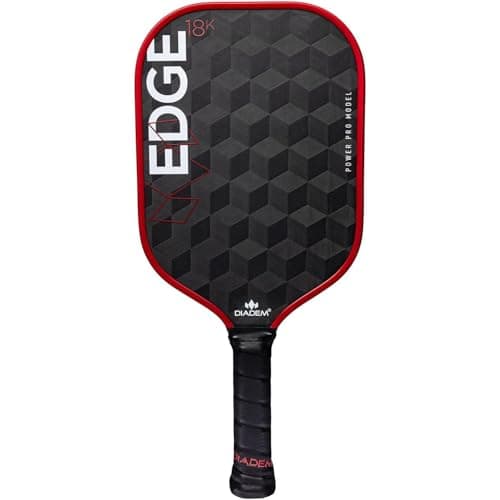 Diadem Edge 18K Power Pro Diadem's power paddle, and its longest handle | The one most players should buy | 8.0 | |
| 2 | 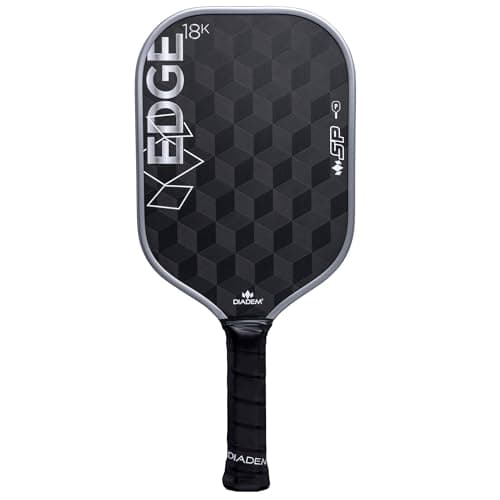 Diadem Edge 18K SP Hand speed and quick exchanges at the kitchen | Buy for hand speed, if you accept the trade | 7.5 | $174.95 · View on Amazon #adPrice as of November 20, 2026 |
Tap any row to jump to the full write-up. Prices are pulled live from Amazon.
Diadem Edge 18K Power Pro
The Diadem to buy if you want the brand's 18K face on current thermoformed construction with a 5.7in handle.
Pickleball Central publishes a 16.4 x 7.5in outline, a 16mm polymer honeycomb core, a 3D 18K carbon fiber face, a 5.7in handle, a 4 1/8in grip and an 8.0 oz average in a 7.75-8.25 oz range, thermoformed with carbon wrapped around the edges under the guard. The 5.7in handle is the longest Diadem publishes and the reason this is the two-hander's Diadem.
Buy this one unless hand speed is the specific weakness you are shopping to fix. Diadem publishes a 16.4 x 7.5in outline, a 16mm core on an 8mm PP honeycomb density, a 3D 18K carbon fiber face, a 5.7in handle, a 4 1/8in grip, an 8.0 oz weight and a 240mm balance point, thermoformed with the carbon wrapped around the edges under the guard. We score it 9 spin, 9 power, 7 control, 7 forgiveness. Two extra millimeters of core is the single cheapest source of control in paddle construction: more material between your hand and the ball means more deflection, longer dwell and a softer landing on a reset. The 5.7in handle is the longest Diadem publishes and the reason this is the two-hander's Diadem. The cons are real and worth naming. A 7.5in face on a stiff thermoformed elongated frame is narrow, so our 7 forgiveness score is a mid-table number rather than a good one, and a mishit toward the edge dies instead of merely weakening. The 4 1/8in grip runs small for larger hands and will want an overgrip. And Diadem's own product page is honest that the Pro shape raises swing weight for deeper drives, which is the same thing as saying it is slower to reposition at the net.
- Core
- 16 mm
- Shape
- Elongated
- Face
- 3D 18K carbon fiber
- Weight
- 7.75-8.25 oz (8.0 oz avg)
- Build
- Thermoformed
- Gen
- Edge 18K Power Pro (thermoformed polymer honeycomb)
Manufacturer-listed as USA Pickleball approved. Approvals and delistings change — verify against the current USAP equipment list before tournament play (checked 2026-07).
Diadem Edge 18K SP
The speed cut of Diadem's 18K line: a 14mm core on a 10mm cell honeycomb, thermoformed, built to come off the face fast.
Diadem publishes 16.4 x 7.5in, a 14mm thickness, a 10mm PP honeycomb density, a 3D 18K carbon face, a 240mm balance point and 8.0 oz. The larger 10mm cell is the unusual spec - fewer, bigger cells make a livelier, less damped core, which is why this is the poppiest paddle Diadem sells rather than the most controlled.
The specialist, and the more interesting engineering of the two. Diadem publishes the same 16.4 x 7.5in outline, the same 3D 18K carbon fiber face, the same 4 1/8in Comfort Max grip, the same 8.0 oz in a 7.8-8.2 oz range and the same 240mm balance point - then drops the core to 14mm and, the spec that actually matters, opens the honeycomb cell from 8mm to 10mm with a foam perimeter around it. Fewer, larger cells make a livelier and less damped core, which is why Pickleball Central's own copy for this paddle talks about hand speed and quick reaction rather than touch. We score it 9 spin, 9 power, 6 control, 6 forgiveness, and those last two are tied for the lowest numbers in our catalog. The cons are the reason it is second here. Thinner core plus bigger cells plus a narrow elongated face is the least forgiving combination Diadem builds, and it is the paddle most likely to punish a contact point that is still drifting. The published handle length is also genuinely in dispute - Amazon's listing title says 5.3in, Pickleball Central's spec table says 5.7in - which matters if you hit a two-handed backhand. And on price it is currently the expensive one, which inverts what most buyers expect.
- Core
- 14 mm
- Shape
- Elongated
- Face
- 3D 18K carbon fiber
- Weight
- 8.0 oz
- Build
- Thermoformed
- Gen
- Edge 18K SP (14mm, 10mm PP cell core)
Manufacturer-listed as USA Pickleball approved. Approvals and delistings change — verify against the current USAP equipment list before tournament play (checked 2026-07).
First, the naming, because it is a mess
Diadem's own store calls this paddle the Edge 18K SP. Pickleball Central, Tennis Warehouse, RacquetGuys and JustPaddles all call the same paddle the Edge 18K Speed Pro. Dick's Sporting Goods lists it as the SP. The Amazon listing title says SP and then describes it as built for “Spin & Speed” and “Fast Hands, Quick Reaction Control.”
They are one paddle. If you are searching and finding what look like two different models at two different prices, that is why. We use both names on this page on purpose so the search works either way.
There is a second naming trap worth clearing. Diadem also sells an Edge 18K Power family in three shapes — Standard, Pro and MAX — all of which are 16mm on the 8mm cell. The Power Pro is the elongated, long-handled shape of that family, and it is what we compare here. The Power Standard uses a 5.3in handle and the MAX is a 15.7 x 8.2in widebody at a 235mm balance point. If forgiveness is what you are actually shopping for, the MAX is the shape to look at, not either paddle on this page.
What actually differs
Everything in the first list is published as identical on both paddles. Everything in the second is not.
Identical: 3D 18K carbon fiber face. 16.4in length. 7.5in width. 4 1/8in grip circumference. 8.0 oz average weight. 240mm balance point. Elongated outline. Thermoformed construction.
Different: core thickness, 16mm against 14mm. Honeycomb cell size, 8mm against 10mm. Perimeter construction, carbon wrapped around the edges under the guard on the Power Pro against a foam perimeter on the Speed Pro. Edge guard, a rim guard on the Power Pro against Diadem's Edge Shield Pro on the Speed Pro. And the handle, where the sources disagree with each other.
That is a short list, and it is why this comparison is worth a page. The face is the most-marketed part of a modern paddle and it is the same here, so nothing about spin generation separates these two — our scores give both a 9. Anybody telling you one of these paddles grips the ball better than the other is describing a core difference in face language.
The spec that matters most is the one nobody shops on
Core thickness gets all the attention. Cell size does more work, and almost no brand publishes it.
A polypropylene honeycomb core is a grid of hollow cells standing on end between the two faces. The cell wall is what resists the ball. Make the cells smaller and you pack more walls into the same area: the core gets stiffer, more damped and quieter, the ball sits on the face a fraction longer, and the paddle feels more controlled. Make the cells larger and you remove wall material: the core gets livelier and springier, the ball leaves sooner, and the paddle feels faster and louder.
Diadem publishes an 8mm cell on the Power Pro and a 10mm cell on the Speed Pro. That is a 25 percent larger cell, and it is pulling in the same direction as the 2mm-thinner core. Both changes make the SP quicker off the face and less forgiving. This is not a brand hedging two ways — it is a coherent design decision, and it explains why the SP carries 6s for control and forgiveness on our scale while sharing a 9 for power with its sibling.
The foam perimeter on the Speed Pro pulls slightly the other way. Foam packed around the inside of the frame adds mass at the edges, which raises twist weight and buys back a little of the stability a thinner core gives up. We have no measured twist weight for either paddle, so we are not going to claim a number — but it is the reason we did not score the SP lower than 6. Our swing weight and twist weight guide explains why perimeter mass does more for mishits than static weight ever does, and 14mm vs 16mm cores covers the thickness decision across the whole market rather than inside one line.
The handle conflict, and why it is not a footnote
Diadem publishes a 5.7in handle on the Edge 18K Power Pro, and the Amazon listing title says the same thing: “5.7-In Extended Handle.” Those agree, so the Power Pro's handle is settled.
The Speed Pro is not settled. Amazon's listing title says “5.3-In Comfort Handle.” Pickleball Central's spec table for the same paddle says 5.7in. Four tenths of an inch sounds like nothing until you hit a two-handed backhand, where it is the difference between both hands fitting on the grip and your bottom hand riding the bevel.
We are not going to guess. If a two-handed backhand is part of your game, buy the Power Pro, where the 5.7in figure is corroborated — and where Diadem's own shape description says the extended handle is the point. If you want the Speed Pro and you need the length, measure it when it arrives and return it if it is 5.3in. Our handle length guide covers how much handle a two-hander actually needs, and best paddles for a two-handed backhand ranks the frames built for it across brands.
Why the thinner paddle costs more
This is the oddest thing about the matchup and the most useful to know before you buy.
At the time of writing, the 16mm Power Pro is listed on Amazon at a substantial discount to Diadem's own sale price, which is itself well under the regular price Diadem prints on its own page. The 14mm Speed Pro is listed at Diadem's sale price on Amazon and at the same number on Pickleball Central. In other words the Power Pro is being cleared and the Speed Pro is not.
Two readings fit. One is that the Speed Pro is the newer product and holding its price. The other is that the Power Pro is the better-selling shape and gets discounted into volume. Either way the practical effect is the same: today you pay a premium for the paddle with less core in it, and that is a bad trade unless hand speed is specifically what you came for.
Our how much should a paddle cost guide covers what the money actually buys at each tier. The short version for this page: both paddles sit in the upper-mid bracket at their current Amazon prices, below the thermoformed flagships and above the value tier, and the Power Pro is currently the better value by a clear margin.
One buyer-first note. Diadem is a brand whose own store runs long sales, and on these two models the direct price has at times been higher than Amazon's rather than lower. Check both. We earn nothing when you buy direct and we would still rather you paid less.
Who should buy which
Buy the Power Pro if: you hit a two-handed backhand; you reset and dink more than you bang; your contact point still varies; you want Diadem's 18K face on the more controllable core; or you are price-sensitive, because right now it is the cheaper paddle. This is most players, and it is why it leads our Diadem shelf as well.
Buy the Speed Pro if: you are specifically losing fast exchanges at the kitchen line; you already play a thin core and know you hit the middle of the face; you want the fastest ball off the face Diadem makes; or you want the foam perimeter, which is the more modern construction of the two. Our best 14mm power paddles page ranks thin-core frames across brands if the SP looks right but Diadem does not.
Buy neither if: forgiveness is your actual problem. Both of these are 7.5in-wide elongated frames and both carry mid-table or worse forgiveness scores from us. A wider face fixes mishits and nothing on this page does. Start at most forgiving pickleball paddles or best widebody pickleball paddles instead — and inside Diadem's own range, the Edge 18K Power MAX is the widebody shape to look at.
Buy neither if your elbow is complaining either. Both are stiff thermoformed frames at 8.0 oz with a 4 1/8in grip. Our paddles for tennis elbow page is the right starting point, and Diadem's own answer there is the 19mm Warrior with the aramid layer, not an 18K Edge.
The approval picture
Both Amazon listing titles state “USAPA Approved.” Diadem's own Edge 18K Power page states USAPA Approved. Pickleball Central's spec table for the Speed Pro carries no certification field at all, which is an absence of information rather than a contradiction.
The procedure is the same as on every paddle page we publish: before you buy for sanctioned play, look up your exact model and core thickness on the current USA Pickleball equipment list, which is the only authority and which changes. Our USAP approved paddles guide explains how to read that list and what a delisting actually means for a paddle you already own.
The verdict
Buy the Edge 18K Power Pro. Same face, same outline, same weight, same balance, a corroborated 5.7in handle, two more millimeters of core, a smaller and better-damped cell, and — at the time of writing — a materially lower price. On our scale that is two points of control and two of forgiveness for less money, which is not a close call.
Buy the Edge 18K Speed Pro if hand speed is the problem you are solving and you are willing to pay more for a thinner core to solve it. It is a coherent, well-designed paddle: the 10mm cell and the foam perimeter are a real engineering answer to a real complaint, and Diadem publishes more detail about them than most brands publish about anything. Go in knowing it is the least forgiving paddle on the Diadem shelf, by our own scoring, on purpose.
If this comparison has you questioning the brand rather than the model, the two pages worth reading next are best Diadem paddles, which ranks all five of the Diadem frames we cover including the 19mm Warrior and the entry Icon, and FRIDAY Aura vs Aura Pro, which is the same kind of one-variable decision in a foam core rather than a honeycomb one.
Is the Diadem Edge 18K SP the same paddle as the Speed Pro?
Yes. Diadem's own store names it Edge 18K SP; Pickleball Central, Tennis Warehouse, RacquetGuys and JustPaddles all call the identical paddle the Edge 18K Speed Pro, and Dick's Sporting Goods lists it as the SP. One paddle, two names, which is why the same model can appear twice in a search at two prices.
What is the difference between the Diadem Edge 18K Power Pro and the Speed Pro?
The core. Diadem publishes the same 3D 18K carbon fiber face, the same 16.4 x 7.5in elongated outline, the same 4 1/8in grip, the same 8.0 oz weight and the same 240mm balance point on both. The Power Pro runs a 16mm core on an 8mm polypropylene honeycomb cell with carbon wrapped around the edges. The Speed Pro runs a 14mm core on a 10mm cell with a foam perimeter. Thinner core plus larger cell equals a faster, livelier, less forgiving paddle.
Does honeycomb cell size actually matter?
It matters more than most buyers realize, and almost no brand publishes it. The cell wall is what resists the ball, so smaller cells pack more wall material into the same area - stiffer, more damped, quieter, longer dwell, more control. Larger cells remove wall material, so the ball leaves sooner and the paddle feels faster and louder. Diadem's 8mm against 10mm is a 25 percent difference in cell size, pulling the same direction as the 2mm of core thickness between these two paddles.
How long is the handle on the Diadem Edge 18K Speed Pro?
The sources disagree and we are not going to guess. The Amazon listing title says 5.3in; Pickleball Central's spec table for the same paddle says 5.7in. The Power Pro is settled at 5.7in, corroborated by both Diadem and the Amazon listing. If you hit a two-handed backhand, that corroboration is a reason to buy the Power Pro, or to measure the Speed Pro on arrival while it is still returnable.
Why is the 14mm Diadem more expensive than the 16mm one?
Because the Power Pro is being discounted and the Speed Pro is not. At the time of writing the 16mm Power Pro is listed on Amazon well under Diadem's own sale price, while the 14mm Speed Pro sits at the same number on Amazon and at Pickleball Central. The practical effect is that you currently pay a premium for less core, which is a bad trade unless hand speed is the specific weakness you are fixing. Our live price layer refreshes daily, so check the current numbers on this page before deciding.
Which Diadem paddle is the most forgiving?
Neither of these. Both are 7.5in-wide elongated frames and we score them 7 and 6 for forgiveness. Inside Diadem's own range the Edge 18K Power MAX is the widebody shape at 15.7 x 8.2in with a 235mm balance point, and the 19mm Warrior with its aramid middle layer is the most vibration-damped paddle we have specced. Across brands, our most forgiving paddles roundup is the right page.
Are these two paddles USA Pickleball approved?
Both Amazon listing titles say USAPA Approved, and Diadem's own Edge 18K Power page says the same. Pickleball Central's Speed Pro spec table carries no certification field, which is missing information rather than a contradiction. Approvals and delistings change, so look your exact model and core thickness up on the current USA Pickleball equipment list before sanctioned play.