Best Widebody Pickleball Paddles
Every flagship paddle in this sport is getting longer. The widebody is the argument in the other direction — more face width, more twist weight, more margin on the ball you did not hit in the middle.
Disclosure: Drive Dink earns a commission from qualifying Amazon purchases at no extra cost to you. We accept no free products and no paid placements — commissions never change our picks. How this works.
If you want one answer: the 11Six24 Pegasus Power 2 is the widebody pickleball paddle to buy, and it is for the upgrading player who keeps catching the ball off the middle of the face and has decided to fix it with the outline rather than with more practice. It is the widest face we cover at a published 15.8 x 8.12in, it keeps a 16mm core so you do not trade touch for stability, and it is the only widebody here with a handle long enough for a two-handed backhand. Buy the Selkirk Vanguard Power Air Epic instead if you want pop and an edgeless face, the CRBN2 TruFoam Genesis if you want a full foam core in the same shape, and the Vatic Pro V-Sol Pro Bloom if you want the most spin per dollar on the page.
Units we claim to have tested: 0. Picks are ranked on manufacturer-published dimensions and construction and on our editorial scores, compiled from those specs and the consistent reviewer record. Live Amazon prices render on every card below and move daily.
| # | Paddle | Best for | Score | Price |
|---|---|---|---|---|
| 1 | 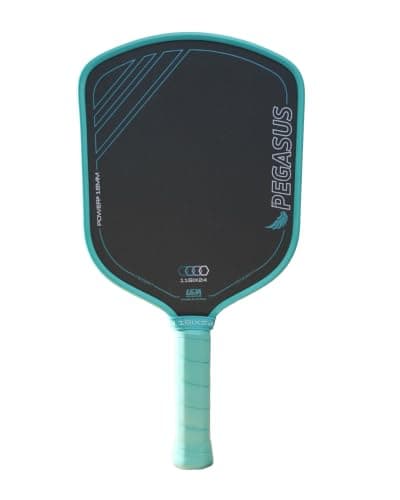 11Six24 Pegasus Power 2 The widest, most stable Power 2 | Best widebody overall | 8.3 | $209.99 · View on Amazon #adPrice as of October 23, 2026 |
| 2 | 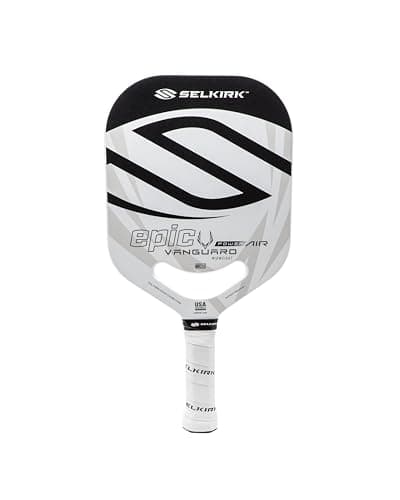 Selkirk Vanguard Power Air Epic Selkirk's widest, most forgiving outline | Most forgiving face, most pop | 7.5 | |
| 3 | 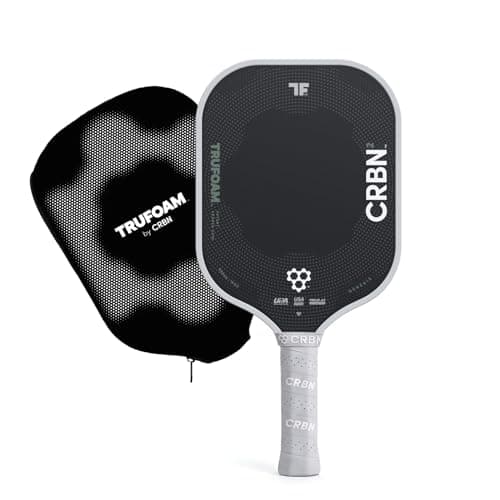 CRBN2 TruFoam Genesis (Square) A full foam core in the widest CRBN outline | Best foam-core widebody | 8.3 | $199.99 · View on Amazon #adPrice as of October 23, 2026 |
| 4 | No image Vatic Pro V-Sol Pro Bloom 16mm Maximum face width and margin on mishits | Best value widebody | 8.5 |
Tap any row to jump to the full write-up. Prices are pulled live from Amazon.
11Six24 Pegasus Power 2
The widebody Power 2 — same core and face as its two siblings, in the outline that forgives a mishit best.
15.8 x 8.12in, a 16mm Gen 4 floating core, a HexGrit face, a 5.75in handle, a 4 1/8in grip and an 8.15 oz average. Every one of those numbers except the outline is shared with the Vapor and the Hurache-X, which makes this line a rare chance to choose purely on shape. Pegasus is the wide one: the highest twist weight of the three and the most margin when contact drifts off the middle. Note the approval - 11Six24 lists the Power 2 line as UPA-A, which is the professional-side certification and not the same thing as USA Pickleball approval.
For the player who wants the widebody outline without giving up anything else to get it. 11Six24 publishes the Pegasus at 15.8 x 8.12in - the widest face in our catalog - on a 16mm Gen 4 floating core behind a HexGrit face, with a 5.75in handle, a 4 1/8in grip and an 8.15 oz average. It scores an 8 on spin, power and control with a 9 on forgiveness, and that is the shape of a paddle doing its job: width buys mishit margin without costing you the thick-core touch a 13mm frame gives up. It is also the only widebody here with a handle long enough for a two-handed backhand. Two honest cons. The first is price: 11Six24 sits above the JOOLA Pro IV paddles it gets cross-shopped against, with far thinner Amazon circulation, so fewer failure modes are publicly known. The second is the approval - 11Six24 lists the Power 2 line as UPA-A, the professional-tour certification, and does not name USA Pickleball approval, which matters if you play sanctioned amateur events.
- Core
- 16 mm
- Shape
- Widebody
- Face
- HexGrit face over a Gen 4 floating core
- Weight
- ~8.15 oz
- Build
- Thermoformed
- Gen
- Gen 4 (Power 2)
11Six24 lists the Power 2 line as UPA-A approved — the professional-tour certification, which is a separate program from USA Pickleball approval. Check the current USA Pickleball equipment list before amateur tournament play, and your event's own rules before professional play (checked 2026-10).
Selkirk Vanguard Power Air Epic
The widebody Power Air: 15.75 x 8in with an edgeless frame, which buys the biggest margin on an off-center ball of any Selkirk we cover.
Selkirk publishes a 0.5in (about 13mm) polymer honeycomb core behind a hybrid fiberglass-and-carbon face, in a 15.75 x 8in outline with a 5.25in handle, a 4.25in grip and a 7.7-8.1 oz range. The edgeless DuraEdge construction removes the plastic bumper, so face area runs right to the rim. Two things follow from the numbers: the wide, short outline is the easiest Selkirk to turn over at the kitchen and the most stable on a mishit, and the thin core makes it the poppiest - at the cost of touch.
For the player whose misses are wide and whose complaint is that their paddle feels dead. Selkirk publishes the Epic at 15.75 x 8in with edgeless DuraEdge construction, which removes the plastic bumper so the hitting surface runs right to the rim, over a 0.5in (about 13mm) polymer honeycomb core and a hybrid fiberglass-and-carbon face, at 7.7-8.1 oz with a 5.25in handle. The thin core is the whole personality: it is the poppiest paddle on this page, and it carries our joint-highest forgiveness score of 9. Buy it if you want free pace and the biggest effective face. The cons are the matching pair of that trade: a 6 on control, which is the lowest here, so resets and drops take more work than they do on a 16mm frame; a fiberglass-blend face that holds spin to a 7; and edgeless construction is a trade, not an upgrade, because there is no replaceable bumper after you dig one out of the court.
- Core
- 13 mm
- Shape
- Widebody
- Face
- Hybrid fiberglass and carbon-fiber face, Edgeless DuraEdge
- Weight
- 7.7-8.1 oz
- Build
- Cold-pressed
- Gen
- Vanguard Power Air
Manufacturer-listed as USA Pickleball approved. Approvals and delistings change — verify against the current USAP equipment list before tournament play (checked 2026-07).
CRBN2 TruFoam Genesis (Square)
CRBN's 100% foam core in the square outline — the most forgiving paddle CRBN makes, and the only one we cover whose maker publishes a PBCoR .43 certification by name.
CRBN publishes a 14mm 100% foam core — not a foam-injected honeycomb, the whole core — behind a Toray T700 carbon face with an added fiberglass layer, in a 7.85 x 16in square outline with a 5.5in handle, a 4.125in grip and an 8.1 oz average within 0.2 oz. CRBN lists it as USAP approved and PBCoR .43 certified; its own pages are inconsistent on UPA-A, calling it approved in one place and provisionally approved in another, so verify before professional play. CRBN publishes no molding method.
For the player who wants the widebody shape and the newest core technology in the same purchase, and who is comfortable being early. CRBN publishes the Genesis as a 14mm 100% foam core - the entire core, not a foam-injected honeycomb - behind a Toray T700 carbon face with an added fiberglass layer, in a 7.85 x 16in square outline with a 5.5in handle and an 8.1 oz average within 0.2 oz. It scores a 9 on forgiveness with straight 8s elsewhere, and it is the only paddle on this page whose maker publishes a PBCoR .43 certification by name. The cons need saying plainly. No full foam core has a multi-season durability record anywhere, and a core that softens gradually is a worse failure than one that cracks, because you will not notice it happening. CRBN publishes no molding method, and its own pages contradict each other on UPA-A status - approved in one place, provisionally approved in another.
- Core
- 14 mm
- Shape
- Widebody
- Face
- Toray T700 carbon with an added fiberglass layer, 100% foam core
- Weight
- 8.1 oz +/- 0.2
- Build
- Not published
- Gen
- TruFoam Genesis (100% foam)
Manufacturer-listed as USA Pickleball approved. Approvals and delistings change — verify against the current USAP equipment list before tournament play (checked 2026-07).
Vatic Pro V-Sol Pro Bloom 16mm
The widebody V-Sol Pro — 16 x 8in, long handle only. The widest, most forgiving face in the line and the one to buy if off-center contact is the weakness you are fixing.
Bloom trades the V7's reach for width: Vatic lists it at 16 x 8in against the V7's 16.5 x 7.5in, which spreads the sweet spot sideways and raises twist weight — the spec that decides how much a paddle turns in your hand on an off-center ball. It ships in the 5.6in long handle only, so two-handed backhand players lose nothing by choosing it.
For the player who wants to test whether the outline fixes anything before spending flagship money. Vatic lists Bloom at 16 x 8in against the V7's 16.5 x 7.5in, on the same floating EPP foam core and raw Toray T700 carbon face as the rest of the V-Sol Pro line, in a 5.6in long handle only. It carries our joint-highest forgiveness score of 9 alongside a 9 on spin, which is the best spin score on this page by a full point, and it is the cheapest full foam core we cover. If your misses are wide and you also want the ball to bite, this is the one. The cons: Vatic publishes no molding method for the line, the same no-durability-record caveat applies as it does to the Genesis, and the listed 8.0-8.3 oz static weight is light enough that most players add lead tape.
- Core
- 16 mm
- Shape
- Widebody
- Face
- Raw Toray T700 carbon fiber (heat-compressed texturing)
- Weight
- ~8.0-8.3 oz (listed)
- Build
- Not published
- Gen
- V-Sol (Gen 4 foam core)
Manufacturer-listed as USA Pickleball approved. Approvals and delistings change — verify against the current USAP equipment list before tournament play (checked 2026-07).
What "widebody" actually means
USA Pickleball caps a paddle at 17 inches long and at 24 inches of length plus width combined. Every maker is therefore spending the same budget in different proportions, and the three names you see on spec sheets are just three ways to spend it. An elongated paddle is taller and narrower. A standard shape sits in the middle. A widebody spends the budget on width: shorter than a standard frame, and wider than anything else on the shelf.
The number that changes is twist weight — how much the head resists rotating in your hand when the ball lands away from the center line. Width is the single biggest lever on it, because mass sitting further out to the sides of the handle axis is what resists that rotation. A wider paddle does not literally have more square inches of sweet spot; it has a sweet spot that punishes you less for missing it. On a mishit, a high-twist-weight paddle loses less ball speed and sends the ball closer to where you aimed.
That is the entire case for the shape, and it is a narrow case. If the points you lose are balls you could not reach, a widebody is the wrong paddle and you want our elongated roundup instead. If the points you lose are balls you reached and shanked, read on. The full taxonomy is in our paddle shape guide, and the broader question of mishit tolerance — which also covers elongated and hybrid frames that happen to be forgiving — is on the most forgiving paddles.
The published numbers, side by side
Every figure here is the manufacturer's own. Where a maker publishes nothing — molding method on the TruFoam line and on the V-Sol Pro line — the row says so rather than guessing.
| Spec | Pegasus Power 2 | Power Air Epic | TruFoam Genesis | V-Sol Pro Bloom |
|---|---|---|---|---|
| Published outline | 15.8 x 8.12in | 15.75 x 8in | 7.85 x 16in | 16 x 8in |
| Core | 16mm Gen 4 floating | ~13mm polymer honeycomb | 14mm 100% foam | 16mm floating EPP foam |
| Face | HexGrit | Fiberglass + carbon hybrid | T700 carbon + fiberglass layer | Raw Toray T700 carbon |
| Handle | 5.75in | 5.25in | 5.5in | 5.6in (only length offered) |
| Listed weight | ~8.15 oz | 7.7-8.1 oz | 8.1 oz +/- 0.2 | ~8.0-8.3 oz |
| Molding method | Thermoformed | Not thermoformed | Not published | Not published |
| Edge guard | Standard bumper | Edgeless (DuraEdge) | Standard bumper | Standard bumper |
| Our forgiveness score | 9 | 9 | 9 | 9 |
| Our spin / power / control | 8 / 8 / 8 | 7 / 8 / 6 | 8 / 8 / 8 | 9 / 8 / 8 |
| Approval as listed | UPA-A (not USAP) | USAP | USAP + PBCoR .43 | USAP |
Read the bottom three rows together and the page sorts itself. All four score a 9 on forgiveness, which is what you came for and which none of them differentiates on. The separation is everywhere else: the Epic is two points down on control because of its thin core, Bloom is a point up on spin because of its raw T700 face, and the Pegasus is the only one with a handle long enough for a two-hander — at the cost of an approval that is not USA Pickleball's.
Why core thickness matters more here than usual
Three of these four paddles run a 14mm or 16mm core and one runs about 13mm, and on a widebody that gap is louder than it would be on an elongated frame. A wide, short outline already has low swing weight — there is less mass out at the tip to accelerate — so the paddle is fast through a hands exchange whatever the core does. Add a thin core to that and you get a frame that is both quick and springy, which is excellent at the kitchen and genuinely difficult to reset with, because the ball leaves before the face has had time to absorb it.
That is the Epic. It is not a flaw; it is a choice, and it is the right choice for a player whose problem is generating pace. But if you are buying a widebody because you want to be steadier, a thin core partly undoes the reason you are here. The 16mm Pegasus and the 16mm Bloom are the two that give you width and dwell at the same time. Our 14mm vs 16mm guide covers the trade in general, and dwell time explains why the thicker core feels slower off the face.
Two of these are full foam cores. Be deliberate about that.
The TruFoam Genesis and the V-Sol Pro Bloom are not honeycomb paddles with foam injected into the perimeter. Both makers publish a core that is foam throughout. The advantage is exactly the one this page is about: foam distributes impact across the whole core rather than through a cell-wall grid, which is part of why both land on a 9 for forgiveness.
The risk is equally specific. Honeycomb paddles fail visibly — they delaminate, they crack, you can hear it. A foam core that compresses and softens over a season fails invisibly, and nobody has owned one for long enough to publish what that curve looks like. We have no test data and neither does anyone else, so we are not going to pretend the risk is priced. If you want the shape without that unknown, the Pegasus and the Epic are conventional cores. More on the construction itself in our foam-core roundup and in Gen 3 and Gen 4 foam paddles explained.
The 11Six24 approval catch
Our top pick carries a certification that is not the one most readers assume. 11Six24 lists the Power 2 line as UPA-A approved. UPA-A is the professional tour's equipment program; USA Pickleball approval is the one sanctioned amateur tournaments check. They are separate programs with separate lists, and a paddle can hold one without the other.
Practically: it makes no difference at all in recreational play, it is a real problem if you enter a USAP-sanctioned event, and at the professional end it is the certification that counts. We rank the Pegasus first because it is the best widebody we cover, and we are telling you this so the decision is yours. If you play sanctioned amateur events, the Genesis and Bloom are listed as USA Pickleball approved and the Epic is Selkirk's standard USAP-listed construction. Verify your exact model against the current list before you enter anything — see USAP approval and delisting, explained and PBCoR .43 explained.
How we ranked these
Four paddles, because four is how many widebody frames we cover. We did not pad the list with hybrids that happen to be slightly wide, and we did not leave a paddle off because it is cheap. Ranking is on published construction and dimensions plus our own 1-10 scores, which are an editorial read of those specs against the consistent reviewer record — not lab output. We do not run a lab and do not claim to. Every listing was confirmed in our registry on October 17, 2026, and prices come from our live price layer rather than being typed into the page. The full approach is on our methodology page.
The bottom line
Buy the Pegasus if you want the best widebody we cover and the UPA-A listing does not affect where you play. Buy the Power Air Epic if you want pop and an edgeless face and you are not trying to fix your soft game. Buy the TruFoam Genesis if the foam core is the part you want and you accept the unknown. Buy Bloom if you want the most spin for the least money. And if you are not yet sure the outline is your problem at all, start with standard-shape paddles or how to choose a paddle before you spend anything.
What is the best widebody pickleball paddle?
The 11Six24 Pegasus Power 2. It is the widest face we cover at a published 15.8 x 8.12in, it keeps a 16mm Gen 4 core so the extra stability does not cost you touch, and it has the only handle on this page long enough for a two-handed backhand. The one thing to check first is the approval: 11Six24 lists the Power 2 line as UPA-A rather than USA Pickleball approved.
What is a widebody pickleball paddle?
A paddle that spends its rulebook-capped face area on width rather than length. USA Pickleball limits a paddle to 17 inches long and 24 inches of length plus width combined, so a wider frame is necessarily a shorter one. Widebody frames typically measure around 8 inches across against roughly 7.5 inches for an elongated paddle.
Is a widebody paddle better for beginners?
It is more forgiving, which helps anyone, but that is not the reason to buy one. The specific thing a widebody fixes is losing ball speed and accuracy when contact drifts off the center line. If your misses are wide, the outline is the right spec to change at any level. If you are mostly late to the ball, the answer is swing weight, not width.
Does a widebody paddle have a bigger sweet spot?
Not more square inches of it — a wider face raises twist weight, which is how much the head resists rotating when you hit away from the middle. The practical effect is that off-center contact costs you less speed and less accuracy, which is what most players mean when they say a paddle has a big sweet spot.
Are widebody paddles good for a two-handed backhand?
Only if the handle is long enough, and most are not, because a shorter frame usually means a shorter handle. Of the four here, the 11Six24 Pegasus publishes a 5.75in handle and the Vatic Bloom a 5.6in, both of which give a second hand room. The Selkirk Power Air Epic's 5.25in handle is the one to avoid for a two-hander.
Widebody or elongated — which should I buy?
Decide on which point you lose. If you lose balls you could not reach, buy elongated: length is leverage and reach. If you lose balls you reached and shanked, buy widebody: width is stability. If neither description fits, a standard shape sits between the two and is usually the lower-regret purchase.
- Paddle shape: elongated vs standard vs widebody
- Best standard-shape pickleball paddles
- Most forgiving pickleball paddles
- Best elongated pickleball paddles
- Swing weight & twist weight explained
- Best 11Six24 paddles
- 11Six24 Pegasus vs Hurache-X
- Best foam-core pickleball paddles
- Best Selkirk paddles
- Best CRBN paddles