Best Bread & Butter Pickleball Paddles (2026)
The brand's Amazon shelf is one model in three outlines at one price, so this is a shape decision rather than a price decision. Here is which Loco fits which game.
Disclosure: Drive Dink earns a commission from qualifying Amazon purchases at no extra cost to you. We accept no free products and no paid placements — commissions never change our picks. How this works.
The verdict: buy the Loco 16mm in the standard 16 x 8in shape unless you have a specific reason not to. It carries the lowest published swing weight and the highest published twist weight in the line, which is the forgiving end of the range, and it costs exactly the same as the other two. Take the elongated instead if you hit a two-handed backhand and want the 5.5in handle, or the hybrid if you want reach without the full trade.
What Bread & Butter is known for. The brand built its name on direct-to-consumer paddles sold with blunt marketing and a deliberately soft, connected feel rather than the hard pop most power paddles chase. The Loco is the model that carries that identity: a 16mm dual-density core that combines EPP and EVA foam, a raw Toray T700 carbon face with a fiberglass layer behind it for extra response, and an octagonal handle wrapped for vibration damping. Retailer spec fields list the line at 227 g, give or take 5 g, which is roughly 8.0 oz, and list it as USA Pickleball approved.
The honest constraint on this page. Bread & Butter sells most of its catalog on its own site, and only one model has live Amazon listings we could verify: The Loco 16mm, in standard, hybrid and elongated, all three in stock at the same price when we checked on November 12, 2026. So this is not a five-model brand ranking. It is a shape decision on one paddle, which is the decision the brand's Amazon shelf actually offers you. There is no cheaper Loco to name as a budget pick, because all three cost the same - if your budget is the binding constraint, our best pickleball paddles under $150 ranking has frames at half this money.
Units we claim to have tested: 0. Every spec here is a manufacturer or retailer published figure, and the scores are our own editorial read of those figures rather than measurements. Prices come from our live layer with an as-of date under each button.
| # | Paddle | Best for | Score | Price |
|---|---|---|---|---|
| 1 | 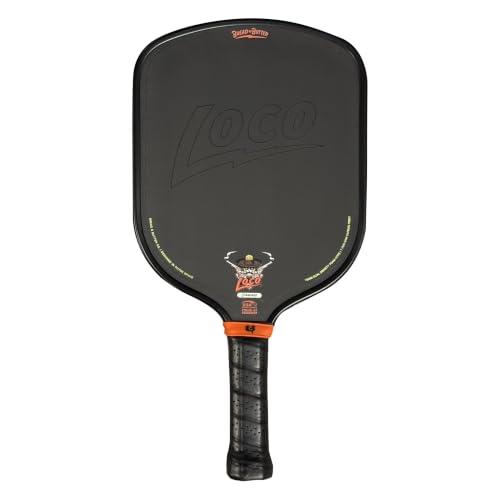 Bread & Butter The Loco 16mm (Standard) The widest, most forgiving Loco shape | Best overall: the widest, most forgiving Loco | 8.5 | $149.25 · View on Amazon #adPrice as of November 20, 2026 |
| 2 | 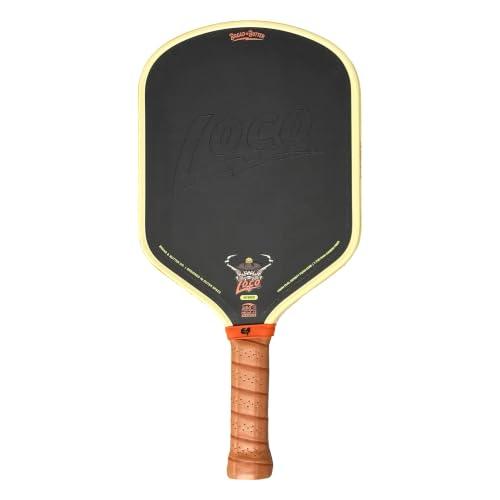 Bread & Butter The Loco 16mm (Hybrid) The middle Loco - reach without the full elongated trade | Best all-court compromise | 8.3 | $149.25 · View on Amazon #adPrice as of November 20, 2026 |
| 3 | 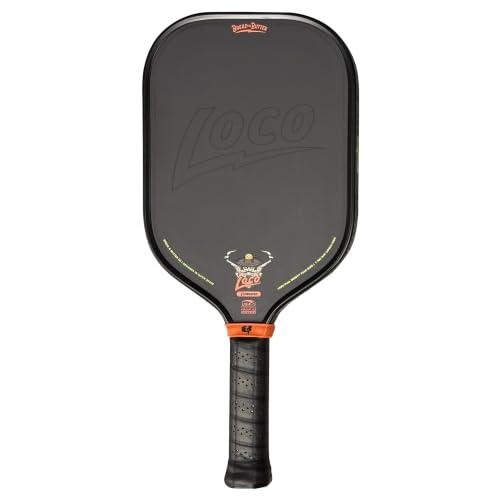 Bread & Butter The Loco 16mm (Elongated) Reach and drive power, with the line's longest handle | Best for drives and two-handed backhands | 8.0 | $149.25 · View on Amazon #adPrice as of November 20, 2026 |
Tap any row to jump to the full write-up. Prices are pulled live from Amazon.
Bread & Butter The Loco 16mm (Standard)
A 16 x 8in standard frame on a dual-density foam core — the Loco shape to buy if you want the brand's spin surface without its swing weight.
Bread & Butter builds all three Loco shapes the same way: a 16mm dual-density core of EPP and EVA foam behind a raw Toray T700 carbon face with a fiberglass layer underneath for pop, and an octagonal handle with a vibration-dampening wrap. The standard shape is the widest of the three at a published 16 x 8in, with the lowest published swing weight in the line (108) and the highest twist weight (7.3) — which is the spec pair that produces mishit margin. The handle is the shortest Loco at 5.3in, so a two-handed backhand is cramped.
Who it is for: most players, and specifically anyone whose last paddle punished off-center contact. This is the 16 x 8in outline, the widest of the three, and the published numbers back up what the shape implies - a swing weight of 108, the lowest in the line, against a twist weight of 7.3, the highest in the line. That pairing is the definition of a forgiving frame: less effort to accelerate, more resistance to twisting when you catch the ball off the middle of the face. On our scoring it takes a 9 on control and a 9 on forgiveness while holding the same 9 on spin as its siblings, because the face material does not change between shapes. The cons are real. The 5.3in handle is the shortest Loco, so a two-handed backhand has to crowd the hand onto the shoulder of the grip. A standard outline gives up reach at the stretch volley and loses leverage on a drive, which is why we score it a 7 on power rather than the 9 the elongated gets. And this is a soft-feeling paddle by design - the dual-density foam core is plush, not crisp, so if you want the hard, hollow report of a thermoformed honeycomb frame you will not like it.
- Core
- 16 mm
- Shape
- Standard
- Face
- Raw Toray T700 carbon over fiberglass
- Weight
- ~8.0 oz (227 g +/-5 g)
- Build
- Not published
- Gen
- —
Retailer spec fields list the Loco 16mm as USA Pickleball approved (checked 2026-11). Approvals and delistings change — verify against the current USAP equipment list before tournament play.
Bread & Butter The Loco 16mm (Hybrid)
The all-court Loco: the same foam core and raw T700 face in the outline between the 16 x 8in standard and the 16.5in elongated.
Identical construction to the other two Locos — a 16mm dual-density EPP and EVA foam core, a raw Toray T700 carbon face over a fiberglass layer, an octagonal handle with a vibration-dampening wrap — in the shape Bread & Butter positions between its standard and elongated frames. Be careful with the numbers on this one: retailer listings disagree on the hybrid's published length and handle (16.2in with a 5.3in handle in one, 16.5 x 7.375in with a 5.5in handle in another), so we describe it by its position in the line rather than assert a dimension. Amazon stocks it in Tan and Azul.
Who it is for: the player who wants a little more reach than the standard without the full elongated trade-off. Construction is identical to the other two Locos, which is the useful thing about this line - the same 16mm dual-density EPP and EVA foam core, the same raw Toray T700 face with a fiberglass layer underneath for pop, the same octagonal handle with a vibration-dampening wrap. We score it in the middle on every axis, an 8 for control, power and forgiveness alike, with the shared 9 on spin. It is the safest buy of the three if you are coming from a paddle you liked and do not want to relearn a shape. The cons: one honest caveat about the numbers, which is that retailer listings disagree on this paddle's published dimensions - one gives 16.2in long with a 5.3in handle, another gives 16.5 x 7.375in with a 5.5in handle - so we rank it by its position in the line rather than claim a figure we cannot confirm. A middle shape is also the one most likely to leave you wishing you had committed in one direction, and the hybrid is the only Loco where the color choice on Amazon is limited to Tan and Azul.
- Core
- 16 mm
- Shape
- Hybrid
- Face
- Raw Toray T700 carbon over fiberglass
- Weight
- ~8.0 oz (227 g +/-5 g)
- Build
- Not published
- Gen
- —
Retailer spec fields list the Loco 16mm as USA Pickleball approved (checked 2026-11). Approvals and delistings change — verify against the current USAP equipment list before tournament play.
Bread & Butter The Loco 16mm (Elongated)
A published 16.5 x 7.375in frame with a 5.5in handle — the Loco for players who hit through the ball and want room for two hands.
The elongated Loco is the power end of the line: a published 16.5in length and 7.375in face width on the same 16mm dual-density EPP and EVA foam core, behind the same raw Toray T700 carbon face with a fiberglass layer for pop. Its 5.5in handle is the longest of the three shapes, which is the reason to pick it if you hit a two-handed backhand. The trade is the one every elongated frame makes — a narrower face and a higher swing weight than the 16 x 8in standard, so off-center contact costs more.
Who it is for: players who hit through the ball, take the two-handed backhand, and will trade mishit margin for leverage. The published frame is 16.5 x 7.375in with a 5.5in handle, which is the longest handle in the line by a clear margin and the main reason to pick this shape. Length past the standard's 16in puts more mass further from your hand, and that is what turns a drive into a finisher - we score it a 9 on power against the standard's 7, with the same 9 on spin from the identical raw T700 face. The cons are the ones every elongated frame carries, and they are not small. The face is narrower, so off-center contact costs more, and we score it a 7 on both control and forgiveness where the standard takes a 9 on each. The higher swing weight that gives you the drive also makes the paddle slower to turn over in a hands battle at the kitchen. And because Bread & Butter publishes no molding method for this line, you are buying a foam core on the strength of its spec sheet rather than a documented build process.
- Core
- 16 mm
- Shape
- Elongated
- Face
- Raw Toray T700 carbon over fiberglass
- Weight
- ~8.0 oz (227 g +/-5 g)
- Build
- Not published
- Gen
- —
Retailer spec fields list the Loco 16mm as USA Pickleball approved (checked 2026-11). Approvals and delistings change — verify against the current USAP equipment list before tournament play.
What Bread & Butter actually builds
Four published construction details define the Loco, and all three shapes share every one of them. That is unusual and it is the reason this page can be short on comparison and long on shape.
A dual-density foam core. Rather than a plastic honeycomb, the Loco uses a 16mm core that combines EPP and EVA foam at different densities. Foam cores are the direction the premium end of this market has moved - CRBN's TruFoam line and the Gen-4 floating cores do the same thing - and what they buy you is a plusher, more connected impact with a sweet spot that degrades more gracefully than a honeycomb cell structure does. Our foam-core and Gen-3 paddle guide covers what foam changes and what it does not.
A raw T700 carbon face over fiberglass. The hitting surface is unpainted Toray T700 carbon, which is the standard spin surface in this price class, with a fiberglass layer underneath that Bread & Butter and its retailers describe as adding pop. That is a less common recipe than carbon alone: fiberglass is livelier and less stiff, so the layup is doing the job a thermoformed perimeter does on other paddles. Our T700 carbon fiber guide explains what the grade number means, and carbon fiber vs fiberglass covers the trade between the two materials.
An octagonal, vibration-damped handle. The handle is octagonal with a damping wrap under the grip. For a paddle with a soft core this compounds rather than duplicates - core and handle are separate vibration paths, and treating both is the reason a foam paddle can feel muted to the point of being quiet. If elbow comfort is why you are shopping, read our paddles for tennis elbow ranking before you commit to any frame.
No published molding method. This is the gap worth naming. Bread & Butter does not say whether the Loco is thermoformed, cold-pressed or built some other way, and we will not assert one, so every product card on this page prints “Not published” in the build row. If a documented hot-molded unibody matters to you, our thermoformed paddle guide explains what the process does and best thermoformed power paddles ranks frames whose makers do publish it.
The three shapes, side by side
Published figures only. Where a dimension is disputed between retailer listings we say so rather than pick the flattering one. Live prices and buy buttons are in the quick picks table above.
| Spec | Loco 16 Standard | Loco 16 Hybrid | Loco 16 Elongated |
|---|---|---|---|
| Published frame | 16 x 8in | Disputed: 16.2in or 16.5 x 7.375in | 16.5 x 7.375in |
| Handle length | 5.3in | Disputed: 5.3in or 5.5in | 5.5in |
| Core | 16mm dual-density EPP + EVA foam | 16mm dual-density EPP + EVA foam | 16mm dual-density EPP + EVA foam |
| Face | Raw Toray T700 over fiberglass | Raw Toray T700 over fiberglass | Raw Toray T700 over fiberglass |
| Listed weight | 227 g (~8.0 oz) | 227 g (~8.0 oz) | 227 g (~8.0 oz) |
| Grip circumference | 4.25in | 4.25in | 4.25in |
| Published swing / twist weight | 108 / 7.3 | Not published for this shape | Not published for this shape |
| Our spin / power | 9 / 7 | 9 / 8 | 9 / 9 |
| Our control / forgiveness | 9 / 9 | 8 / 8 | 7 / 7 |
| The reason to pick it | Widest face, lowest swing weight | Reach without the full trade | Longest handle, most leverage |
Read that table as one paddle with a dial on it. Because core, face, weight and grip are constant, the only variables are length, width and handle - and those three numbers are exactly what swing weight and twist weight are built out of. The standard shape is not a worse paddle than the elongated. It is the same paddle with its mass closer to your hand.
Which shape fits your game
Three honest paths, in the order we would ask the questions.
Do you hit a two-handed backhand? If yes, take the elongated and stop reading. A 5.5in handle is the minimum most two-handed players can get both hands onto without choking up over the shoulder, and handle length is bought out of face length, so you cannot have it in the standard shape. Our handle length guide covers how much face you give up, and best paddles for a two-handed backhand ranks the whole field on that one requirement.
Do you lose more points to mishits or to being unable to finish? If your errors come off the edge of the face, take the standard: 16 x 8in with a 7.3 twist weight is a forgiveness spec, and no amount of core technology substitutes for a wide face. Most forgiving paddles ranks on that axis alone. If instead you win the dink rally and then cannot put the ball away, the elongated's leverage is the fix, and most powerful pickleball paddles is the harder-hitting end of the market.
Are you coming from a thermoformed honeycomb paddle? Then expect an adjustment regardless of shape. A dual-density foam core at 16mm is a quieter, slower-feeling impact than a hot-molded honeycomb frame, which some players read as control and others read as mush. Power vs control paddles is the page for deciding which of those two things you actually want, and our 14mm vs 16mm core guide explains why a 16mm core feels the way it does before shape enters it.
The Loco 2 question
One thing you should know before buying: Bread & Butter has released a successor. The brand's own store page for the original Loco 16mm describes the paddle as being replaced, and the Loco 2 is the model the brand now sells direct, at a higher price than the original commands on Amazon. We did not find a live Amazon listing for the Loco 2 when we searched the catalog on November 12, 2026.
That has two honest implications and we are not going to soften either. The paddles on this page are the previous generation of this model, so if you want the newest Bread & Butter frame you will be buying it from the brand rather than through the link on this page. And a superseded model is the one that gets discounted, which is exactly why the original Loco is interesting at its current price - the same argument we make about the JOOLA Perseus Pro IV against the Pro V, where the older paddle is the better value of the two.
We have no published spec sheet for the Loco 2 that we would stand behind, so this page makes no claim about how the two compare. When the Loco 2 reaches Amazon with a verifiable listing we will cover it.
What else sits at this price
The Loco lands in the most competitive bracket in pickleball, which is worth saying plainly on a page that recommends it. Three honest comparisons.
The flagship comparison. At our last refresh the JOOLA Perseus Pro IV 16mm sat within a dollar or two of the Loco. That is a paddle with a tour presence, a documented thermoformed Gen-4 build and resale liquidity the Loco does not have - our Perseus Pro IV review is the full write-up. What the Loco offers against it is a foam core and a softer feel, which is a preference rather than a spec win.
The cheaper foam option. The Vatic Pro V-Sol Pro Flash uses a floating EPP foam core inside an EVA perimeter and typically prices well below the Loco. If what attracts you to Bread & Butter is the foam core rather than the brand, read our Vatic Pro V-Sol Pro review before you spend the difference.
The forgiveness option. If you are drawn to the standard Loco for its width, the Six Zero Double Black Diamond 16mm is the paddle that owns that reputation, and it costs more rather than less. Our Double Black Diamond review and DBD alternatives page both work through that trade.
Who should skip the Loco
Three groups, stated directly. Players who need a documented construction method for sanctioned play planning - the approval is listed, but the build is not published, and if that distinction matters to you it matters. Players who want a crisp, loud, hard-popping paddle, because a dual-density foam core at 16mm is the opposite of that by design. And anyone buying their first paddle: this is a premium-tier frame with no beginner-friendly justification, and our how to choose a paddle guide will save you money.
One last practical note. All three shapes were in stock at one price when we checked, but this is a superseded model from a small direct-to-consumer brand, which is exactly the profile of a listing that sells through and does not come back. Prices on this page come from our live layer with their own as-of date, and if a listing dies the buy button falls back to a search for the exact model rather than a dead page.
Which Bread and Butter paddle should I buy?
The Loco 16mm in the standard 16 x 8in shape, for most players. It has the lowest published swing weight in the line (108) and the highest published twist weight (7.3), which is the forgiving combination, and all three shapes cost the same on Amazon so there is no price penalty for choosing it. Pick the elongated instead if you hit a two-handed backhand and need its 5.5in handle, or the hybrid if you want some extra reach without the full elongated trade.
What is Bread and Butter Pickleball known for?
Direct-to-consumer paddles with a deliberately soft, connected feel rather than the hard pop most power paddles chase. The Loco carries that identity in its construction: a 16mm dual-density core combining EPP and EVA foam, a raw Toray T700 carbon face with a fiberglass layer behind it for response, and an octagonal handle with a vibration-damping wrap. The brand sells most of its range on its own site rather than through retail.
Is the Bread and Butter Loco USAPA approved?
Retailer spec fields list the Loco 16mm as USA Pickleball approved, checked November 2026. Approvals and delistings change, so verify the exact model and core thickness against the current USA Pickleball equipment list before tournament play. Note that approval is a separate question from construction: Bread and Butter does not publish a molding method for this line, so our product cards print Not published in the build row rather than assert one.
Has the Bread and Butter Loco been replaced?
Yes. The brand's own store page for the original Loco 16mm describes it as being replaced, and Bread and Butter now sells the Loco 2 direct at a higher price. We found no live Amazon listing for the Loco 2 when we searched the catalog on November 12, 2026, so the paddles on this page are the previous generation. That is also why the original is interesting at its current price - a superseded model is the one that gets discounted.
How much does a Bread and Butter paddle cost?
All three Loco 16mm shapes carried the same Amazon price when we last refreshed our price layer, which puts the paddle in the same bracket as a JOOLA Perseus Pro IV 16mm and above the Vatic Pro V-Sol Pro line. We do not print a number in our prose because it moves weekly - the live figure with its as-of date sits under every buy button on this page.
Is the Loco good for a two-handed backhand?
The elongated shape is, and the other two are not especially. The elongated Loco publishes a 5.5in handle against the standard shape's 5.3in, and that quarter-inch matters more than it sounds when you are fitting two hands onto a grip. Handle length comes out of face length, so the elongated also has the narrowest face of the three at a published 7.375in, which means less mishit margin.