Best Pickleball Paddles Under $150
This is the bracket where the trickle-down finally caught up: thermoformed frames, raw carbon faces and even foam cores now sit under $150. Five paddles ranked, with what each one gives up.
Disclosure: Drive Dink earns a commission from qualifying Amazon purchases at no extra cost to you. We accept no free products and no paid placements — commissions never change our picks. How this works.
The verdict: the JOOLA Perseus Pro IV 16mm is the best pickleball paddle under $150, and it is not close on paper. It is a thermoformed Gen-4 flagship that scores a 9 on both spin and power on our scale, and it sits just inside the band. If you would rather keep the change, the Vatic Pro V-Sol Pro Flash gives you a full foam core for meaningfully less. The budget pick is the Vatic Pro Prism Flash, which matches both of them on spin for roughly two-thirds of the money.
Why this band is the interesting one. Three years ago $150 bought a composite face and a honeycomb core. It now buys a thermoformed unibody, a raw Toray T700 surface, and in two cases on this page an actual foam core - the construction that was flagship-only in 2024. The reason is simple: the paddle market's top end moved to $200 and up, and everything that defined the top end two generations ago slid down into this bracket. Under $150 is where the trickle-down currently lands.
What we did not do. We did not pad this list with paddles that are merely cheap. Every pick here scores an 8 or 9 on at least two of our four axes, and three of the five tie the most expensive paddles we cover on spin. If a paddle is on this page, the reason is what it does rather than what it costs. Paddles we would not recommend at any price are not here, and our how much a paddle should cost guide covers what each bracket genuinely buys.
Units we claim to have tested: 0. Specs are the makers' and retailers' published figures, and the scores are our own editorial assessment of those specs rather than measurements. Band membership was checked against our live price layer when this page was written; prices move, so each buy button carries its own as-of date.
| # | Paddle | Best for | Score | Price |
|---|---|---|---|---|
| 1 | 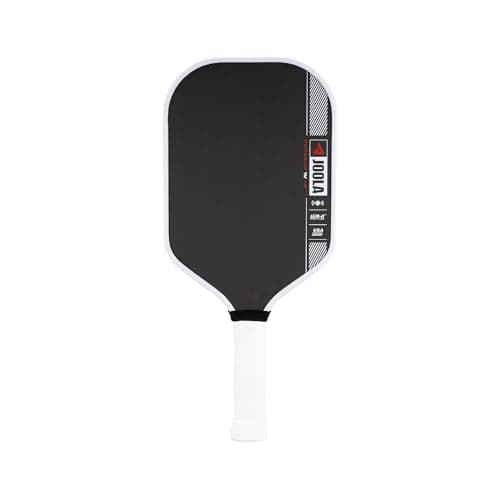 JOOLA Ben Johns Perseus Pro IV 16mm All-court power with a big sweet spot | Best overall under $150 | 8.3 | |
| 2 | 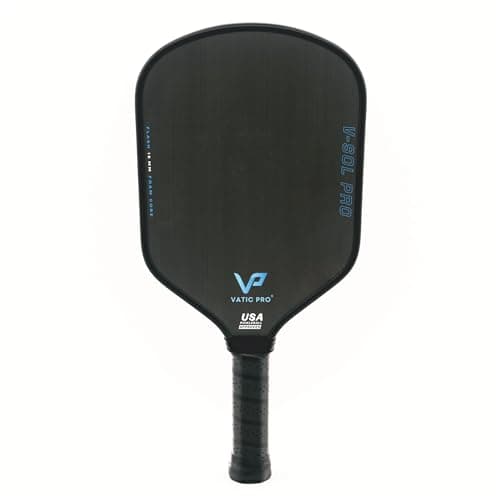 Vatic Pro V-Sol Pro Flash 16mm The foam core in a shorter, faster hybrid outline | Best value: a foam core at two-thirds the money | 8.3 | |
| 3 | 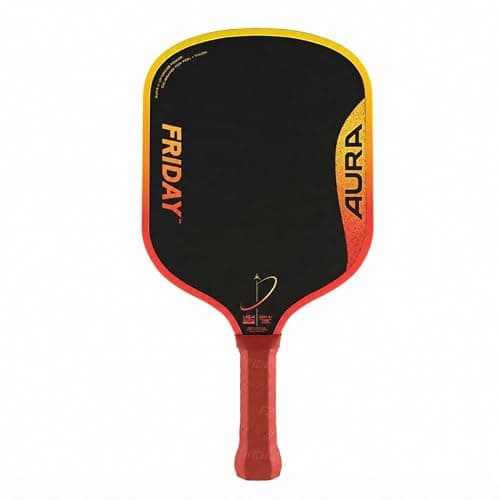 FRIDAY Aura Widebody The most forgiving paddle in FRIDAY's range | Best forgiveness in the band | 8.3 | |
| 4 | 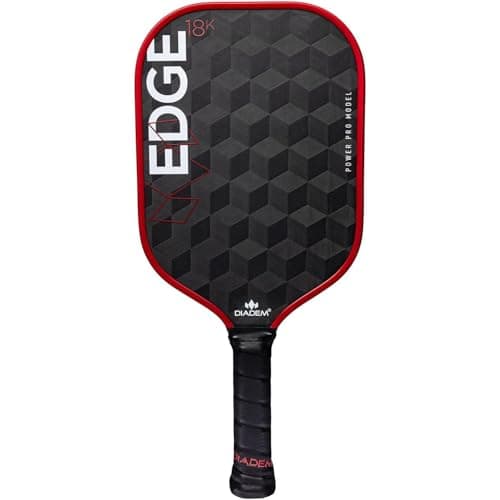 Diadem Edge 18K Power Pro Diadem's power paddle, and its longest handle | Best for drives and reach | 8.0 | |
| 5 | 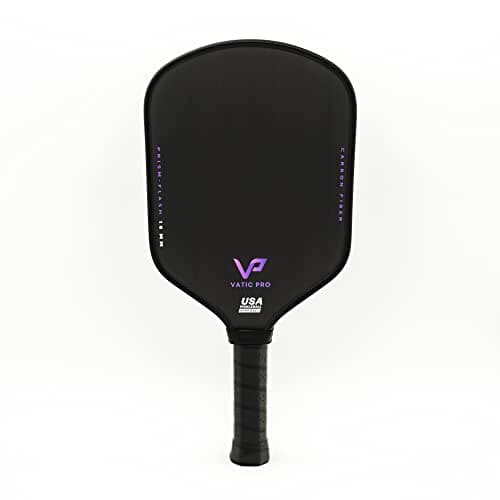 Vatic Pro Prism Flash 16mm The value spin champion (best under ~$110) | Budget pick: the most spin per dollar | 8.0 |
Tap any row to jump to the full write-up. Prices are pulled live from Amazon.
JOOLA Ben Johns Perseus Pro IV 16mm
JOOLA's Gen-4 Perseus: thermoformed power and a grippy Charged surface, with the 16mm core adding forgiveness the 14mm gives up. Now the previous generation to the Pro V.
The Perseus Pro IV set the benchmark the rest of the power field chased, and JOOLA's March 2026 Pro V refines that formula rather than replacing it. The 16mm version trades a little raw pop for a larger, more forgiving sweet spot — the sensible pick if you want top-tier power without punishing off-center hits. Charged Surface Technology keeps spin high.
Who it is for: the upgrading player who wants the paddle the rest of the power field chased, and will take the band ceiling to get it. The Perseus Pro IV 16mm is a thermoformed Gen-4 hybrid with JOOLA's Charged carbon-fiber surface, published at around 8.0 oz, and it is the only paddle on this page that carries a tour presence, a long public record and real resale liquidity. We score it a 9 on both spin and power - the top of our scale on the two axes this site exists for - with an 8 on forgiveness, which is unusual for a paddle that hits this hard. The cons. It sits within a dollar or two of the band ceiling at our last refresh, so it leaves you no room, and prices at this tier move weekly. Its control score of 7 is the lowest of the five here, which is the complaint that sends players to a wider frame. And JOOLA launched the Pro V collection in March 2026, which makes this the previous generation - a fact that is the reason it is affordable at all, and one you should know before you buy.
- Core
- 16 mm
- Shape
- Hybrid
- Face
- Charged carbon-fiber surface (Tech-Flex)
- Weight
- ~8.0 oz
- Build
- Thermoformed
- Gen
- Pro IV (Gen 4)
Manufacturer-listed as USA Pickleball approved. Approvals and delistings change — verify against the current USAP equipment list before tournament play (checked 2026-07).
Vatic Pro V-Sol Pro Flash 16mm
Same foam core and raw T700 face as the V7, in Vatic's 16.3 x 7.7in hybrid shape — a little less reach, a little more hand speed.
Flash is the middle shape of the V-Sol Pro range: shorter and wider than the elongated V7, which moves the sweet spot down and in and makes the paddle quicker to turn over at the net. If you have been playing a standard or hybrid frame and want a foam core without relearning where the paddle face is, this is the version to buy.
Who it is for: the player who has decided the next paddle should be a foam core and does not want to pay flagship money for one. The V-Sol Pro Flash is a hybrid outline on a full floating EPP foam core inside an EVA perimeter ring, behind a raw Toray T700 face with heat-compressed texturing, listed in a 8.0 to 8.3 oz range. On our scale it matches the Perseus on spin at a 9 and beats it on control at an 8, for meaningfully less money - which is the single best value argument in this bracket. The cons are about documentation and brand rather than play. Vatic publishes no molding method for this line, so our card prints Not published rather than claim one. It has no tour presence, which means no pro endorsement and a thinner resale market. And our scoring puts it a point behind the Perseus on power, so if you buy it expecting the same ball speed off a drive, you will notice.
- Core
- 16 mm
- Shape
- Hybrid
- Face
- Raw Toray T700 carbon fiber (heat-compressed texturing)
- Weight
- ~8.0-8.3 oz (listed)
- Build
- Not published
- Gen
- V-Sol (Gen 4 foam core)
Manufacturer-listed as USA Pickleball approved. Approvals and delistings change — verify against the current USAP equipment list before tournament play (checked 2026-07).
FRIDAY Aura Widebody
Same published core, face, handle and weight as the Aura Hybrid in a full 8in-wide frame - the widest, steadiest shape FRIDAY sells.
Pickleball Central publishes a 16.0 x 8.0in widebody outline, a 16mm EPP foam core, a textured carbon face, a 5.5in handle, a 4.25in grip and a 7.9 oz average in a 7.7-8.1 oz range - every published number identical to the Aura Hybrid except the outline. Width is what buys twist weight and mishit margin, and the retailer's own copy calls this the safer, more forgiving option of the two.
Who it is for: the player whose errors come off the edge of the face rather than the middle of it. The Aura Widebody is the widest frame on this page and the most forgiving paddle in FRIDAY's range: a thermoformed widebody on an EPP foam core behind a textured carbon face, published in a 7.7 to 8.1 oz range with a 7.9 oz average. It is the lightest paddle here by published average weight, and we score it a 9 on forgiveness with an 8 across spin, power and control - the most balanced card of the five. If you are coming off a 16 x 8in beginner paddle and do not want to relearn your reach, this is the shortest step up. The cons: a widebody gives up reach at the stretch volley and leverage on the drive, so it is a point behind the Perseus and the Diadem on power; FRIDAY is a younger brand than JOOLA or Selkirk with a shorter public record; and a 7.9 oz average is light enough that heavy hitters will want to add weight, which means buying tape as well.
- Core
- 16 mm
- Shape
- Widebody
- Face
- Textured carbon fiber
- Weight
- 7.7-8.1 oz (7.9 oz avg)
- Build
- Thermoformed
- Gen
- Aura / Gen 4 (EPP foam core)
Pickleball Central lists this paddle's approvals as USAP and its FAQ states it is approved for USAP-sanctioned play; the Amazon listing title makes no approval claim. Approvals and delistings change - verify your exact model against the current USA Pickleball equipment list before tournament play (checked 2026-10).
Diadem Edge 18K Power Pro
The Diadem to buy if you want the brand's 18K face on current thermoformed construction with a 5.7in handle.
Pickleball Central publishes a 16.4 x 7.5in outline, a 16mm polymer honeycomb core, a 3D 18K carbon fiber face, a 5.7in handle, a 4 1/8in grip and an 8.0 oz average in a 7.75-8.25 oz range, thermoformed with carbon wrapped around the edges under the guard. The 5.7in handle is the longest Diadem publishes and the reason this is the two-hander's Diadem.
Who it is for: the singles player, the former tennis player, the person who finishes points from the baseline. The Edge 18K Power Pro is Diadem's power paddle and carries its longest handle: a thermoformed elongated frame with a 3D 18K carbon face over a polymer honeycomb core, published in a 7.75 to 8.25 oz range with an 8.0 oz average. We score it a 9 on both spin and power, tying the Perseus on this page's two most important axes while costing less, and the 18K face weave is a coarser, grippier surface than most 3K faces in the band. The cons are the elongated bargain, stated plainly: a narrower face means mishits cost more, and we score it a 7 on both control and forgiveness, the joint lowest here. The higher swing weight that gives you the drive also slows the paddle down in a kitchen exchange. And Diadem's naming is genuinely confusing - the Power Pro and the Speed Pro are different paddles, and our Diadem comparison exists because people buy the wrong one.
- Core
- 16 mm
- Shape
- Elongated
- Face
- 3D 18K carbon fiber
- Weight
- 7.75-8.25 oz (8.0 oz avg)
- Build
- Thermoformed
- Gen
- Edge 18K Power Pro (thermoformed polymer honeycomb)
Manufacturer-listed as USA Pickleball approved. Approvals and delistings change — verify against the current USAP equipment list before tournament play (checked 2026-07).
Vatic Pro Prism Flash 16mm
The value-shopper's spin paddle: raw T700 carbon and a thermoformed build that punches well above its price.
Vatic built a reputation on giving you 90% of a $250 paddle for around a hundred bucks. The Prism Flash's raw T700 face grips for spin and the elongated frame adds reach — the paddle we recommend when 'best spin under $100' is the search.
Who it is for: the player who wants a raw carbon face and nothing else, for as little as possible. The Prism Flash is Vatic's value spin champion: a thermoformed elongated frame with a raw Toray T700 face, published at around 8.0 oz, and it has been the default recommendation in this price class for two years for one reason - it scores a 9 on spin on our scale, the same as the Perseus and the Diadem, at roughly two-thirds of what either costs. If your paddle budget is the binding constraint and spin is the shot you are trying to buy, start here. The cons: a 7 on control, the joint lowest on this page, because an elongated frame on a honeycomb core does not reward touch the way a foam core does; the Prism line is the older of Vatic's two platforms, with the V-Sol Pro above it; and Vatic's grips are thin, so plan on an overgrip from day one.
- Core
- 16 mm
- Shape
- Elongated
- Face
- Raw Toray T700 carbon fiber
- Weight
- ~8.0 oz
- Build
- Thermoformed
- Gen
- Prism
Manufacturer-listed as USA Pickleball approved. Approvals and delistings change — verify against the current USAP equipment list before tournament play (checked 2026-07).
How we ranked under-$150 paddles
Criteria first, because a price-band page is only useful if the ranking inside the band is honest. Four things decided the order.
Core construction, not core thickness. What a paddle is built out of matters more than how thick it is. A thermoformed unibody with a foam-filled or foam-core interior behaves differently from a cold-pressed honeycomb paddle regardless of the millimeter figure, and four of our five picks are thermoformed. Our thermoformed paddle guide explains what the process changes, and foam cores and Gen-3 construction covers the newer recipe now reaching this band.
The face, specifically whether it is raw. A raw, unpainted carbon surface grips the ball; a painted or composite one does not, and no amount of marketing copy changes that. Four of our five picks publish a raw or textured carbon face, and the three that score a 9 on spin all use raw Toray T700 or a coarse 18K weave. Our T700 carbon guide and how paddle spin works cover why.
Shape class, matched to a player. We deliberately included one hybrid flagship, one foam-core hybrid, one widebody and two elongated frames, because the single most common mistake in this bracket is buying the right construction in the wrong outline. Our paddle shape guide is the page to read first if you have never thought about it.
What the maker publishes. A paddle whose brand publishes a weight range, a handle length and an approval status is a safer purchase than one that publishes a slogan. Where a figure is not published we print Not published rather than estimate - which is why two cards on this page say exactly that in the build row.
The five, side by side
Published figures and our own scores. Live prices and buy buttons are in the quick picks table above.
| Spec | Perseus Pro IV 16 | V-Sol Pro Flash | FRIDAY Aura Widebody | Diadem Edge 18K Power Pro | Vatic Prism Flash |
|---|---|---|---|---|---|
| Shape class | Hybrid | Hybrid | Widebody | Elongated | Elongated |
| Core | 16mm, Gen 4 | 16mm floating EPP foam | 16mm EPP foam | 16mm polymer honeycomb | 16mm honeycomb |
| Face | Charged carbon (Tech-Flex) | Raw Toray T700 | Textured carbon | 3D 18K carbon | Raw Toray T700 |
| Build | Thermoformed | Not published | Thermoformed | Thermoformed | Thermoformed |
| Listed weight | ~8.0 oz | ~8.0-8.3 oz | 7.7-8.1 oz (7.9 avg) | 7.75-8.25 oz (8.0 avg) | ~8.0 oz |
| Our spin / power | 9 / 9 | 9 / 8 | 8 / 8 | 9 / 9 | 9 / 8 |
| Our control / forgiveness | 7 / 8 | 8 / 8 | 8 / 9 | 7 / 7 | 7 / 8 |
| The reason to pick it | Flagship specs inside the band | Foam core, less money | Most mishit margin | Drives and reach | Most spin per dollar |
Pick by the hole in your game
A price band is not a recommendation. Four honest paths through it.
You cannot finish points. Take the Perseus Pro IV 16mm or the Diadem Edge 18K Power Pro - the two paddles on this page that score a 9 on power. The Perseus is the more forgiving of the two and the Diadem has the longer handle. Our best power paddles ranking covers the whole field, and the most powerful paddles goes further up the price ladder.
Your shots land, but flat. Spin is a face-material problem, not a budget problem, and three paddles here score a 9 on it. The cheapest of the three is the Prism Flash, which is why it is our budget pick. Best spin paddles ranks the whole market and best spin paddles under $100 covers the band below this one.
You lose points to mishits. Buy width, not technology. The FRIDAY Aura Widebody is the forgiving pick here, and most forgiving paddles ranks on that axis alone - swing weight and twist weight explains the two numbers that produce mishit margin.
You hit a two-handed backhand. Handle length is the constraint, and in this band the Diadem is the one to look at first. Best paddles for a two-handed backhand ranks the field on that single requirement, and handle length covers what you trade for it.
What you give up by staying under $150
Three things, and it would be dishonest to pretend otherwise.
The newest construction, mostly. The full-foam generation - CRBN's TruFoam line, the Gen-4 floating cores from 11Six24, JOOLA's Pro V - sits above this band, and the two foam cores here are value-brand implementations rather than flagship ones. Our CRBN TruFoam Barrage review covers what the expensive version of that idea does differently.
Current-generation badging. The Perseus Pro IV is affordable because the Pro V exists. Perseus Pro IV vs Pro V works through whether the newer paddle is worth roughly double, and our answer is not a simple yes - but you are buying last year's flagship, and you should know that going in.
Resale and support, at the value brands. A JOOLA or a Selkirk has a used market, accessory support and a warranty process. The smaller brands on this page have thinner liquidity and shorter public records - fine if you keep paddles until they die, worth knowing if you rotate every season. Our paddle brands guide covers who actually makes what.
Also worth knowing in this band
Five picks is a ranking, not an inventory. Four more paddles sit inside $150 and are worth a look for specific reasons.
The JOOLA siblings. The Hyperion Pro IV 16mm and the Scorpeus Pro IV sit at the same price as the Perseus on the same Pro IV platform - the Hyperion is the faster head through the air, the Scorpeus the control-leaning frame. Perseus vs Hyperion Pro IV is the comparison, and best JOOLA paddles ranks the family.
The Bread & Butter Loco. A dual-density EPP and EVA foam core under a raw T700 face, in three shapes at one price just inside the band - and a superseded model, which is why it is in reach. Our best Bread & Butter paddles page is the shape decision.
The CRBN 3X X-Series 16mm. A thermoformed elongated frame with a foam-reinforced perimeter from a brand with genuine tour presence, scoring an even 8 across all four of our axes. Best CRBN paddles decodes the 1X / 2X / 3X numbering, which describes shapes rather than quality tiers.
The Gearbox CX14H Ultimate Power. The only paddle in this band with no plastic honeycomb in it at all - Gearbox builds a solid, vertically-ribbed carbon span instead - and the heaviest build we cover at an 8.5 oz average. Best Gearbox paddles explains the construction and the approval discrepancy you should check before sanctioned play.
Who should spend less than this
Two groups, and we would rather send you away than sell you a paddle you do not need.
If this is your first paddle, spend half of this and learn what you actually want. Best power paddles under $100 and best spin paddles under $100 both have frames that will not hold a new player back, and our how to choose a paddle guide is the right starting point.
If you are equipping a household rather than upgrading yourself, a paddle is the wrong purchase entirely - you want paddles, balls and possibly a net in one box. Our best pickleball sets page ranks those, and it is blunt about where a set's paddles stop being enough.
One last practical note. This band is the one that moves most on promotions, because it is where last-generation flagships land when the new ones launch. Every number on this page comes from our live layer with its own as-of date, and Black Friday pickleball deals covers which paddle categories genuinely discount and which never do.
The Holbrook Aero line. Three edgeless shapes on a Force-Tec T700 carbon face and a 16mm foam-perimeter core, all at one price well below this band's ceiling - the cheapest raw-carbon frames we rank anywhere. Our best Holbrook paddles page is the shape decision, including what removing the edge guard costs you.
What is the best pickleball paddle under $150?
The JOOLA Ben Johns Perseus Pro IV 16mm, on published specs. It is a thermoformed Gen-4 hybrid with JOOLA's Charged carbon-fiber surface that scores a 9 on both spin and power on our scale, which no other paddle in the band matches while also scoring an 8 on forgiveness. It sits close to the band ceiling, so if you want change left over, the Vatic Pro V-Sol Pro Flash gives you a full floating foam core for meaningfully less.
Can you get a good pickleball paddle for under $150?
Yes, and that is newer than most buying advice admits. Under $150 now buys a thermoformed unibody, a raw Toray T700 carbon face and in some cases an EPP foam core - the construction that was flagship-only two generations ago. The top of the market moved to $200 and up, and last year's premium specs slid into this bracket. Three of the five paddles we rank here tie the most expensive paddles we cover on spin.
Is a $150 paddle better than a $100 paddle?
Sometimes, and the difference is construction rather than brand. At $100 you reliably get a raw carbon face and a thermoformed honeycomb core, which is enough for spin. The extra $50 buys either a foam core, a current flagship platform, or a wider and more forgiving frame. If spin is the only thing you are shopping for, the gap is small - our budget pick scores the same 9 on spin as the best paddle on this page.
What should I avoid in a paddle under $150?
Painted faces, unpublished specs and fiberglass sold as carbon. A painted surface cannot grip the ball no matter what the listing claims, so spin is physically out of reach. A brand that will not publish a weight range, a handle length or an approval status is asking you to buy on photography. And be careful with core-thickness marketing: 16mm versus 14mm matters far less than whether the paddle is thermoformed and whether the face is raw.
Which under-$150 paddle is most forgiving?
The FRIDAY Aura Widebody, which is the widest frame in our ranking and the most forgiving paddle in FRIDAY's range - a thermoformed widebody on an EPP foam core, published in a 7.7 to 8.1 oz range. We score it a 9 on forgiveness, the highest here. Width and perimeter mass are what create mishit margin, so a widebody beats a better-specced elongated frame on this one axis every time.
Do pickleball paddles under $150 get USAPA approved?
All five paddles in this ranking are manufacturer-listed as USA Pickleball approved. Approval is not a price feature - it is a geometry and surface-roughness test that cheap paddles pass routinely. What matters is that approvals and delistings change, so verify the exact model and core thickness against the current USA Pickleball equipment list before tournament play rather than trusting a listing.