Best Holbrook Pickleball Paddles (2026)
Three shapes, one price, no edge guard. Holbrook's Aero line removes the one component every other paddle has - here is what that buys and what it costs.
Disclosure: Drive Dink earns a commission from qualifying Amazon purchases at no extra cost to you. We accept no free products and no paid placements — commissions never change our picks. How this works.
The verdict: buy the Holbrook Aero X unless you have a reason to go long or wide. It is the middle of the three shapes and the most balanced card in the line. Take the Aero T if you hit a two-handed backhand and want its 5.5in handle, or the Aero S if mishits are what cost you points. All three cost the same, so this is a shape decision rather than a budget one.
What Holbrook is known for. Edgeless paddles, and a direct-to-consumer model that keeps a carbon-faced frame at a price the big brands do not compete at. The Aero line is the brand's first edgeless series: instead of a plastic guard wrapped around the rim, Holbrook packs foam into the perimeter of the core itself - which it calls EdgeCraft on the T - so the hitting surface continues right out to the edge of the paddle. Every Aero publishes a Force-Tec T700 carbon face, a 16mm core, a 7.85 oz average and a 4 1/4in grip.
The honest constraint on this page. Holbrook sells most of its catalog direct, and the Aero line is the range with live, verifiable Amazon listings - three shapes, all in stock at one price when we checked on November 19, 2026. There is no budget pick to name inside the line because there is no cheaper Aero. If the price is your binding constraint, these paddles already sit below most of what our best spin paddles under $100 page ranks.
Units we claim to have tested: 0. Specs are the maker's and retailers' published figures, and the scores are our own editorial read of those figures rather than measurements. Prices come from our live layer with an as-of date under each button.
| # | Paddle | Best for | Score | Price |
|---|---|---|---|---|
| 1 | 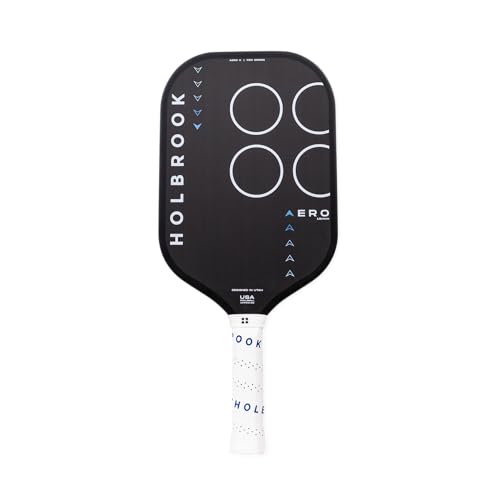 Holbrook Aero X Edgeless 16mm The middle Aero - same frame, quicker handle | Best Holbrook paddle overall | 8.3 | |
| 2 | 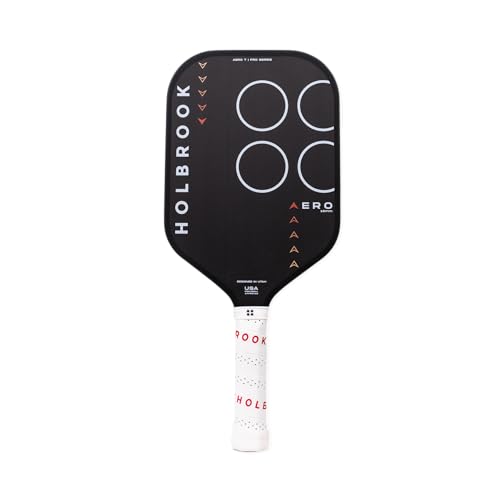 Holbrook Aero T Edgeless 16mm The long Aero, with the line's longest handle | Best for reach and two-handed backhands | 7.8 | |
| 3 | 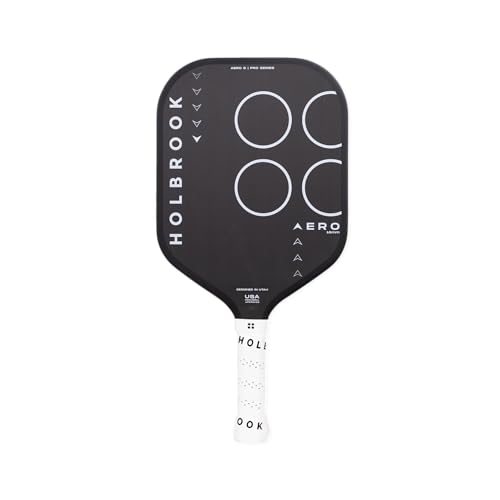 Holbrook Aero S Edgeless 16mm The widest Aero, for mishit margin and hand speed | Best for mishit margin and hand speed | 8.5 |
Tap any row to jump to the full write-up. Prices are pulled live from Amazon.
Holbrook Aero X Edgeless 16mm
Holbrook's hybrid: the same published 16.5 x 7.5in outline as the Aero T on a shorter 5.25in handle, which moves mass closer to your hand.
The X is built as a unibody with a Force-Tec unidirectional T700 carbon face over a polypropylene core and a foam perimeter, in the same 16mm thickness and the same 7.85 oz average as the rest of the line. Holbrook publishes the same 16.5 x 7.5in frame for the X and the T, so the handle is the honest difference between them: 5.25in here against 5.5in there, which is a quarter-inch of leverage traded for a quarter-inch of reach down the grip.
Who it is for: most players, and anyone who wants the Aero line without committing to an extreme at either end. The X is the hybrid: a unibody build with a Force-Tec unidirectional T700 carbon face over a polypropylene core and a foam perimeter, published at 16.5 x 7.5in on a 5.25in handle, 16mm thick, 7.85 oz average, 4 1/4in grip, no edge guard. It scores an even 8 for power, control and forgiveness on our scale with a 9 on spin, which is the most balanced card in the line - and at this price that combination is genuinely hard to find. The cons. Edgeless construction means there is no plastic rim between a carbon frame and the court, so a scraped overhead costs more than it does on a conventional paddle, and you cannot add an edge guard without changing the balance. Holbrook does not publish a swing weight or a twist weight for any Aero, so two of the three numbers that actually predict how a paddle plays are missing. And a brand with no tour presence has a thin resale market.
- Core
- 16 mm
- Shape
- Hybrid
- Face
- Unibody Force-Tec unidirectional T700 carbon
- Weight
- 7.85 oz avg (7.7-8.0 oz)
- Build
- Not published
- Gen
- Aero (edgeless, foam perimeter)
Holbrook lists the Aero line as tournament-legal, but publishes no certification field we could verify on the Amazon listing (checked 2026-11). Verify the exact model against the current USAP equipment list before tournament play.
Holbrook Aero T Edgeless 16mm
An edgeless 16.5in frame with a 5.5in handle and a Force-Tec T700 face - the Aero to buy if you hit through the ball or take the backhand with two hands.
All three Aero shapes share a construction: a 16mm polypropylene honeycomb core with EdgeCraft foam packed where an edge guard would normally sit, a Force-Tec T700 carbon face, and no edge guard at all, which is the point of the line. The T is the long one at a published 16.5 x 7.5in with a 5.5in handle, and it carries the same 7.85 oz average and 4 1/4in grip as its siblings. Edgeless construction buys usable face right out to the rim; it also means there is no plastic strip protecting the frame from the court.
Who it is for: players who drive from the baseline and anyone who needs handle room for a second hand. Holbrook publishes the same 16.5 x 7.5in frame for the T as for the X, so the honest difference between them is the handle: 5.5in here, a quarter-inch longer, bought out of the same overall length. The T also runs a slightly different face - a Force-Tec T700 carbon over a polypropylene honeycomb core with EdgeCraft foam, which is Holbrook's name for the foam that sits where an edge guard would be. The cons are what the extra handle takes away. A longer handle on an identical frame means a shorter hitting face, so the sweet spot sits lower and mishits toward the tip cost more, and we score it two points below the Aero S on both control and forgiveness. It is also the shape most exposed by the missing edge guard, because length is what catches the court on a low dig.
- Core
- 16 mm
- Shape
- Elongated
- Face
- Force-Tec T700 carbon fiber
- Weight
- 7.85 oz avg (7.7-8.0 oz)
- Build
- Not published
- Gen
- Aero (edgeless, EdgeCraft foam)
Holbrook lists the Aero line as tournament-legal, but publishes no certification field we could verify on the Amazon listing (checked 2026-11). Verify the exact model against the current USAP equipment list before tournament play.
Holbrook Aero S Edgeless 16mm
A published 15.7 x 7.95in square frame with a 5in handle - the shortest, widest and most forgiving paddle in Holbrook's edgeless line.
The S trades almost an inch of length for almost half an inch of width against the other two Aeros, which is the trade that produces mishit margin, and it pairs that with the shortest handle in the line at 5in. Construction matches the X: a unibody Force-Tec unidirectional T700 carbon face over a polypropylene core with a foam perimeter, 16mm thick, 7.85 oz average, 4 1/4in grip, no edge guard. A square outline is also the quickest to turn over at the kitchen line.
Who it is for: the player whose errors come off the edge of the face, and anyone who gets beaten in fast hands exchanges at the kitchen. The S is the square: a published 15.7 x 7.95in frame, almost an inch shorter and nearly half an inch wider than the other two Aeros, on the shortest handle in the line at 5in. That is the geometry that produces mishit margin, and it is also the quickest of the three to turn over, which is why we score it a 9 for both control and forgiveness. Construction matches the X - unibody Force-Tec unidirectional T700 over a polypropylene core with a foam perimeter, 16mm, 7.85 oz average. The cons are reach and leverage. A 15.7in paddle gives up real distance at the stretch volley and real pace on a drive, and we score it two points below the T on power. The 5in handle also rules it out for a two-handed backhand, and as with every Aero there is no edge guard and no published balance figures.
- Core
- 16 mm
- Shape
- Widebody
- Face
- Unibody Force-Tec unidirectional T700 carbon
- Weight
- 7.85 oz avg (7.7-8.0 oz)
- Build
- Not published
- Gen
- Aero (edgeless, foam perimeter)
Holbrook lists the Aero line as tournament-legal, but publishes no certification field we could verify on the Amazon listing (checked 2026-11). Verify the exact model against the current USAP equipment list before tournament play.
What edgeless construction actually changes
This is the reason to consider a Holbrook over a conventional paddle at the same money, so it deserves a straight answer rather than the marketing version.
What you gain. An edge guard is a strip of plastic wrapped around the rim, and the area underneath it is dead - a ball that lands there does not come back properly. Remove it and the hitting surface runs to the physical edge of the paddle, which widens the usable face without widening the paddle. It also removes a few grams from the perimeter, which is why edgeless frames tend to feel quicker than their static weight suggests.
What you lose. The protection. A paddle that scrapes the court on a low dig is hitting carbon on concrete rather than plastic on concrete, and the damage is permanent rather than cosmetic. Players who regularly dig low balls off a hard court should think carefully about this; players who do not will never notice. You also cannot add an edge guard later without changing the balance, and our edge guard guide covers that trade in detail.
What it does not change. Spin, which is a face property - all three Aeros use a T700 carbon surface, and how paddle spin works explains why the surface is the whole story there. It also does not make a paddle legal or illegal on its own: edgeless frames are approved routinely, and what matters is the specific model on the current list.
The three shapes, side by side
Published figures only. Note the row that matters most: Holbrook publishes the same frame dimensions for the X and the T, so the handle is the real difference between them. Live prices and buy buttons are in the quick picks table above.
| Spec | Aero S 16mm | Aero X 16mm | Aero T 16mm |
|---|---|---|---|
| Published frame | 15.7 x 7.95in | 16.5 x 7.5in | 16.5 x 7.5in |
| Handle length | 5in | 5.25in | 5.5in |
| Shape class | Square / widebody | Hybrid | Elongated |
| Face | Unibody Force-Tec unidirectional T700 | Unibody Force-Tec unidirectional T700 | Force-Tec T700 carbon |
| Core | 16mm polypropylene, foam perimeter | 16mm polypropylene, foam perimeter | 16mm PP honeycomb, EdgeCraft foam |
| Listed weight | 7.85 oz avg (7.7-8.0) | 7.85 oz avg (7.7-8.0) | 7.85 oz avg (7.7-8.0) |
| Grip / edge guard | 4 1/4in / none | 4 1/4in / none | 4 1/4in / none |
| Our spin / power | 9 / 7 | 9 / 8 | 9 / 8 |
| Our control / forgiveness | 9 / 9 | 8 / 8 | 7 / 7 |
Read that table as one paddle with its mass moved around. Core, face, weight and grip are constant across all three, so every difference in how they play comes from length, width and handle - which is exactly what swing weight and twist weight are built from. Holbrook publishes neither number, which is the single biggest gap in the brand's documentation.
Which Aero fits your game
Three questions, in the order we would ask them.
Do you hit a two-handed backhand? Then take the T and stop reading - 5.5in is the shortest handle most two-handed players can use without crowding the shoulder of the grip, and no amount of technique makes a 5in handle work for two hands. Our best paddles for a two-handed backhand page ranks the whole field on that requirement, and handle length covers what the face gives up to provide it.
Where do your errors come from? If they come off the edge of the face, buy width: the S is nearly half an inch wider and almost an inch shorter than the other two, and that is the geometry that makes mishits survivable. Most forgiving paddles ranks the market on that axis. If instead you win the dink rally and then cannot finish, the T's extra leverage is the fix and best elongated paddles is the wider field.
Are you coming from a conventional paddle you liked? Then the X is the shortest move. It sits between the other two on every axis we score, and an edgeless frame already feels quicker than its weight - changing shape at the same time makes it hard to tell what you actually changed. Paddle shape, explained is the page for working that out before you buy.
The rest of the Holbrook shelf
Three paddles are ranked above, and the brand sells more than three. What we left off, and why.
The Fuze Foam line. Holbrook's dual-density foam-core paddle sits well above the Aero on price, in widebody and elongated shapes, and it is live on Amazon. We have not ranked it because we could not find a published spec table for it from Holbrook or a specialist retailer, and a foam-core paddle with no published weight, handle length or balance figures is not something we will put a score on. If that changes, it belongs on this page - a dual-density core is the construction the premium end of the market has moved to, which our foam core guide covers.
The Power Pro series. A conventional edge-guarded carbon paddle sitting between the Aero and the Fuze on price. Same reason: no spec table we could verify.
The 14mm Aeros. Holbrook sells the same three shapes in a 14mm core. They are real and they are listed, but stock on the 14mm listings has been thin every time we have checked, and the thin-core version of a paddle whose whole appeal is a forgiving perimeter is the less interesting half of the line. Our 14mm vs 16mm guide covers the trade if you want it anyway.
Who should skip the Aero line
Three groups. Players who scrape the court regularly - a dig-heavy defensive player on outdoor concrete is the worst case for an edgeless frame, and the damage is not cosmetic. Players who buy on published balance numbers, because Holbrook does not publish a swing weight or a twist weight for any Aero and we will not invent them. And players who need certification certainty for sanctioned play: Holbrook markets the line as tournament-legal but we could not verify a certification field on the listings, so check the exact model against the current list - our USAP approved paddle guide explains how.
One last practical note. These are value-tier prices for a T700 carbon face, which is the whole argument for the line, and value-tier listings from direct-to-consumer brands are the ones most likely to sell through without restocking. Every number on this page comes from our live layer with its own as-of date, and if a listing dies the buy button falls back to a search for the exact model rather than a dead page.
Which Holbrook paddle should I buy?
The Aero X for most players. It is the hybrid of the three shapes, published at 16.5 x 7.5in on a 5.25in handle, and it scores an even 8 for power, control and forgiveness on our scale with a 9 on spin - the most balanced card in the line. Take the Aero T if you hit a two-handed backhand and need its 5.5in handle, or the Aero S if your errors come off the edge of the face. All three cost the same, so nothing is lost by choosing on shape.
What is Holbrook Pickleball known for?
Edgeless paddles at prices the major brands do not compete at. The Aero line is the brand's first edgeless series: rather than wrapping a plastic guard around the rim, Holbrook packs foam into the perimeter of the core so the hitting surface runs to the physical edge of the paddle. Every Aero publishes a Force-Tec T700 carbon face, a 16mm core, a 7.85 oz average weight and a 4 1/4in grip.
Are edgeless pickleball paddles worth it?
The gain is real and so is the cost. Removing the edge guard removes a dead strip around the rim, so the usable face is wider without the paddle being wider, and the frame feels quicker because mass comes off the perimeter. What you give up is protection: a paddle that scrapes the court is hitting carbon rather than plastic, and that damage is permanent. If you dig a lot of low balls on outdoor concrete, buy a paddle with a guard.
What is the difference between the Holbrook Aero S, X and T?
Shape and handle. The S is the square at a published 15.7 x 7.95in with a 5in handle - the widest and most forgiving. The X and the T share a published 16.5 x 7.5in frame, and differ in handle length: 5.25in on the X, 5.5in on the T, which makes the T the one to buy for a two-handed backhand. Core, face material, weight and grip circumference are the same across all three.
Are Holbrook paddles USAPA approved?
Holbrook markets the Aero line for tournament play, but we could not verify a certification field on the Amazon listings when we checked in November 2026, which is why our product cards say so rather than claiming approval. Verify the exact model and core thickness against the current USA Pickleball equipment list before entering a sanctioned event - approvals and delistings change, and a marketing claim is not an approval.
How does the Holbrook Aero compare to a Vatic Pro or a JOOLA?
On face material, it does not give much away - all of them use a T700-class raw carbon surface, which is what generates spin. Where the Aero loses is documentation and construction: Holbrook publishes no swing weight or twist weight, and the Aero is a honeycomb core with a foam perimeter rather than the full foam cores the premium tier has moved to. Where it wins is price, by a wide margin, and the edgeless face area.